

Lazy Gray (SW 6254) by Sherwin Williams: Paint Review
Some colors make things feel settled. Lazy Gray Sherwin-Williams does precisely that, it’s soft, light, and doesn’t pull too much attention. I’ve seen it work in bright rooms, shaded corners, on walls, and even on cabinets.
This post compiles everything you’ll need to know before trying it. You’ll get a feel for how it looks, when it shines, and what to expect in different parts of the house.
If you’re sorting through gray shades and need something calm but not flat, this is a color for you. It brings the right mix of color and quiet. And once you’ve seen it in action, it’s hard to ignore.
Understanding Lazy Gray by Sherwin-Williams

Lazy Gray (SW 6254) by Sherwin-Williams is a soft, balanced gray with a gentle blue undertone. This shade falls between warm and cool, making it an easygoing choice that fits comfortably in a wide range of spaces, from cozy bedrooms to modern living rooms.
Basic Color Profile
HEX code: #BEC1C3
LRV (Light Reflectance Value): 54.13
Color family: Light gray with a soft blue undertone
Lazy Gray is part of Sherwin-Williams’ neutral gray lineup and offers a quiet, clean presence. It works exceptionally well when you want your walls to feel calm without fading into the background. It’s available in all standard finishes, including matte, satin, and semi-gloss for trim or cabinetry.
Undertones Explained
Lazy Gray has a soft blue undertone that subtly shifts depending on the lighting. It doesn’t jump out or feel icy, but it does bring a steady coolness that gives rooms a peaceful feel.
- In bright natural light, especially in south-facing rooms, the blue undertone becomes more noticeable, making the gray feel crisp yet soft.
- In low or artificial light, the color appears deeper and closer to a true gray, with the blue undertone fading into the background. Warm bulbs can help maintain a cozy balance.
This flexible tone works well in bedrooms, bathrooms, and shared spaces where you want a calm, put-together look without too much visual weight.
Lazy Gray in Different Rooms
Lazy Gray works across multiple rooms and surfaces, offering a consistent look that suits various styles. It brings softness and balance without feeling too dark or flat.
Living Rooms
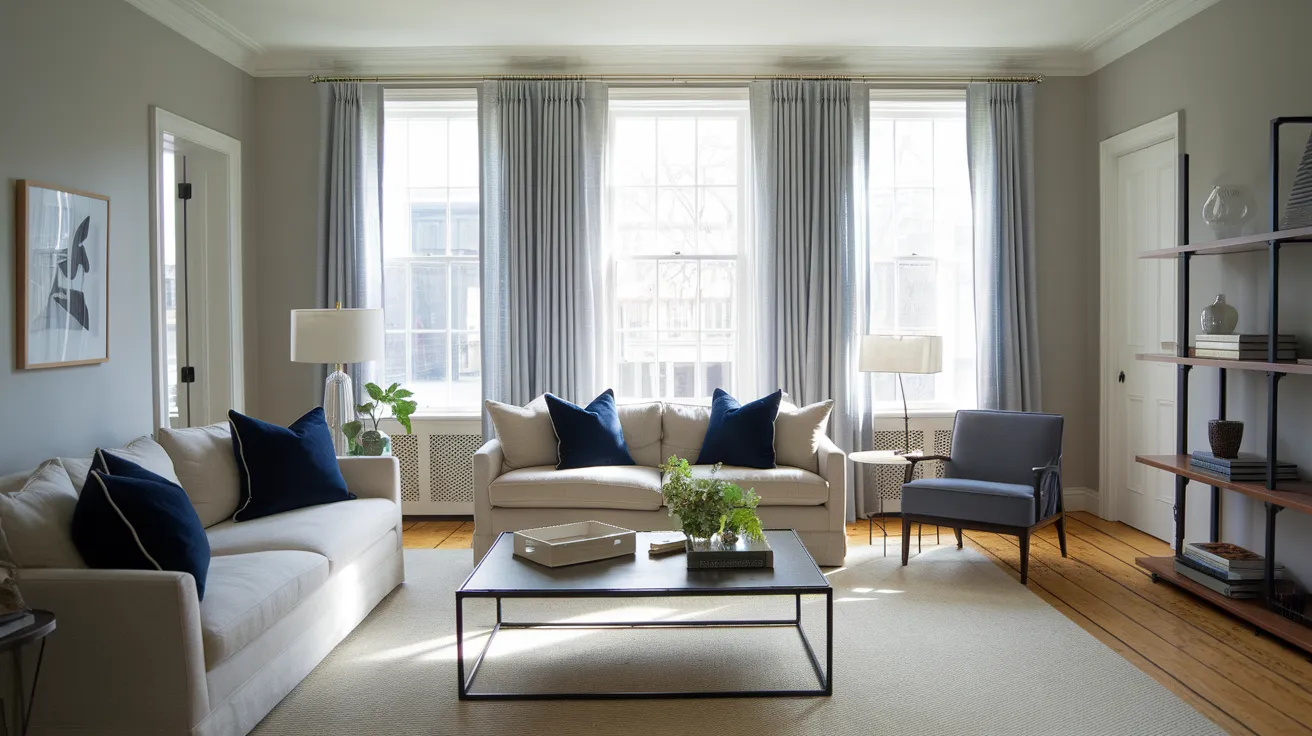
Lazy Gray sets a calm foundation in living rooms, making it easy to build around. It pairs well with soft furnishings, such as neutral sofas, light curtains, or woven textures.
You can also bring in contrast with black metal, dark wood, or deep blue accents. Use it on all four walls or as a feature behind open shelving, a fireplace, or a TV unit.
Bedrooms
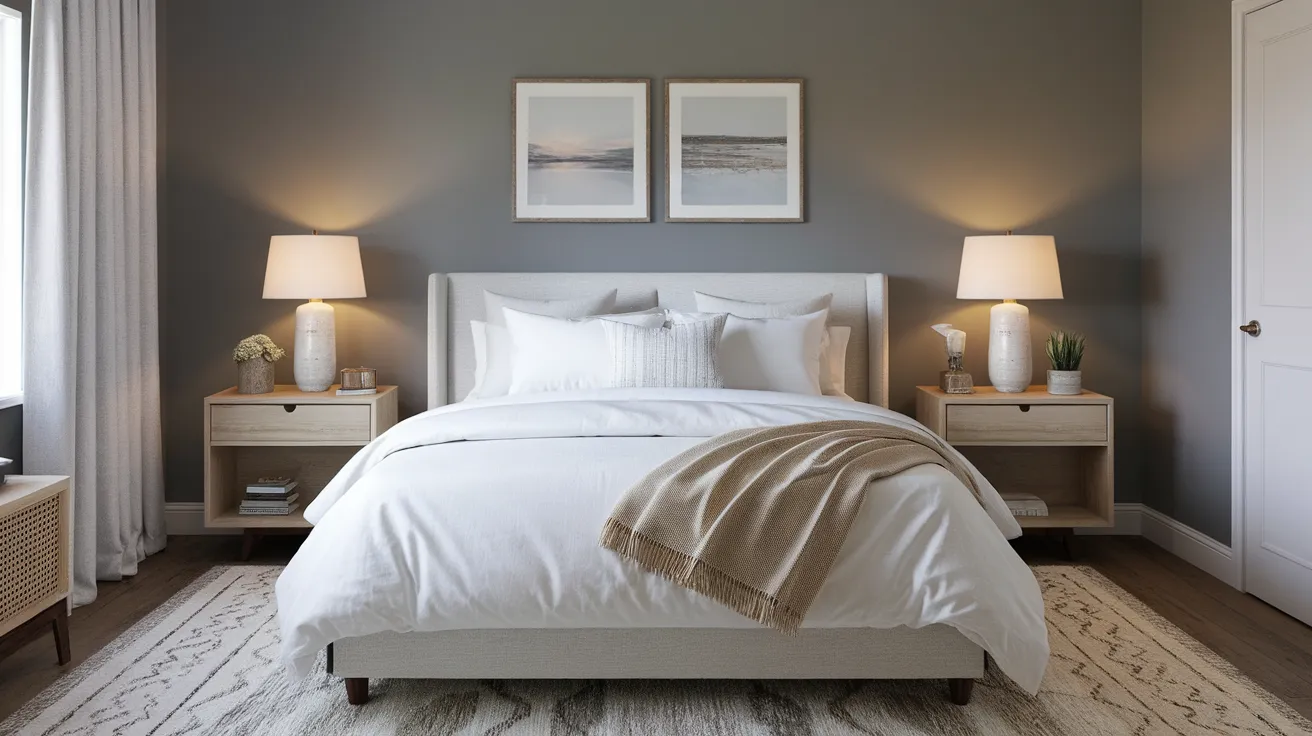
In bedrooms, Lazy Gray helps create a soft, restful space that doesn’t feel too cold. It looks great next to white or beige bedding, layered rugs, and light wood furniture.
Use warm lamps or dimmable bulbs to create a cozy atmosphere in the room. Either on all walls or just behind the headboard, Lazy Gray keeps things simple and easy to relax in.
Bathrooms

Lazy Gray brings a fresh, clean look to bathrooms. It pairs well with white subway tile, gray stone, or brushed metal fixtures, such as black or silver.
The blue-gray tone adds a sense of stillness without making the room feel small. Try it on walls, built-ins, or even a painted vanity. Add soft towels and minimal decor to complete the look.
Kitchens and Cabinets
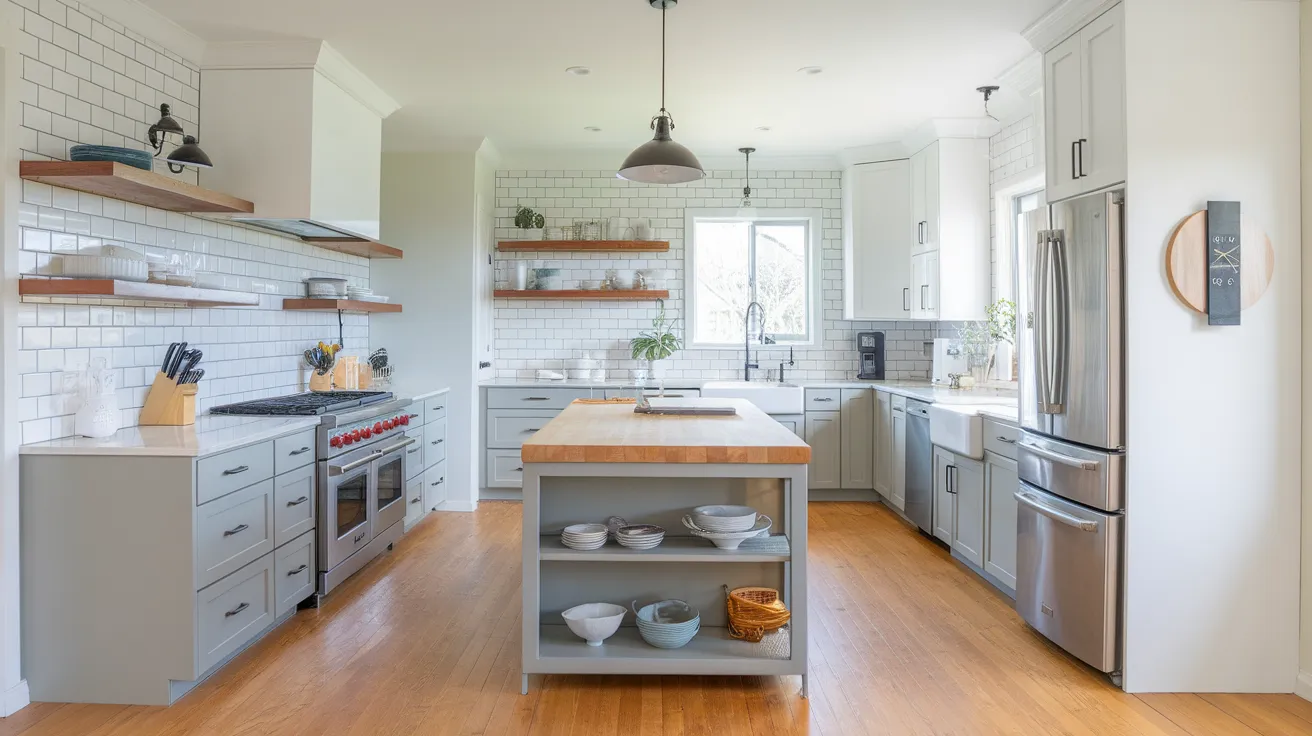
This color pairs nicely with kitchens featuring a mix of white tile, wood flooring, and light-colored counters. Lazy Gray suits both walls and cabinets, particularly in lower or island areas.
The color gives just enough contrast to stand out without taking over the space. It works in both modern and classic kitchen layouts.
Exteriors
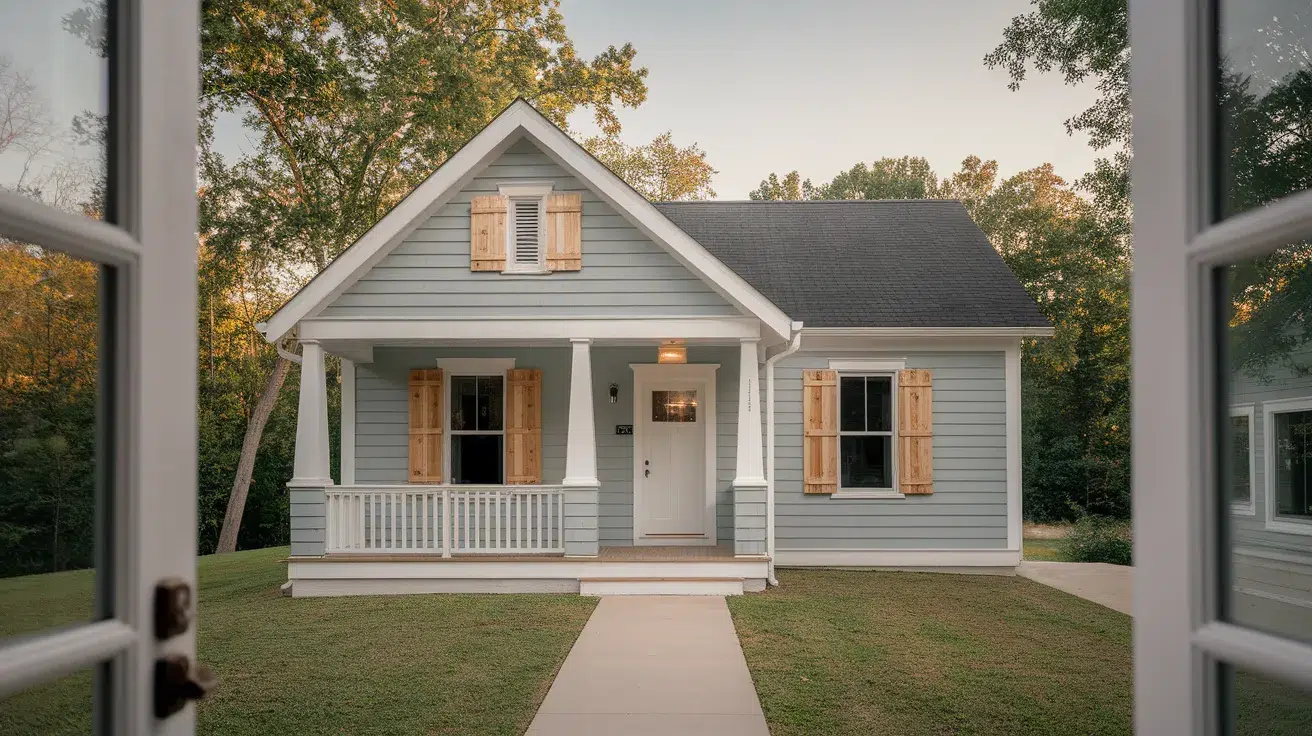
Lazy Gray holds up well outside, making it a strong option for home exteriors. Use it on siding with crisp white trim for a neat finish, or mix it with natural wood shutters for a softer feel.
The tone stays even in full sunlight without shifting too blue. It brings a steady look to porches, garages, or front doors while keeping things simple and timeless.
Lazy Gray vs. Other Sherwin-Williams Grays
If you like Lazy Gray but want to check out a few close options, Sherwin-Williams has some other shades that offer a similar feel with subtle shifts in tone or depth. Here’s how Lazy Gray fares against them:
Lazy Gray vs. Misty

Misty (SW 6232, #CDD2D2) is a soft, cool gray with a slight green-blue undertone, similar in mood to Lazy Gray.
- Misty is lighter and airier, often reading more blue-green in bright rooms.
- Lazy Gray feels more grounded and slightly deeper, with a steadier, more neutral effect.
If you want something brighter and breezier, Misty is a good fit. For a more centered, stable gray, Lazy Gray works better
Lazy Gray vs. Reflection

Reflection (SW 7661, #D3D5D3) is a pale silver-gray with a crisp, clean tone; great for open spaces.
- Reflection is a touch cooler and more refined, with a silvery edge in daylight.
- Lazy Gray has more body and a hint of warmth, especially under soft or artificial light.
Go with Reflection if you want a sharp, breezy finish. Pick Lazy Gray for a cozier, more settled look.
Lazy Gray vs. Olympus White

Olympus White (SW 6253, #D4D8D7) is a pale, icy gray with cool blue undertones. Great for minimal, airy spaces.
- Olympus White is much lighter and can look almost white in strong sunlight.
- Lazy Gray shows more color depth and feels less stark, especially on all four walls.
If you’re after a barely-there gray, Olympus White might suit you. For a bit more presence, Lazy Gray holds better.
Lazy Gray vs. Krypton

Krypton (SW 6247, #B8C0C3) is a cool, mid-toned gray with a distinct blue cast that leans deeper than Lazy Gray.
- Krypton reads noticeably bluer, especially in cooler or shaded rooms.
- Lazy Gray feels more balanced, with a softer, more muted tone that plays well with warm and cool accents.
Choose Krypton if you want a strong, cool-gray statement. Stick with Lazy Gray for something softer and more adaptable.
Undertone and LRV Comparison Table
| Paint Color | Undertones | LRV | Warm or Cool |
|---|---|---|---|
| Lazy Gray | Blue-gray | 54.13 | Cool |
| Misty | Blue-green | 64 | Cool |
| Reflection | Cool silver-gray | 66 | Cool |
| Olympus White | Soft blue | 68 | Cool |
| Krypton | Cool blue-gray | 52 | Cool |
All of these colors sit in the cool gray family, but they show up differently depending on light and room type. Test swatches in your space to get the right feel before choosing one.
Color Pairings That Work With Lazy Gray
Lazy Gray is a versatile shade that pairs well with both cool and warm accents. Whether you’re going for contrast or a softer flow, there’s plenty to build around.
Trim Colors That Work
These whites bring out the calm tone in Lazy Gray without clashing. You can go crisp, warm, or cool depending on your style.
- Pure White (SW 7005, #EDECE6): For baseboards, ceilings, and doors when you want a crisp, clean contrast.
- Greek Villa (SW 7551, #F0ECE2): If you prefer a softer white that warms up Lazy Gray’s cool edge.
- Extra White (SW 7006, #EEEFEA): For a bright, calm look that fits well in modern or minimal spaces.
Accent Colors That Pair Well With Lazy Gray
Accent shades add interest and balance to Lazy Gray. These colors help you layer in warmth, depth, or softness.
- Naval (SW 6244, #2F3D4C): For a deep, rich navy that brings contrast and depth without overwhelming the room.
- Mannered Gold (SW 6130, #C19763): For a warm, muted mustard that breaks up cool grays naturally.
- Golden Fleece (SW 6388, #D6AD78): For a lighter take on ochre that still feels grounded and earthy.
- Clary Sage (SW 6178, #ACAD97): For a fresh sage green that pairs well with Lazy Gray and natural wood.
Paint Finish Recommendations
The finish you choose doesn’t just affect durability. it also changes how Lazy Gray looks in your space. Here’s how each finish performs and how it can shift the feel of the color:
Matte is great for low-traffic areas like ceilings or bedrooms. It hides surface flaws and gives Lazy Gray a soft, cozy appearance. The cool blue undertones feel more muted, especially in low or shaded lighting.
Eggshell works nicely in living rooms, dining areas, and hallways. It adds a light sheen that keeps things bright without being shiny. This finish helps Lazy Gray feel calm and clean, with a little added life.
Satin is ideal for kitchens, bathrooms, and other high-traffic zones. It’s easy to clean and adds a bit more glow. Satin can make Lazy Gray’s blue side pop slightly more, especially in spaces with direct or overhead light.
If you’re torn between finishes, try a few swatches on your wall under different lighting. That’ll give you the best read on how Lazy Gray will look in your space.
Sampling and Buying Options
Before you commit to a gallon, it’s smart to test Lazy Gray in your own space. Lighting, room size, and nearby colors can all shift how the shade reads.
Where to Get Peel-and-Stick Samples
The easiest way to try Lazy Gray without making a mess is with peel-and-stick samples.
- Samplize offers real paint samples with a sticky back. They’re removable, repositionable, and won’t damage your walls.
- Local hardware stores often carry Lazy Gray chips or small sample jars.
- Sherwin-Williams stores usually offer both swatch cards and tester pots for brushing on small wall sections.
Where to Buy the Paint
You can buy Sherwin-Williams Lazy Gray both online and in-store.
- Sherwin-Williams.com lets you order directly, with delivery or in-store pickup.
- Independent paint retailers often carry Lazy Gray or can order it in various finishes.
- Home improvement stores may have it in stock or can place a custom order.
- Some locations also offer curbside pickup or delivery options. Call ahead to confirm availability.
Conclusion
There’s something steady about Sherwin-Williams Lazy Gray; it settles in quietly but still brings just enough color.
Now you’ve got a full view of how it looks, where to use it, and what makes it different. Try a sample, sit with it for a day or two, and see how it fits your space.
Remember not to rush it. Some colors need a little time to show their full potential. Keep these tips handy when shopping or testing swatches.
Want more real-life paint tips and color breakdowns? Head over to other blogs on the website and find your next favorite shade.


