Why You Should Bottom Water Your Plants?
Most plant problems trace back to one thing: water. Too much, too little, or delivered in a way that never quite reaches where it’s needed.
Bottom watering plants flips the entire process around, letting the soil pull in exactly what it needs from below rather than guessing from the top.
It sounds simple, and it is, but the difference it makes to root health, moisture consistency, and overall plant condition is hard to ignore.
The steps are straightforward, the results are reliable, and once you understand how it works, it becomes the only watering method that actually makes sense.
What Is Bottom Watering of Plants?
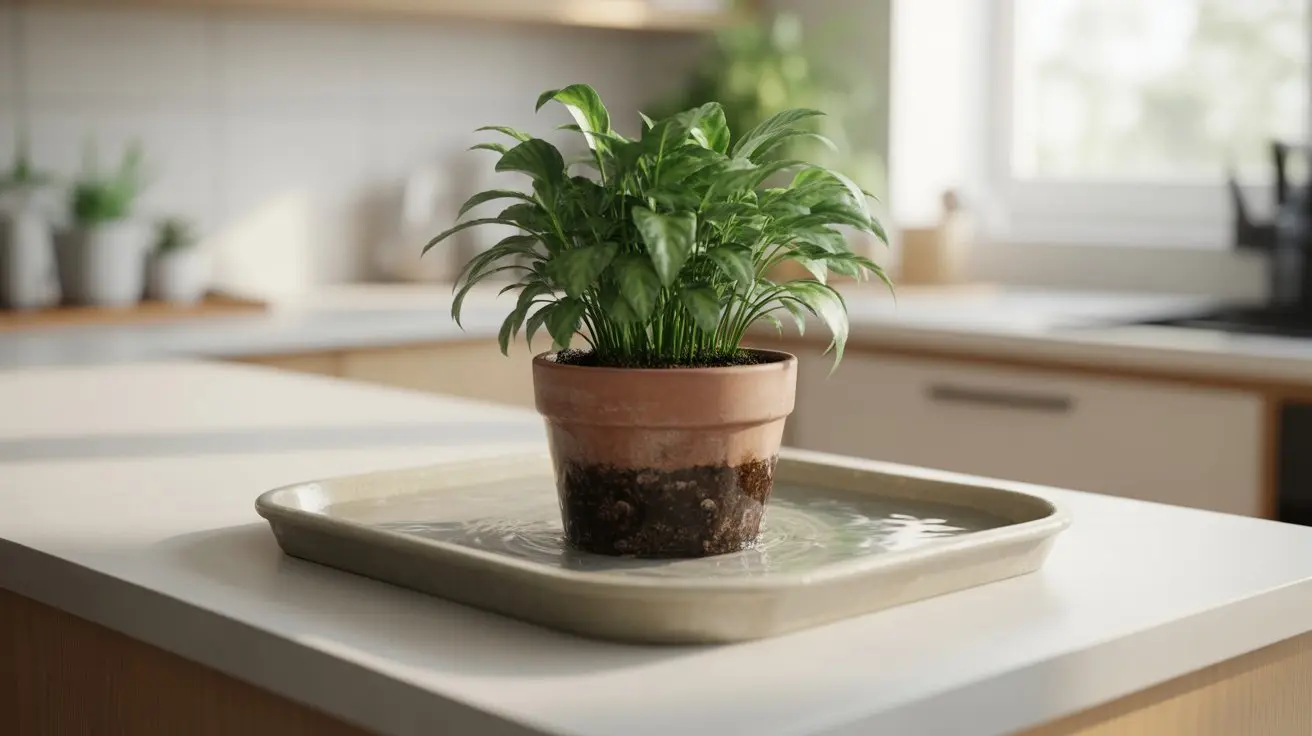
Bottom watering is a method where you let your plant absorb water from below rather than pouring it from the top.
You simply place the pot in a tray or basin of water and let the soil draw moisture upward on its own.
It’s a simple technique that encourages deeper root growth and reduces the risk of overwatering.
Benefits of Bottom Watering
Bottom watering does more than just hydrate your plants; it changes how moisture moves through the soil, directly affecting the health of your roots over time.
Most people notice a difference in plant health within just a few weeks of switching.
- Even moisture distribution: Water travels upward through the soil evenly, reaching every part of the root zone without dry pockets.
- Reduces the risk of overwatering: Roots absorb only what they need, making it much harder to accidentally flood the soil.
- Encourages deeper root growth: Roots naturally grow downward toward the moisture source, building a stronger and healthier root system.
- Keeps foliage dry: No water splashes onto leaves or stems, reducing the risk of fungal growth and surface disease.
- Less soil disruption: Gentle absorption from below keeps the soil structure intact, unlike top watering, which can compact and displace soil over time.
How To Bottom Water Plants (Step-by-Step)
Here’s how to do it correctly from start to finish. Follow these steps carefully, and you’ll get even moisture every time without the guesswork.
Step 1: Prepare The Water Source
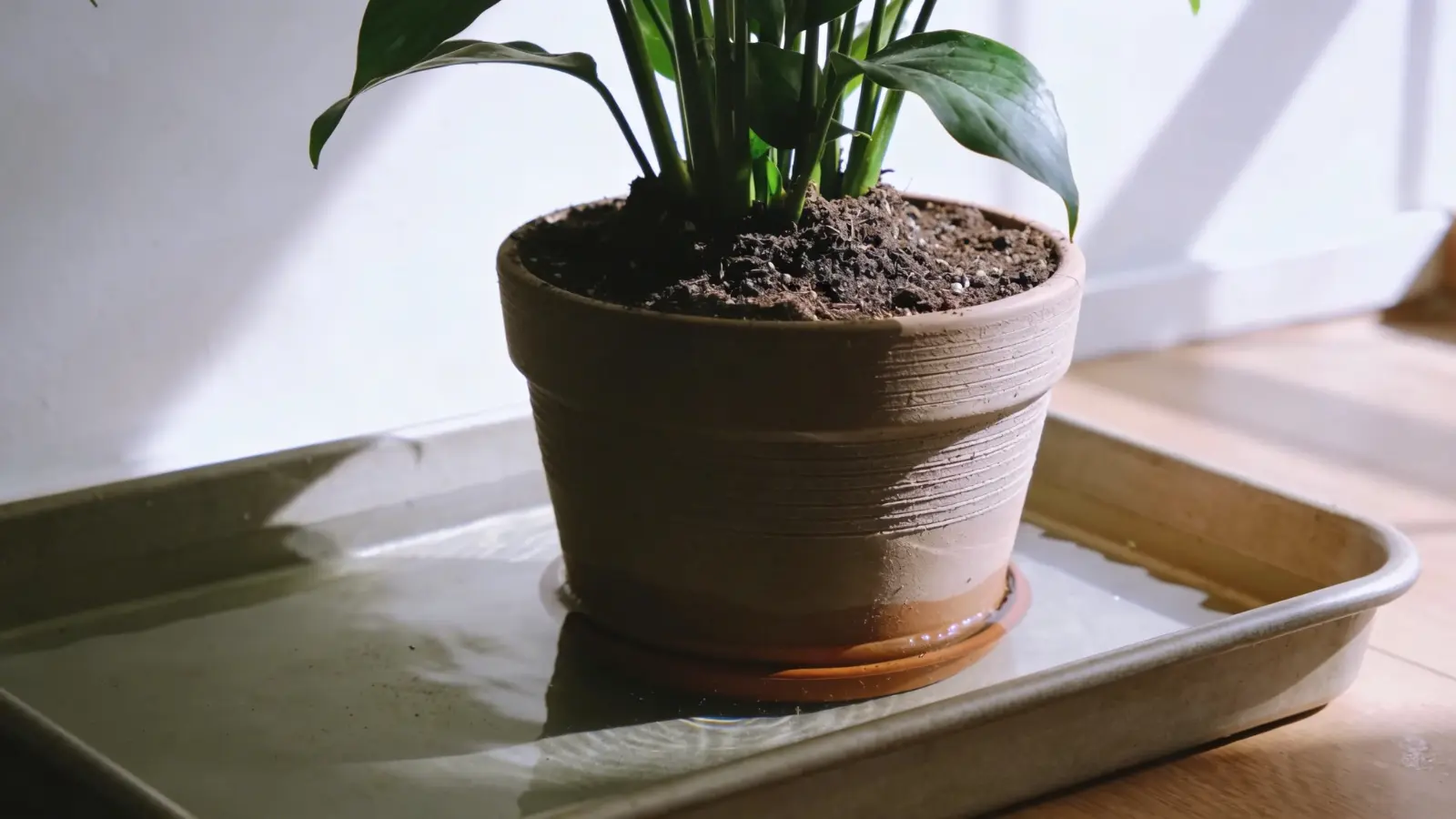
Fill a tray, basin, or sink with 1–2 inches of water. Use room-temperature water to avoid shocking the roots.
The water needs to make direct contact with the drainage holes at the base of the pot. That’s what starts the absorption process.
Step 2: Place The Pot Correctly
Set the pot in the water so only the base is submerged. The entire pot should not be sitting underwater.
Your pot must have drainage holes; this is non-negotiable. Without them, water can’t enter the soil at all. Roots draw water upward through the soil as soon as contact is made.
Step 3: Let The Soil Absorb Water
Leave the pot in the water for 15–60 minutes. During this time, capillary action pulls moisture upward evenly through the soil.
A few things affect how long this takes:
- Dry soil absorbs water faster in the beginning
- Larger pots take more time to fully saturate
- Dense or compacted soil slows the upward movement
Don’t rush this step. Pulling the pot out too early is the most common mistake.
Step 4: Check When Watering Is Complete
Touch the top layer of soil. It should feel slightly damp, not soaked, just moist.
You can also lift the pot. A heavier pot means the soil has absorbed water. If the topsoil still feels completely dry, the plant needs more time in the water.
Step 5: Remove And Drain Excess Water
Take the pot out and let it drain fully before placing it back on its tray or shelf.
Leaving the pot sitting in standing water cuts off oxygen to the roots. That leads to root rot, even when watering from below.
How Bottom Watering Actually Works?
Bottom watering works through a process called capillary action. Water moves upward through tiny pores in the soil, pulled by the natural tendency of dry soil particles to absorb water.
Roots take in water based on need, not pressure. This means the soil gets evenly saturated from bottom to top, unlike top watering, which can flood some areas and miss others.
One thing to note: the top layer of soil stays dry at first. That’s normal. It usually becomes slightly damp near the end of the soak.
If your soil is hydrophobic, meaning it repels water instead of absorbing it, capillary action won’t work properly. You’ll need to break up the surface or pre-moisten the soil before bottom watering.
How Long To Bottom Water?
Most plants need 15–60 minutes of soak time. But that range exists for a reason.
Several factors control how long it takes:
- Pot size: Bigger pots need more time for water to travel the full height of the soil
- Soil type: peat retains moisture differently than coco coir or compacted potting mix
- Root density: More roots mean faster absorption
- How dry the soil is: very dry soil absorbs quickly at first, then slows down
Removing the pot too early leaves the core of the soil dry. Leaving it too long causes oversaturation and starves the roots of oxygen.
Check the topsoil and pot weight together to decide when to stop.
How To Know If You Did It Correctly?
You don’t need any tools to check. Just use your hands and common sense.
Signs it worked:
- Topsoil feels slightly moist to the touch
- The pot feels noticeably heavier than before
- No standing water remains after draining
Signs something went wrong:
- Dry the top layer after 60 minutes → soil may be compacted or hydrophobic
- Soil stays soggy for hours → you left it in too long
- Waterlogged smell coming from soil → root stress or early rot
If the top stays dry after a full soak, break up the soil surface and try again. Sometimes compacted soil just needs a little help to let water through.
When Bottom Watering Works Best And When It Doesn’t
Bottom watering isn’t the right method for every situation. Knowing when to use it makes a big difference.
It works best when:
- Your soil has good drainage and aeration
- You’re working with small to medium-sized pots
- You need even moisture throughout the root zone
It struggles when:
- Soil is compacted or hydrophobic
- Pots are very large, and water can’t travel the full height
- Roots are already waterlogged from previous overwatering
The whole method depends on water moving upward freely. Anything that blocks that movement, dense soil, no drainage holes, or a pot that’s too deep, reduces how effective it is.
Quick Bottom Watering Checklist
Keep this checklist handy as you get started. It keeps the process clean and consistent.
Before you water, run through this list:
- Fill the tray or basin with 1–2 inches of water.
- Confirm the pot has drainage holes.
- Place the pot so that only the base sits in water.
- Soak for 15–60 minutes.
- Check the topsoil; slightly damp means done.
- Remove the pot and let it drain fully before replacing.
Conclusion
Bottom watering plants is one of those techniques that seems almost too simple to make a real difference until you try it.
You now know how capillary action moves moisture evenly through the soil, why drainage holes are non-negotiable, how long to soak, and what signs tell you the job is done right.
You also know the mistakes that catch most people off guard and exactly how to avoid them.
Put it all together, and what you have is a watering method that works with your plant’s natural needs rather than against them. Consistent, controlled, and surprisingly effective once it becomes a habit.
Tried bottom watering plants already? Share your experience or favorite tip in the comments below. We’d love to hear what worked for you!
Frequently Asked Questions
Can You Overwater with Bottom Watering?
Yes, you can. Leaving the pot in water for too long reduces oxygen at the root level. That causes root rot even though the water came from below, not the top.
Why is the Topsoil Still Dry After Bottom Watering?
The soak time was likely too short, or the soil has become compacted. Compacted soil blocks water movement upward. Try loosening the surface and soaking again for the full 15–60 minutes.
Do I Need to Top Water Sometimes?
Yes. Bottom watering alone causes salt and mineral buildup in the upper soil over time. Occasional top watering flushes those out and keeps the soil balanced.