Why L-Shaped Office Desks Are the Go-To Choice for Space Saving and Productivity
Modern workspaces are shrinking, multitasking is the norm, and productivity expectations continue to rise. Whether you’re setting up a home office, upgrading a corporate workstation, or rethinking how space is used in a shared environment, furniture choices play a larger role than many people realize. Among those choices, L-shaped office desks have emerged as a clear favorite—not because they are trendy, but because they solve real, everyday problems.
An L-shaped desk isn’t just about having more surface area. It’s about organizing work intelligently, maximizing usable space, and supporting the way people actually work today. Below, we explore why these desks have become a go-to solution for both efficiency and comfort.
The Growing Demand for Smarter Workspace Design
Over the past decade, work environments have shifted dramatically. Remote and hybrid work models have made home offices common, while businesses aim to fit more functions into smaller floor plans. Ergonomics, flexibility, and workflow efficiency are now central to workspace design rather than afterthoughts.
Design professionals and workplace strategists consistently emphasize that a desk should support task variety. Employees and remote workers alike often switch between computer-based tasks, paperwork, meetings, and creative work throughout the day. A desk that accommodates these transitions seamlessly has become essential.
Space Efficiency Is No Longer Optional
Rising real estate costs and limited room dimensions mean that every square meter counts. Traditional straight desks often waste corner space or force awkward layouts. L-shaped desks, by contrast, turn corners into productive zones rather than dead space.
How L-Shaped Office Desks Maximize Space
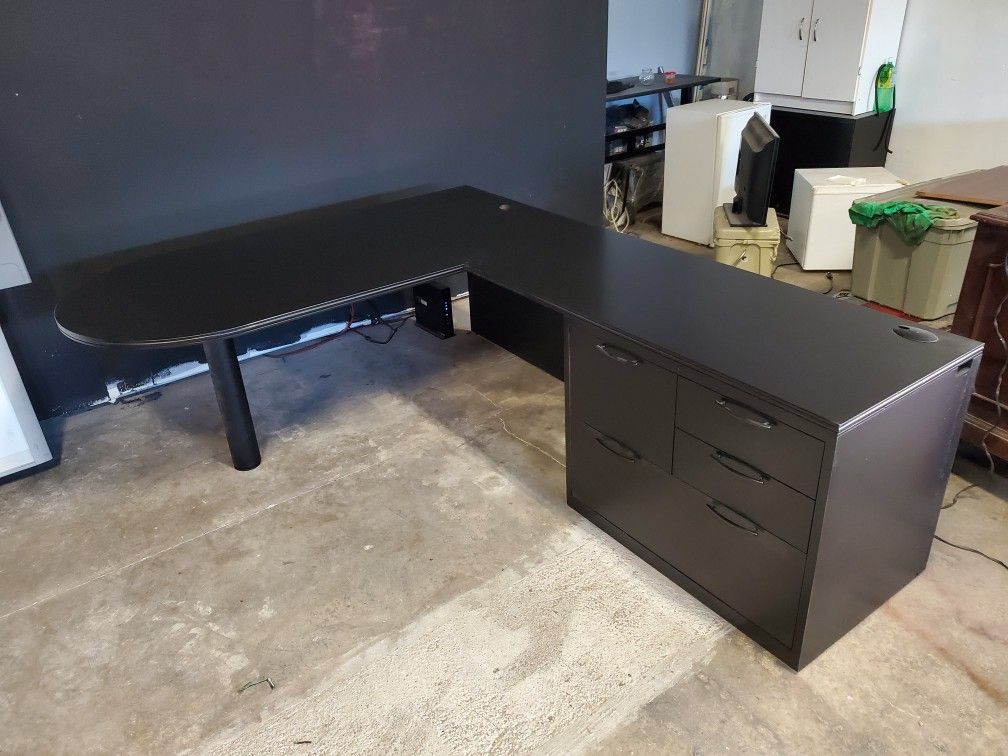
One of the biggest advantages of an L-shaped desk is its ability to fit snugly into corners. This design allows users to reclaim areas that would otherwise remain unused, especially in small rooms or apartments. Instead of pushing furniture against walls and leaving gaps, the desk becomes an integrated part of the room’s geometry.
This makes an L-shape office desk particularly appealing for compact home offices, studio apartments, and shared workspaces where efficiency is critical.
More Work Surface Without a Bigger Footprint
Despite offering significantly more usable surface area, L-shaped desks often occupy no more floor space than a large rectangular desk. The perpendicular layout distributes work zones logically—one side can be dedicated to computer work, while the other supports writing, reading, or secondary equipment.
This balance allows users to spread out without feeling crowded or cluttered.
Productivity Benefits Backed by Ergonomic Principles
Productivity experts frequently highlight the importance of visual organization. When tools and tasks are grouped logically, the brain expends less energy switching contexts. L-shaped desks naturally support this by creating distinct zones.
For example:
- One side for digital work and monitors
- One side for paperwork, planning, or creative tasks
This separation helps reduce cognitive overload and keeps essential items within easy reach.
Reduced Movement, Increased Efficiency
Reaching for documents, swiveling between screens, or shifting from typing to writing becomes smoother when everything is positioned around you. The L-shape minimizes unnecessary movement, which not only improves efficiency but also reduces physical strain over long work sessions.
Ergonomists widely agree that minimizing repetitive twisting and overreaching supports long-term comfort and posture—key factors in sustained productivity.
Ideal for Multitasking and Technology-Heavy Setups
Many professionals now work with two or more monitors, laptops, tablets, and peripheral devices. A standard desk can quickly feel cramped under this load. L-shaped desks provide ample space for multiple screens while leaving room for keyboards, notebooks, and accessories.
This is especially valuable for roles such as designers, developers, analysts, and content creators who rely on multi-screen workflows.
Because of their larger surface and often modular designs, L-shaped desks tend to offer better cable management options. Keeping cords organized and devices spaced appropriately contributes to both safety and mental clarity—an often overlooked aspect of productivity.
Flexibility for Different Work Environments
Home offices often serve multiple purposes, from focused work to virtual meetings. An L-shaped desk allows users to maintain a professional setup without dominating the room. One side can face a wall for deep work, while the other can be positioned to create a clean, camera-friendly background for calls.
In professional environments, L-shaped desks are commonly used in managerial offices, open-plan layouts, and collaborative spaces. Their design supports both individual focus and light collaboration, making them adaptable to various roles and team structures.
Facilities planners appreciate their modularity, as many models can be mirrored, expanded, or combined with storage units.
Storage and Organization Advantages
Many L-shaped desks incorporate drawers, shelves, or return units that extend from one side. This integrated storage keeps essential items close without requiring additional furniture, further saving space.
A tidy workspace is consistently linked to better concentration and reduced stress, according to organizational psychology research. By making storage part of the desk itself, L-shaped designs support cleaner, more efficient work habits.
The extended surface allows users to keep active projects visible without stacking or overcrowding. This supports better task tracking and reduces the likelihood of misplaced documents or tools.
Aesthetic and Design Versatility
From minimalist modern designs to traditional wood finishes, L-shaped desks are available in a broad range of aesthetics. This versatility makes it easier to match the desk to existing décor, whether in a home office or a professional setting.
In open or multi-use rooms, an L-shaped desk helps visually define the workspace. This subtle boundary can improve mental separation between work and personal life—an increasingly important consideration for remote workers.
Conclusion
L-shaped office desks have earned their popularity not through novelty but through practicality. They address some of the most common workspace challenges: limited space, increasing technology demands, and the need for better organization. By maximizing surface area, supporting ergonomic principles, and fitting naturally into modern layouts, they offer a solution that enhances both productivity and comfort.
Whether you’re optimizing a small home office or designing a professional workspace, an L-shaped desk provides flexibility, efficiency, and long-term usability. In a world where how we work continues to evolve, choosing furniture that adapts with us isn’t just smart—it’s essential.