
Ways to Create Private Outdoor Sanctuaries in Hills Properties Without Blocking Views
Hills properties come with a specific design tension that flat suburban blocks do not have. The view is the reason the property was chosen. The view is also the reason that privacy is difficult. Every direction that provides the outlook also provides a line of sight back into the property from somewhere else. Living in a fishbowl with a nice backdrop is not the sanctuary most hills buyers had in mind.
Solving this without simply blocking the view requires a more layered approach than most fencing decisions involve.
1. Privacy and Views Are Not Mutually Exclusive, But They Require Planning
The instinct when privacy is needed is to put up a fence. Solid fence, privacy solved, view gone. The alternative is to think about where privacy is actually needed and from which specific angles. A hill’s property, overlooked from the north by a neighbouring property on a higher level, needs a very different solution from one that needs screening from a road to the east.
Working with fencing contractors who have experience on sloped and elevated sites is the starting point. The challenges on a hill block, getting posts into sloped ground, managing retaining requirements, specifying materials that perform in elevated and exposed conditions, are different from a flat suburban fence job. Fencing contractors who work primarily on flat sites will solve those challenges eventually. The ones who work on hill sites regularly solve them correctly the first time.
2. Planting Creates Privacy Without Creating Walls
Strategic planting is the privacy solution that gets better with time rather than weathering with it. A correctly positioned screen planting at the right height for the specific angle of overlooking creates privacy that feels natural rather than constructed. It also moves in the wind, which a fence does not, and that movement is part of what makes an outdoor space feel like a sanctuary rather than an enclosure.
The limitation of planting is time. A hedge that will eventually provide full screening needs to be planted years before the screening is needed. The properties that have lush, established privacy planting are almost universally the ones where someone planted with patience rather than waiting until the problem became urgent.
3. Solar Positioning Affects How the Sanctuary Actually Gets Used
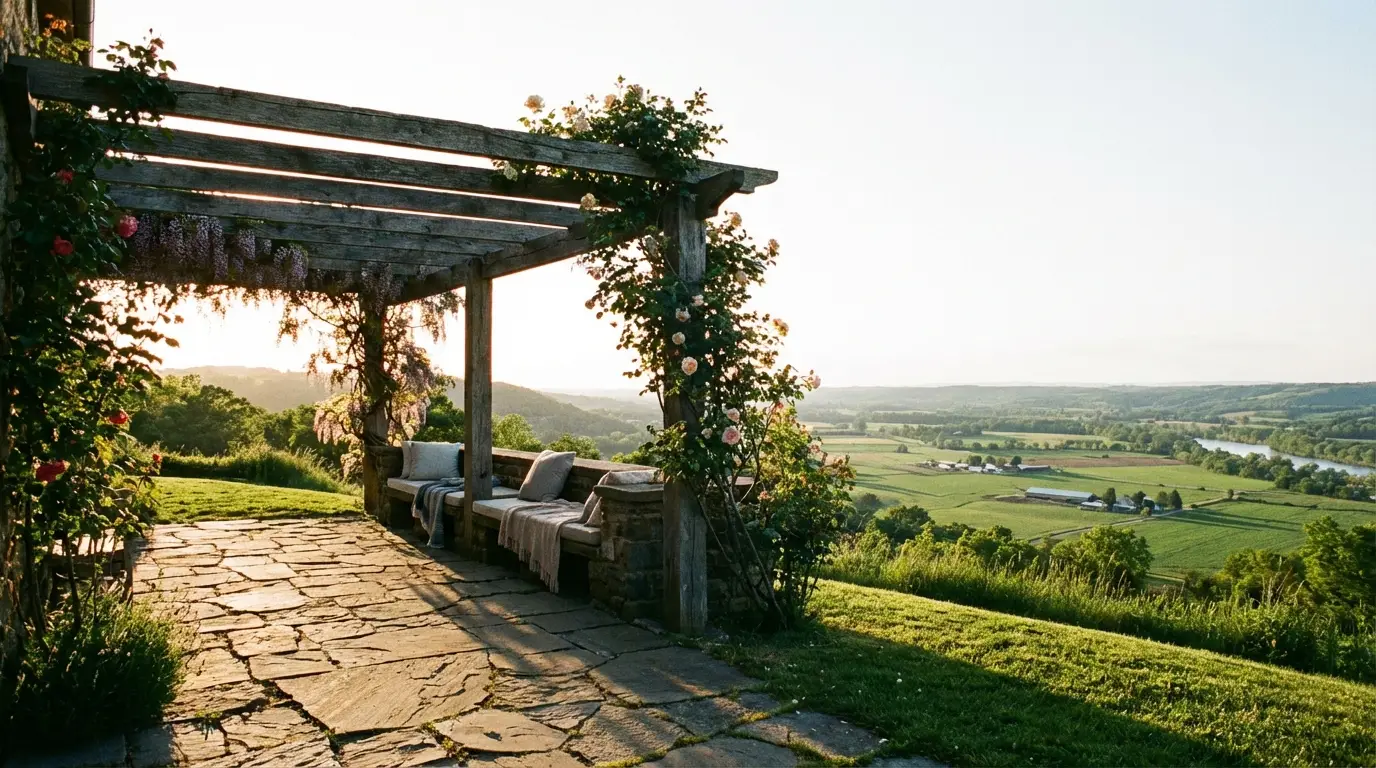
An outdoor sanctuary that faces the wrong direction for the sun, or that has no shade where it is needed in the afternoon, is a sanctuary that gets used for about three weeks in the year when the conditions happen to be right. Sun position relative to the outdoor space affects where shade structures need to go, which direction seating should face, and how the space performs across the seasons.
Solar panels on hills properties often benefit from the same assessment. A solar installation that accounts for the site’s specific elevation, orientation, and any shading from surrounding vegetation or structures performs considerably better than one positioned by default. Having the solar analysis done early in the project also reveals information about sun angles that informs the outdoor sanctuary design itself.
4. Levels Are an Asset on a Hills Block
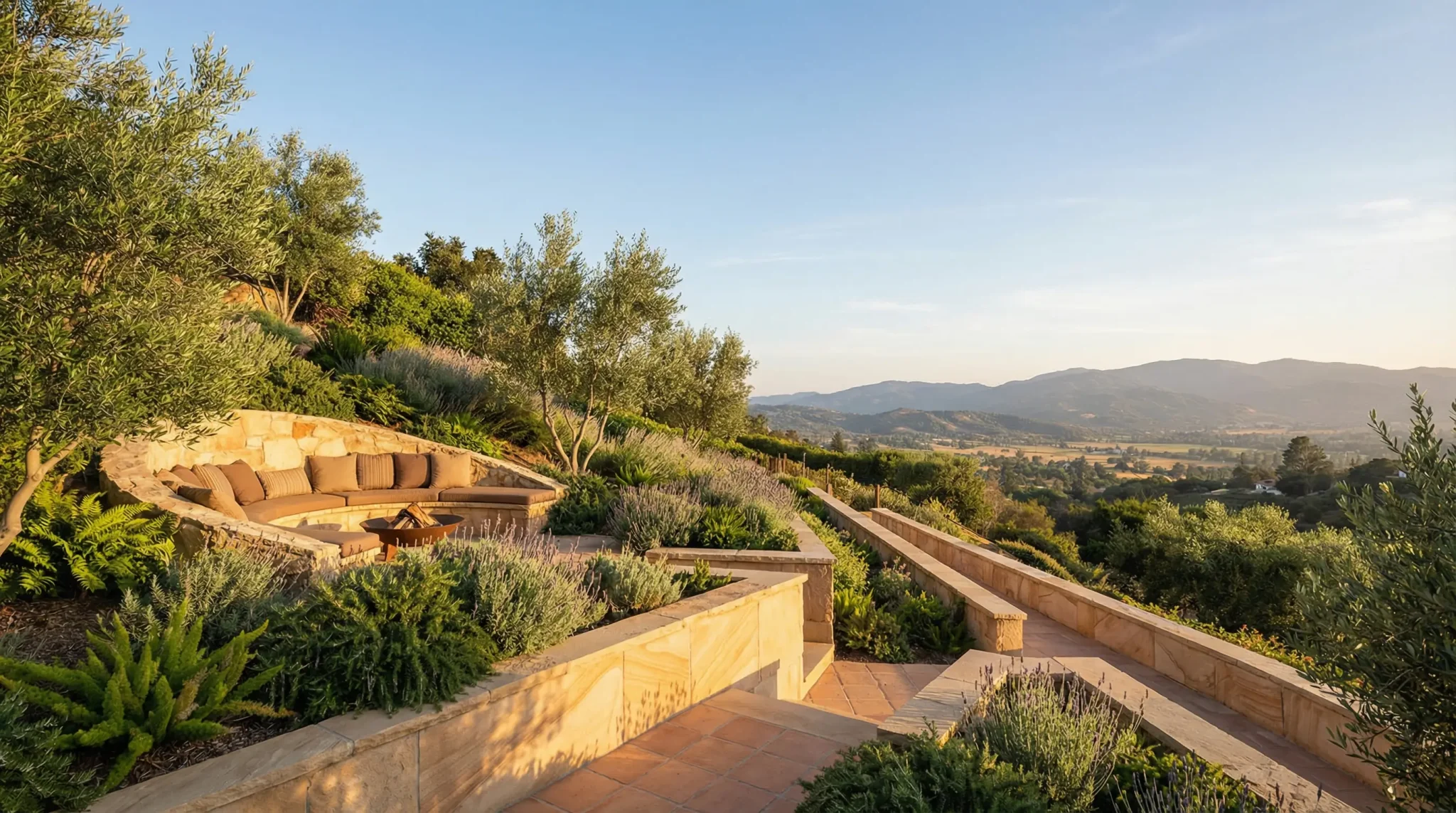
Flat land gets a single outdoor space. A hills block with changes in level gets the opportunity for several. A lower terrace that is screened from above by the retaining that creates the upper terrace. A seating area tucked into a change in level that feels sheltered without any fence being involved. These spatial moves create privacy through topography rather than through barrier.
Fencing contractors working on hills sites regularly deal with retaining as part of the fencing brief. The retaining wall that holds a terrace in place can also function as the privacy screen for that terrace. Two problems, one structure, if the design accounts for it from the start.
Conclusion
Privacy on a hills property does not require sacrificing the view that made the property worth buying. It requires understanding which angles actually need addressing, working with fencing contractors experienced on elevated sites, using planting strategically, positioning outdoor spaces relative to solar movement, and using the levels the site provides rather than fighting them.


