11 Types of Ceiling Cracks with Pictures: Causes & Fixes
Have you noticed cracks in your ceiling and wondered if they’re a serious problem or just a cosmetic issue?
Ceiling cracks are common, but understanding the cause and type can help you decide whether to fix them yourself or call a professional.
In this guide, I’ll walk you through identifying different types of ceiling cracks, what causes them, and whether you should handle repairs or seek expert help.
By the end, you’ll know exactly what to look for and how to address those cracks with confidence. Ready to dig in and learn more.
Types of Ceiling Cracks You Should Know About
Ceiling cracks vary in appearance and cause. Understanding each type helps identify its severity and whether repair is needed.
1. Hairline or Drywall Cracks
Thin, fine lines that often appear along ceiling seams or corners. These are mostly surface-level and don’t indicate structural problems.
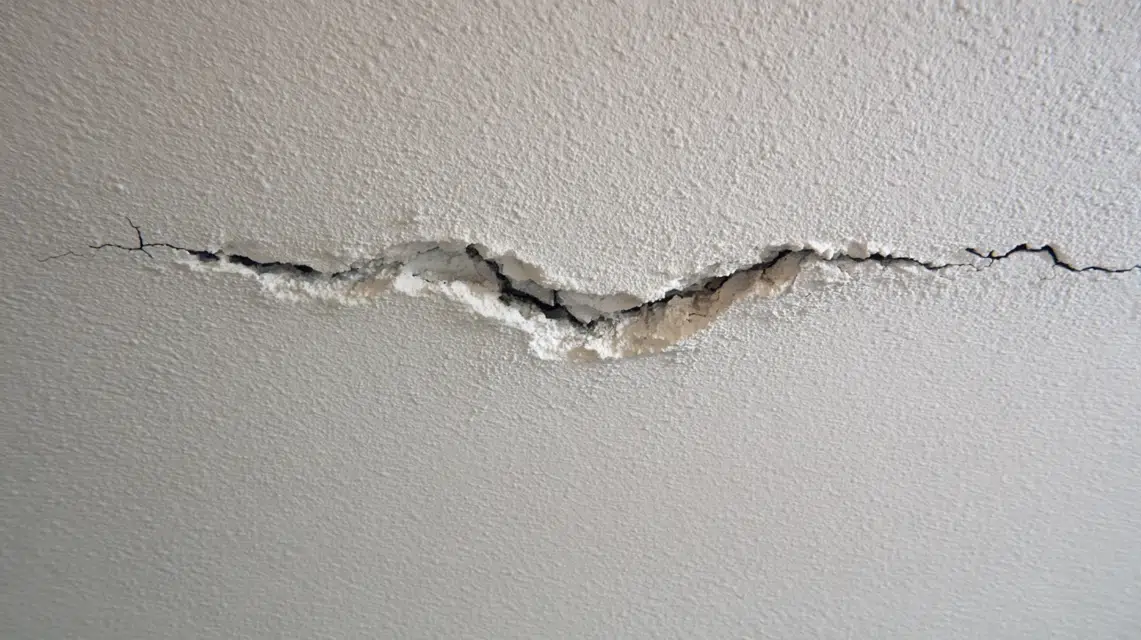
Causes:
- Natural settling in new homes
- Changes in humidity or temperature
- Improper drywall installation or joint taping
Fix: For small cracks, apply joint compound or spackle, sand smooth, and repaint. For recurring cracks, use mesh tape before applying compound to strengthen the seam.
2. Plaster Cracks
Narrow to medium cracks in older plaster ceilings, sometimes spreading out like spider webs.
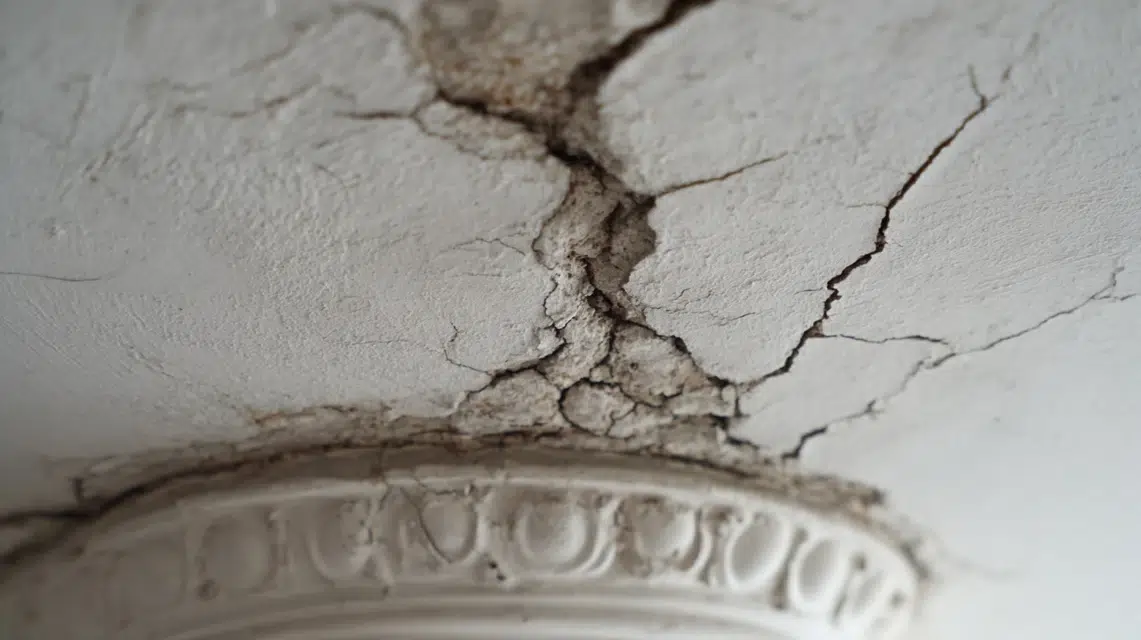
Causes:
- Aging and drying plaster
- Vibration from doors or nearby traffic
- Separation between plaster and wooden lath underneath
Fix: Clean out loose debris, apply plaster adhesive or bonding agent, and patch with new plaster mix. In large or repeated cases, consider re-plastering or replacing sections of the ceiling.
3. Expansion Cracks
Hairline cracks that appear randomly across the ceiling surface, often visible after seasonal weather changes.
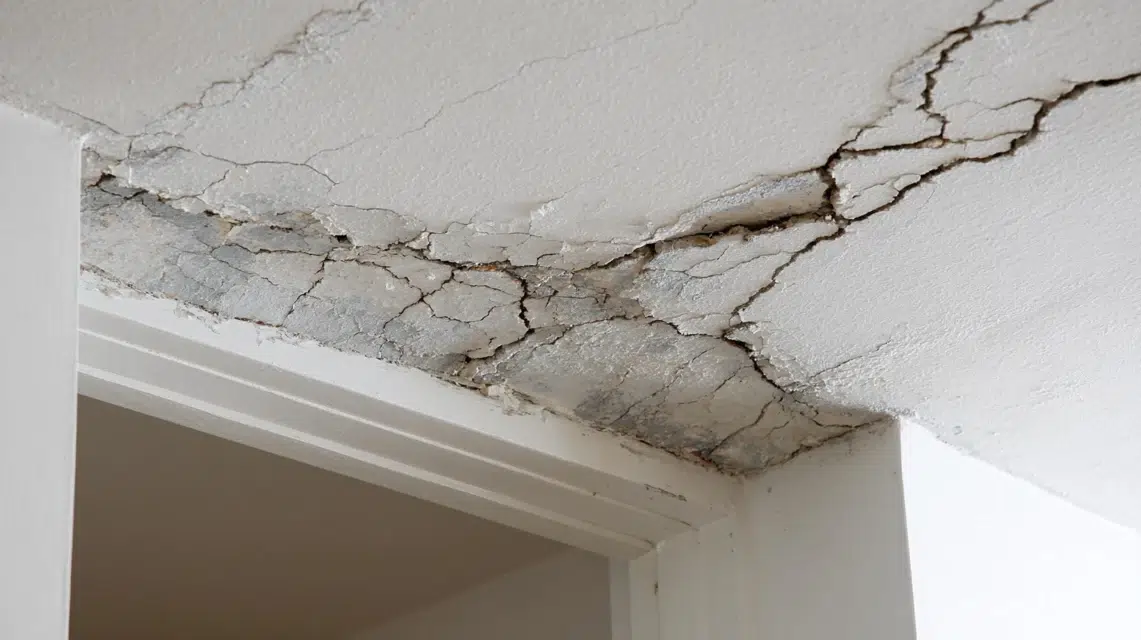
Causes:
- Expansion and contraction of ceiling materials
- Poor insulation or ventilation
- Large swings in indoor humidity
Fix: Seal cracks with flexible filler that can handle movement, then repaint using high-quality ceiling paint. Adding insulation and keeping humidity stable helps prevent future cracks.
4. Diagonal Cracks
Cracks that run at a 45° angle from corners or edges, often connecting walls and ceilings.
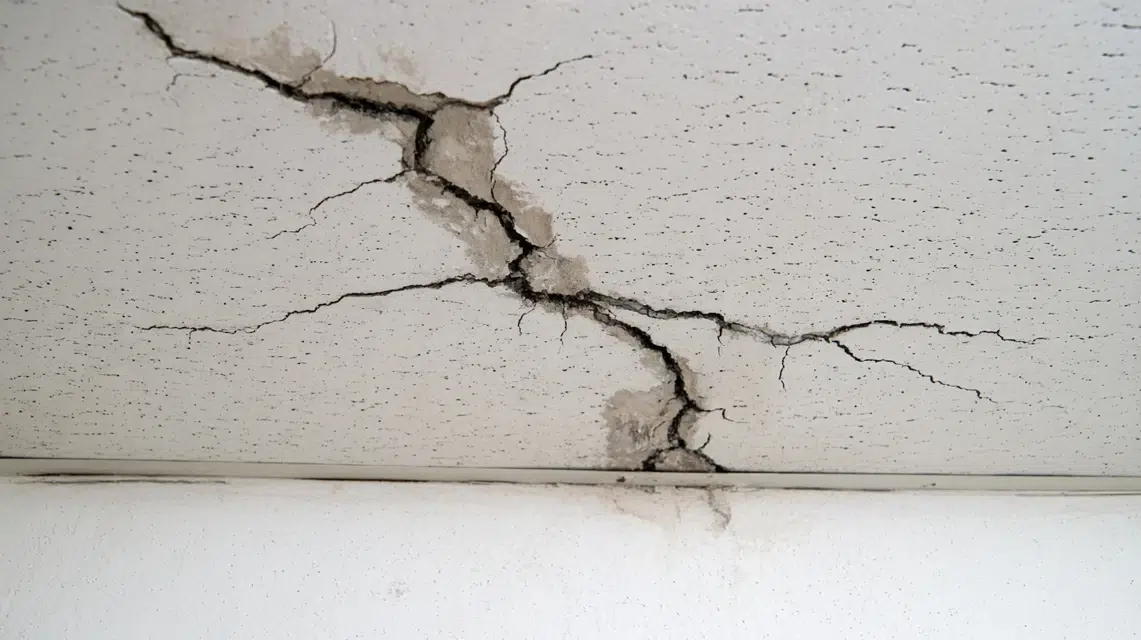
Causes:
- Minor foundation settlement or shifting
- Uneven weight distribution in the structure
- Framing stress after temperature changes
Fix:
If cracks are less than 1/8 inch wide, patch them with drywall compound. Larger or widening cracks should be inspected by a contractor to rule out foundation movement.
5. Circular Cracks
Round or ring-shaped cracks around ceiling fixtures like fans, lights, or vents.
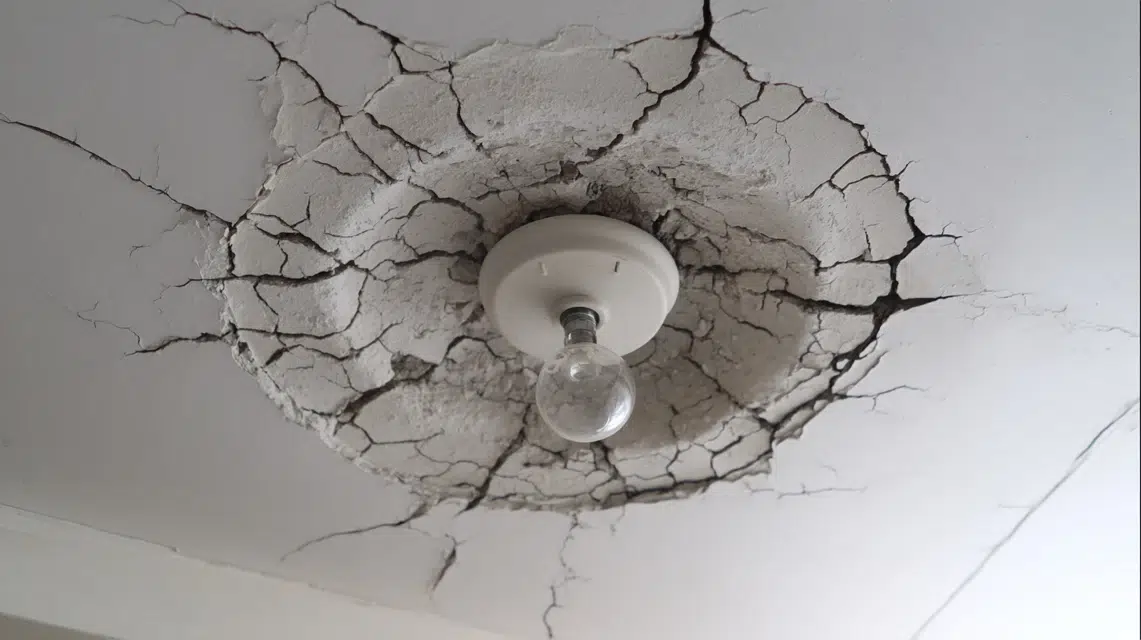
Causes:
- Stress from fixture vibration or weight
- Loose mounting hardware
- Minor ceiling movement during settling
Fix: Tighten fixture mounts and reinforce with drywall anchors if needed. Patch cracks with joint compound, sand smooth, and repaint. For wider cracks, use mesh tape before applying filler.
6. Settlement or Foundation Cracks
Cracks near walls, corners, or across ceiling joints that often widen over time.
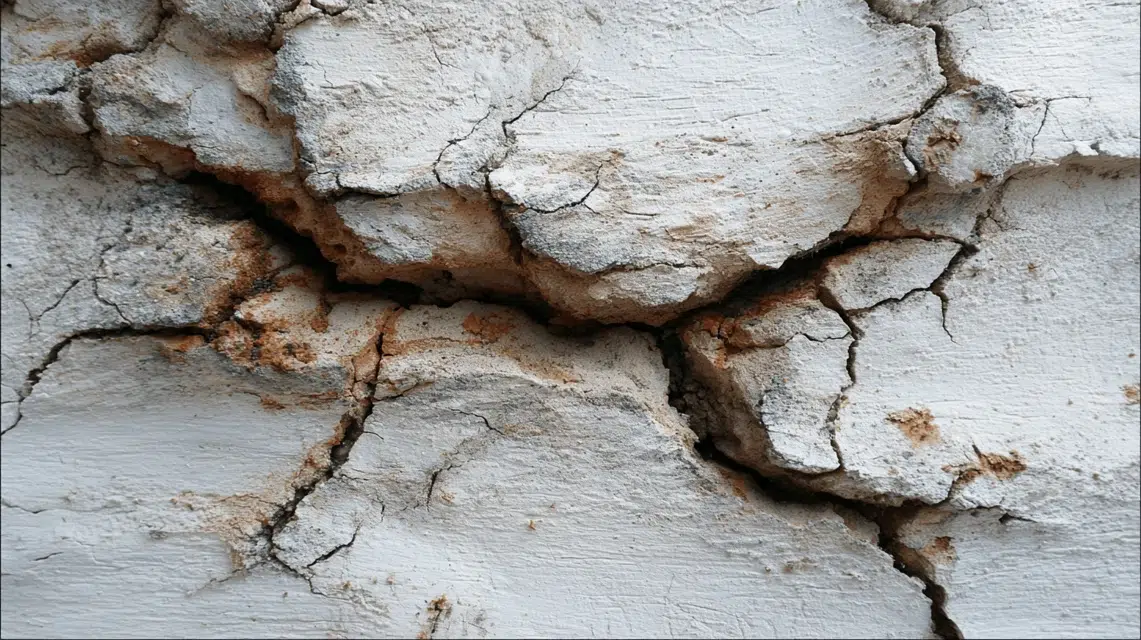
2
Causes:
- Foundation settling or shifting soil
- Poor construction or soil compaction
- Seasonal ground movement
Fix: Monitor the crack for growth. If it widens or new cracks form, call a structural engineer or foundation specialist. Minor cracks can be patched with compound after confirming there’s no active movement.
7. Cracks Around Door Frames or Walls
Ceiling cracks are appearing near door frames or where the ceiling meets walls.
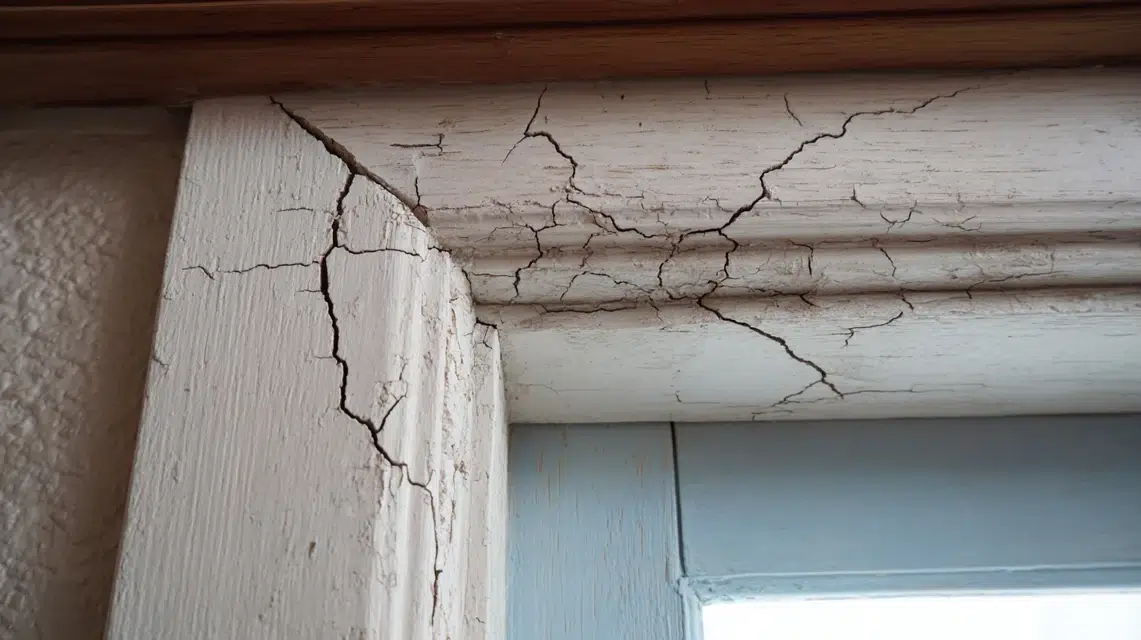
Causes:
- Building movement or settling
- Drywall stress near openings
- Foundation shifts affecting structural alignment
Fix: If the crack is small and stable, repair with joint compound. If accompanied by uneven doors or sticky frames, seek professional inspection to ensure the structure hasn’t shifted.
8. Moisture-Related Cracks
Ceiling cracks that appear with stains, discoloration, or bubbling paint.
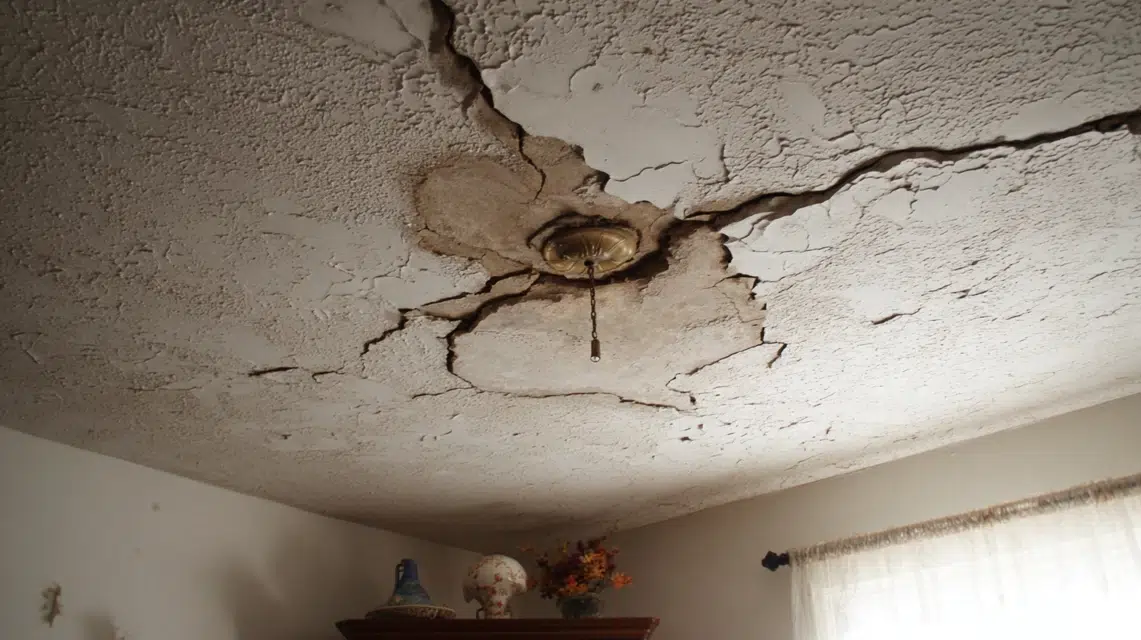
Causes:
- Leaks from the roof, pipes, or HVAC units
- Long-term humidity or condensation buildup
- Poor ventilation in bathrooms or kitchens
Fix: First, locate and fix the source of the moisture. Let the ceiling dry completely, then scrape away damaged paint. Use a stain-blocking primer and patch with joint compound before repainting.
9. Sagging or Bulging Ceilings
Visible drooping or curved ceiling areas are often accompanied by wide cracks.
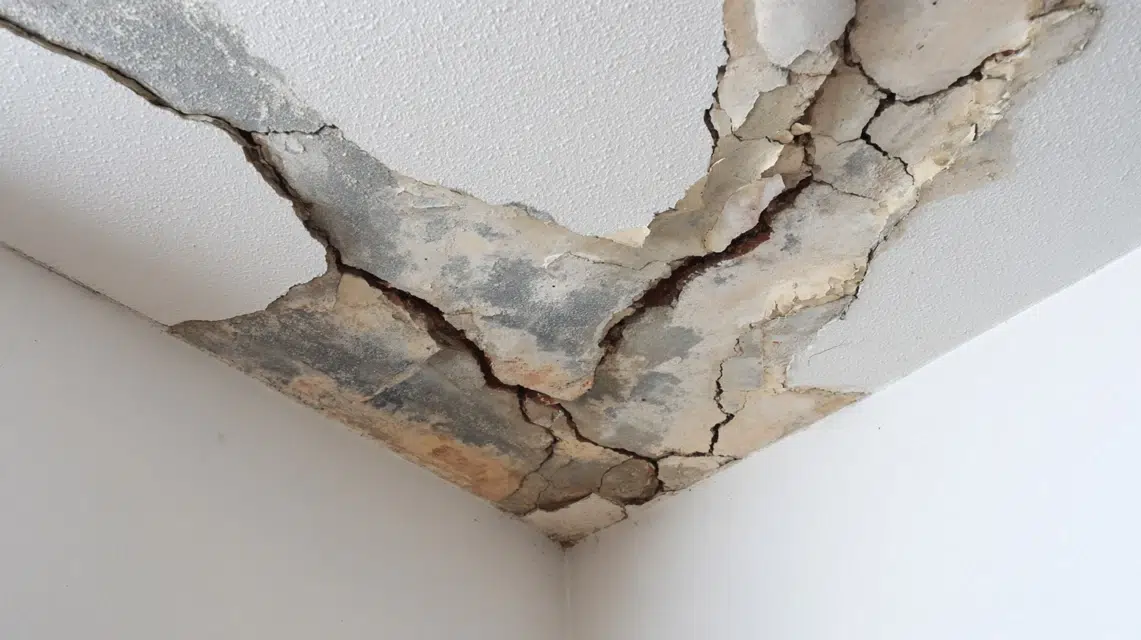
Causes:
- Water damage from leaks
- Weak or damaged ceiling joists
- Heavy insulation or fixture weight pulling down the surface
Fix:
Immediate attention is required. Remove damaged ceiling material, repair or reinforce joists, and replace the weakened section. Always consult a contractor if sagging is significant or worsening.
10. Cracks Around Fixtures
Small cracks radiating from ceiling lights, fans, or vents.
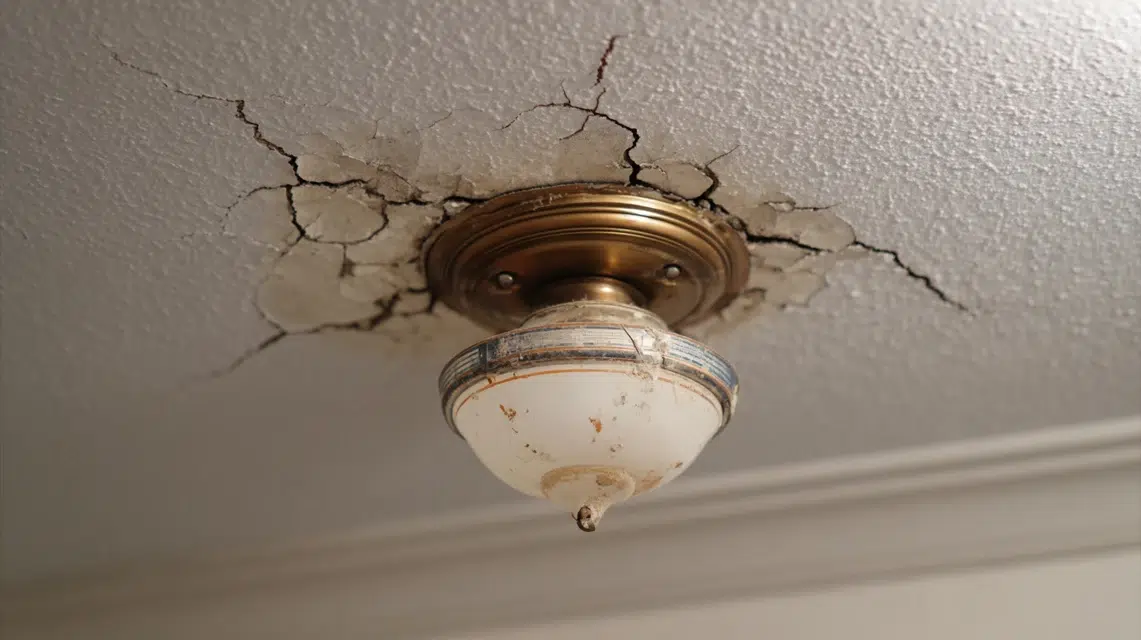
Causes:
- Vibration or movement from heavy fixtures
- Improper installation or mounting pressure
- Expansion from the heat generated by the lights
Fix: Secure the fixture properly and ensure there’s no strain on the ceiling material. Patch cracks using lightweight filler, smooth the area, and repaint once dry.
11. Pest-Related Cracks
Random cracks with signs of wood damage or tiny holes nearby, sometimes accompanied by droppings or debris.
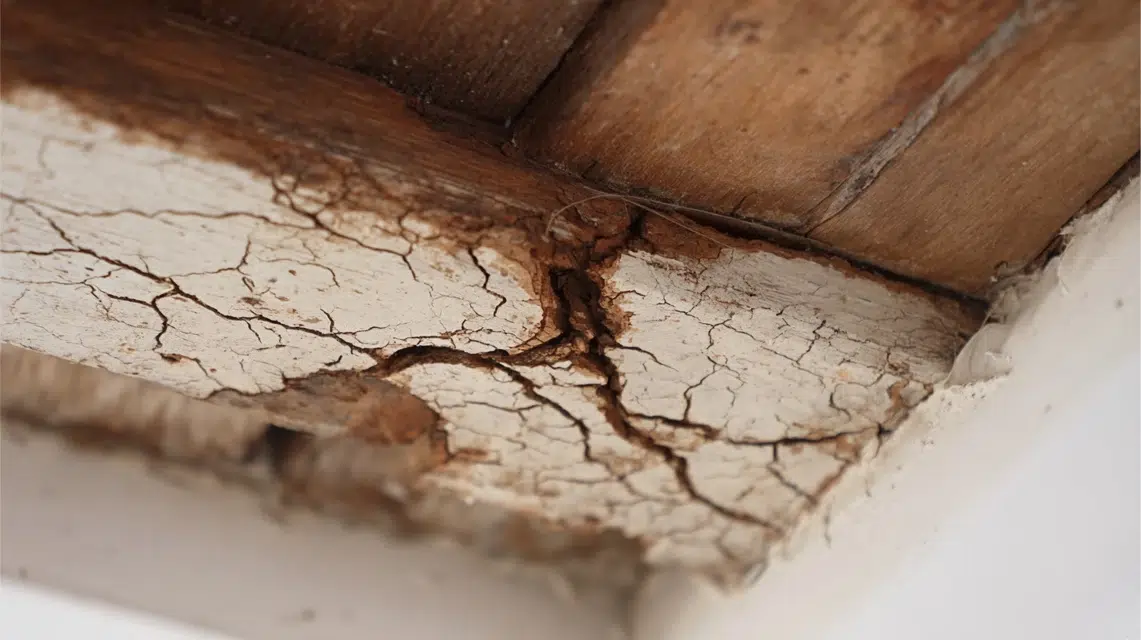
Causes:
- Termites, carpenter ants, or rodents are damaging wooden supports
- Moisture-attracted pests weakening the structure
- Long-term neglect or hidden infestations
Fix: Call a pest control professional immediately to treat the infestation. Once resolved, repair damaged wood or drywall sections and reseal the area to prevent reinfestation.
When to Worry About Ceiling Cracks
Understanding the difference between superficial and structural cracks helps determine when to worry and when to take action.
Superficial Cracks vs. Structural Cracks
| Feature | Superficial Cracks | Structural Cracks |
|---|---|---|
| Appearance | Small, thin, and usually hairline in width | Larger, wider, and may appear suddenly |
| Cause | Natural settling, humidity, or temperature changes | Foundation movement, water damage, or load stress |
| Location | Commonly found on drywall seams or corners | Often near walls, beams, or load-bearing areas |
| Severity | Mostly cosmetic, not a threat to the structure | Can indicate serious structural problems |
| Progression | Remain stable over time | Widen or spread if the issue continues |
| Action Needed | Simple patching or repainting | Professional inspection and repair recommended |
Signs You Need Professional Help
You should contact a professional if you notice any of the following:
- Cracks that are large or widening quickly over time
- Cracks appearing in structurally stressed areas such as corners, around beams, or near fixtures
- Bulging or sagging ceilings, which may indicate weakened support or water damage
- Cracks accompanied by moisture, stains, or discoloration on the ceiling surface
- Repeated cracking in the same area, even after DIY repairs
- Uneven walls, sticking doors, or warped frames near the cracks; often signs of foundation movement
DIY fixes may hide the problem temporarily, but only a professional can determine if there’s a deeper structural or moisture issue that needs repair.
Conclusion
Ceiling cracks can be unsettling, but now you know how to assess them and determine whether a DIY fix will work or when to call a professional.
If you’re dealing with minor cosmetic cracks or serious structural issues, taking early action can prevent further damage.
Keep in mind that not all cracks are the same; some are harmless, while others may need your immediate attention.
If you found this guide helpful, be sure to check out more of my content on home maintenance tips. Don’t wait, take action now to keep your ceiling safe and secure.