What Is a Tray Ceiling and Should You Add One?
Tired of plain, flat ceilings? A tray ceiling adds instant depth and luxury to any room.
This architectural feature makes spaces feel larger, creates stunning lighting opportunities, and offers a lot of customization options.
This blog covers everything about what is a tray ceiling, including master bedroom tray ceiling ideas, from how they’re built to costs and design ideas, so you can decide if this upgrade is right for your home.
What Is a Tray Ceiling and How Is It Built?
A tray ceiling is a recessed design where the center sits higher than the edges, creating an upside-down tray effect that adds depth and makes rooms feel larger.
Most rise 6 to 18 inches above the border and work beautifully in bedrooms, dining rooms, and living rooms.
Builders create them by framing two ceiling levels, lower joists around the perimeter, and higher joists in the center.
The space between, called the “reveal,” gets bridged with vertical framing, then covered with drywall and paint.
You can add molding for extra style or keep it simple.
Adding one to an existing home requires removing your current ceiling and modifying the framing, which only works if you have attic space above.
Benefits of a Tray Ceiling
Tray ceilings add depth and visual interest to any room while making spaces feel larger, brighter, and more upscale without major renovations.
- Creates the Illusion of Height: The raised center draws your eyes upward, making rooms feel larger and more open without changing the actual structure.
- Adds Architectural Interest: Tray ceilings break up flat, boring ceilings with depth and dimension, giving your space a custom, high-end look.
- Provides Better Lighting Options: The recessed center is perfect for chandeliers, recessed lights, or LED strips. Hide indirect lighting in the reveal for a soft, luxurious glow.
- Boosts Home Resale Value: Buyers see tray ceilings as premium features, especially in master bedrooms and dining rooms where sophistication matters.
- Offers Design Flexibility: Paint the center a different color, add crown molding, or keep it minimalist. Tray ceilings work with any style from modern to traditional.
Master Bedroom Tray Ceiling Ideas
Upgrade your master bedroom into a luxurious retreat with tray ceiling designs that add drama, ambient lighting, and architectural character above your bed.
1. Soft Cove Lighting
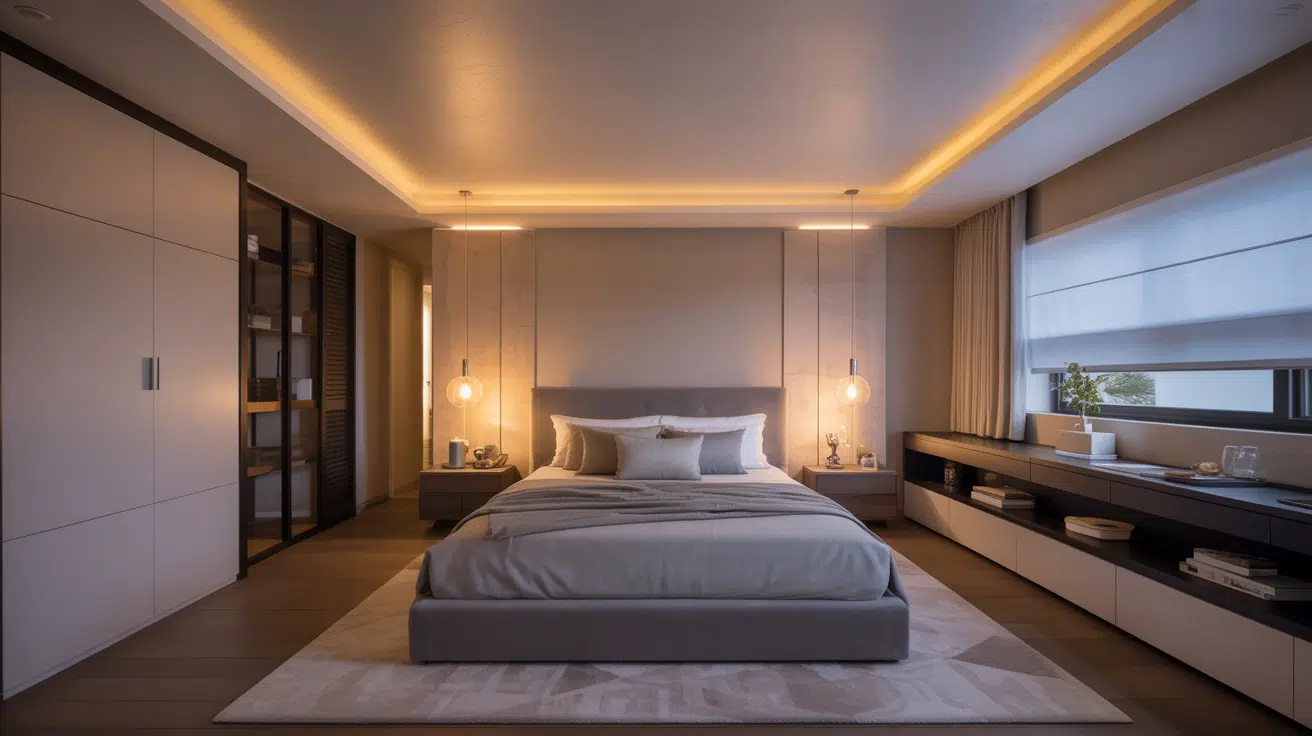
Hide LED strip lights around the tray’s perimeter for a warm, ambient glow that transforms your bedroom into a spa-like retreat.
This indirect lighting creates a floating ceiling effect without harsh overhead glare.
It’s perfect for setting a relaxing mood and adds a touch of luxury that makes your master suite feel like a five-star hotel.
2. Two-Tone Color Scheme
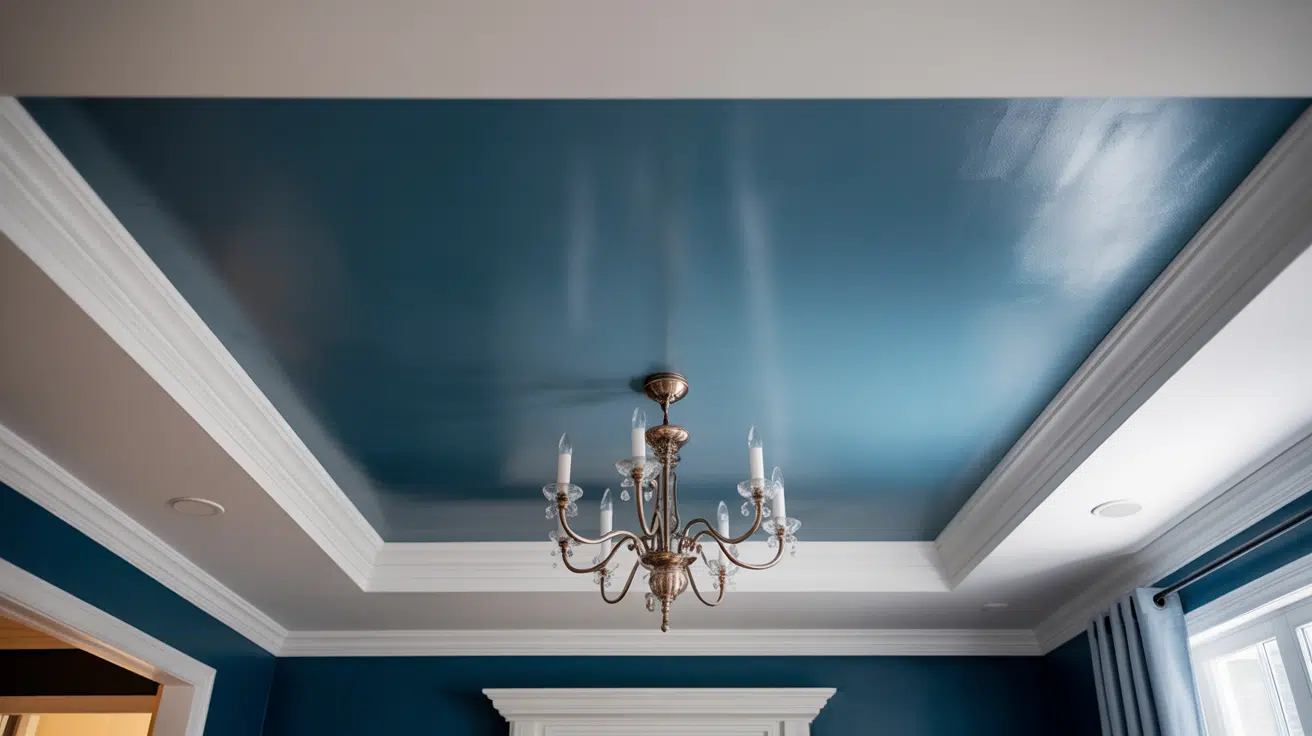
Paint the recessed center a contrasting shade to make the tray pop and add visual depth.
Try a darker hue in the center with lighter edges, or go bold with a rich navy or charcoal against white.
This simple technique highlights the architectural detail and costs almost nothing to achieve.
3. Wood-Inlay Tray Ceiling
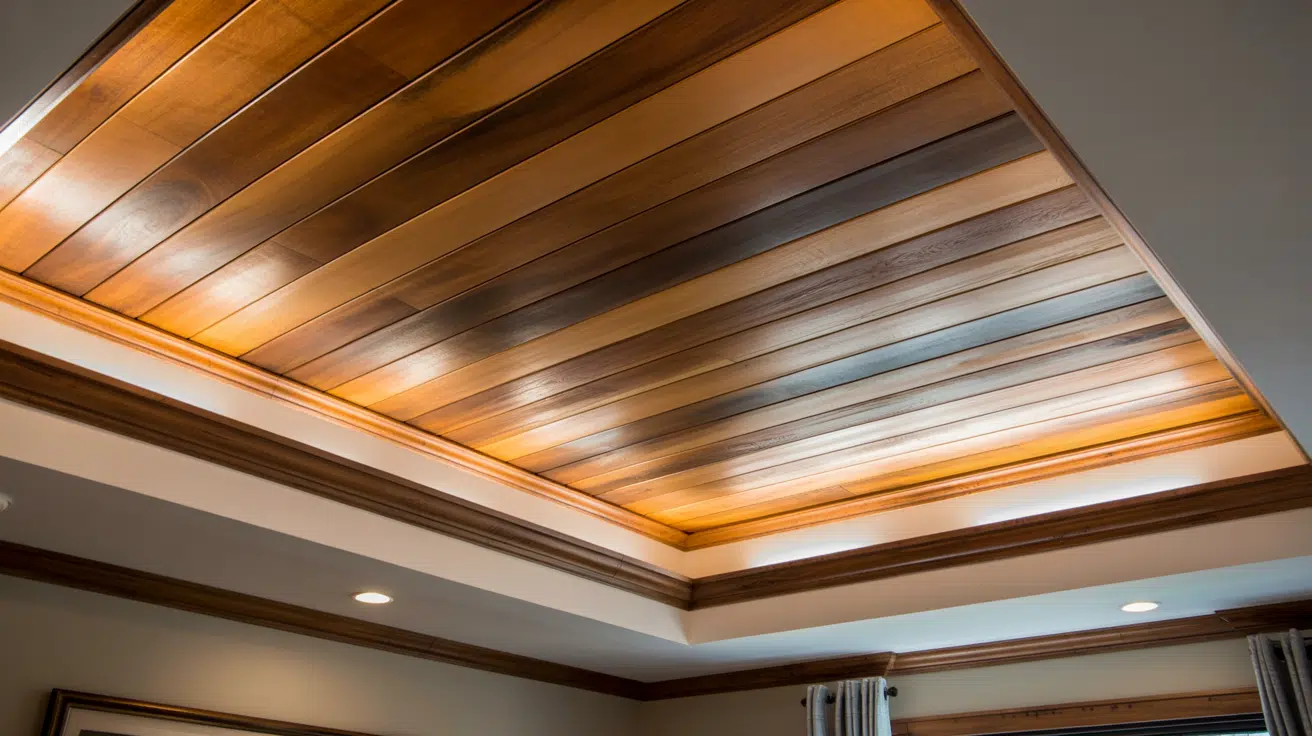
Install wood planks, shiplap, or decorative paneling inside the tray for natural warmth and texture.
The wood grain adds character and makes the ceiling feel custom-designed rather than builder-grade.
Choose stained wood for rustic charm or painted planks for a coastal or farmhouse vibe.
4. Double Tray Ceiling
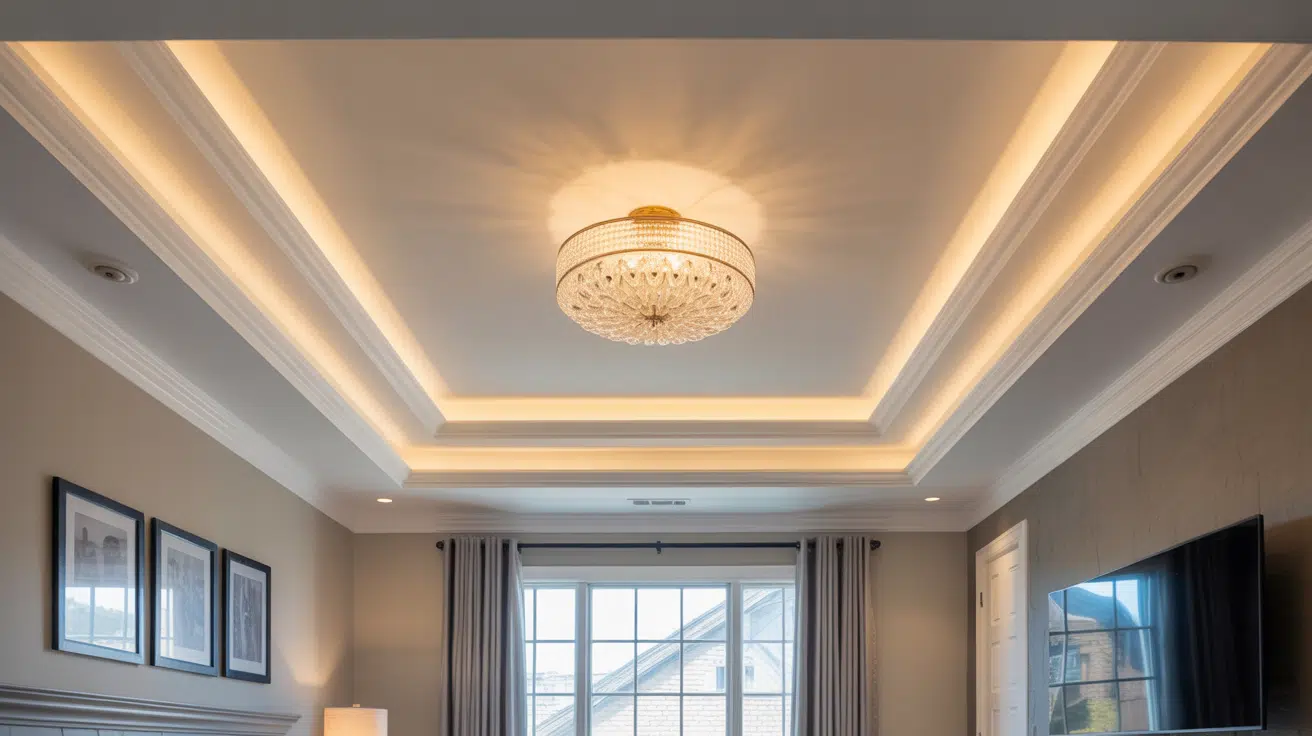
Stack two tray levels for dramatic height and maximum visual impact. The layered effect creates serious depth and makes even standard ceilings feel grand.
This works beautifully in larger master bedrooms where you want to make a bold architectural statement.
5. Statement Chandelier
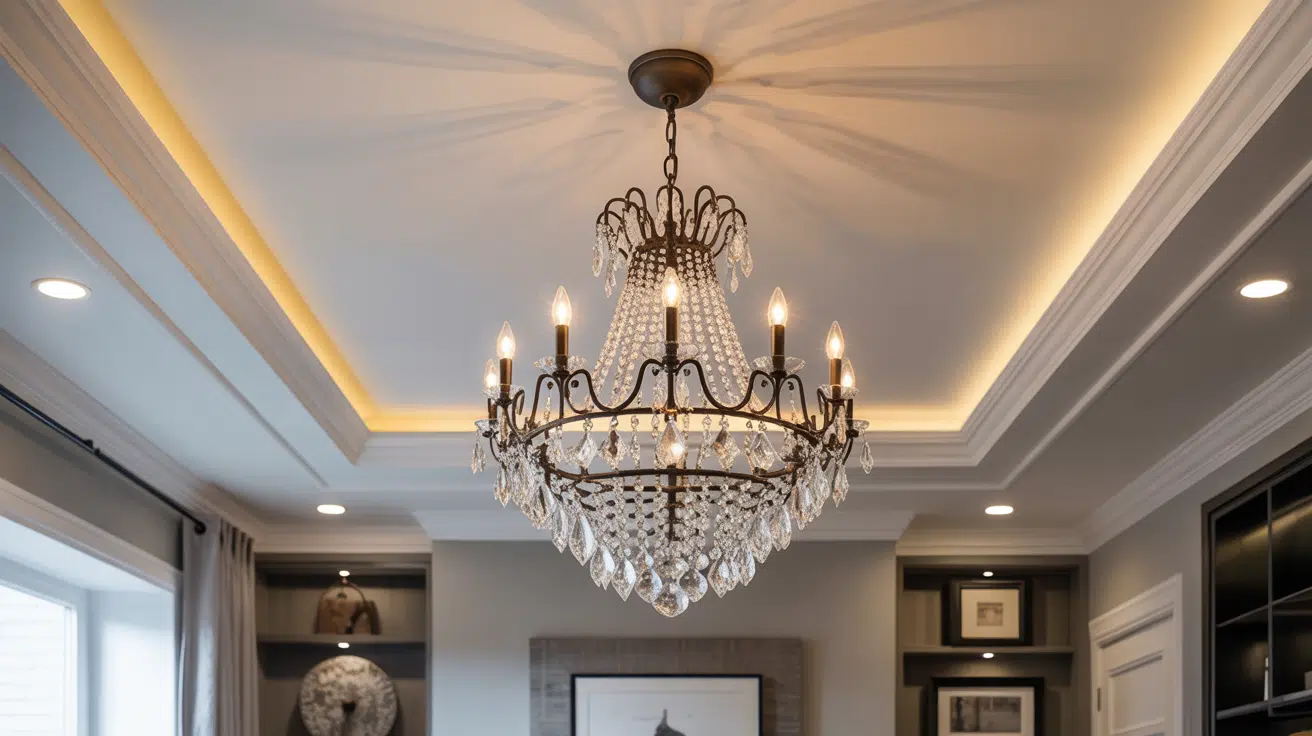
Hang a show-stopping chandelier or oversized pendant in the tray’s center to create an instant focal point. The recessed area frames the fixture perfectly and draws eyes upward.
Choose crystal for glamour, modern geometric shapes for contemporary spaces, or rustic iron for farmhouse style.
6. Minimalist Shallow Tray
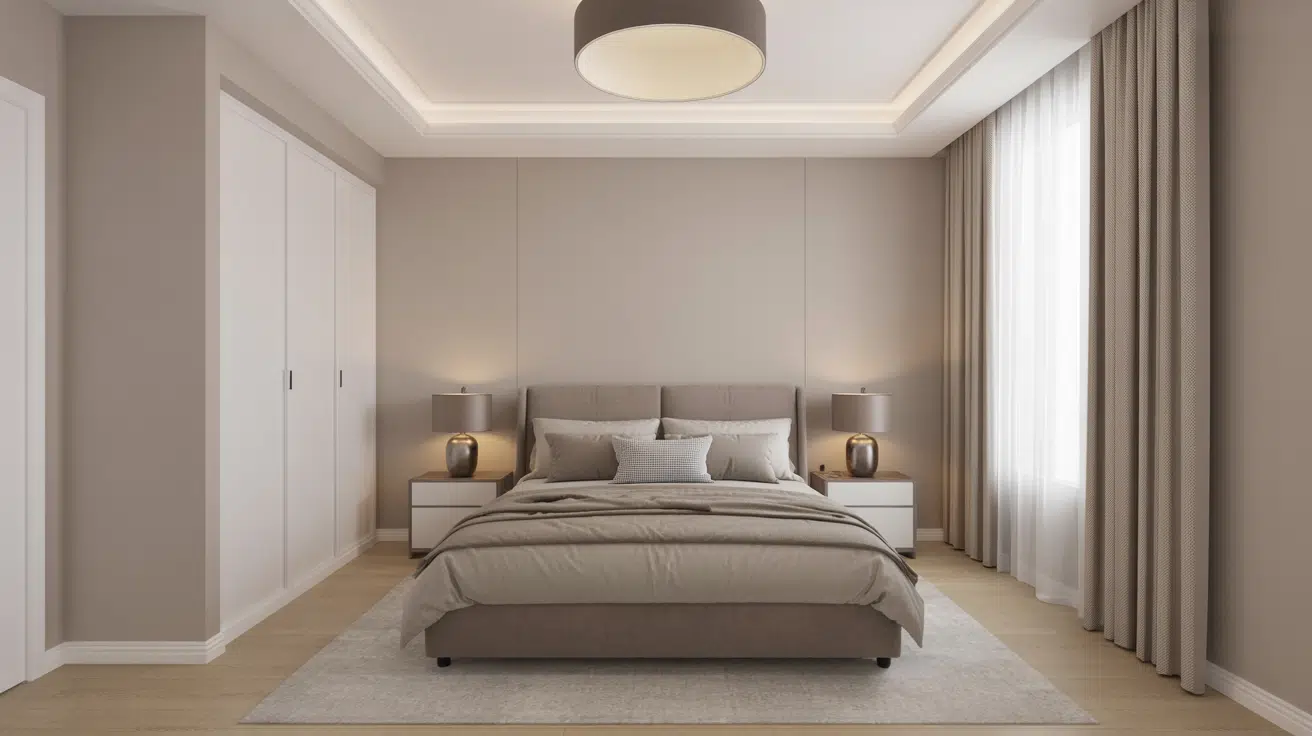
Keep it simple with a subtle, low-profile tray and clean lines for modern bedrooms.
Skip heavy crown molding and ornate details in favor of smooth transitions and neutral paint.
This understated approach adds dimension without overwhelming minimalist or Scandinavian-inspired spaces.
7. Accent Wallpaper or Texture
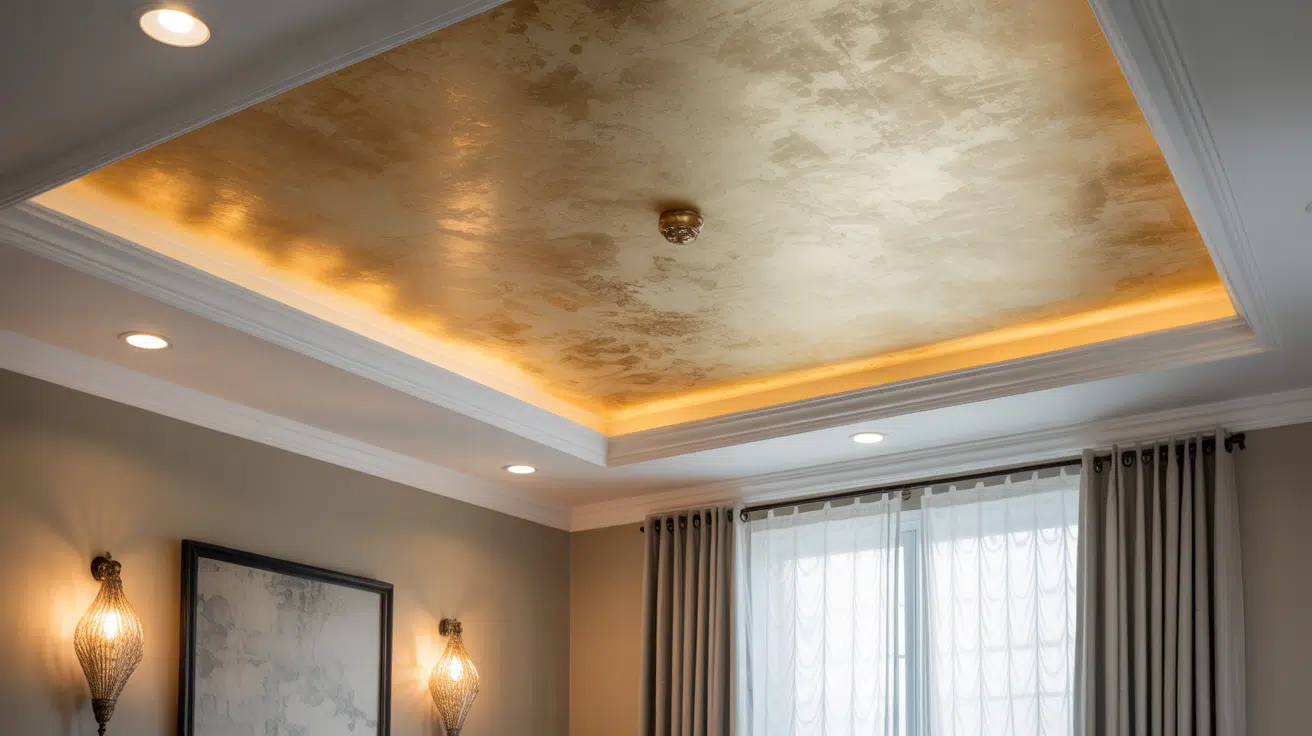
Apply patterned wallpaper, textured paint, or decorative plaster inside the tray to create visual interest.
Metallic wallpapers catch light beautifully, while subtle textures add depth without being too busy.
This technique turns your ceiling into a true design feature that guests will notice immediately.
Tray Ceiling Drawbacks to Consider
- Higher Installation Costs: Retrofitting can cost thousands due to ceiling removal and framing modifications. Even new construction costs more than flat ceilings.
- Requires Adequate Vertical Space: You need attic clearance above. Homes with low attic space or second floors may lack the necessary room.
- Harder to Clean and Maintain: Dust collects on reveal surfaces, requiring ladders to reach. Changing recessed light bulbs becomes a climbing task.
- Doesn’t Suit Every Room: They look awkward in small spaces or low-ceiling rooms. They can clash with modern or minimalist styles.
- Painting Costs More: Multiple surfaces and angles require extra work. Professionals charge more, and DIY takes significantly longer.
- Potential for Poor Proportions: If sized incorrectly for the room, tray ceilings can look awkward or unbalanced instead of elegant.
- Reduces Insulation Space: The raised center can compress attic insulation, potentially affecting your home’s energy efficiency in that area.
Tray Ceiling vs Other Ceiling Types
| Ceiling Type | Key Feature | Pros | Cons | Typical Cost* |
|---|---|---|---|---|
| Tray Ceiling | Raised center | Adds depth and luxury | Reduces edge height, higher labor | $1,500–$5,000+ |
| Coffered Ceiling | Grid of recessed panels | Very decorative, high-end look | Expensive, needs high ceilings | $3,000–$10,000+ |
| Vaulted Ceiling | Tall sloped ceiling | Dramatic, spacious feel | Costly, harder to clean | $7,000–$20,000+ |
| Recessed Ceiling | Flat with recessed lights | Modern, simple, affordable | Less architectural interest | $500–$2,500+ |
Costs vary based on room size, materials, and labor rates.
How to Customize a Tray Ceiling
Learn simple ways to personalize your tray ceiling with paint, lighting, trim, wood accents, or texture to match any room style and create a stunning architectural focal point.
- Paint with Contrasting Colors: Use different shades in the center versus edges to create depth. Try darker tones for coziness or paint the reveal a bold accent color.
- Add Crown Molding or Trim: Install decorative molding along the edges. Choose simple profiles for modern spaces or ornate designs for traditional looks.
- Install Indirect Lighting: Place LED strips in the reveal for a soft glow. This makes the center appear to float and adds luxury.
- Incorporate Wood Planks or Beams: Add shiplap or beams inside the tray for texture. Stain for richness or paint to match.
- Apply Wallpaper or Texture: Cover the interior with patterned wallpaper or textured paint. Metallic options reflect light, while subtle textures add dimension.
- Hang a Statement Light Fixture: Install a chandelier or pendant in the center. The recessed area frames the light and draws eyes upward.
- Add Coffered Details: Install a beam grid within the raised center for maximum impact. Works beautifully in formal dining rooms.
Conclusion
Tray ceilings transform ordinary rooms into spaces with character and charm. They add height, create focal points, and offer creative freedom with lighting and design.
From subtle modern styles to dramatic details, there’s an option for every home.
That said, consider your room size, ceiling height, and budget first. If you have the space and resources, a tray ceiling boosts home value and makes everyday living feel luxurious.
Ready to upgrade your space? Start planning your tray ceiling project and turn that flat ceiling into an architectural feature you’ll love.