

Shaker Cabinets vs. Traditional: Find the Right Fit for You
Have you ever found yourself torn between the clean simplicity of shaker cabinets and the rich detail of traditional ones? You’re not alone; this is one of the most common decisions homeowners face during a kitchen remodel.
I understand how overwhelming it can feel when every choice impacts both the look and functionality of your space.
In this guide, I’ll help you compare these two cabinet styles side by side, covering everything from design features to maintenance and cost.
By the end, you’ll feel more confident about choosing what works best for you and your home.
Overview of Shaker and Traditional Kitchen Cabinets
Understand how these two classic cabinet styles differ in design, material, and practicality.
Signature Design Features
Shaker cabinets are defined by their five-piece door construction with a recessed center panel and clean, flat frame.
The minimalistic lines and lack of ornamentation give them a classic appeal that blends well with contemporary, transitional, or farmhouse kitchens.
Traditional cabinets, in contrast, feature more elaborate details, raised center panels, ornate moldings, and decorative trim.
Their craftsmanship reflects old-world elegance and is often inspired by Victorian, European, or colonial design influences.
Common Materials and Finishes
Both styles often use durable hardwoods such as maple, cherry, oak, or walnut. Shaker cabinets typically feature painted finishes in white, gray, or natural wood tones, adhering to their simple form.
Traditional cabinets tend to use darker stains, glazed finishes, or distressed treatments to highlight the intricate carvings and create a rich, formal look.
Pros and Cons of Shaker Cabinets & Traditional Cabinets
Each cabinet style has its strengths and limitations in terms of style, cost, and upkeep.
|
Style |
Pros |
Cons |
|
Shaker Cabinets |
Classic look, easy to clean, budget-friendly, versatile |
It may look plain, but recessed edges can trap dust |
|
Traditional Cabinets |
Luxurious appearance, detailed craftsmanship, and suits classic interiors |
More expensive, harder to clean, may not suit modern spaces |
Shaker Vs. Traditional Cabinets Key Differences

Understand how shaker and traditional cabinets differ in look, cost, upkeep, and compatibility with various kitchen layouts and themes.
Cost Comparison
Shaker cabinets generally cost less due to their simpler construction and minimal detailing. They offer a good balance between quality and budget, especially in larger kitchens.
Traditional cabinets may come with a higher price tag, mainly due to the added labor, trims, and custom work. The type of wood, finish, and hardware also affect the overall cost.
Homeowners should consider long-term value, not just upfront pricing, when making this decision.
Cleaning & Maintenance
Shaker cabinets are easier to wipe down because of their flat surfaces and limited grooves. They’re ideal for busy households or those seeking low-maintenance options. However, corners in the recessed panels can sometimes collect dust.
Traditional cabinets require more detailed cleaning, especially around moldings and decorative trim. This can be time-consuming, particularly in kitchens prone to grease and moisture.
Consistent upkeep helps both types maintain their appearance over time.
Suitability by Kitchen Design
Shaker cabinets blend well in open floor plans and homes with clean layouts. They match well with natural light, light-colored walls, and minimal decor.
Traditional cabinets complement kitchens with rich color palettes, detailed wood flooring, and coffered ceilings. They fit well in homes that follow formal design schemes or historic layouts.
When choosing between them, think about the surrounding elements like lighting, wall treatments, and nearby furniture.
Are Shaker Cabinets Still a Popular Choice Today?
Shaker cabinets remain a top choice, with many opting for slimmer frame versions that feel more modern and space-friendly.
Slim shaker styles feature narrower stiles and rails, giving a clean and updated appearance without losing the familiar structure.
Classic shaker designs still appeal to those who prefer a more traditional or transitional setting. Designers note growing interest in soft matte finishes like white, gray, and beige.
This style’s ability to fit into different kitchen layouts keeps it widely used by both professionals and homeowners.
Can You Mix Shaker and Traditional Styles in One Kitchen?
Combining shaker and traditional cabinets is a practical way to balance simplicity with detail. This mix works exceptionally well in transitional kitchens that bridge classic and contemporary features.
Lower cabinets with shaker fronts offer a clean foundation, while upper cabinets or a central island in a traditional style can add texture and contrast.
Another approach is using shaker cabinetry throughout with a traditional-style range hood or hutch.
Choosing consistent finishes and coordinating hardware ensures the styles work together without making the design feel mismatched or uneven.
The ideal cabinet style depends on visual preferences, how your home is built, your budget, and how much upkeep you want.
Personal Preference & Home Architecture
Your cabinet style should reflect both your design taste and the structure of your home. Shaker cabinets suit open floor plans, natural light, and homes with modern or transitional interiors.
Traditional cabinets work well in homes with formal dining rooms, rich wood trim, or more segmented layouts.
Consider the fixed elements in your kitchen, such as ceiling height, window placement, and floor materials. Matching cabinet style with these elements helps the space feel well-integrated rather than forced or out of place.
Budget & Maintenance Needs
Shaker cabinets are often more budget-friendly because of their straightforward design and simpler construction process. They’re also easier to clean, making them ideal for busy households.
Traditional cabinets typically cost more due to the detailed carving and trim, which also add more surfaces that require regular care.
If you’re working within a set budget or want something low-maintenance, a shaker may be a more practical option.
For those who prioritize visual richness and don’t mind extra upkeep, traditional styles offer long-term appeal, especially in larger kitchens with formal settings.
Side-by-Side Image Ideas for Shaker vs Traditional Cabinets
Use these comparison ideas to visually highlight key differences between shaker and traditional cabinets across layout, detail, and material choices
1. Complete Kitchen Layout: Shaker vs Traditional
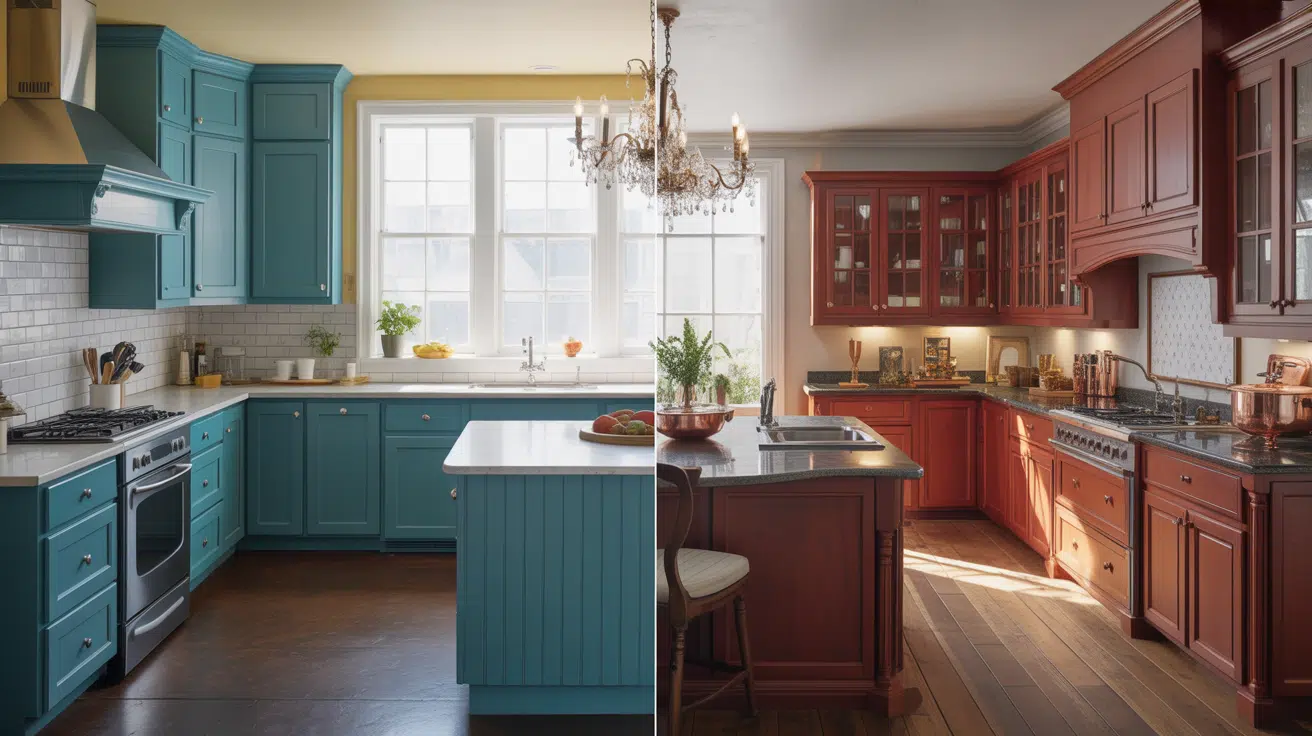
Show both styles in complete kitchen settings. Use a shaker-style kitchen with bright colors, or opt for a traditional kitchen with rich wood tones. This helps readers immediately grasp how each style changes the overall space and atmosphere.
2. Cabinet Door Close-Up: Flat vs Raised Panel

Feature zoomed-in shots of each door style. Highlight the flat, recessed panel of the shaker door versus the raised, contoured design of the traditional cabinet. This makes it easy to see the structural differences.
3. Hardware Choices: Modern vs Vintage Accents

Show contrasting hardware styles: sleek bar handles on shaker cabinets next to curved, vintage-style knobs on traditional cabinets. This comparison illustrates how even small details can define the overall style.
4. Finish and Color: Light vs Dark Tones

Display a light matte finish on shaker cabinets beside a deep wood stain on traditional cabinetry. This side-by-side makes it easier to understand how finish impacts the mood of the kitchen.
5. Kitchen Islands: Clean vs Carved Base Design

Contrast a flat-paneled shaker island with a traditional island that includes legs, curves, or base moldings. It highlights how each style approaches focal-point cabinetry.
6. Interior Storage: Sleek vs Fixed Layouts

Visualize pull-out drawers inside shaker cabinets versus traditional fixed wood shelving. This image pairing can help readers compare convenience versus classic built-in structure.
7. Backsplash Pairing: Minimal Tile vs Patterned Design

Show subway tile behind shaker cabinets and a mosaic or mural tile behind traditional ones. This reinforces how each style aligns with different backsplash choices.
8. Flooring Match: Light vs Rich Tones

Display shaker cabinets with light wood or gray tile flooring versus traditional cabinets with dark stained floors. This comparison helps users see how flooring complements each style.
9. Appliance Integration: Seamless vs Statement Pieces

Compare flush-mount stainless steel appliances with shaker cabinets against standalone or panel-covered appliances with traditional cabinets. This illustrates how style influences appliance selection.
Quick Comparison Table of Shaker Cabinets vs. Traditional
Compare shaker and traditional cabinets across key factors, including design, pricing, maintenance effort, and potential impact on resale value.
|
Feature |
Shaker Cabinets |
Traditional Cabinets |
|
Design |
Clean lines, flat panels, simple form |
Raised panels, decorative trim, and detailed finishes |
|
Cost |
Generally more affordable; fewer custom details |
Often higher due to materials and craftsmanship |
|
Cleaning |
Easy to clean; minimal grooves |
Requires more effort; intricate moldings trap dust |
|
Resale Value |
Widely appealing; suits modern buyers |
Adds beauty in classic homes; may feel dated in modern layouts |
Conclusion
Choosing between shaker and traditional cabinets doesn’t have to be a stressful decision. With a clear understanding of your home’s layout, daily needs, and personal preferences, you can confidently pick the style that works for you.
Remember, both options offer lasting quality; you’re not making a wrong choice, just a different one.
Consistency in finishes and thoughtful pairings will go a long way, especially if you’re blending the two. I hope this side-by-side look gave you more clarity.
If you’re planning your kitchen update, feel free to browse my other guides on cabinetry styles, layout planning, and finish options. They’re designed to help you make confident, informed choices every step of the way.


