Modular Kitchen Design Guide: Layouts, Costs & Ideas
A modular kitchen design is not just about cabinets and finishes. It is a system that combines layout, storage, materials, and workflow into one structured setup.
Many kitchens look good but fail in daily use because the planning behind them is incomplete. That’s where understanding modular kitchen design properly makes a difference.
In this guide, you will learn how modular kitchens work, how different layouts affect movement, what materials actually last, and how to plan your kitchen step by step without costly mistakes.
By the end, you’ll have a clear idea of how to build a kitchen that works as well as it looks. Let’s start with the basics.
What is Modular Kitchen Design and How it Works
A modular kitchen design is a modern way of building a kitchen using pre-made units. These units are manufactured in factories and installed at your home in a planned layout, so everything fits together neatly and looks organized.
Instead of building from scratch on-site, modular kitchens use standard-sized cabinets, drawers, and shelves. This makes the setup faster and more precise, while also improving daily use.
Storage becomes more efficient with pull-outs and corner units, movement between work areas feels smoother, and everything has a fixed place to reduce clutter.
The system is also flexible, so individual units can be adjusted or replaced without redoing the entire kitchen.
Core Components of A Modular Kitchen
A modular kitchen is made up of different units that work together to create a complete setup. Each component has a clear role.
- Base Cabinets: These sit directly on the floor and form the foundation of the kitchen, holding heavy items while supporting the countertop and built-in appliances securely.
- Wall Cabinets: Installed above the countertop, these cabinets keep frequently used items within reach while freeing up workspace below, making daily cooking tasks more convenient and organized.
- Tall Units: These vertical cabinets use full height from floor to ceiling, offering large storage space for pantry items, groceries, or housing built-in ovens and refrigerators neatly.
- Drawers And Pull-Outs: Designed for easy access, these sliding units help organize utensils, spices, and essentials so nothing gets lost at the back or hard to reach.
- Countertop: This is the main working area where food preparation, cutting, and cooking tasks happen, so it needs to be durable, easy to clean, and heat-resistant.
- Backsplash: Positioned behind the countertop, it protects walls from water, oil, and stains while also adding a visual element that enhances the overall kitchen design.
Each of these parts is designed to fit perfectly with the others, which keeps the kitchen neat and efficient.
Modular Kitchen vs. Traditional Kitchen
Before choosing a kitchen style, you need to understand how modular kitchens differ from traditional ones. Here’s a breakdown so you can compare both clearly:
| Feature | Modular Kitchen | Traditional Kitchen |
|---|---|---|
| Construction | Factory-made modules assembled on-site | Built entirely on-site by carpenters |
| Installation Time | Fast and streamlined | Takes longer due to manual work |
| Design Flexibility | Pre-designed but customizable | Fully customizable but less structured |
| Storage Efficiency | Smart storage with built-in solutions | Basic storage, often less optimized |
| Finish Quality | Uniform and polished finish | Depends on carpenter skill |
| Maintenance | Easy to repair or replace parts | Repairs can be time-consuming |
| Cost Control | More predictable pricing | Costs can vary during construction |
Types of Modular Kitchen Layouts Explained
The layout of a modular kitchen decides how your space functions and feels. Choosing the right one helps you move easily, use space better, and keep everything organized.
1. L-Shaped Kitchen Layout
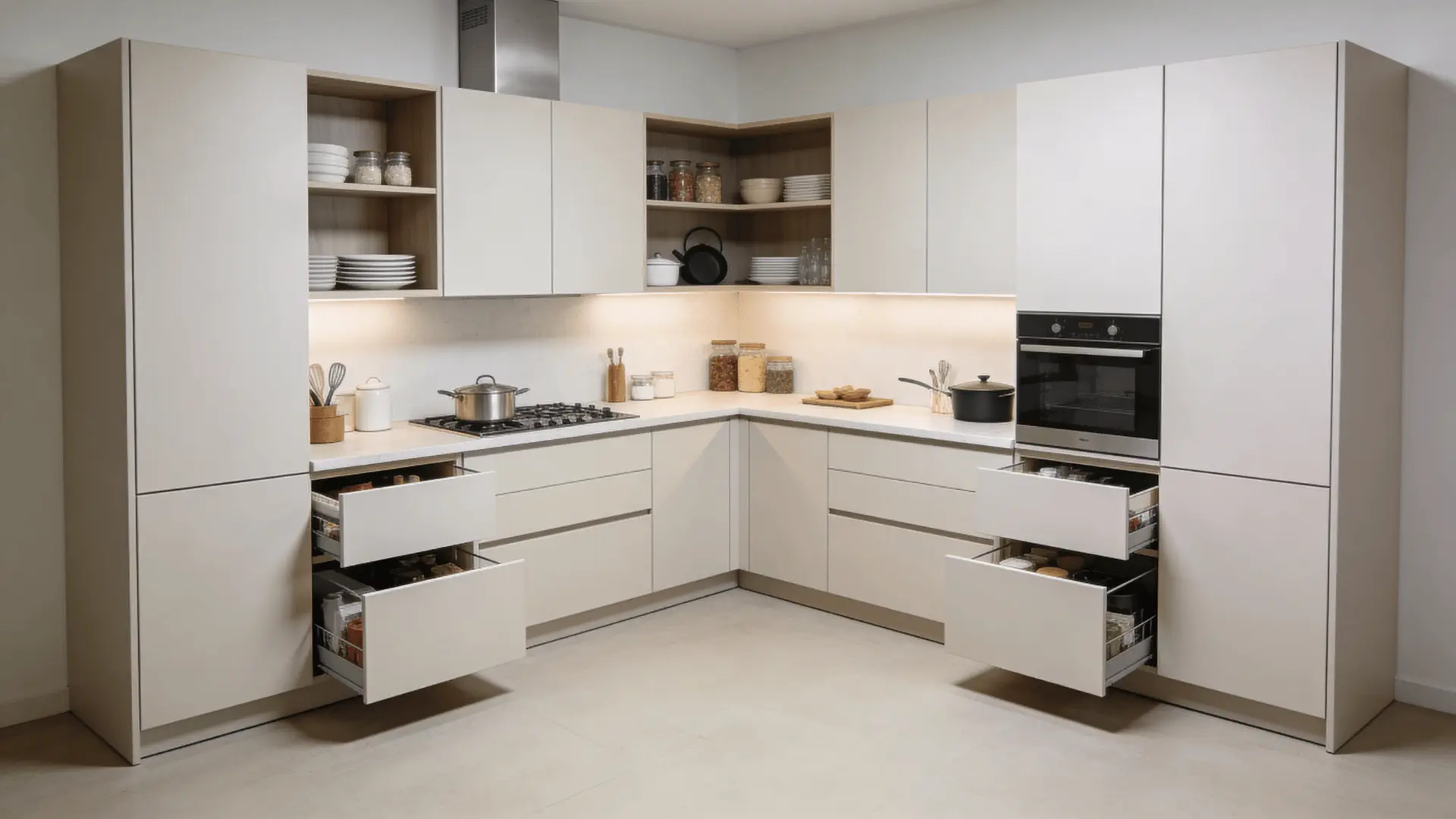
An L-shaped kitchen uses two connected walls to create an open and efficient workspace.
It works well in small to medium homes, allows easy movement, and keeps the center area free, making it a practical choice for both closed and open kitchens.
2. U-Shaped Kitchen Layout
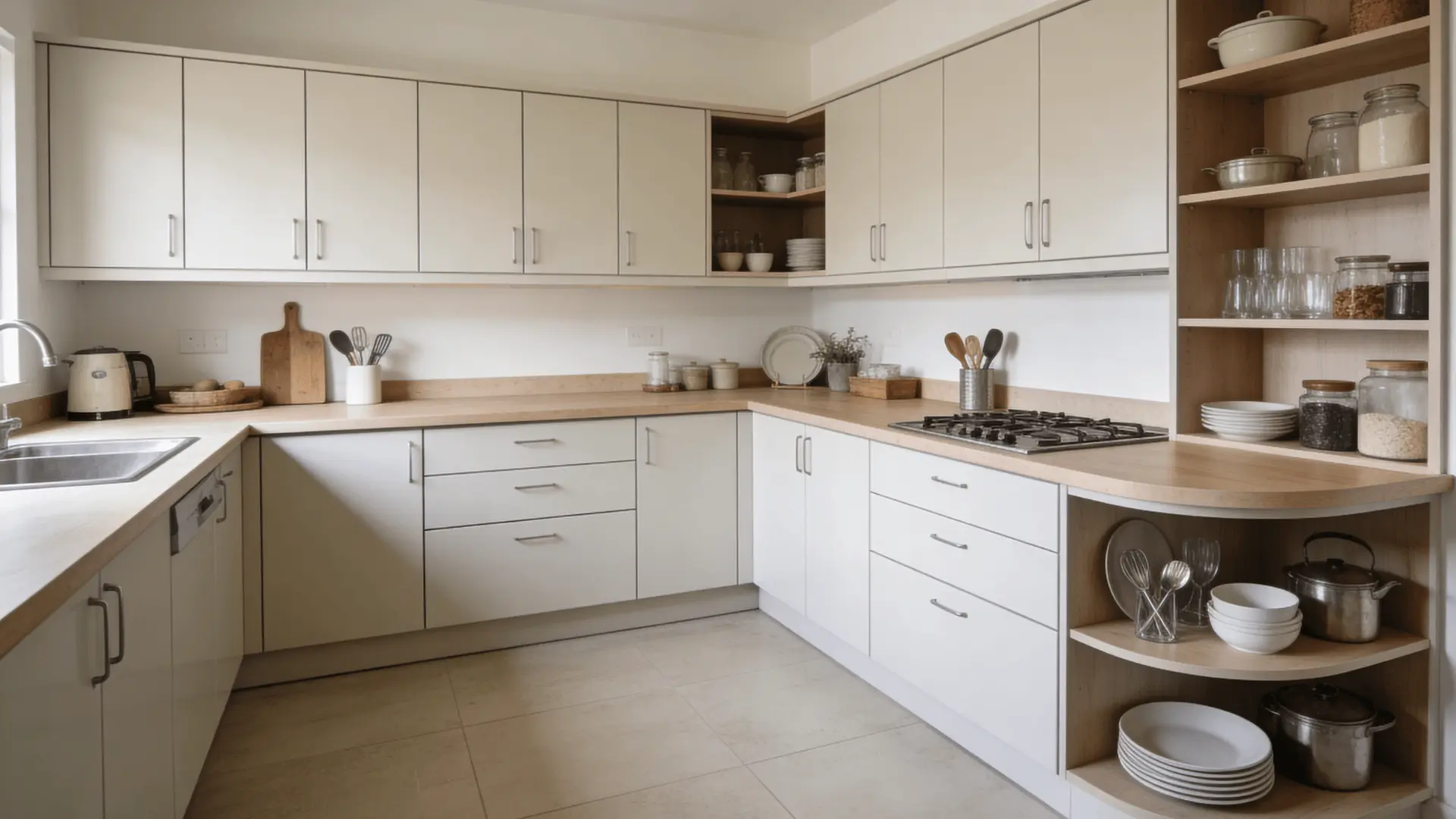
A U-shaped kitchen covers three walls, offering plenty of storage and counter space.
It suits larger kitchens and keeps everything within reach, but it needs enough room to avoid feeling cramped and to maintain smooth movement.
3. Straight Kitchen Layout
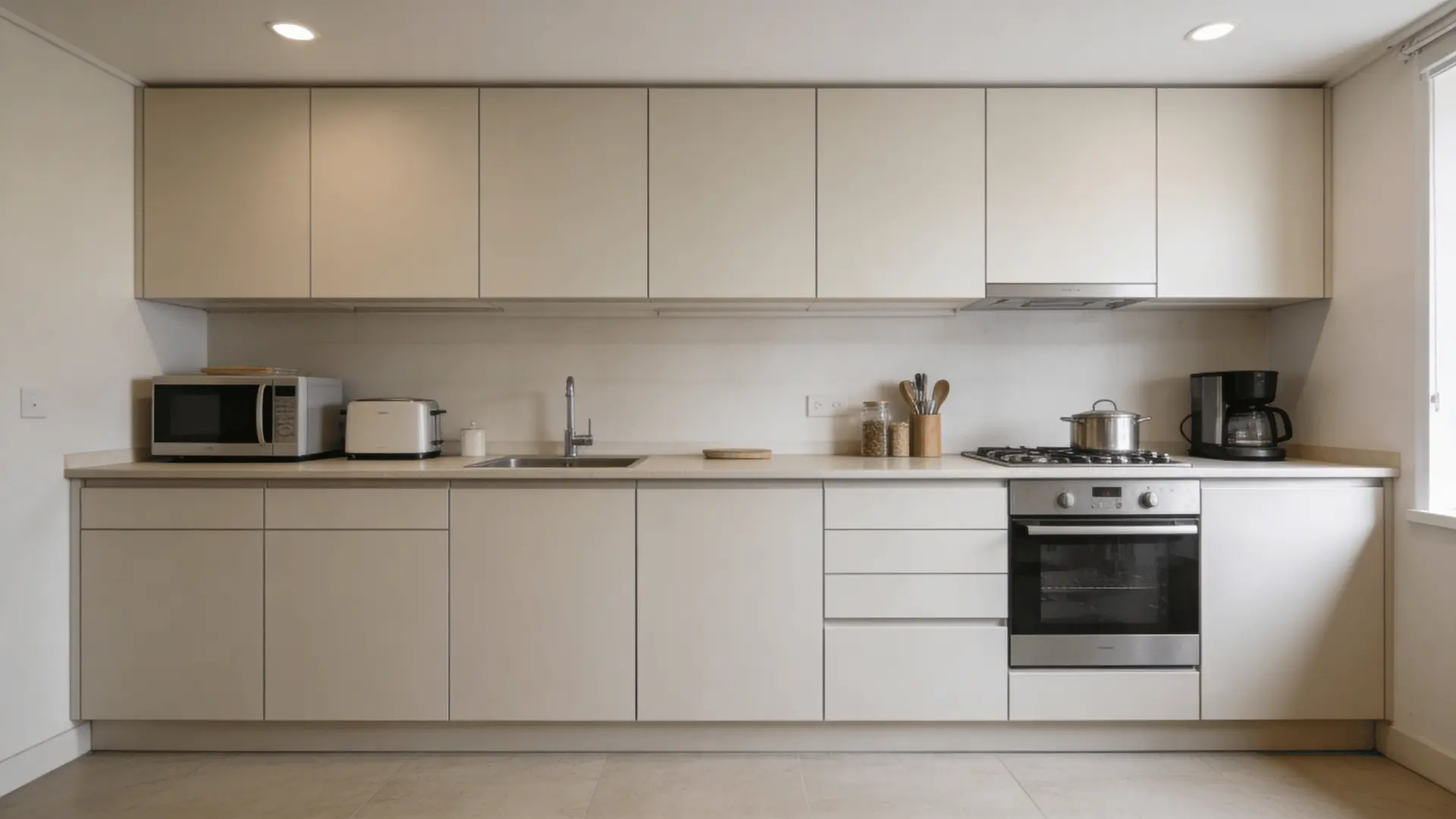
A straight kitchen places all cabinets and appliances along one wall.
It is ideal for small homes or studio spaces, offering a simple and compact setup, though storage and workspace are more limited compared to other layouts.
4. Parallel Kitchen Layout
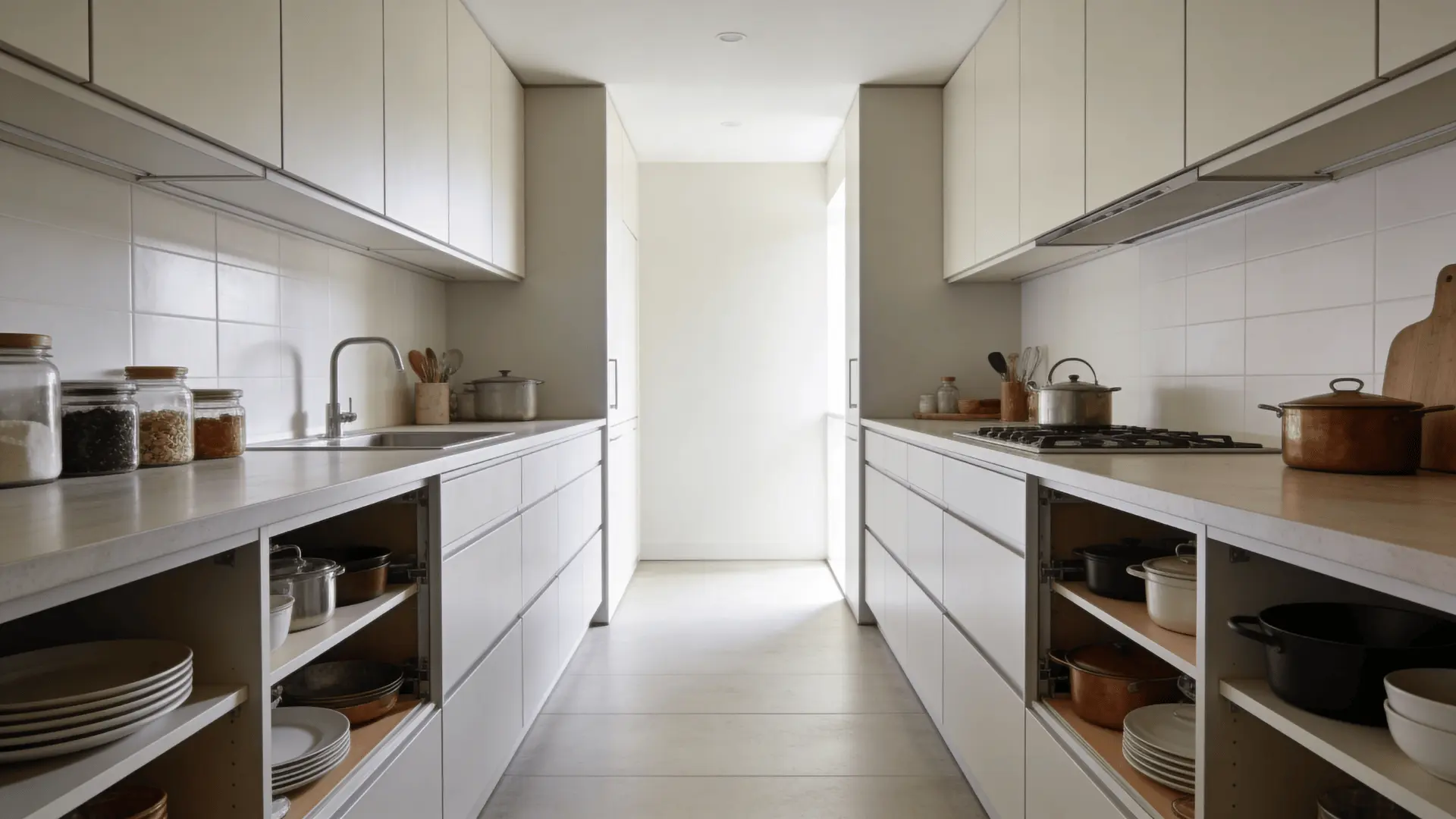
A parallel kitchen has two counters facing each other, creating a highly efficient work zone.
It works best in narrow spaces and provides good storage on both sides, but requires enough gap between counters for comfortable movement.
5. Island Kitchen Layout
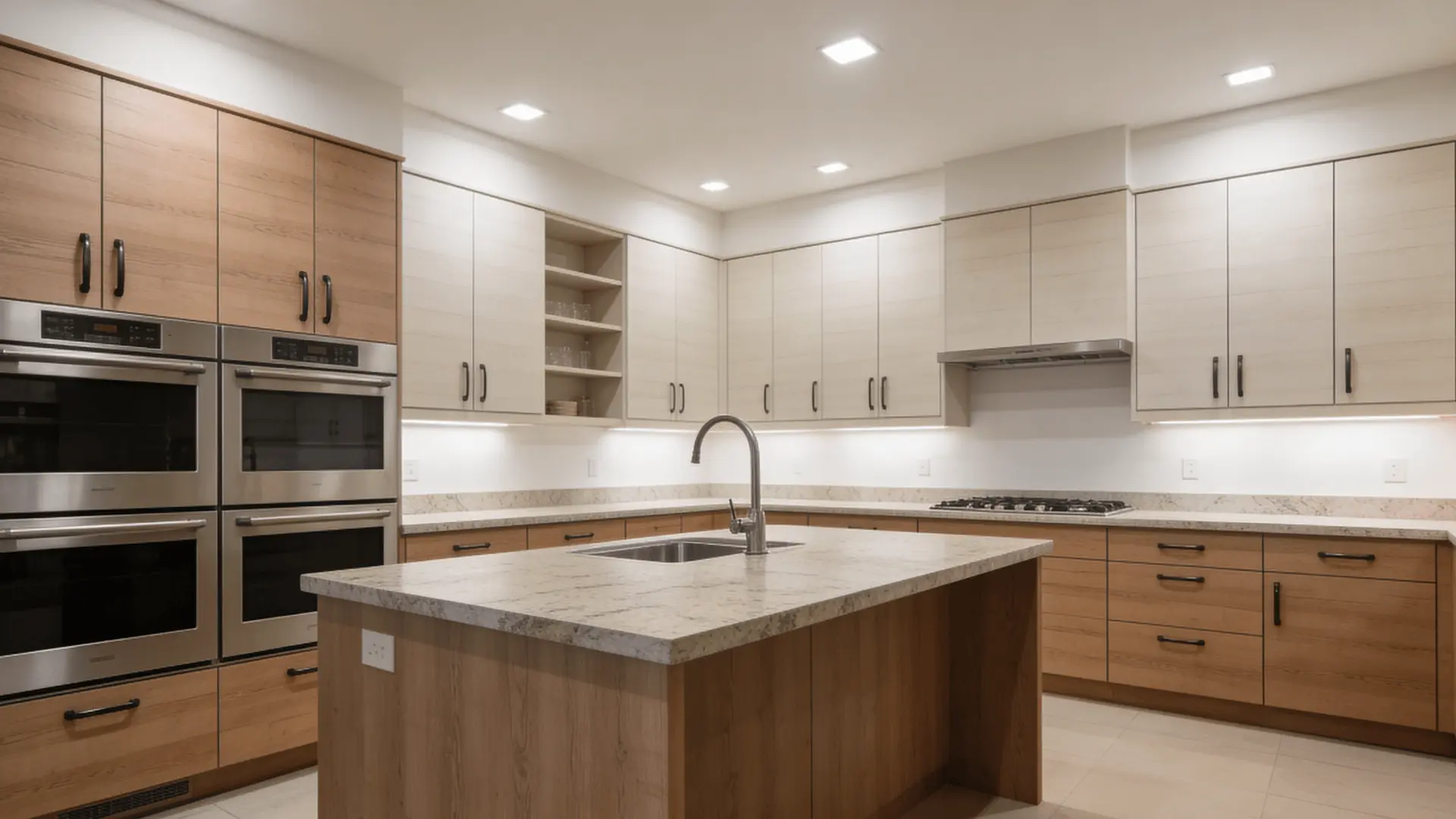
An island kitchen includes a central counter along with the main kitchen area.
It suits large or open spaces, adds extra workspace and storage, and often doubles as a dining or social area, but needs sufficient space to function well.
Choosing the Right Layout for Your Space
Choosing the right layout depends on a few practical factors.
- Kitchen Size: Small spaces work better with straight or L-shaped layouts
- Room Shape: Long spaces suit parallel layouts, while square spaces fit U-shaped designs
- Usage Needs: More cooking requires more counter space and storage
- Movement Space: Ensure enough room to move comfortably between areas
A well-chosen layout makes daily tasks easier and helps you get the best use out of your kitchen space.
Key Elements that Define a Good Modular Kitchen Design
A modular kitchen is not just about looks. What really matters is how easy it feels to use every day. A good design makes cooking, cleaning, and movement smooth and stress-free.
1. Storage Solutions and Cabinet Configurations
Storage is the backbone of any modular kitchen. When planned properly, it keeps everything organized and easy to access.
Focus on using a mix of:
- Base cabinets for heavy items like pots and appliances
- Wall cabinets to use vertical space efficiently
- Tall units for pantry and built-in storage
- Corner units like carousel or pull-outs to avoid dead space
- Drawers instead of deep shelves for better visibility and access
A good setup means every item has a fixed place. You should not need to search through clutter for daily essentials.
2. Work Triangle and Workflow Planning
A kitchen should feel easy to move around in. That’s where the work triangle helps.
It connects three main areas: the stove, sink, and refrigerator. These should be placed at a comfortable distance so movement feels natural, not cramped.
Beyond the triangle, the workflow also matters. Prep space should be close to the stove, the sink should be near the prep area, and frequently used items should be within reach.
When this flow is right, cooking becomes faster and less tiring.
3. Appliance Integration and Placement
In a modular kitchen, appliances should be part of the design from the start. They should fit in smoothly, not look like afterthoughts.
- Built-in appliances help save space and keep the design clean
- The chimney must sit directly above the cooktop for proper function
- The refrigerator should be placed where it does not block movement
- A dishwasher works best when placed close to the sink
Also, plan electrical points early. This avoids messy wiring and last-minute adjustments.
4. Lighting and Ventilation Considerations
Lighting and ventilation play a big role in how the kitchen feels and functions. Good ventilation keeps the kitchen fresh and helps maintain the space over time.
Use a layered lighting approach:
- Task lighting for cooking and prep areas
- Ambient lighting for overall brightness
- Accent lighting to add a subtle design touch
For ventilation, make sure there is a strong chimney or exhaust system. If possible, include windows or open areas for natural airflow.
Materials, Finishes, and Color Choices
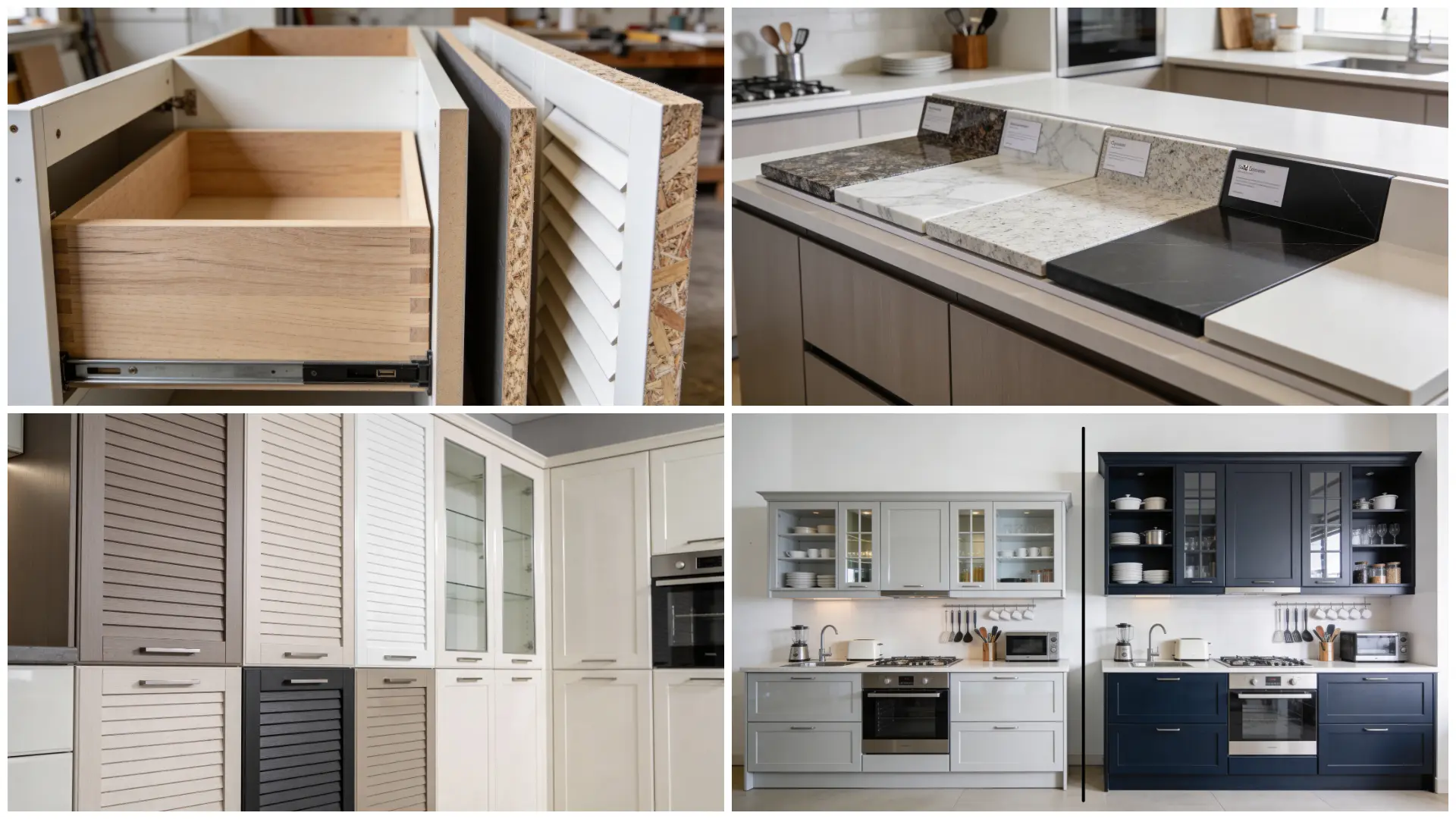
Materials and finishes decide how your kitchen looks, how long it lasts, and how much maintenance it needs. A good choice here balances durability, budget, and everyday usability.
1. Cabinet Materials (Plywood, MDF, HDF, Particle Board)
The cabinet structure is the foundation of your kitchen. This is where strength and durability matter most.
- Plywood: Strong, moisture-resistant, and long-lasting. Works well for Indian kitchens where humidity and heat are common.
- MDF (Medium Density Fiberboard): Smooth surface, good for painted finishes. Less resistant to moisture compared to plywood.
- HDF (High Density Fiberboard): Denser than MDF and slightly more durable. Often used for shutters rather than full cabinet structure.
- Particle Board: Budget-friendly but less durable. Not ideal for areas exposed to water or heavy use.
If you want a long-term setup, plywood is usually the safer choice for core cabinets.
2. Shutter Finishes (Laminate, Acrylic, PU, Glass)
Shutters define the visible look of your kitchen. They also affect maintenance and daily cleaning effort.
- Laminate: Affordable, durable, and available in many textures and colors. Easy to maintain.
- Acrylic: Glossy and reflective finish. Gives a modern look but shows fingerprints and scratches more easily.
- PU (Polyurethane Paint): Smooth painted finish with a premium feel. Requires careful handling and maintenance.
- Glass: Used in combination with other materials. Adds a light, open feel but needs regular cleaning.
Each finish creates a different style, so the choice depends on how much maintenance you are comfortable with.
3. Countertop Options and Their Practical Use
The countertop handles daily wear, heat, and spills. So it needs to be both strong and easy to maintain.
- Granite: Highly durable, heat-resistant, and low maintenance. One of the most practical choices.
- Quartz: Engineered stone with a uniform look. Non-porous and easy to clean, but slightly more expensive.
- Marble: Premium look but prone to stains and scratches. Needs more care.
- Solid Surface: Seamless finish and modern appearance. Not as heat-resistant as stone options.
For most homes, granite or quartz offers the best balance of durability and ease of use.
4. How to Choose Colors for Different Kitchen Sizes
Color plays a big role in how spacious or compact your kitchen feels.
For smaller kitchens, lighter shades like white, beige, or light grey help reflect light and make the space feel open. Glossy finishes can enhance this effect.
For larger kitchens, darker tones like navy blue, charcoal grey, or deep green can add depth and character without making the space feel cramped.
You can also combine two tones. For example, lighter upper cabinets with darker lower cabinets create balance and reduce visual heaviness.
Modular Kitchen Design Ideas for Different Needs
Every home has different space limits and daily habits. The design should match how the kitchen is used every day.
1. Small Modular Kitchen Design
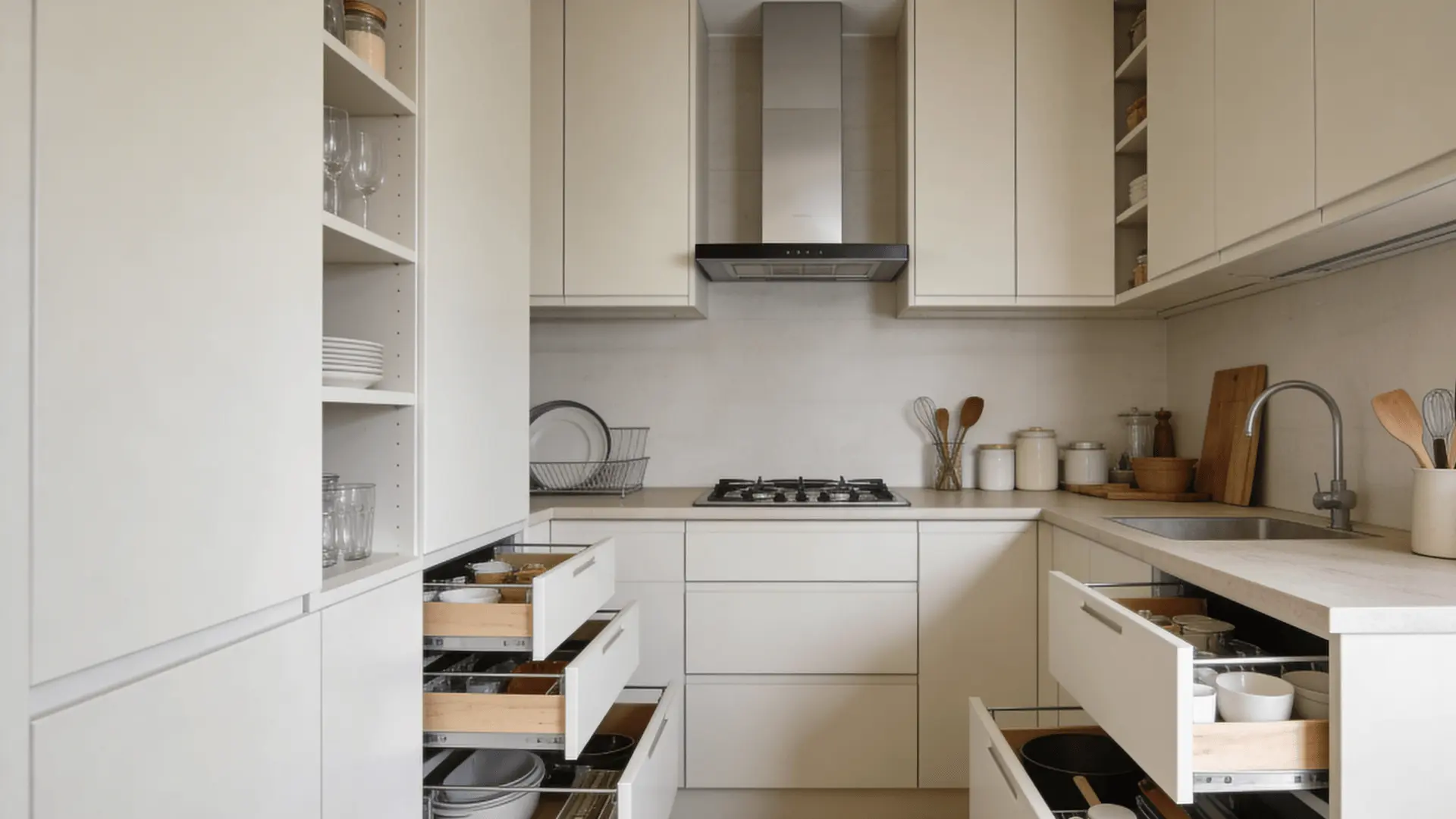
Small kitchens work best with simple and focused planning. The goal is to use space wisely while keeping movement easy.
Vertical storage with tall cabinets helps free up floor space. Light colors and simple layouts like straight or L-shaped designs make the area feel more open.
Pull-out drawers and corner units improve access without adding bulk. Keeping only essential items within reach helps avoid clutter.
2. Open Kitchen Design
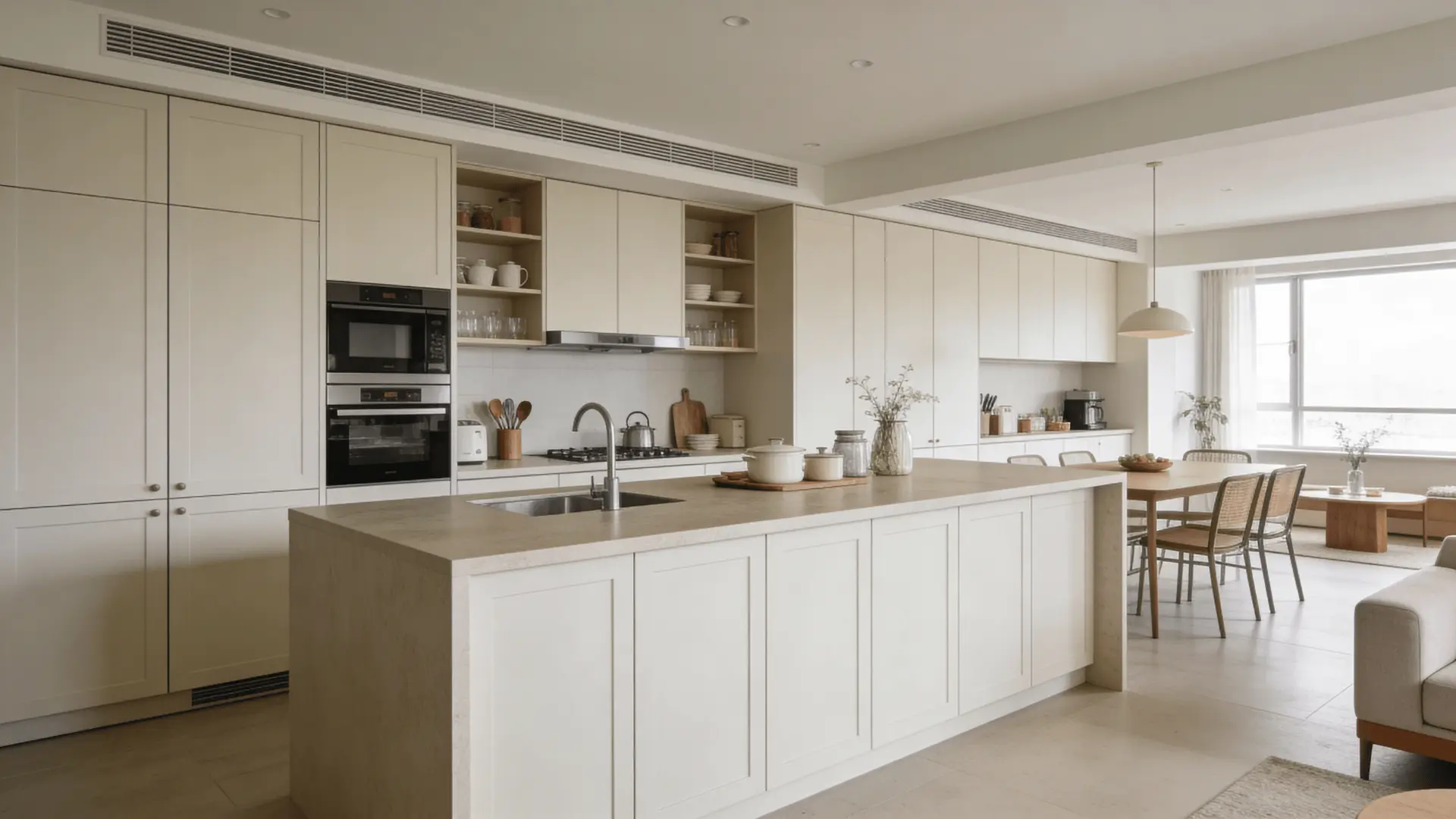
Open kitchens connect with the living or dining area. This makes the space feel larger and more connected.
A breakfast counter or island can act as a divider without closing off the space. The design should match the rest of the home for a consistent look.
Closed storage helps keep the kitchen neat since it is always visible. Proper ventilation is important to manage cooking smells.
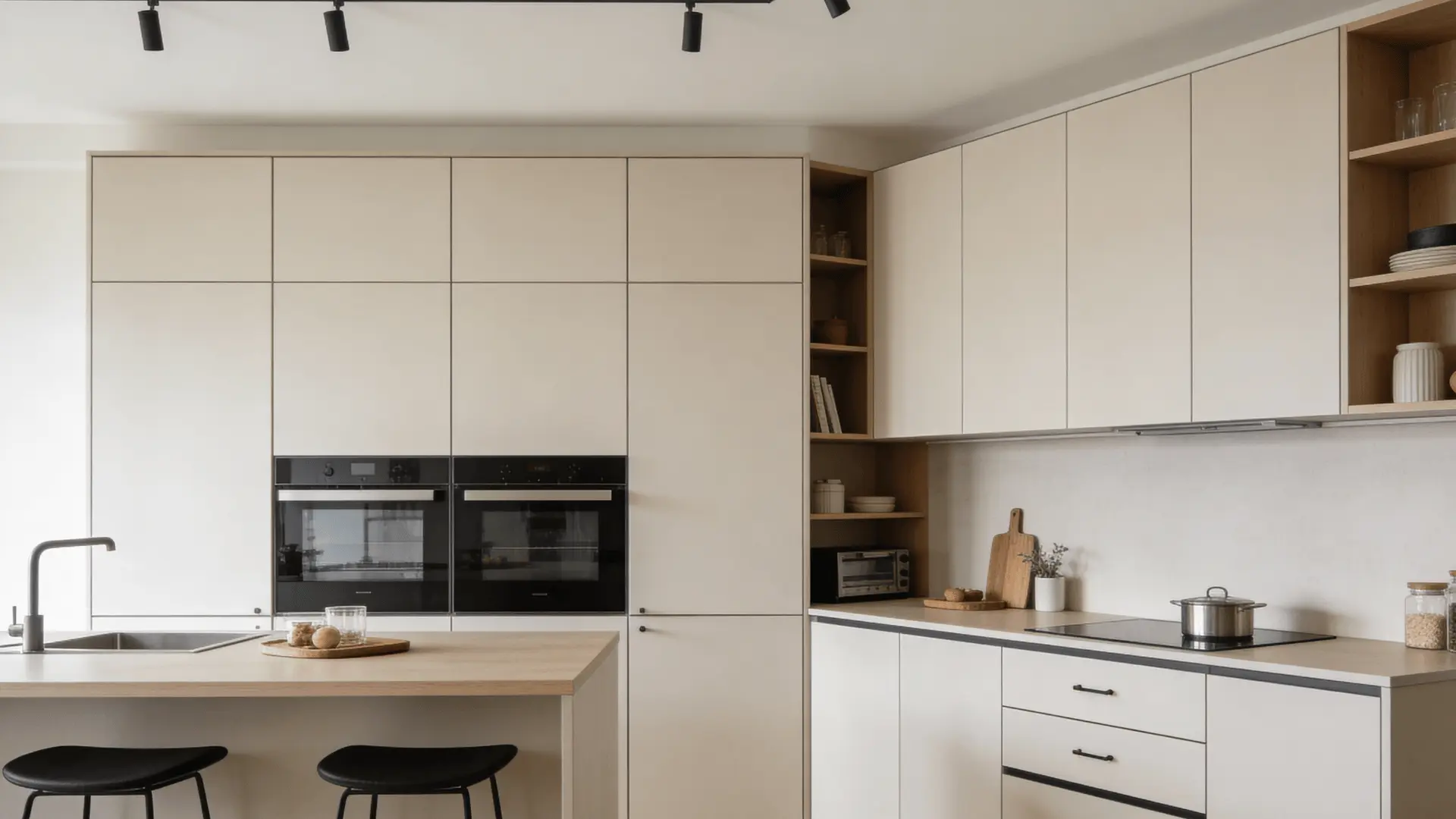
3. Modern Minimal Kitchen
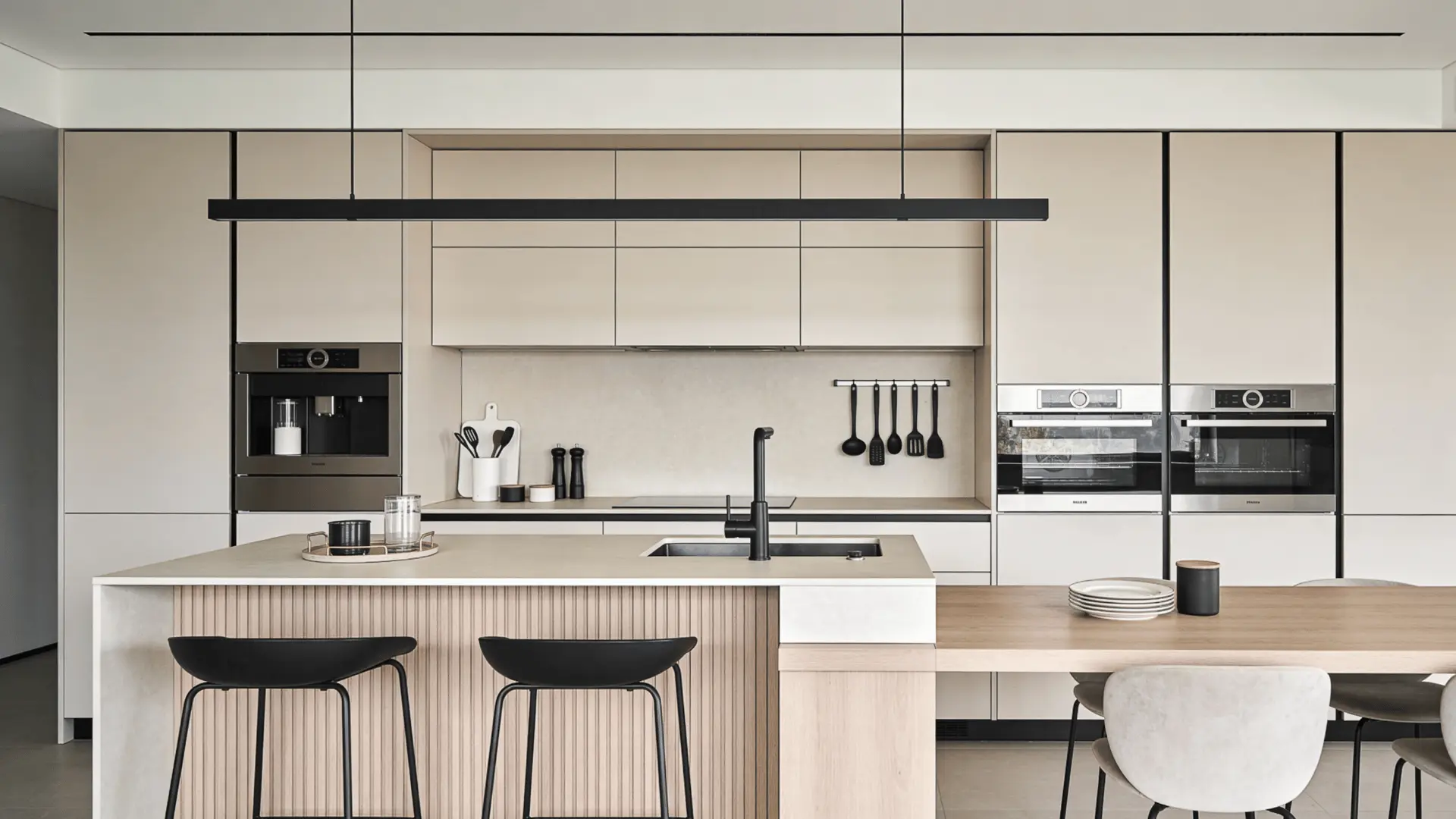
Modern kitchens focus on clean design and simple elements. The idea is to keep only what is useful and remove visual clutter.
Handle-less cabinets, built-in appliances, and smooth surfaces create a seamless look. Neutral shades are commonly used to maintain a balanced feel.
Storage is designed to keep counters clear, so the kitchen stays neat with less effort.
4. Designs for Compact Urban Homes
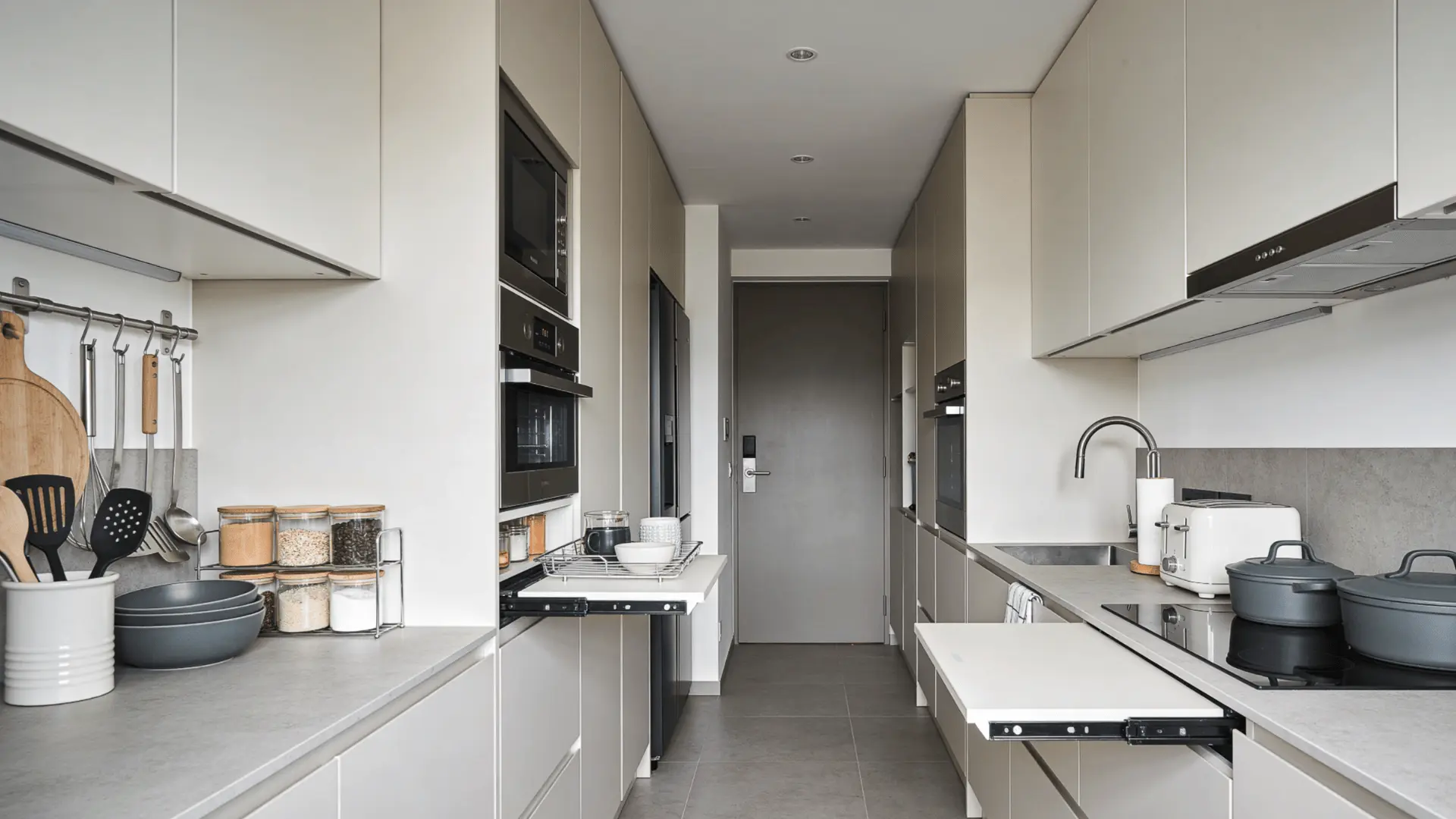
Compact urban kitchens need to be efficient without feeling tight. The design should combine storage and function in a limited space.
Tall units can hold both storage and appliances in one place. Layouts like parallel or straight kitchens help maintain smooth movement.
Multi-purpose features like foldable counters or breakfast ledges add function without taking extra space.
Cost Factors and Budget Planning
The cost of a modular kitchen in the USA can vary widely based on size, materials, and design choices. Understanding real price ranges helps you plan better and avoid surprises.
Cost Breakdown of a Modular Kitchen
In the U.S., a modular kitchen typically costs between $6,000 and $40,000+, with most mid-range kitchens falling around $15,000 to $25,000.
Here is a clear breakdown of where the money goes:
| Component | Estimated Cost Range |
|---|---|
| Cabinets & Woodwork | $6,000 – $22,000 |
| Countertops | $2,500 – $9,000 |
| Appliances | $2,500 – $15,000 |
| Labor & Installation | $4,000 – $20,000 |
| Permits, Delivery, Extras | $300 – $4,000 |
Cabinets usually take up the largest share, followed by labor and appliances.
Factors that Increase or Reduce Cost
Several factors directly impact the final price. The biggest one is material quality, as premium finishes and materials increase costs quickly.
Kitchen size and layout also matter. Larger kitchens or complex layouts require more materials and labor. Adding features like islands, tall units, or extra accessories further raises the budget.
Appliance choices can also shift costs significantly, especially when opting for built-in or smart options.
Here is how pricing typically varies per square foot:
| Kitchen Type | Cost Per Sq Ft |
|---|---|
| Basic | $120 – $180 |
| Mid-Range | $180 – $300 |
| Premium | $300 – $600 |
Simpler layouts and standard finishes help control costs without reducing usability.
Budget-Friendly Design Choices
Smart choices can help you build a functional kitchen without overspending.
- Use durable core materials like plywood instead of premium alternatives everywhere
- Keep the layout simple to reduce labor and installation costs
- Limit accessories to only what you use daily
- Mix finishes by using premium options only in visible areas
- Choose standard appliances instead of high-end built-in models
Focusing on function over decoration helps you stay within budget while still creating a kitchen that works well every day.
Latest Trends in Modular Kitchen Design
Kitchen design keeps changing based on how people use the space daily. Recent trends focus on making kitchens more efficient, low-maintenance, and visually clean.
This year, the shift is towards smarter features, simpler designs, and better use of space without adding clutter.
1. Smart Kitchens and Tech Integration
Modern kitchens are becoming more tech-driven. The goal is to make everyday tasks easier and faster.
Appliances now come with smart features like touch controls, app connectivity, and automation. Motion-sensor lights and soft-close systems are also becoming common.
These upgrades improve convenience without changing the basic layout of the kitchen.
2. Handle-less and Sleek Designs
Clean and smooth surfaces are a major trend. Handle-less cabinets are now widely preferred for a clutter-free look.
This design uses groove handles or push-to-open systems to keep the surface flat. It not only looks modern but also makes cleaning easier.
The focus here is on simplicity, where fewer visible elements create a more organized feel.
3. Sustainable and Eco-Friendly Materials
More homeowners are choosing materials that are safer and long-lasting. The focus is on reducing maintenance and improving durability.
Low-emission boards, recycled materials, and finishes that last longer are gaining attention. These choices also help maintain indoor air quality and reduce long-term damage.
This trend is less about appearance and more about practical, long-term value.
4. Multi-Functional Storage Innovations
Storage is becoming smarter and more flexible. Instead of basic cabinets, kitchens now include systems that improve access and organization.
- Pull-out pantry units for easy access
- Drawer organizers for better arrangement
- Corner mechanisms that use hidden space
- Lift-up shutters for overhead cabinets
How to Plan Your Modular Kitchen
Planning a modular kitchen becomes easier when you look at the process step by step.
Step 1: Measure the Space. Start by understanding the kitchen area, including walls, doors, windows, and utility points, so the design is based on actual space and usage needs.
Step 2: Choose the Basics. Select the layout, materials, finishes, and appliances that match your budget, storage needs, and daily cooking habits.
Step 3: Finalize with the Vendor or Designer. Review the design, confirm what is included, and align on pricing, timeline, and installation details before moving ahead.
Step 4: Prepare for Installation. Complete site work like plumbing and electricals first, then move forward with installation, fittings, and final checks.
Common Mistakes to Avoid in Modular Kitchen Design
A modular kitchen can look perfect on paper but still fail in daily use if planning is not done properly. Many common mistakes only become visible after installation.
- Poor Space Planning and Layout Choice: Choosing the wrong layout affects movement and workflow. Incorrect placement of stove, sink, and fridge can make cooking uncomfortable and reduce overall efficiency.
- Ignoring Storage Needs: Not planning enough storage leads to cluttered counters and wasted cabinet space. Daily-use items become hard to access, making the kitchen less organized and harder to manage.
- Choosing Style Over Function: Focusing only on looks can reduce usability. Some trendy designs may not suit daily cooking needs, leading to inconvenience and frustration over time.
- Overlooking Maintenance and Durability: Ignoring maintenance can lead to problems over time. Some materials and finishes require more care than expected, increasing effort and reducing long-term usability.
Conclusion
A well-planned modular kitchen design comes down to making the right decisions early. From layout and storage to materials and appliances, every choice affects how the kitchen performs daily.
When function, workflow, and durability are aligned, the space becomes easier to use and maintain over time. Avoiding common mistakes and focusing on practical needs helps you get better value from your investment.
Whether you are designing a new kitchen or upgrading an existing one, clarity in planning makes the biggest difference.
If you are starting your project, take the first step by mapping your space and defining your needs today.