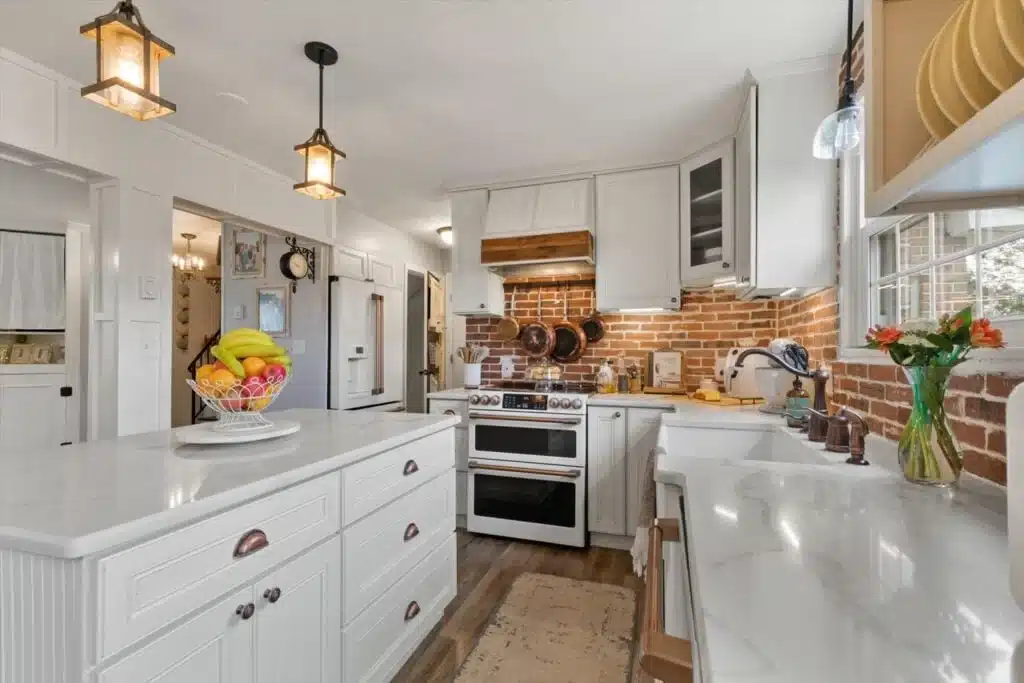
Kitchen Remodel Essentials: From Planning to Perfect Workflow
Kitchen remodeling is the process of redesigning and upgrading a kitchen to improve functionality, efficiency, and visual appeal, and it remains one of the most impactful home improvement projects today. Industry data consistently shows that kitchens play a central role in daily routines because they connect cooking, family interaction, and household organization.
A poorly planned kitchen creates friction through wasted movement, cluttered storage, and inefficient layouts. A well-designed kitchen supports every task quietly and consistently. This guide explains how planning shapes workflow, how layouts and zones influence efficiency, and how materials, appliances, and lighting combine to create a kitchen that works as well as it looks.
What Does a Successful Kitchen Remodel Really Mean?
A successful kitchen remodel balances visual design, efficient workflow, budget control, and long-term usability. Success is not defined by luxury finishes alone but by how smoothly the space supports everyday tasks.
When cabinets open where you expect them to and prep surfaces align naturally with appliances, the kitchen feels intuitive. Remodels that prioritize aesthetics over function often lead to daily frustration. A functional kitchen aligns design decisions with real habits, usage frequency, and movement patterns.
Why Is Planning the Most Important Step in a Kitchen Remodel?
Planning is the most crucial step in a kitchen remodel because every later decision depends on it, and mistakes become costly once construction begins. A clear plan establishes priorities before layout, materials, or appliances lock you into compromises.
Early planning connects budget, workflow, and design into a single system. It helps identify what should change, what should stay, and where flexibility exists. Without planning, remodels often drift, timelines stretch, and costs escalate.
How Do You Define the Right Kitchen Workflow?
The proper kitchen workflow is the logical and efficient movement between storage, preparation, cooking, and cleaning zones. Effective workflow minimizes unnecessary steps and prevents congestion, especially when multiple people use the kitchen.
When workflow is ignored, even large kitchens feel cramped. Drawers collide with appliances, prep areas feel disconnected, and cleaning becomes inefficient. Defining workflow early ensures the space supports you rather than slowing you down.
What Is the Kitchen Work Triangle and Why Does It Matter?
The kitchen work triangle is a design principle that positions the sink, refrigerator, and cooking surface to create efficient movement between tasks. This concept fits into remodeling by providing a proven foundation for workflow efficiency.
Balanced distances reduce fatigue and wasted motion. While modern kitchens may expand beyond strict triangle rules, the principle still highlights the importance of spatial relationships.
Are Modern Zoning Layouts Better Than the Classic Triangle?
Modern zoning layouts are better than the classic triangle when kitchens support multiple users and more complex routines. Zoning separates tasks into defined areas, allowing simultaneous activity without interference.
In compact kitchens, the triangle remains effective. In open or large kitchens, zoning provides flexibility and better flow. The best approach depends on space and lifestyle.
How Do You Choose the Right Kitchen Layout?
The proper kitchen layout is chosen by matching available space with cooking habits, household size, and storage needs. Layout determines movement paths, appliance placement, and storage access.
Choosing a layout without considering how the kitchen is actually used leads to inefficiency and frustration.
Galley Kitchens
A galley kitchen is a narrow layout with parallel counters designed for compact spaces. This layout minimizes movement and keeps all work areas within reach.
Proper lighting and thoughtful cabinet design prevent galley kitchens from feeling confined.
L-Shaped Kitchens
An L-shaped kitchen uses two adjoining walls to create an open work zone. This layout supports flexible zoning and fits well in medium-sized spaces.
It allows room for dining or islands while maintaining efficient movement.
U-Shaped Kitchens
A U-shaped kitchen wraps around three walls, maximizing storage and prep space. This layout supports high-efficiency cooking when spacing is planned carefully.
Poor spacing can cause congestion, making design precision essential.
Island and Peninsula Kitchens
Island and peninsula kitchens introduce additional work surfaces that support prep, storage, and seating. These layouts work well in open-plan homes.
Islands encourage social interaction while maintaining workflow efficiency.
What Are the Essential Zones in a Well-Planned Kitchen?

Kitchen zones are defined areas dedicated to specific tasks such as storage, preparation, cooking, and cleaning. Zoning organizes space around function rather than appearance.
Clear zones reduce overlap and confusion while improving efficiency.
Food Storage Zone
The food storage zone is where ingredients are kept and accessed before cooking. This zone initiates the workflow sequence.
Placement near prep areas reduces unnecessary movement.
Preparation Zone
The preparation zone supports washing, cutting, and assembling ingredients. Adequate counter space and access to tools define its effectiveness.
Centralized prep improves safety and speed.
Cooking Zone
The cooking zone contains heat-producing appliances and ventilation. Its placement affects safety, airflow, and serving efficiency.
Logical grouping improves consistency and comfort.
Cleaning Zone
The cleaning zone handles dishes and waste after meals. It connects sinks, dishwashers, and disposal systems into a single endpoint.
Efficient placement keeps mess contained.
How Do You Select Cabinets That Balance Style and Function?
Cabinets balance style and function by combining durable construction with storage logic that supports daily routines. Their design affects accessibility and organization.
Poorly designed cabinets waste space and increase effort during cooking.
Cabinet Materials and Construction Types
Cabinet materials include solid wood, plywood, and engineered panels. Construction quality determines durability, moisture resistance, and load capacity.
Higher-quality construction improves longevity and performance.
Storage Features That Improve Workflow
Storage features enhance accessibility and reduce wasted motion. Key features include:
• Pull-out shelves for easier access
• Deep drawers for cookware organization
• Corner solutions that eliminate dead space
How Do Countertops Affect Kitchen Workflow and Durability?
Countertops affect kitchen workflow by defining prep space and influencing hygiene and durability. Surface properties determine how efficiently tasks are completed.
Durable surfaces resist heat and staining while supporting heavy use. For custom layouts and precision cuts, modern fabrication relies on waterjet cutting technology, which allows materials to be shaped accurately without heat distortion. Advanced fabrication systems such as precision waterjet cutting machines support complex countertop designs across stone, tile, and composite materials.
Natural Stone Countertops
Natural stone countertops are surfaces made from materials such as granite or marble. They offer strength and visual appeal but require sealing and maintenance.
Proper fabrication preserves structural integrity.
Engineered and Composite Countertops
Engineered countertops are manufactured surfaces designed for consistency and durability. They resist staining and simplify maintenance while supporting modern kitchen designs.
What Appliances Matter Most for an Efficient Kitchen?

Kitchen appliances are mechanical systems that support cooking, storage, and cleaning tasks. Their selection determines task speed, energy use, and placement logic.
Choosing appliances based on real usage improves efficiency and comfort. A reliable reference for selecting appropriate equipment is a comprehensive restaurant equipment checklist, which outlines how appliance categories align with workflow needs, even in residential kitchens inspired by professional design.
Cooking Appliances
Cooking appliances apply heat for food preparation and influence safety and efficiency. Placement relative to prep zones matters significantly.
Modern designs integrate controls and ventilation.
Refrigeration and Food Preservation Appliances
Refrigeration appliances store food at controlled temperatures. Proper sizing and placement reduce unnecessary steps during cooking.
Accessibility improves workflow consistency.
Cleaning and Dishwashing Appliances
Automated appliance cleaning improves sanitation and waste management. Integration with the cleaning zone supports smooth transitions after meals.
Noise level and capacity are key considerations.
How Does Lighting Improve Kitchen Workflow and Safety?
Lighting improves kitchen workflow by enhancing visibility, reducing errors, and increasing safety. Proper illumination supports precision tasks and reduces strain.
Layered lighting balances functionality and atmosphere.
In practice, many homeowners improve visibility and reduce long-term energy costs by upgrading to professional LED lighting services, which optimize task lighting placement while maintaining consistent ambient illumination.
Task Lighting
Task lighting is focused illumination placed over work surfaces. It supports accurate prep and cooking tasks.
Shadow-free lighting improves safety.
Ambient and Accent Lighting
Ambient and accent lighting provide general illumination and visual balance. These systems improve comfort and spatial clarity.
They support both function and aesthetics.
How Much Does a Kitchen Remodel Cost?
A kitchen remodel typically costs between $15,000 and $50,000, depending on scope, materials, and labor. Costs vary based on design complexity and appliance selection.
Main cost factors include:
• Material quality and finishes
• Appliance type and quantity
• Labor and installation complexity
What Factors Influence Kitchen Remodel Costs the Most?
The main cost drivers are materials, labor, layout changes, and appliance upgrades. These factors shape the final budget.
Major influences include:
• Structural modifications
• Custom cabinetry
• Premium appliance selections
How Do You Avoid Common Kitchen Remodeling Mistakes?
Common kitchen remodeling mistakes include poor planning, ignoring workflow, and underestimating costs. These issues lead to delays and dissatisfaction.
The most frequent mistakes are:
• Skipping detailed layout planning
• Overcrowding the space with features
• Choosing style over usability
How to Plan a Kitchen Remodel Step by Step
Planning a kitchen remodel involves organizing decisions into a precise sequence. This process includes five essential steps.
- Assess needs and pain points
- Define budget and scope
- Design layout and workflow
- Select materials and appliances
- Coordinate installation and quality control
What Makes a Kitchen Remodel Truly Future-Proof?
A future-proof kitchen remodel adapts to changing needs, technology, and usage patterns. Durable materials and flexible layouts support longevity.
Designing with adaptability ensures the kitchen remains functional over time.
Conclusion
Kitchen remodeling succeeds when planning, workflow, and material choices align with real-life use. A kitchen designed around movement and efficiency quietly improves daily life. By focusing on essentials rather than trends, you create a space that works today and continues to deliver value long into the future.