35 Kitchen Floor Tile Ideas: Best Styles & Flooring Options
The right kitchen floor tiles can completely change how your space looks and functions.
But flooring is not just about style. In my experience, the best kitchens start from the ground up, focusing on comfort, durability, and how the space handles daily life.
A busy kitchen deals with spills, heat, movement, and constant cleaning. Not every material can keep up.
In this guide, you’ll see practical flooring styles, color choices and layout options so you can choose with confidence. Let’s start by understanding what makes a good kitchen flooring.
What Makes a Good Kitchen Floor Tile or Flooring Choice
Choosing kitchen flooring is not just about picking a design you like. I always look at how the space is used first. A kitchen deals with constant movement, spills, heat, and regular cleaning.
Because of this, not every flooring option works well here. Some materials may look good in photos, but they struggle with water, stains, or daily wear.
A good kitchen floor needs to balance two things. It should match your kitchen style, but more importantly, it should handle everyday use without creating extra work.
Here are the key factors that matter most:
- Durability and Water Resistance Explained: Kitchens face spills, mopping, and leaks. Floors must resist moisture and handle daily wear without damage.
- Cleaning and Maintenance Requirements: Kitchen floors get messy daily. Choose materials that resist stains and need simple cleaning without frequent sealing.
- Slip Resistance and Safety Considerations: Wet floors can be risky. Matte or textured surfaces provide better grip and reduce chances of slipping.
- Comfort Underfoot for Daily Use: Long standing hours matter. Softer floors like vinyl feel easier on feet compared to hard tile or stone.
When you focus on these points, it becomes easier to pick a flooring option that actually works in real life, not just in pictures.
Kitchen Floor Tile Ideas and Flooring Styles to Try
These ideas combine materials, layouts, and styles so you can see what actually works in real kitchens. Each option focuses on both visual appeal and everyday usability.
Classic Kitchen Flooring Ideas
These flooring options bring balance, familiarity, and long-term practicality to everyday kitchen spaces.
1. Black and White Checkerboard Tile Floor
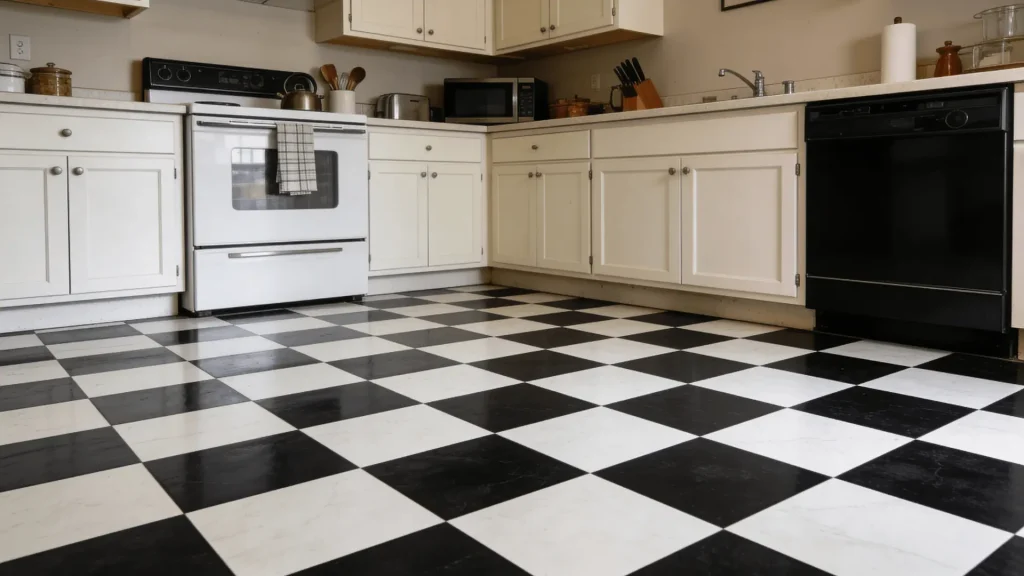
This flooring creates a strong visual pattern that feels structured and familiar. The contrast helps define the kitchen area clearly. It works in both traditional and modern spaces.
The layout also hides minor dirt patterns, making it practical while still adding a noticeable design element to the floor.
2. Light Grey Large-Format Porcelain Tiles
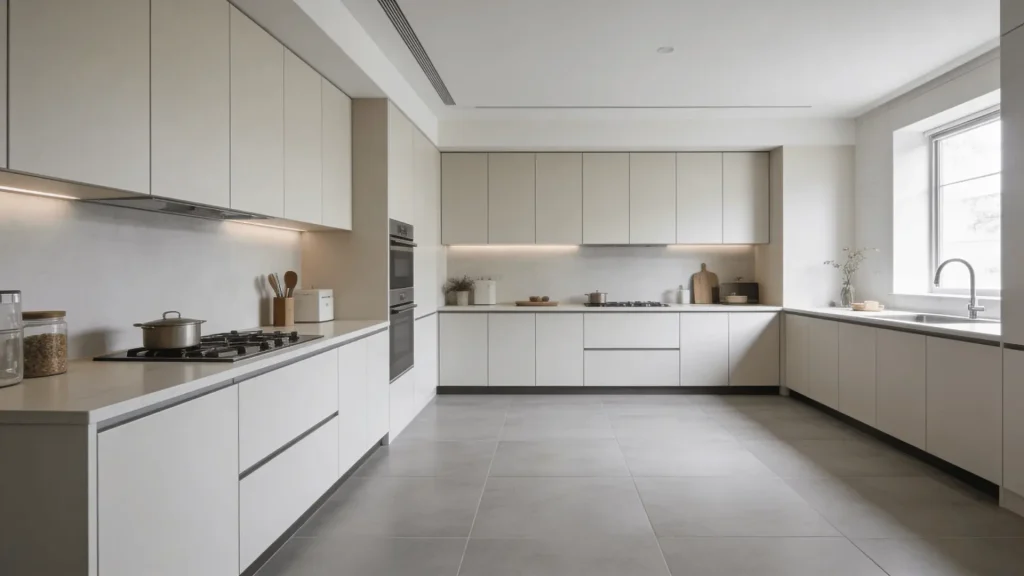
Large tiles reduce grout lines, which helps the floor look cleaner and less cluttered. Light grey is easy to match with cabinets and countertops.
It also reflects enough light to make the space feel slightly bigger. This option works well for kitchens that need both simplicity and low maintenance.
3. Beige Stone-Look Tiles for A Neutral Base
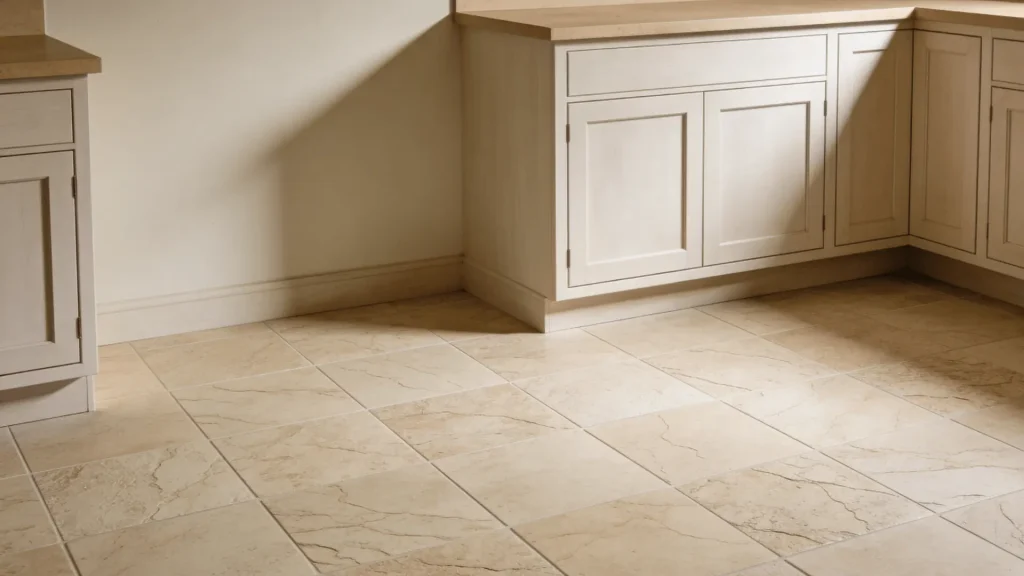
Beige stone-look tiles provide a calm and balanced foundation. They do not overpower other design elements, making them easy to pair with different styles.
The natural tone helps hide dust and small marks. This makes them a reliable choice for kitchens where flexibility and easy upkeep are important.
4. White Marble-Look Tiles with Subtle Veining
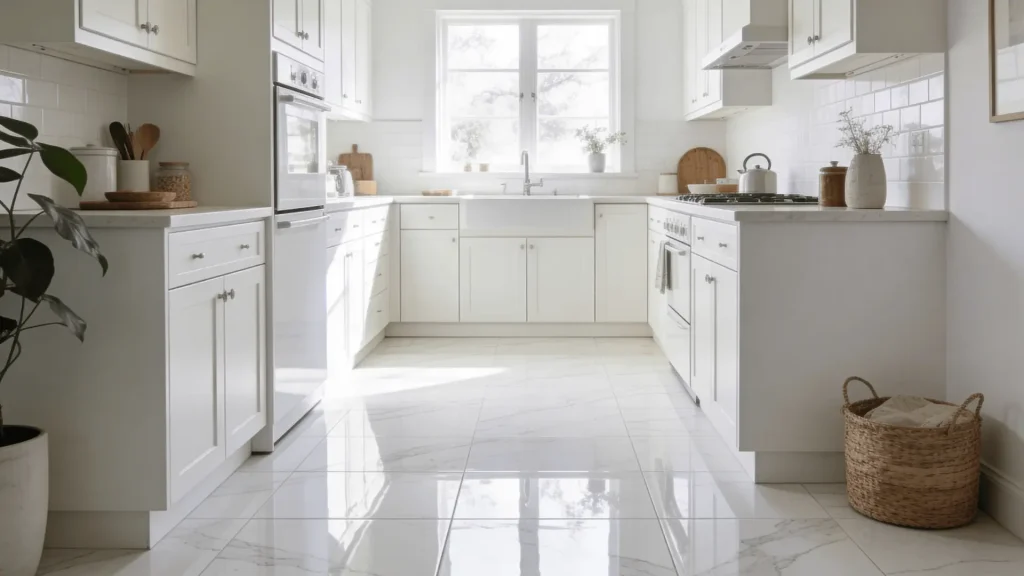
These tiles offer the look of marble without the heavy maintenance. The light surface reflects more light, helping the kitchen feel brighter.
Subtle veining adds detail without making the floor too busy. It works well in kitchens that need a clean and slightly refined finish.
5. Warm Oak Engineered Wood Flooring
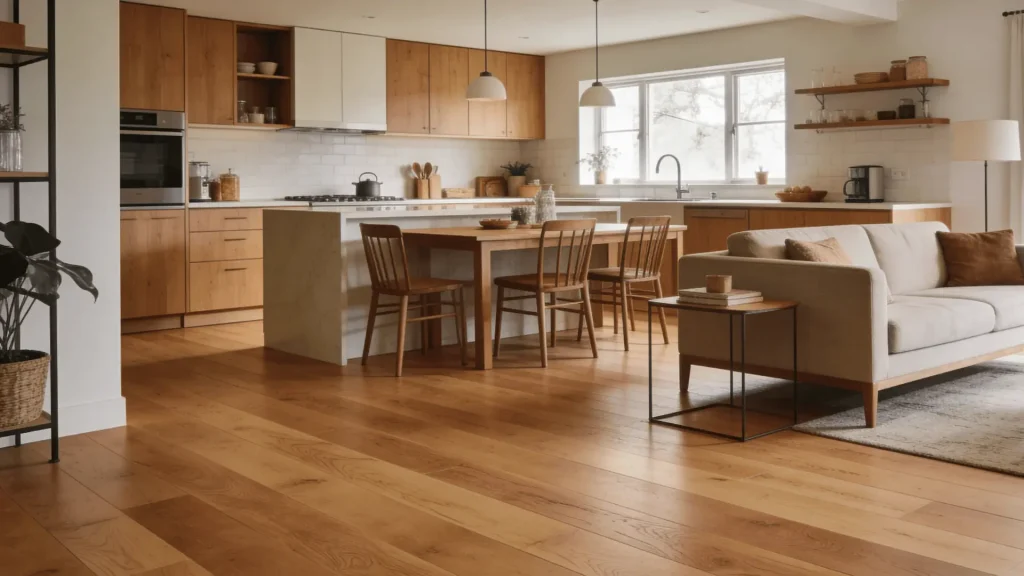
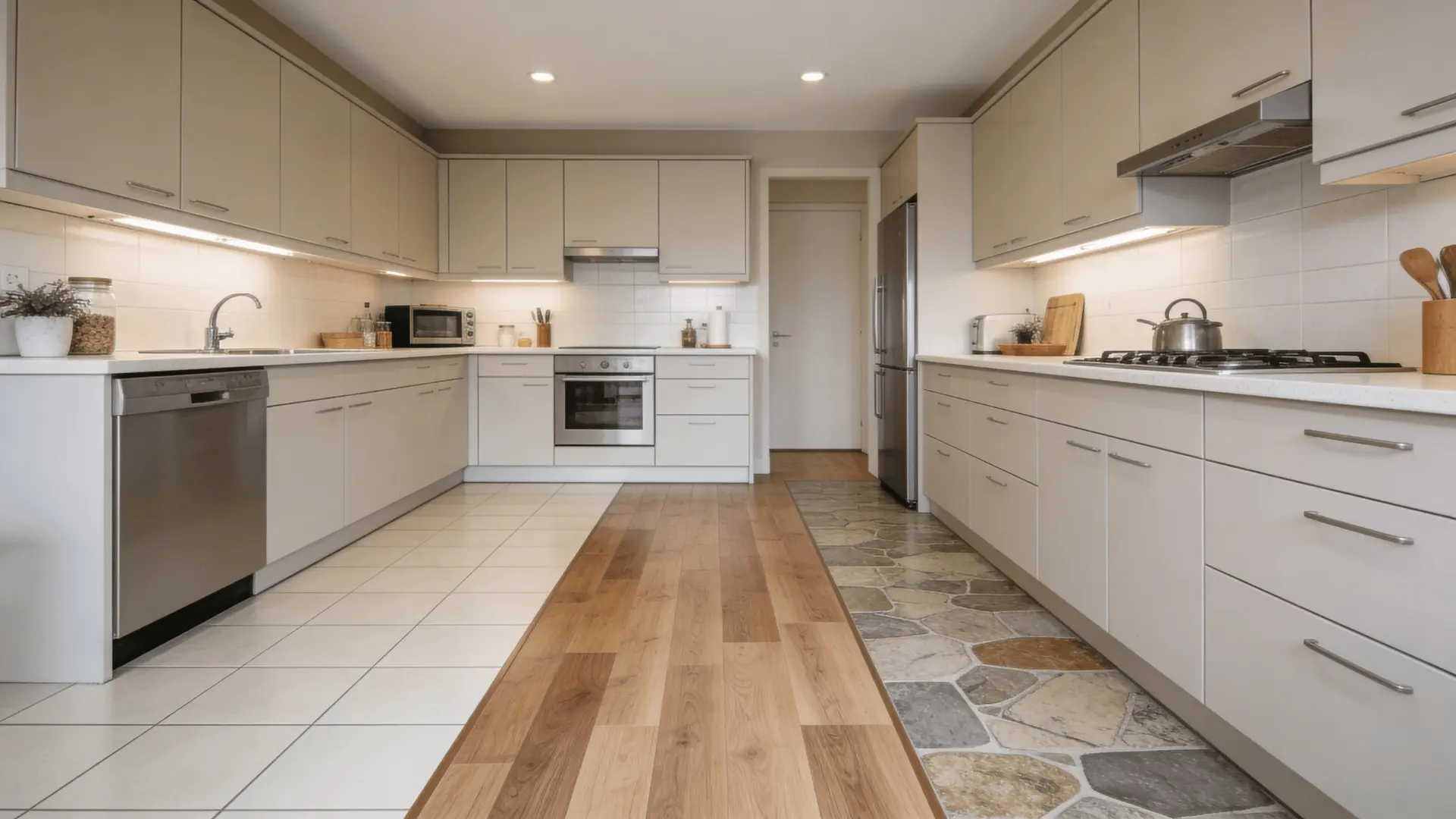
Engineered wood brings warmth and a natural feel to the kitchen. It works well in open layouts by connecting the kitchen with other areas.
Compared to solid wood, it handles moisture better. This makes it a more practical option for kitchens that still want a soft and inviting look.
6. Straight Lay Subway Tile Flooring
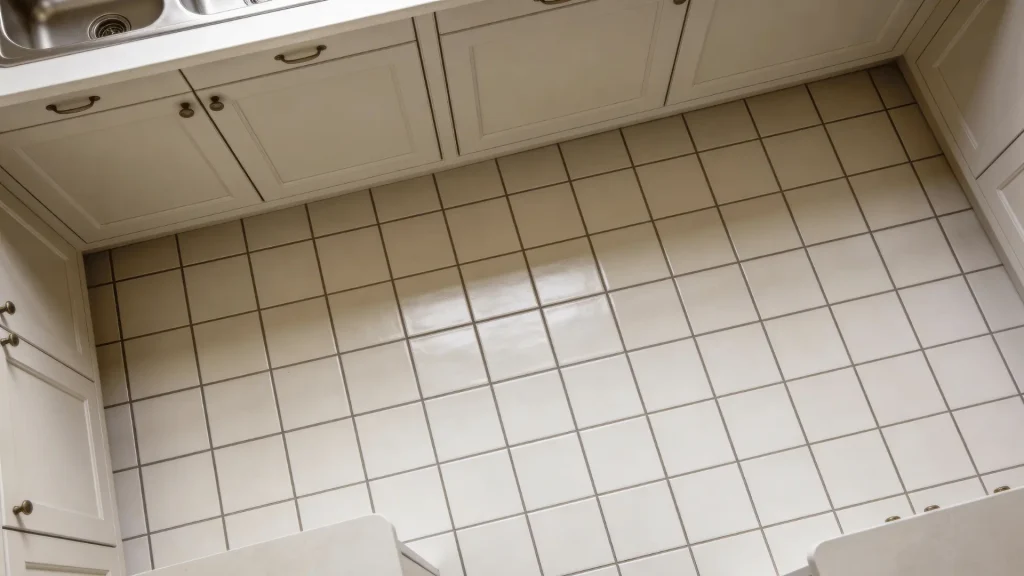
A straight grid layout keeps the design simple and easy to follow. It creates a clean and organized appearance without drawing too much attention.
This style works well in both modern and classic kitchens. The even pattern also makes cleaning easier since dirt does not collect in complex layouts.
7. Soft Taupe Ceramic Tiles for A Clean Look
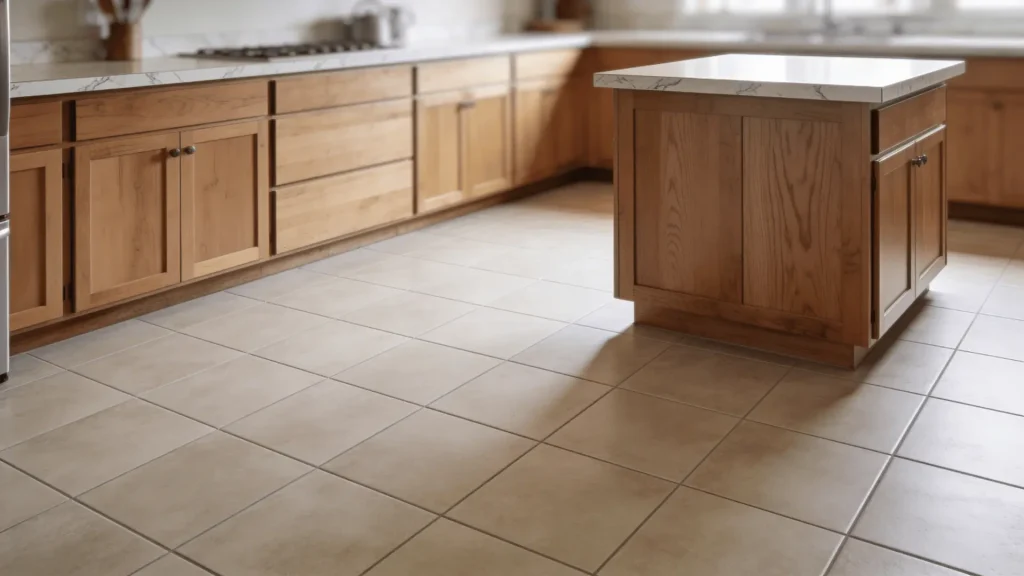
Taupe sits between grey and beige, creating a balanced tone. It helps hide dust and daily marks, which is useful in busy kitchens.
This color works with both warm and cool design schemes. It keeps the space looking calm while still being practical for everyday use.
Modern and Minimal Kitchen Floor Ideas
These flooring styles focus on clean lines, simple layouts, and smooth surfaces that support a calm and clutter-free kitchen design.
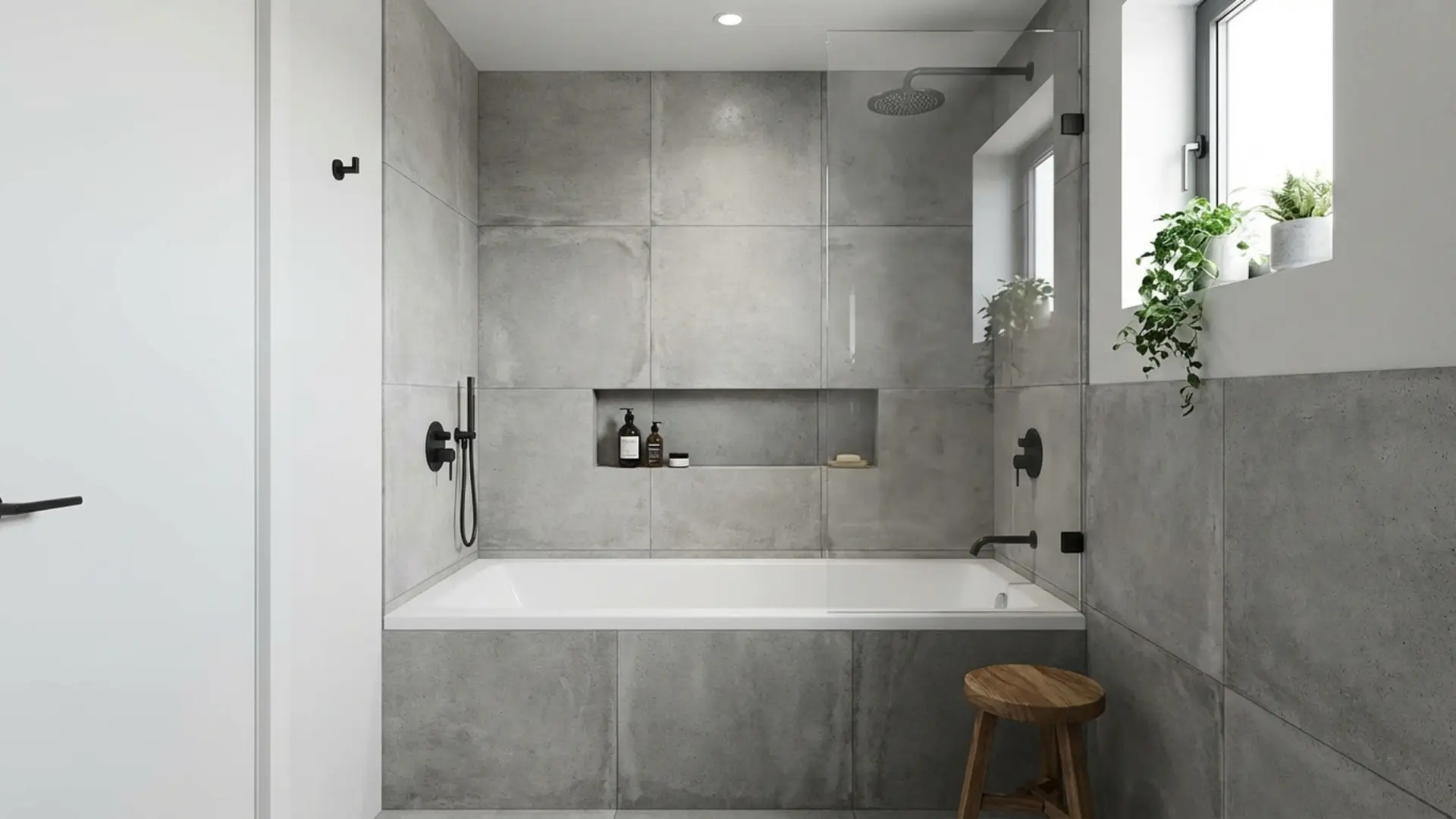
8. Matte Finish Concrete-Look Tiles
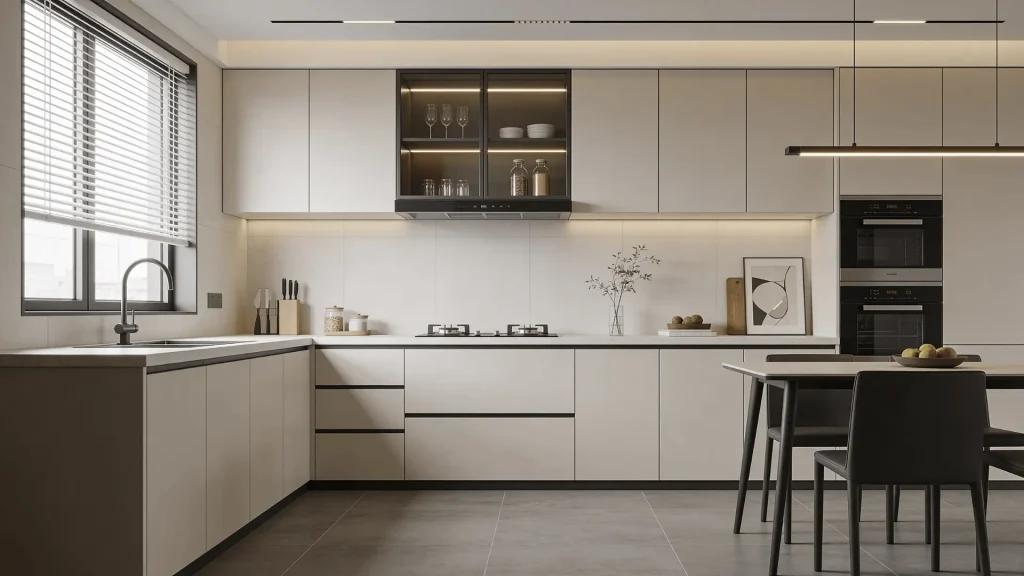
These tiles give a clean and grounded appearance. The matte finish reduces glare and helps hide smudges and footprints.
They work well in kitchens that focus on simple and practical design. This option is also easier to maintain compared to glossy surfaces that show marks quickly.
9. Seamless Large Slab Porcelain Flooring
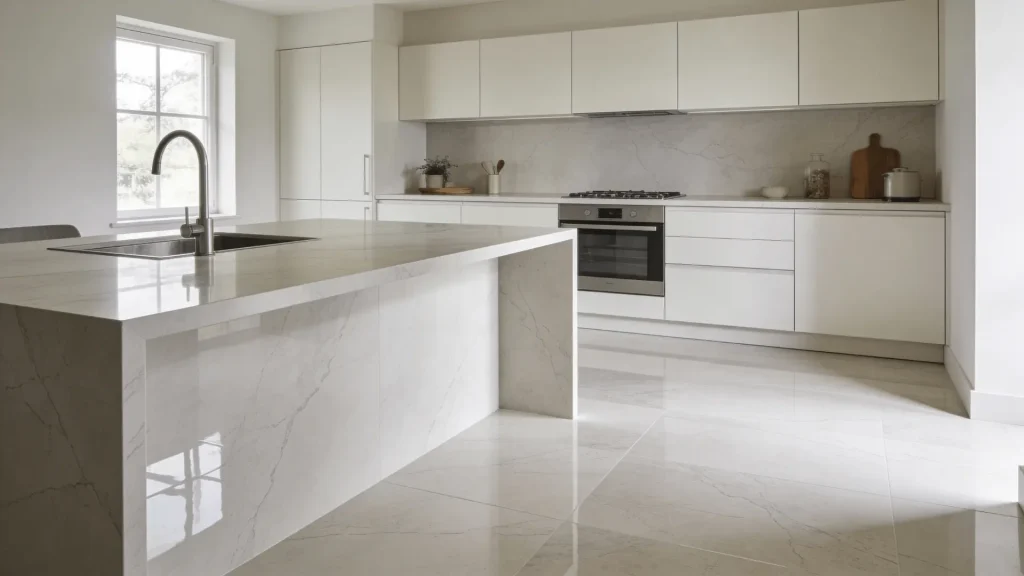
Large slabs reduce joints and create a smooth, continuous surface. This makes the kitchen look more open and less busy. Fewer grout lines also mean easier cleaning.
It works well in modern kitchens where a simple and uninterrupted floor design helps maintain a neat overall appearance.
10. Charcoal Grey Tiles with Minimal Grout Lines
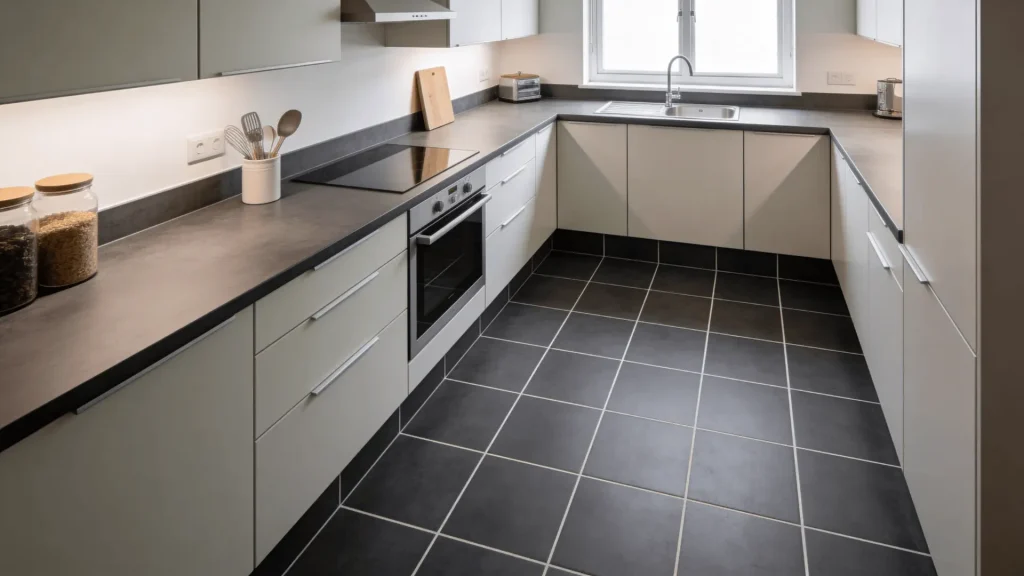
Charcoal grey adds depth without making the space feel too dark. Thin grout lines keep the floor looking sharp and clean.
This option works well in kitchens that need a modern touch. It also hides stains better than lighter floors, making it easier to maintain daily.
11. Monochrome Kitchen Floor with Matching Tones
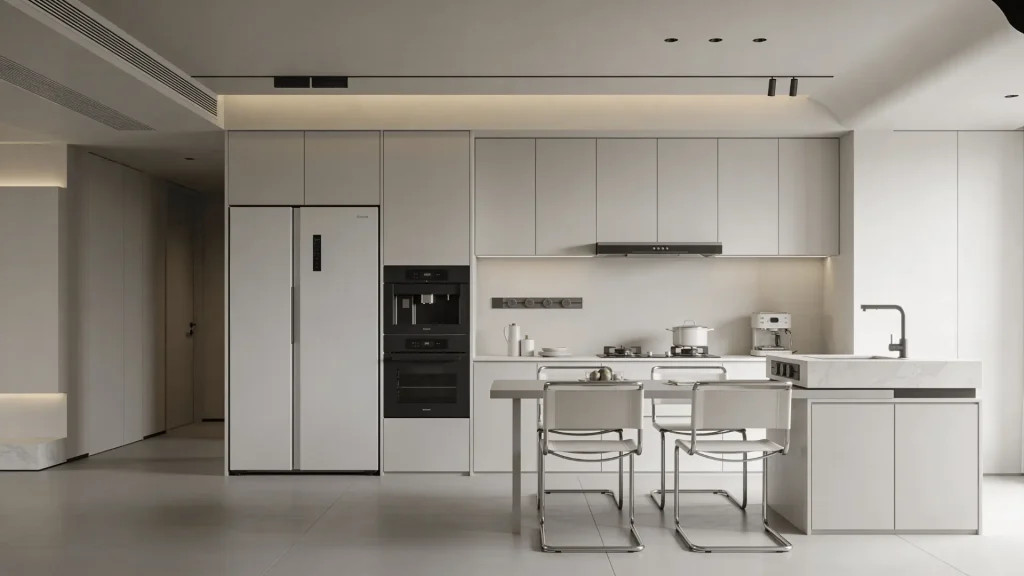
Using a single color across the floor creates a uniform look. It removes visual breaks and helps the kitchen feel more organized.
This approach works well in minimal designs where simplicity matters. It also allows cabinets and other elements to stand out without competing with the flooring.
12. Polished Tiles for A Sleek Finish
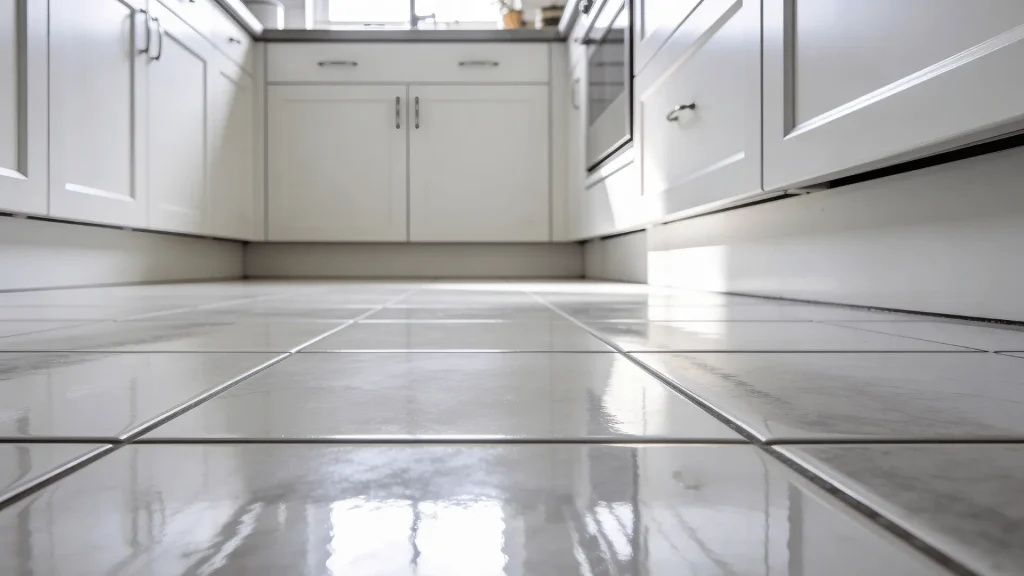
Polished tiles reflect light and give the floor a sharper look. They work well in kitchens with good natural or artificial lighting.
However, they can show smudges and water marks more easily. This option suits spaces where appearance is a priority and regular cleaning is manageable.
13. Rectangular Tiles in A Stacked Layout
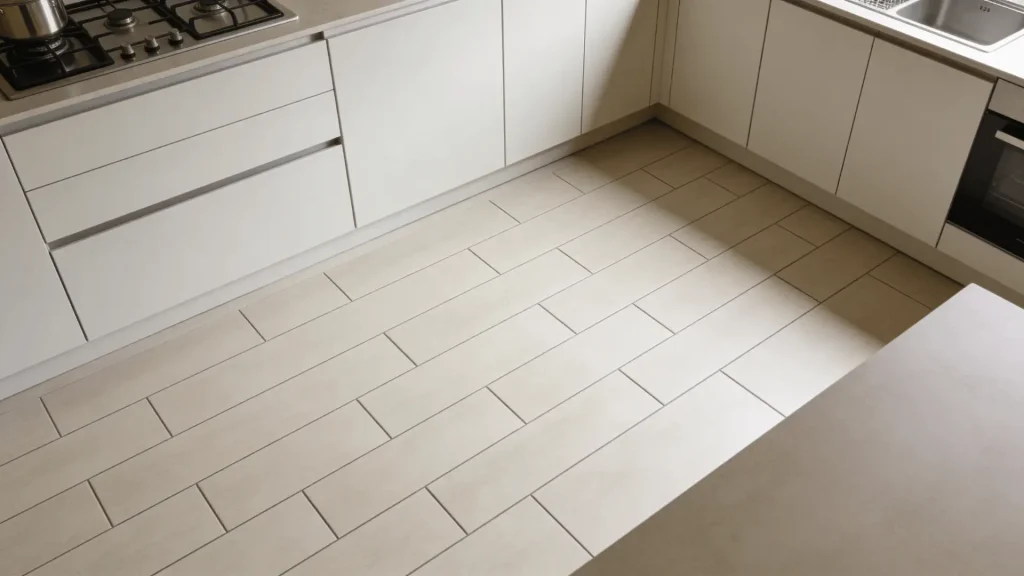
This layout creates straight and clean lines that guide the eye across the room. It keeps the design simple and structured.
It works well in modern kitchens that focus on order and clarity. The layout also helps make narrow kitchens appear slightly longer.
14. Industrial Cement-Look Flooring Tiles
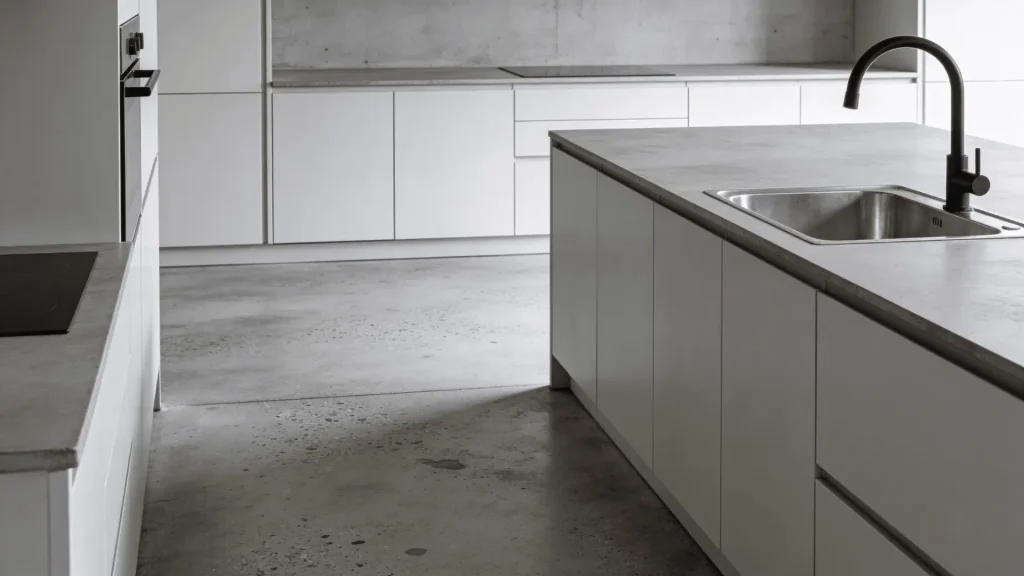
Cement-look tiles offer a raw and simple finish without using real concrete. They pair well with metal fixtures and minimal cabinetry.
This option is suitable for kitchens that focus on function and durability. The surface also hides marks better than highly polished flooring options.
15. Micro-Cement Seamless Flooring
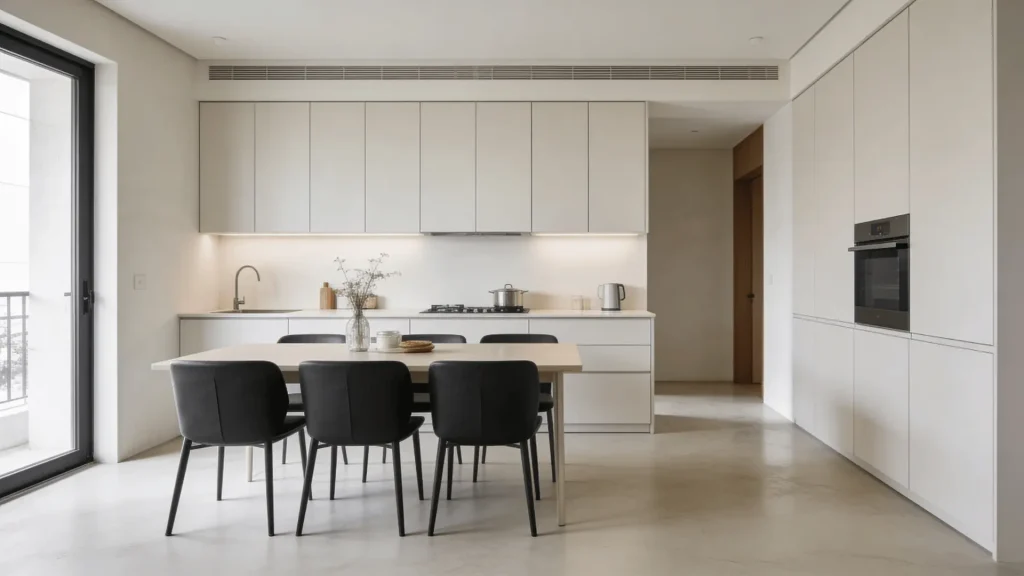
Micro-cement creates a smooth surface with no visible joints. This gives the kitchen a clean and continuous appearance. It is water-resistant and easy to maintain.
This option works well in modern kitchens where both simplicity and practicality are important for daily use.
Bold and Statement Kitchen Floor Tile Ideas
These eye-catching flooring choices add strong visual impact and work best when the rest of the kitchen design stays simple and balanced.
16. Moroccan Patterned Tile Flooring
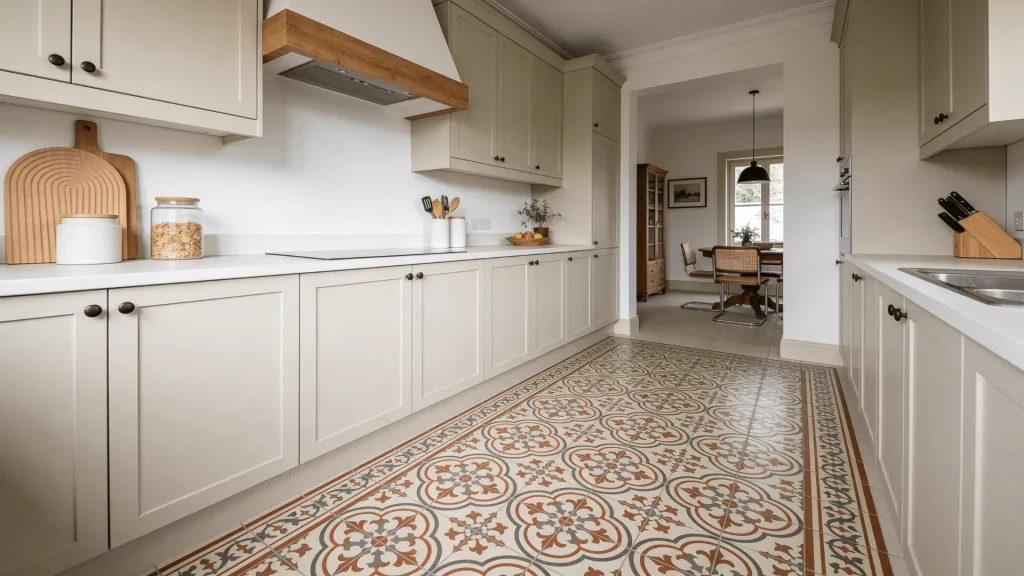
These tiles add strong visual interest with detailed patterns. They naturally draw attention and become a focal point.
This works best when other kitchen elements stay simple. The design adds character while still being functional, especially when the surface is easy to clean.
17. Black Geometric Tile Designs
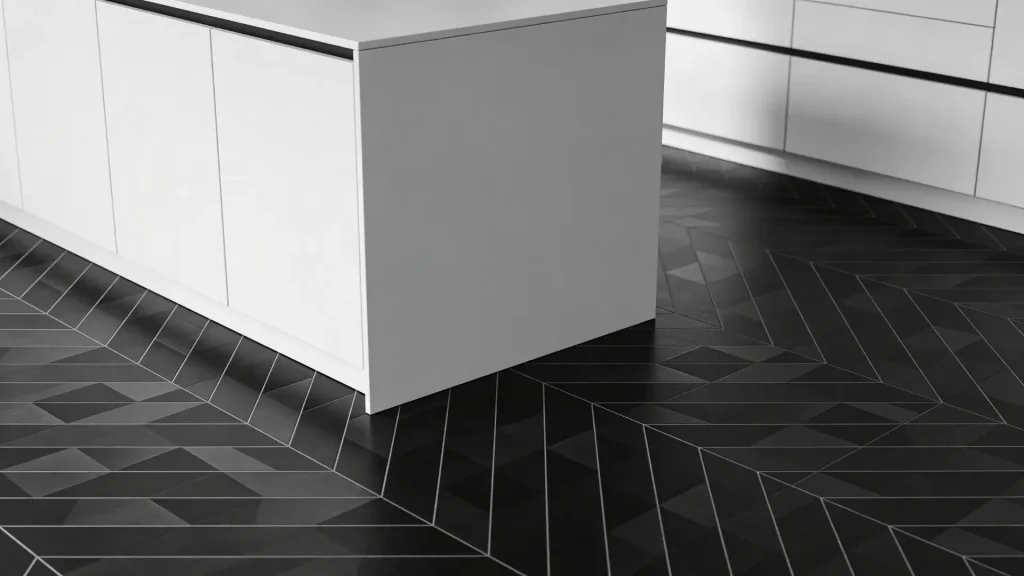
Geometric patterns create structure and depth without using bright colors. Black tiles add contrast and work well in modern kitchens. The design feels bold but controlled.
This makes it easier to pair with simple cabinets while still giving the floor a noticeable presence.
18. Multi-Color Encaustic Tiles
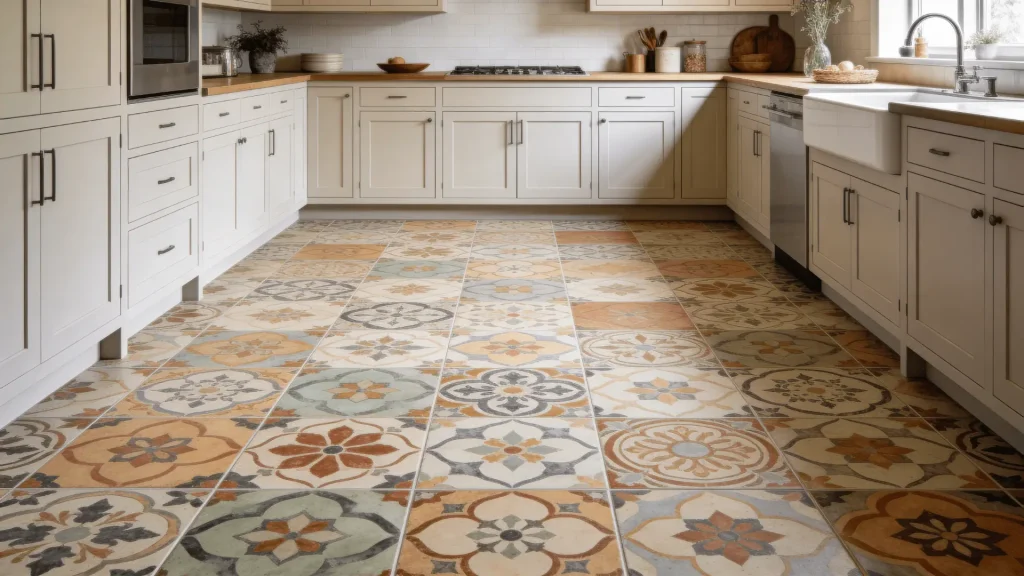
These tiles combine different shades and patterns to create a detailed floor design. They work best in kitchens with simple surroundings.
The variety of colors helps hide stains and wear. This makes them both visually interesting and practical for everyday kitchen use.
19. Deep Green Tile Flooring for Contrast
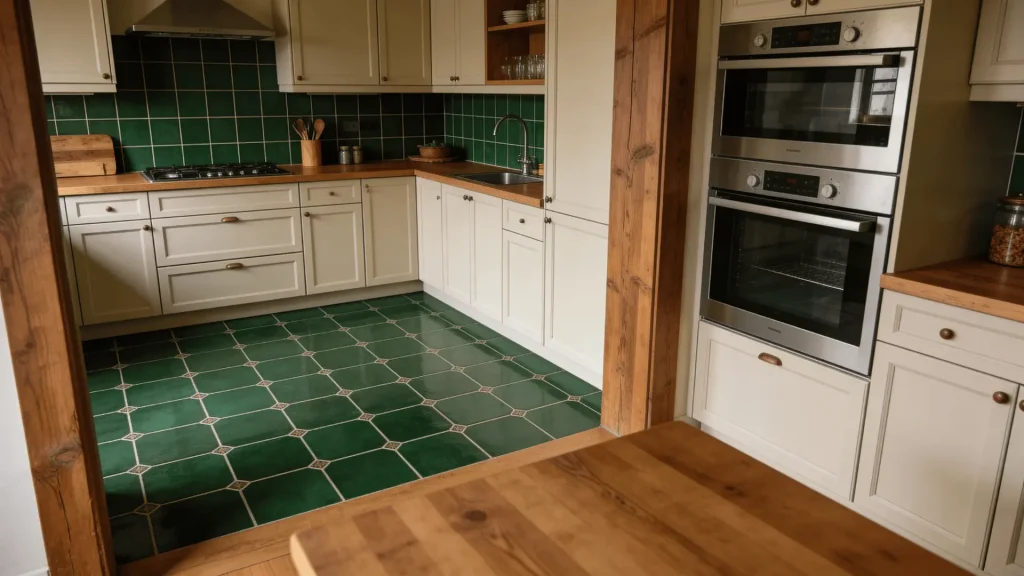
Deep green adds color in a controlled and balanced way. It pairs well with neutral cabinets and wooden finishes.
This creates a rich contrast without making the space feel overwhelming. It is a good option for kitchens that want subtle color while staying practical.
20. High-Contrast Diagonal Checkerboard
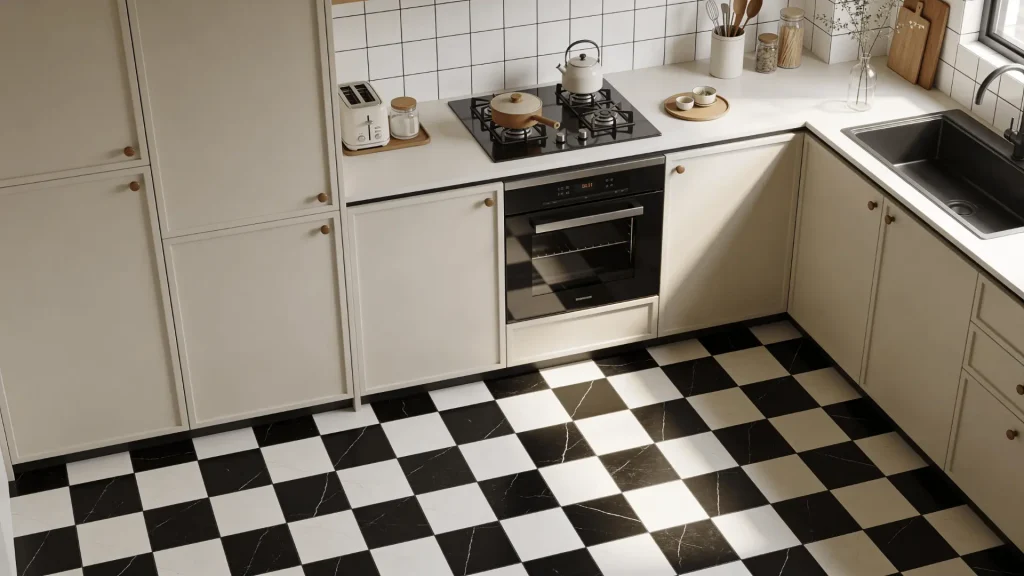
A diagonal layout adds movement and makes the floor feel more dynamic. It can help smaller kitchens appear wider by guiding the eye across the space.
This pattern gives a fresh take on a classic design while still maintaining structure and balance.
21. Artistic or Abstract Patterned Tiles
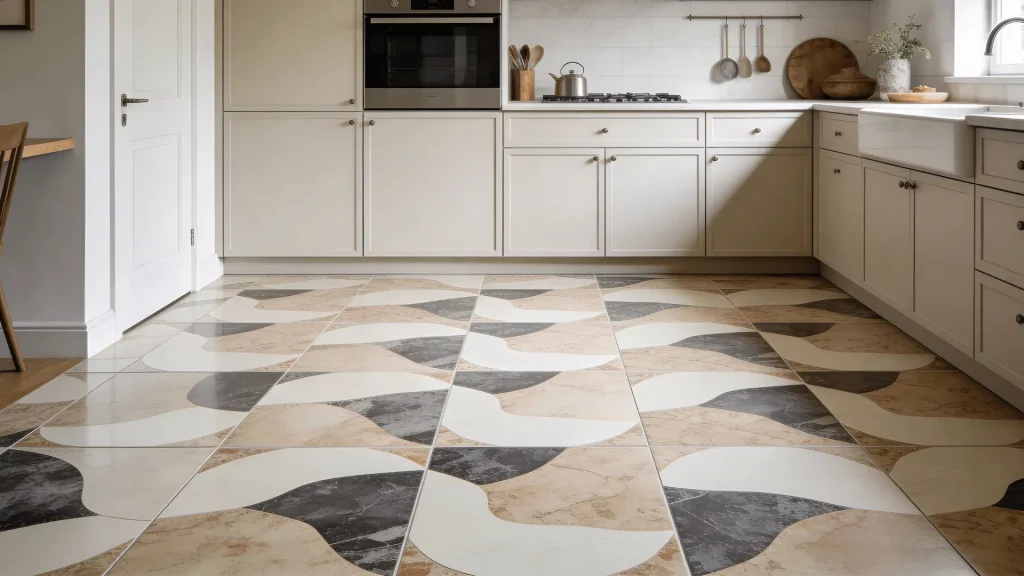
Abstract designs give the floor a unique and creative look. They work best when other elements in the kitchen remain simple. This helps avoid visual clutter.
These tiles are ideal for spaces where the floor acts as a key design feature while still handling daily use.
22. Glossy Statement Tiles in Rich Tones
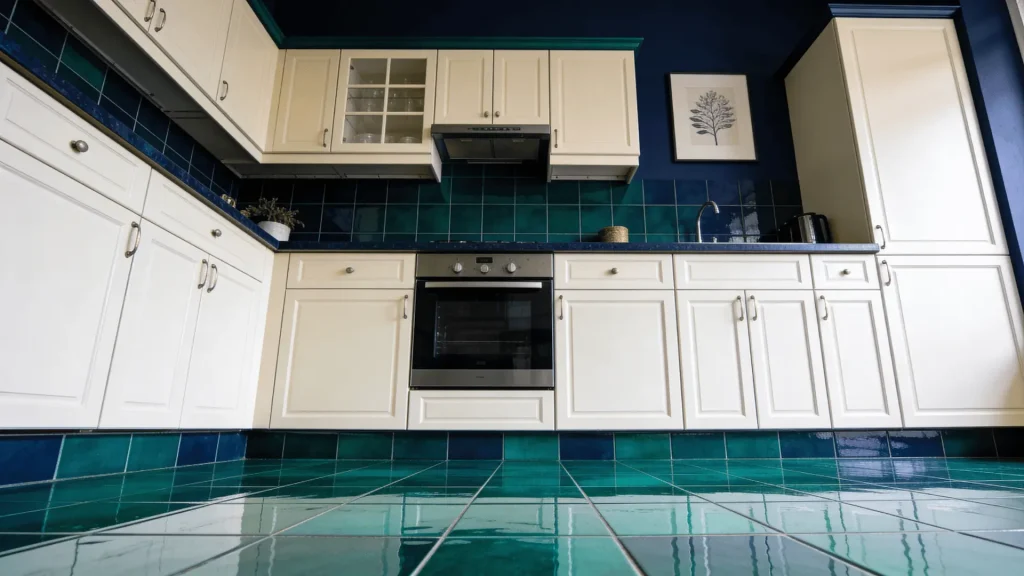
Glossy tiles reflect light and bring depth to the floor. Rich colors like navy, emerald, or deep brown add a bold finish.
These tiles work best when paired with simple cabinets so the floor does not feel overwhelming.
23. Terrazzo Flooring with Color Chips
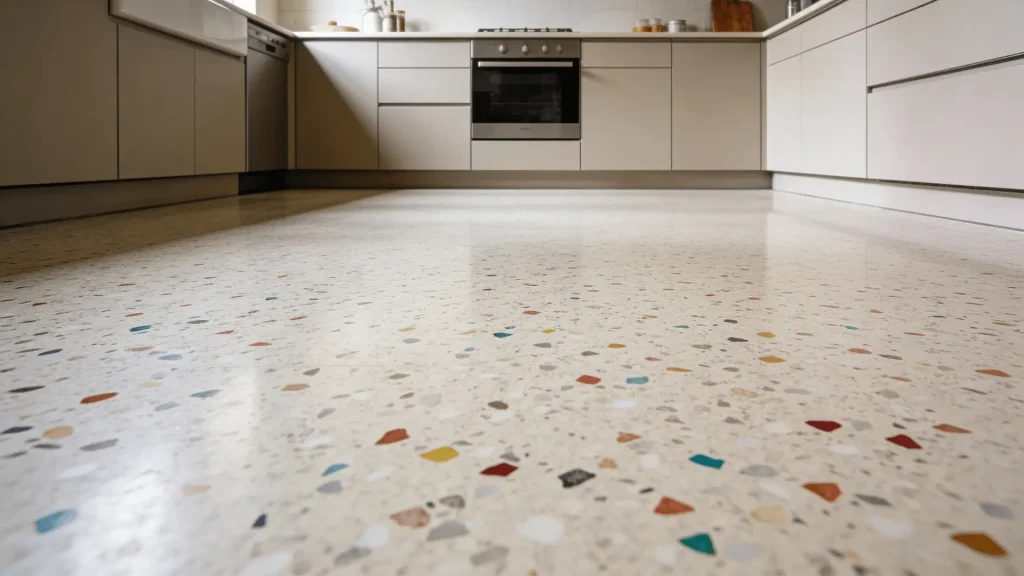
Terrazzo uses small stone, marble, or glass chips set in a solid base to create a textured surface. The natural variation adds depth without strong patterns.
It handles heavy use well and hides stains easily. This makes it a durable, low-maintenance flooring option that works well in modern kitchens.
Natural and Warm Kitchen Flooring Ideas
These flooring options focus on warmth, natural textures, and a relaxed feel. They help create a kitchen that looks comfortable while still working well for daily use.
24. Wood-Look Porcelain Tiles in Warm Tones
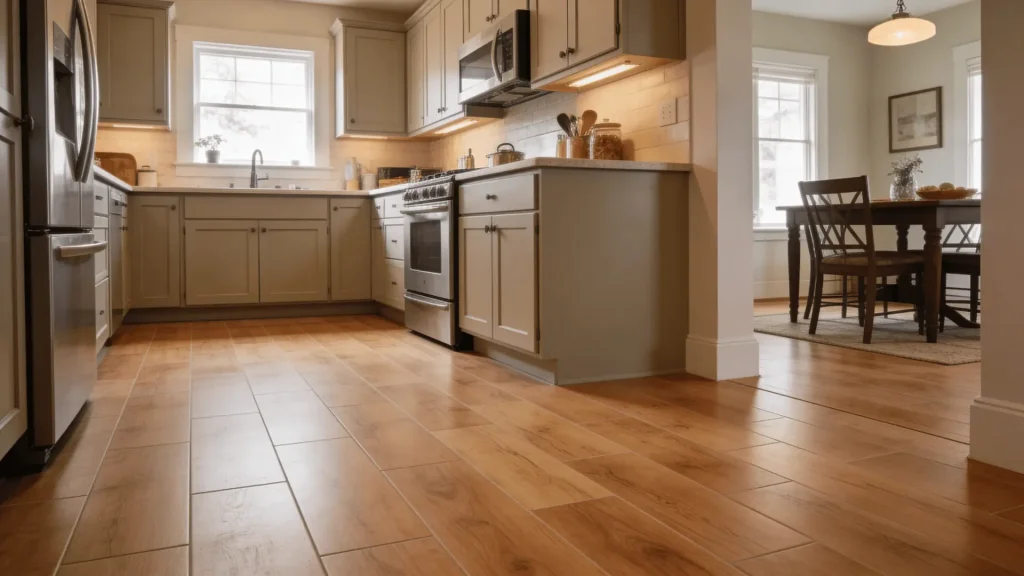
These tiles provide the appearance of wood with better resistance to moisture. They are ideal for kitchens that need durability without losing warmth.
The texture adds a natural feel. This option works well in homes that want both comfort and long-term performance.
25. Terracotta Tile Flooring for Rustic Feel
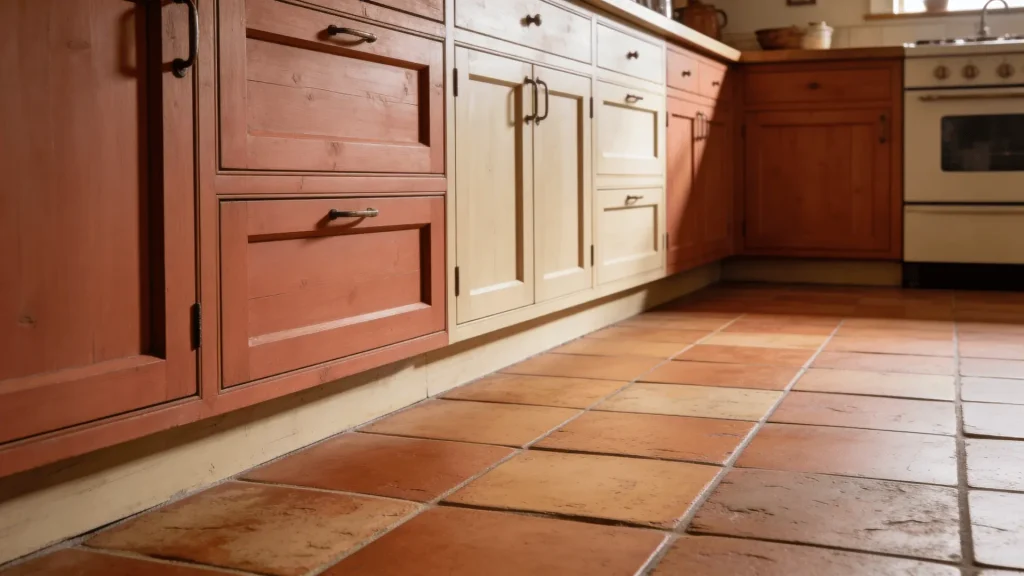
Terracotta tiles bring warmth and a slightly aged appearance. They work well in traditional or relaxed kitchen settings.
The natural color variations add depth without making the space feel busy. They also hide dirt well, making them suitable for everyday use.
26. Travertine Tiles with Natural Texture
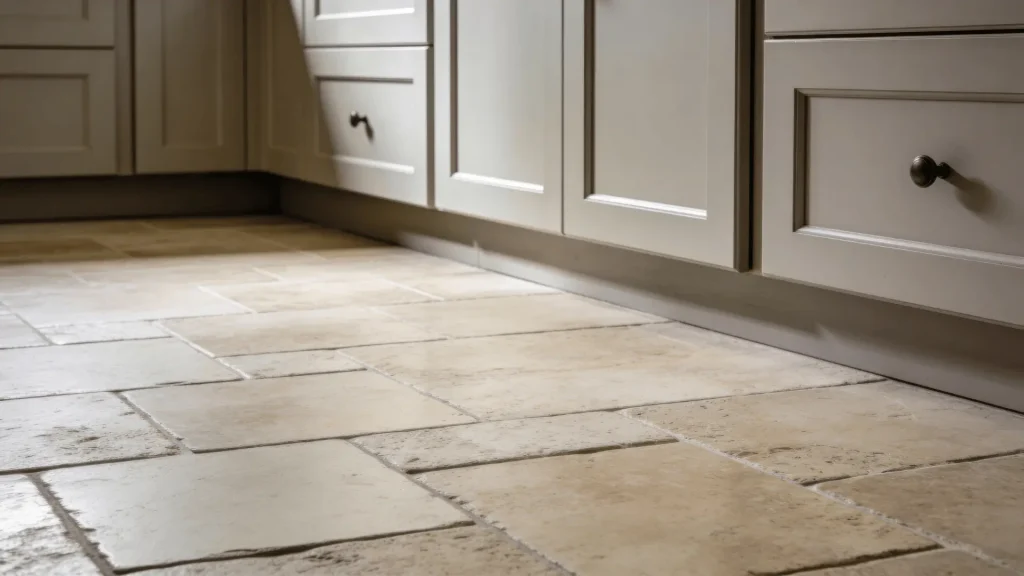
Travertine offers a soft and natural texture that feels grounded. It adds subtle variation without being too polished.
This makes it suitable for kitchens that focus on calm and simple design. The surface also provides decent grip, improving safety in wet areas.
27. Slate Tiles for Earthy Depth
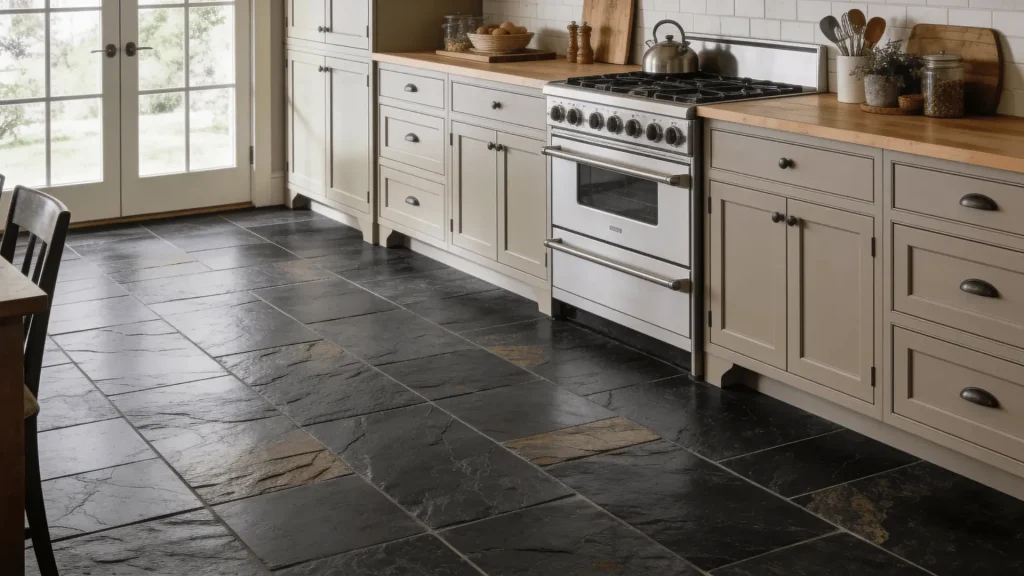
Slate is a natural stone with rich, dark tones that ground the kitchen visually and add depth. Its textured surface improves grip, making it safer in wet areas.
It is highly durable and resists wear over time. The uneven color also helps conceal dirt, scratches, and daily kitchen mess.
28. Sandy Beige Tiles for A Soft Look
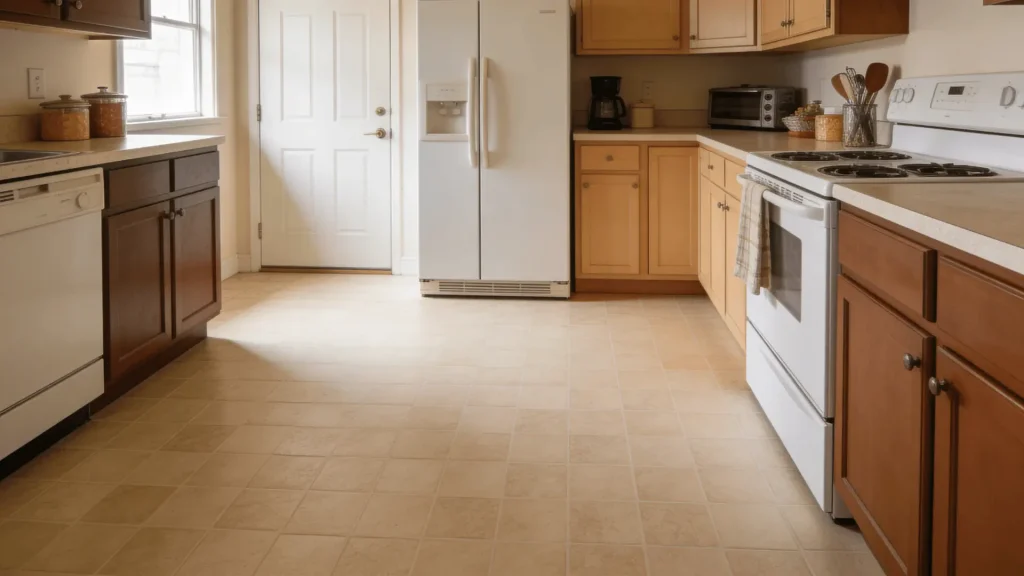
Sandy beige tiles create a light and warm atmosphere. They are easy to match with different cabinet styles and colors.
The tone helps hide minor dirt while keeping the space bright. This option works well for kitchens that need balance without strong contrast.
29. Bamboo Flooring for An Eco-Friendly Option
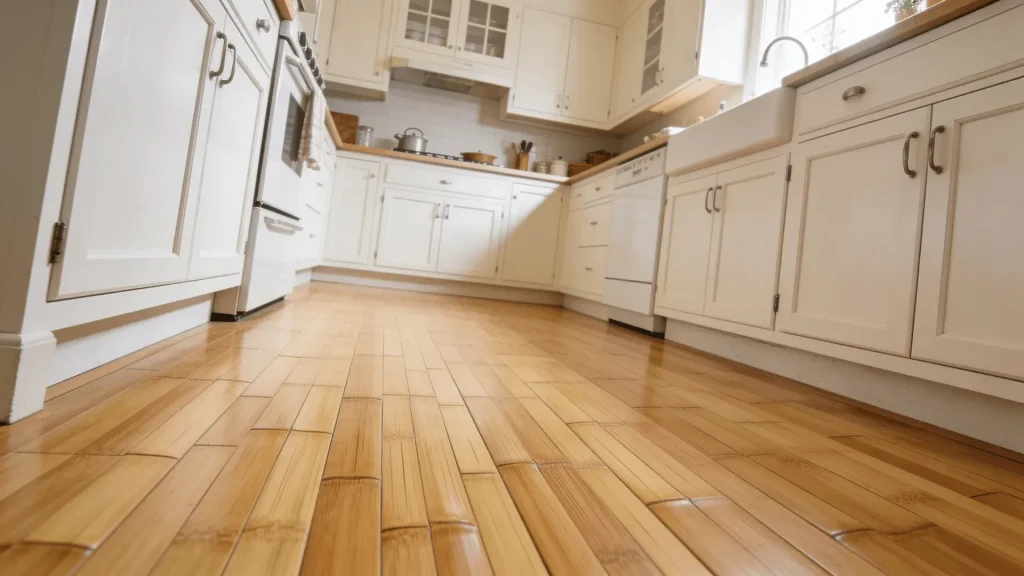
Bamboo offers a clean and natural look with a lighter tone. It is considered a more sustainable choice compared to hardwood.
It works well in kitchens that focus on simple materials. However, proper sealing is important to improve moisture resistance.
30. Cork Flooring for Soft and Quiet Use
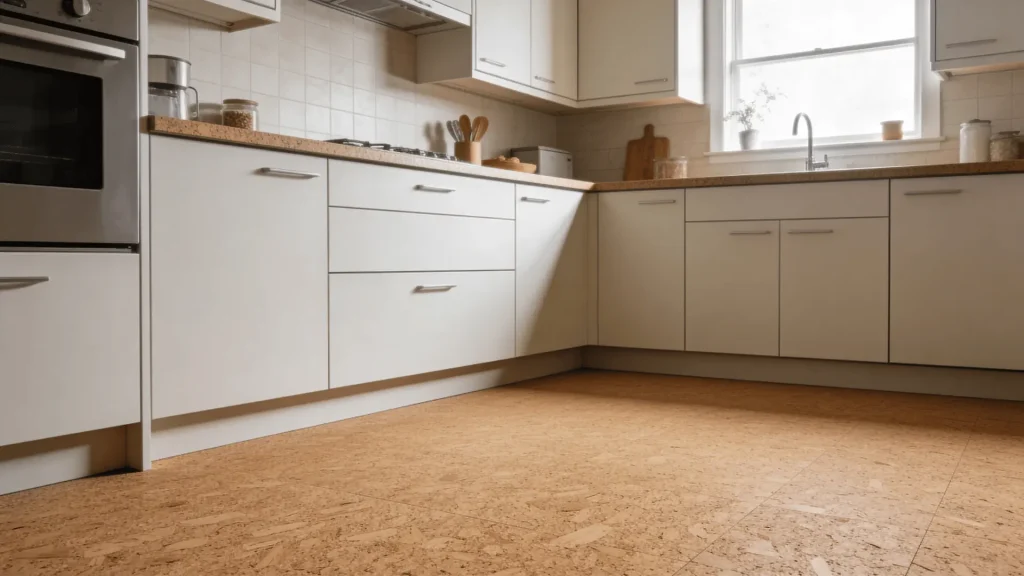
Cork provides a soft surface that is comfortable for long standing hours. It also reduces noise, which is useful in busy homes.
This flooring works best in kitchens with controlled moisture levels. It adds comfort while still supporting everyday kitchen activity.
Smart and Practical Flooring Ideas for Daily Use
These flooring options focus on function, safety, and ease of maintenance. They are designed to handle daily kitchen use without adding extra effort.
31. Luxury Vinyl Tile (LVT) for Busy Kitchens
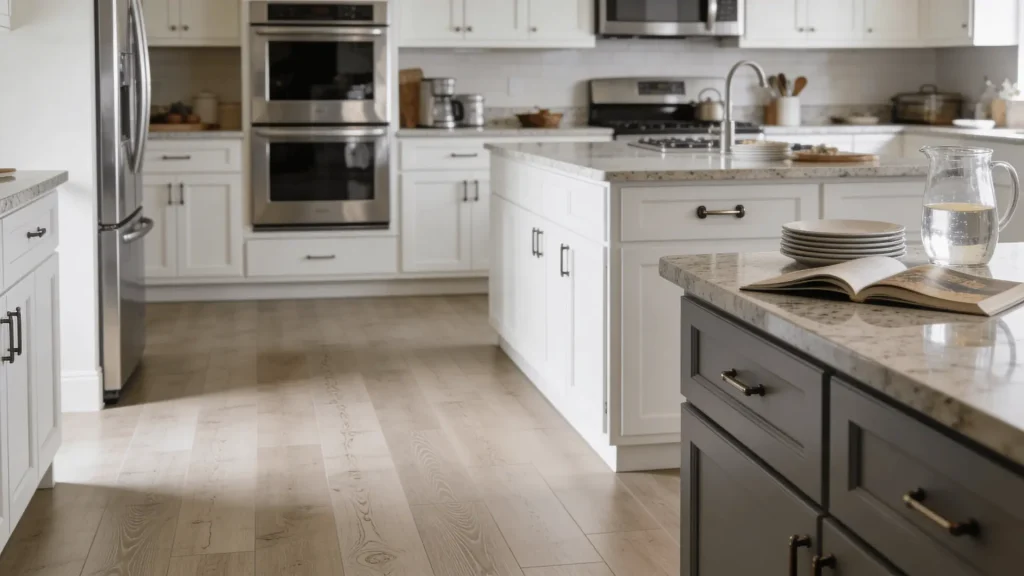
LVT is a layered flooring material designed to handle moisture, spills, and constant foot traffic. It feels softer than tile, making long kitchen hours more comfortable.
The surface resists stains and scratches, which reduces maintenance effort. With realistic wood and stone finishes, it offers both durability and design flexibility for modern kitchens.
32. Anti-Slip Textured Tiles for Safety
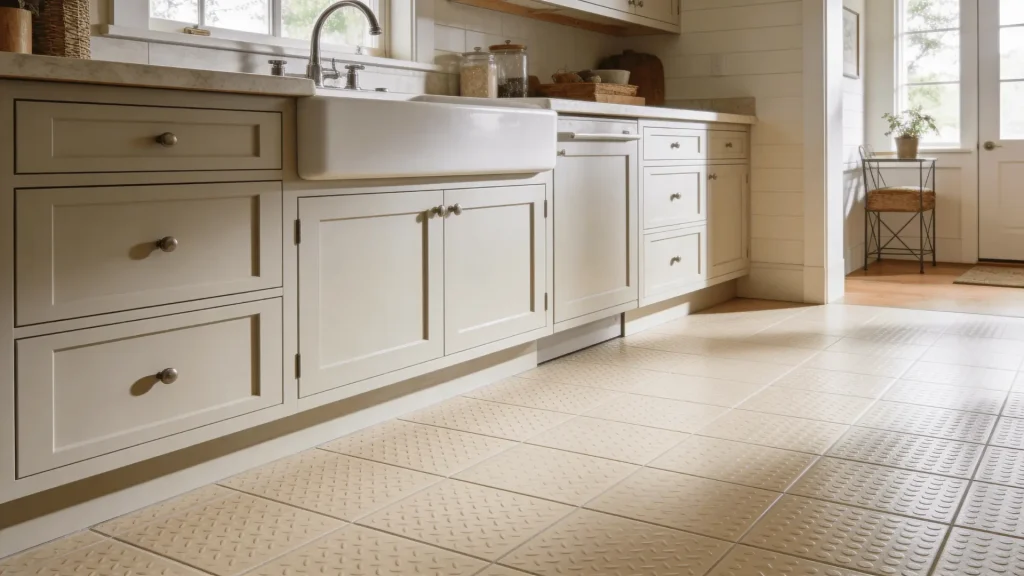
Textured tiles have a slightly rough surface that increases traction, especially when the floor is wet. This makes them safer for everyday kitchen use.
They are useful in high-traffic areas near sinks or cooking zones. Despite the added grip, they are still easy to clean and maintain with regular mopping.
33. Mixed-Size Tile Layout for Subtle Variation
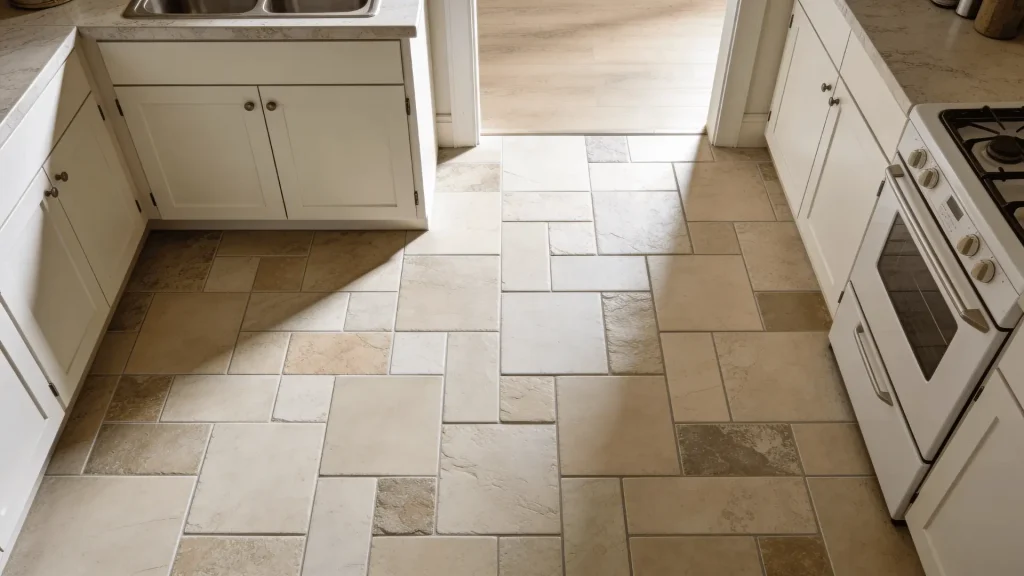
Using different tile sizes adds interest without making the floor feel crowded. Keeping the same color helps maintain balance.
This layout works well in kitchens that want a slight change from standard patterns while still keeping the design controlled.
34. Waterproof Laminate Flooring for Easy Care
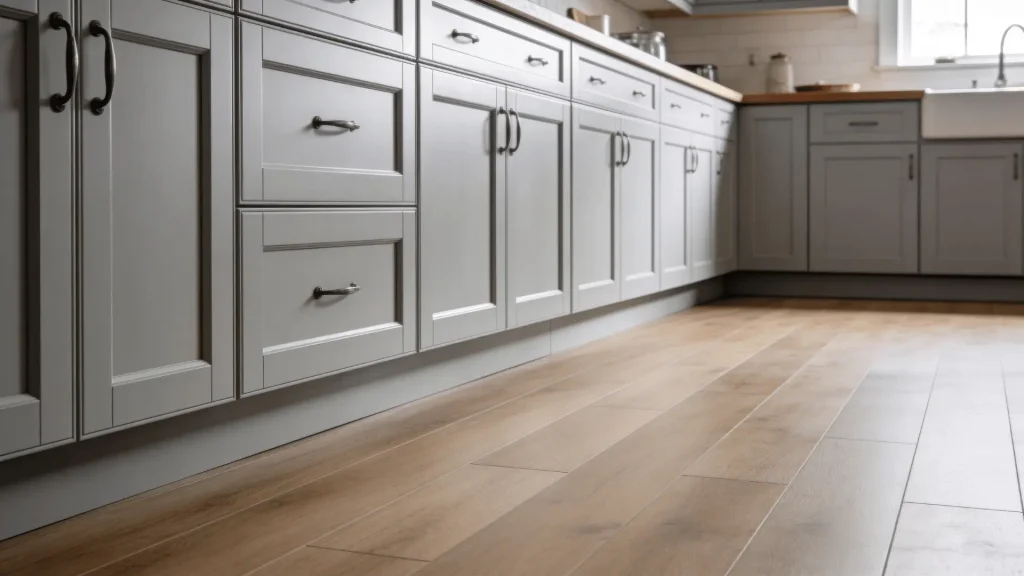
Waterproof laminate offers the look of wood with better resistance to moisture. It is more budget-friendly and easier to maintain.
This makes it a practical choice for kitchens that need both style and convenience without the cost of real hardwood.
35. Rubber Flooring for High-Use Kitchens
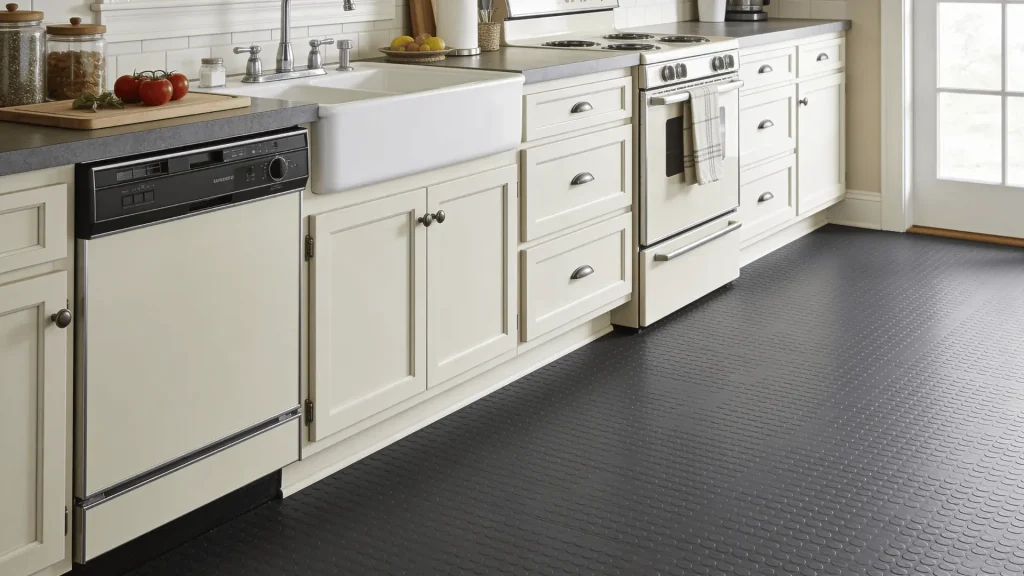
Rubber flooring is highly durable and provides a strong grip underfoot. It is comfortable to stand on and handles heavy traffic well.
It works best in kitchens where safety, comfort, and long-term durability are the main priorities.
Best Color Choices for Kitchen Flooring
Floor color affects how your kitchen looks, feels, and performs daily. It can make the space appear larger, brighter, easier to maintain, and better balanced with the overall design.
- Neutral colors like white, grey, beige, and taupe are the safest choice. They reflect light, make the space feel open, and match easily with changing cabinets or countertops over time.
- Dark floors like charcoal, deep brown, or black add contrast and depth. They work well in larger kitchens but can show dust, scratches, and water marks more easily.
- Earthy tones such as terracotta, warm browns, and sandy shades create a relaxed and inviting feel. They also hide dirt better, making them practical for everyday use.
- Bold colors like deep green, navy, or patterned mixes add personality and act as a focal point. They work best when the rest of the kitchen is kept simple to avoid a crowded look.
The right floor color comes down to balance, choosing a shade that fits your style while still working well with your space, lighting, and daily use.
How to Choose the Right Kitchen Flooring for Your Needs
Choosing the right kitchen flooring comes down to how you use your space, not just how it looks. Focus on practical factors to make a decision that works long-term.
| Factor | Focus | Best Options | Result |
|---|---|---|---|
| Budget & Long-Term Value | Upfront vs lifetime cost | Porcelain, LVT | Fewer repairs, longer lifespan |
| Busy / Family Kitchens | Traffic, spills, wear | Porcelain, Vinyl | Handles daily use easily |
| Low Maintenance | Cleaning effort | Vinyl, Porcelain | Easy upkeep, no special care |
| Open Floor Plans | Visual flow | Wood, Wood-look tiles | Smooth, connected look |
When you match flooring with your lifestyle, the decision becomes much simpler. The right choice will not only look good but also hold up well over time.
Common Mistakes to Avoid
- Picking Style Over Function: A floor may look good in photos but fail under daily kitchen use. Always check durability, water resistance, and wear before choosing based on appearance.
- Ignoring Slip Resistance And Safety: Smooth or glossy tiles can become slippery when wet. Choosing matte or textured finishes helps improve grip and reduces the risk of accidents.
- Choosing High-Maintenance Materials without Planning: Some flooring needs sealing or special cleaning to maintain its look. If you’re not prepared for upkeep, the surface can lose its finish quickly.
- Not Considering Lighting and Space Size: Floor color can look very different depending on light and room size. A poor choice can make the kitchen feel smaller or harder to maintain.
Many flooring choices go wrong not because of bad materials, but because key factors are overlooked. Knowing these common mistakes can help you avoid extra costs and frustration later.
Latest Kitchen Flooring Trends And What They Mean
Kitchen flooring trends are shifting toward a mix of style and practicality. Some focus on long-term performance, while others are more visual and may not last.
Large format and seamless flooring is gaining popularity because it reduces grout lines and creates a clean, open look. It’s practical, easy to maintain, and works well in modern or smaller kitchens.
Matte and low-gloss finishes are replacing glossy surfaces. They reduce glare, hide smudges, and offer better grip, making them both functional and easy to live with daily.
Sustainable flooring options like cork, bamboo, and certain vinyl types are becoming more common. This shift is driven by a focus on long-term value and environmentally conscious choices.
Natural textures and earthy colors are also trending. Wood-like grains, stone finishes, and warm tones create a softer look that blends easily with different kitchen styles.
Overall, the most reliable trends are the ones that improve usability while still fitting your design, not just those that look good for a short time.
Conclusion
Choosing the right kitchen floor tile idea means thinking beyond trends and focusing on how your kitchen works every day.
The best floors support your routine, handle moisture and wear, and still match your overall style. When you balance durability, safety, comfort, and color, the decision becomes much clearer.
Small details like finish, texture, and layout can make a big difference in long-term performance.
Take time to compare materials carefully, think about your household needs, and plan for the future. If you’re updating your kitchen, start with the floor and build the rest of the design around it.