
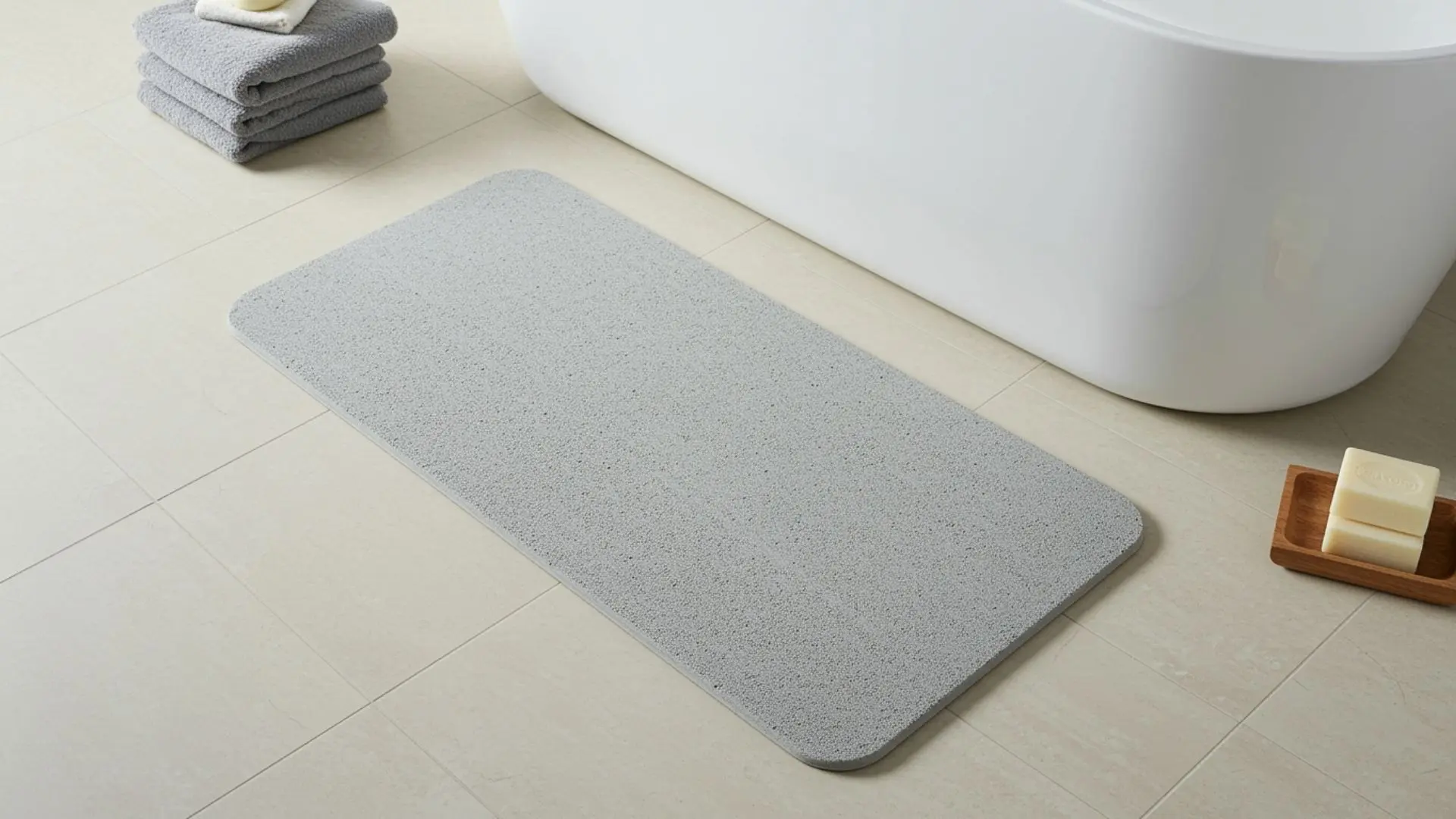
How to Clean a Stone Bath Mat: Step-by-Step Guide
A stone bath mat offers a unique alternative to traditional fabric mats. Made from natural minerals like diatomaceous earth, it’s designed to absorb moisture quickly, keeping your bathroom dry and hygienic.
But, like any product, it requires care to maintain its performance. From cleaning tips to restoring its absorbency, there are easy ways to keep your stone bath mat in top condition.
Today, I’ll give you the ins and outs of stone bath mat maintenance, with practical advice to enhance its lifespan and effectiveness.
Keep reading to find out how to clean and care for your stone bath mat to keep it functioning like new.
What is a Stone Bath Mat?
A stone bath mat is different from traditional cloth mats. It is made from compressed natural minerals that absorb moisture instantly.
Most mats use diatomaceous earth, which contains microscopic pores. These pores draw water away from the surface, allowing it to dry quickly.
Because of this design, the mat stays dry, reducing moisture on the floor. It also lowers the chances of mold or bacteria forming.
However, soap residue, dust, and minerals from water can slowly block these pores. When this happens, the mat may stop absorbing water efficiently.
Cleaning the mat regularly helps prevent build-up and keeps it working well.
Signs Your Stone Bath Mat Needs Cleaning
A stone bath mat usually gives clear signals when cleaning is needed. Paying attention to these signs helps prevent deeper stains. Here are common signs to look for:
- Water stays on the surface longer than usual
- Visible stains or darker patches appear
- The mat feels rough or dusty
- Soap residue forms a thin layer
- The surface looks dull instead of smooth
These changes usually mean the pores are partially blocked. Cleaning the mat can restore its original performance.
How to Clean a Stone Bath Mat: Step-by-Step Guide
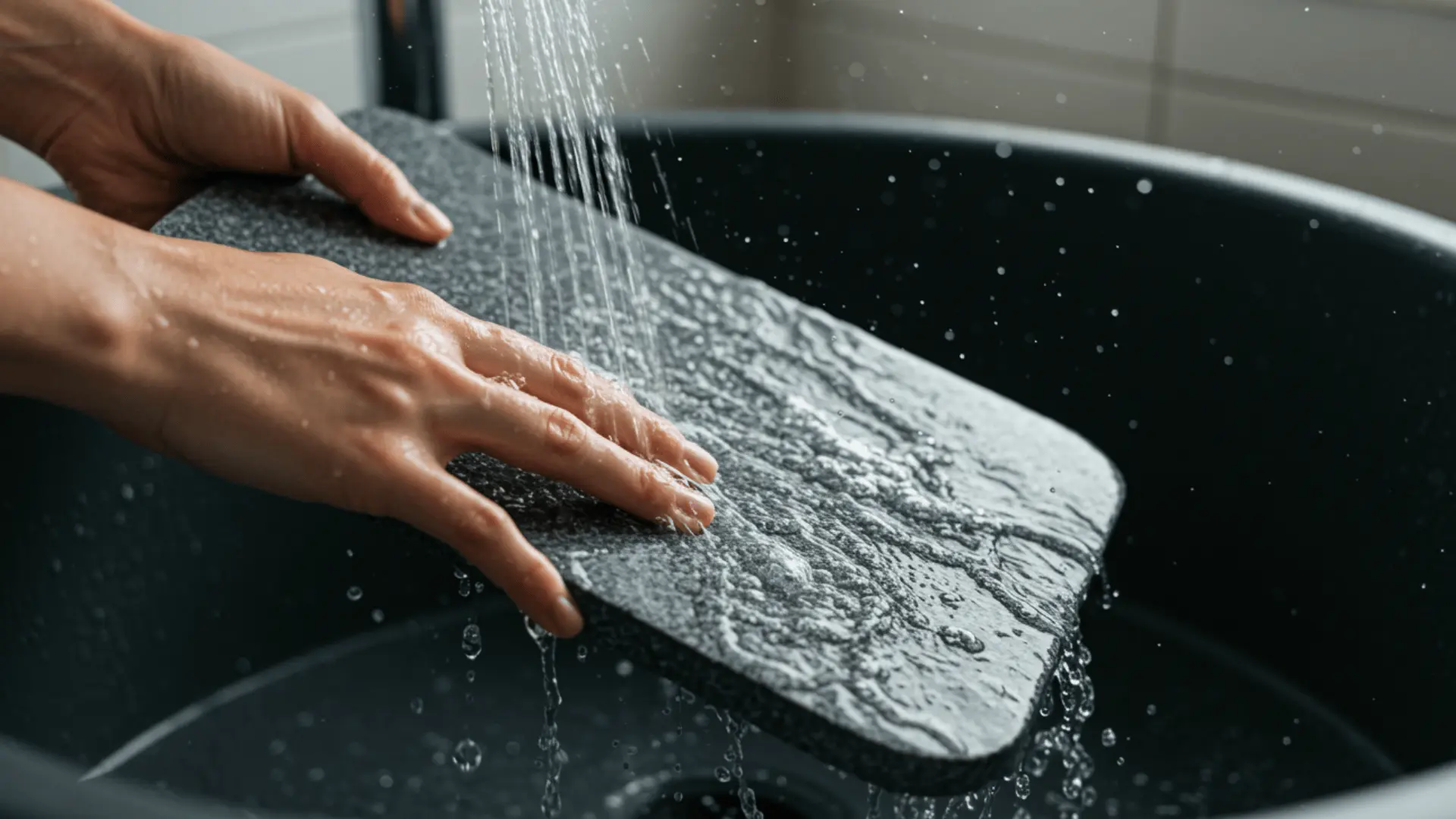
Cleaning a stone bath mat is simple and takes only a few minutes. The process removes dirt and keeps the mat absorbent. Follow these steps to clean it properly:
Tools and Supplies You Will Need
| What | What It’s Used For |
|---|---|
| Soft brush or sponge | Gently scrubs the surface without damaging the pores |
| Mild dish soap | Breaks down soap residue and body oils |
| Warm water | Rinses away dirt and cleaning solution |
| Microfiber cloth | Wipes excess moisture after rinsing |
| Fine sandpaper (very light grit) | Removes stubborn stains and restores absorbency |
| Baking soda | Lifts deeper stains when mixed into a paste |
| White vinegar (optional) | Helps remove mineral build-up from hard water |
Step 1: Remove Loose Dirt
Start by brushing off any dust or debris from the mat’s surface. This step helps prevent dirt from spreading during cleaning. To make it easier, gently shake the mat over a sink or take it outside to remove loose particles before proceeding.
Step 2: Rinse with Warm Water
Rinse the mat with warm water to remove surface residue. This preps the mat for deeper cleaning. Avoid soaking the mat for too long, as prolonged exposure to water can weaken the material.
Step 3: Scrub with Mild Soap
Apply a small amount of mild dish soap to a soft sponge or brush. Gently scrub the mat in circular motions to break down soap residue and oils trapped in the pores. Be sure to focus on any areas with visible build-up.
Step 4: Rinse Thoroughly
After scrubbing, rinse the mat with clean water to remove all soap. Make sure no residue remains, as soap build-up can reduce the mat’s absorbency and performance.
Step 5: Dry the Mat Completely
Place the mat in a well-ventilated area and let it air dry completely before using it again. Proper drying ensures the material maintains its shape and continues to absorb moisture efficiently.
By following these simple steps regularly, you’ll keep your stone bath mat clean, fresh, and fully functional.
Safe Ways to Remove Stains From a Stone Bath Mat
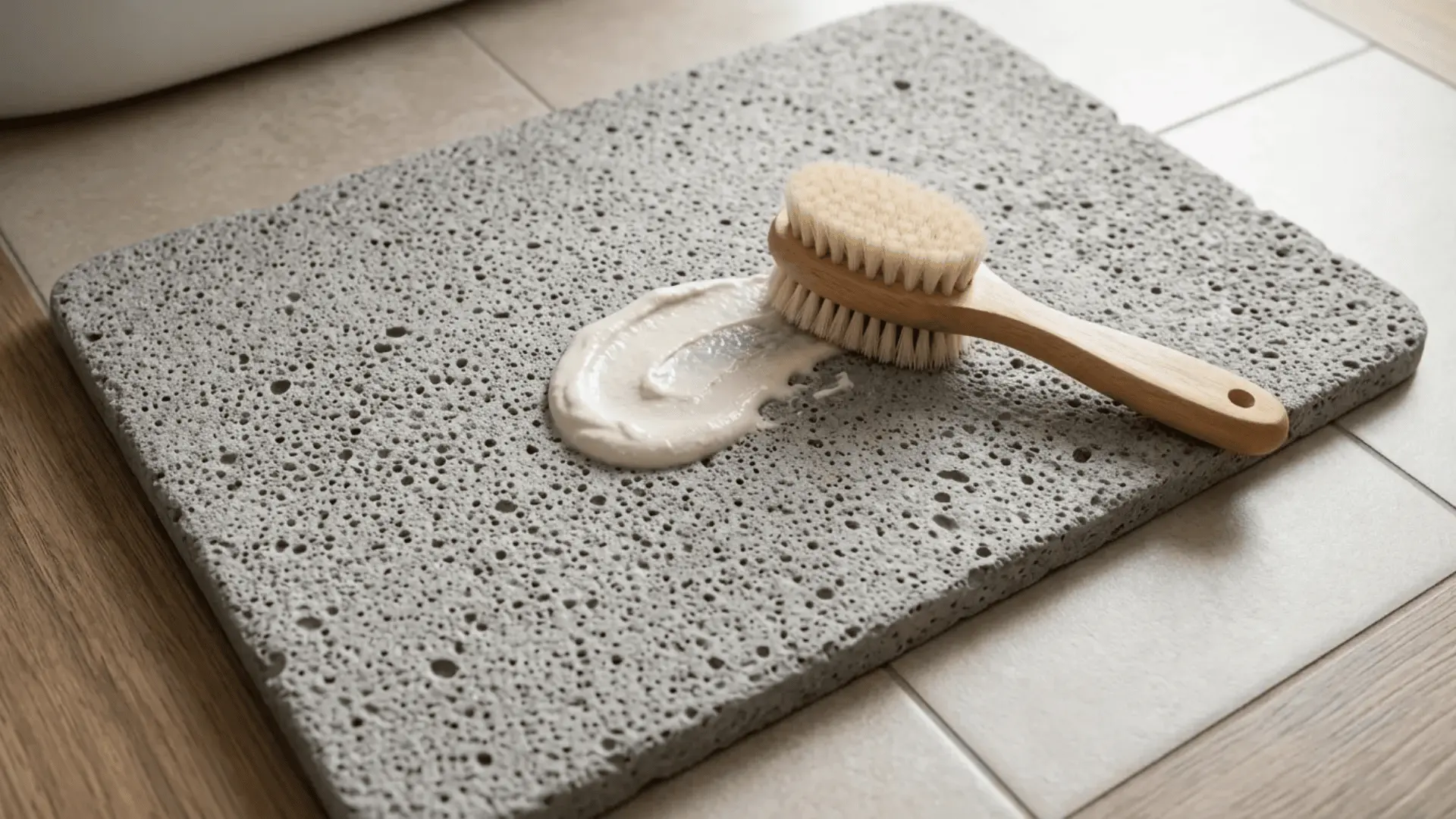
Stone bath mats can develop stubborn stains over time due to soap, oils, or hard water minerals. Here’s how to safely and effectively remove these stains:
1. Baking Soda Paste (For Light Stains and Residue)
Baking soda is great for lifting build-up without damaging the stone surface.
- Mix a small amount of baking soda with water to form a thick paste.
- Apply the paste directly to the stain.
- Gently scrub the stain in circular motions with a soft brush or sponge.
- Rinse the mat thoroughly with water to remove any excess paste.
2. Vinegar Solution (For Mineral Build-up)
A vinegar solution breaks down mineral deposits that cause stains.
- Combine equal parts vinegar and water in a bowl.
- Dampen a soft cloth with the solution and apply it to the stained area.
- Gently wipe the surface with the cloth, making sure to cover the entire stain.
- Rinse the mat well with clean water to remove any lingering vinegar.
3. Light Sanding (For Deeper Stains)
For tougher stains trapped within the stone, light sanding can refresh the surface.
- Use fine-grit sandpaper (around 220 grit) for the best results.
- Lightly rub the sandpaper over the stained area, applying even pressure.
- Sand in a circular motion to ensure an even surface.
- Rinse the mat to remove any sanding dust, and allow it to dry completely.
By following these steps, you can keep your stone bath mat clean and restore its absorbency. Stain removal methods should always be gentle. Careful cleaning protects the structure of the mat.
How to Restore Absorbency in Stone Bath Mats
Sometimes, a stone bath mat may stop absorbing water quickly. This usually happens when soap residue, oils, or dust block the tiny pores in the material.
The following steps can help restore the mat’s absorbency.
- Check the Surface for Buildup: Look for signs of residue such as dull spots, soap film, or water sitting on the surface longer than usual.
- Rinse the Mat With Warm Water: Rinse the mat thoroughly with warm water to remove loose debris, soap residue, and surface build-up.
- Allow the Mat to Dry Completely: Place the mat in a well-ventilated area and let it dry fully before testing its absorbency again.
- Test the Absorbency: Sprinkle a small amount of water on the mat to see if it absorbs quickly or stays on the surface.
- Lightly Sand the Surface if Needed: If absorption is still slow, gently sand the surface using fine sandpaper to remove the thin layer where residue collects.
- Rinse Again After Sanding: Wash the mat with clean water to remove sanding dust and leftover particles.
- Dry the Mat Fully Before Using It Again: Allow the mat to air dry completely before placing it back in the bathroom.
These steps help reopen the pores and restore the mat’s ability to absorb water effectively.
Stone Bath Mats vs. Fabric Bath Mats
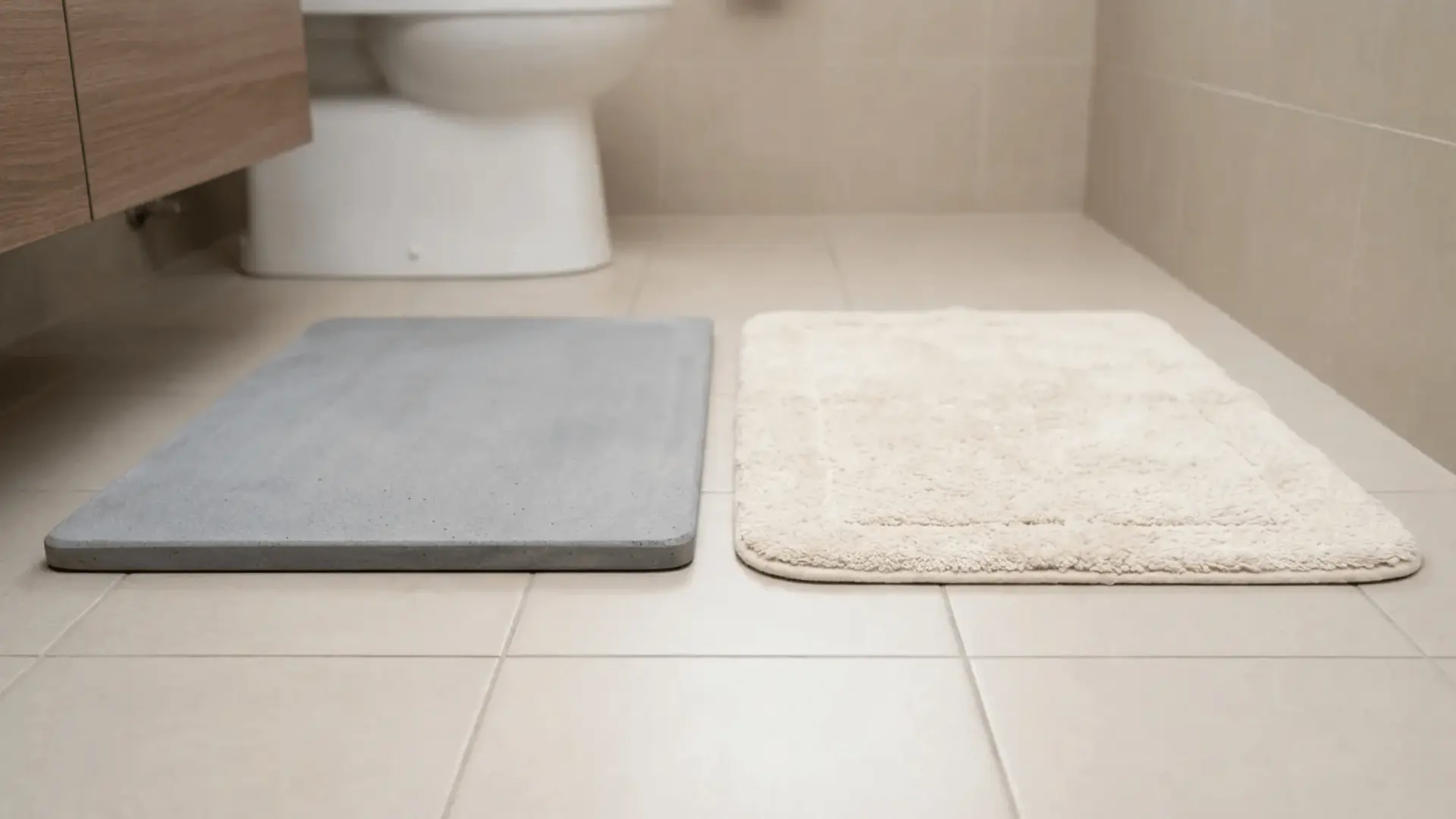
The difference between the two comes down to how they absorb water, how they dry, and how much maintenance they require.
| Feature | Stone Bath Mats | Fabric Bath Mats |
|---|---|---|
| Absorbency | Absorb water almost instantly due to their porous surface. | Absorb moisture but can become saturated after repeated use. |
| Drying Time | Dry within minutes as water evaporates quickly from the surface. | Often stay damp for longer, especially in bathrooms with low ventilation. |
| Maintenance | It’d be great if you require some rinsing or light surface cleaning. | Need regular machine washing to stay clean and fresh. |
| Comfort | Firm and solid underfoot, offering stable support. | Soft and cushioned, providing a more comfortable feel. |
Both options work well in a bathroom setting. The right choice depends on cleaning preference, comfort, and drying speed.
Common Mistakes to Avoid When Cleaning
Most problems with stone bath mats stem from a few simple mistakes. Knowing what to avoid helps maintain absorbency and prevents surface damage.
- Using Bleach or Strong Chemicals: Harsh cleaners can weaken the structure of the mat and damage its porous surface. Mild soap and water are always safer choices.
- Scrubbing Aggressively With Rough Tools: Hard bristles or abrasive pads can scratch the surface and clog the pores. Always use a soft brush or sponge and apply gentle pressure.
- Soaking the Mat for Long Periods: Leaving the mat submerged in water can affect its durability. Rinse quickly and let it air-dry rather than soak it.
- Placing the Mat in a Washing Machine: Stone bath mats are not designed for machine washing. The spinning and excess water can cause cracks or structural damage.
- Using Harsh Cleaners Made for Stone Floors: Floor cleaners often contain chemicals that are too strong for diatomaceous earth mats. Stick to mild dish soap for regular cleaning.
These mistakes can reduce absorbency and shorten the lifespan of the mat. Gentle cleaning methods help preserve its performance for years.
Conclusion
Stone bath mats are an excellent addition to your bathroom, offering swift moisture absorption and fast drying. By regularly cleaning and maintaining your mat, you ensure it stays in top shape for years.
Whether it’s preventing soap buildup or restoring absorbency, these simple maintenance tips help preserve the functionality and longevity of your mat.
Don’t overlook the care your mat needs; tackle those signs of wear today and enjoy a cleaner, fresher bathroom environment.
For more helpful tips and guides, explore more blogs on the website and keep your home in top shape!


