
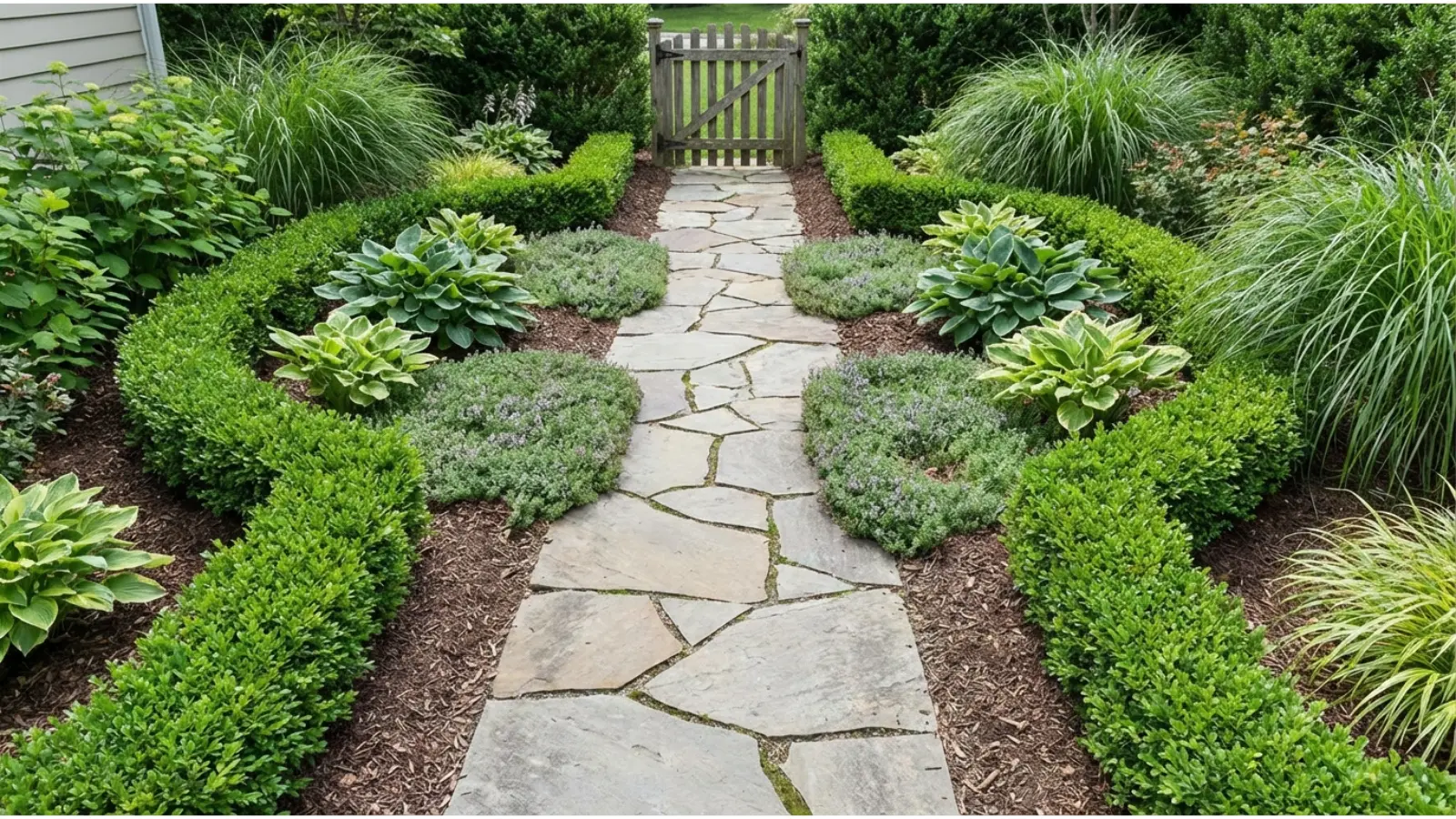
15 Garden Path Ideas to Upgrade Your Outdoor Space
A garden path does more than connect one area to another. It shapes how the entire space feels and how you move through it.
The right choice can make a small garden feel open or give a large one a clear sense of direction. But with so many garden path ideas available, it’s easy to pick something that looks good but doesn’t work in your space.
Today, I’ll give you a range of path styles based on layout, budget, and practical use, along with clear guidance to help you choose what actually fits your garden.
Garden Path Ideas by Style, Budget, and Function
Not every path works in every garden. A gravel trail suits a cottage garden, not a sleek modern courtyard.
Natural and Rustic Garden Path Ideas
These options work with the garden rather than against it. They use materials that feel like they belong outdoors: stone, gravel, wood, and grass.
The result is a path that looks relaxed and unforced. Nothing too polished, nothing too rigid, just a surface that fits naturally into the space around it.
1. Stepping Stone Path with Grass
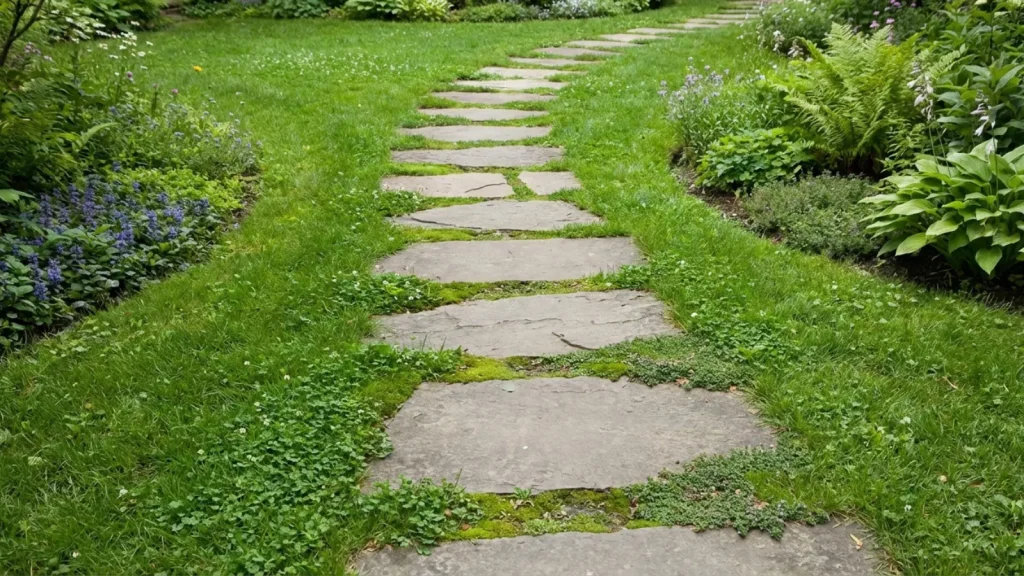
Stepping stones set into the grass create a soft, informal look. The gaps between stones let greenery show through, so the path blends right into the garden.
This works best in low-traffic areas. If the ground is uneven or the spacing is off, it becomes awkward to walk on.
2. Gravel Path with Large Stones
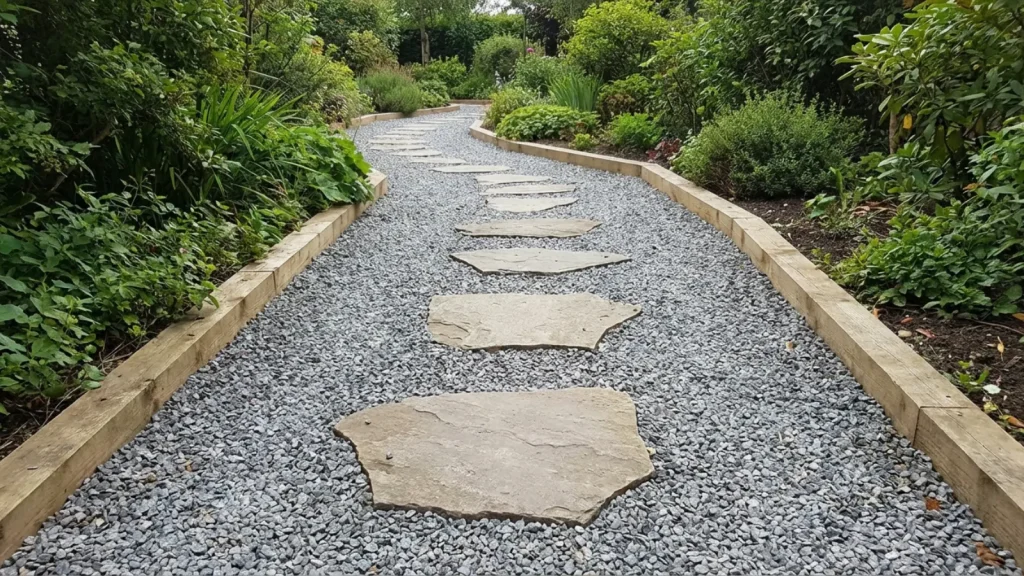
Gravel drains well, which prevents water from pooling after rain. Adding larger stones gives you a stable surface to walk on.
Without a solid border, gravel tends to migrate out of place. Install edging on both sides to keep the path defined
3. Flagstone Garden Path
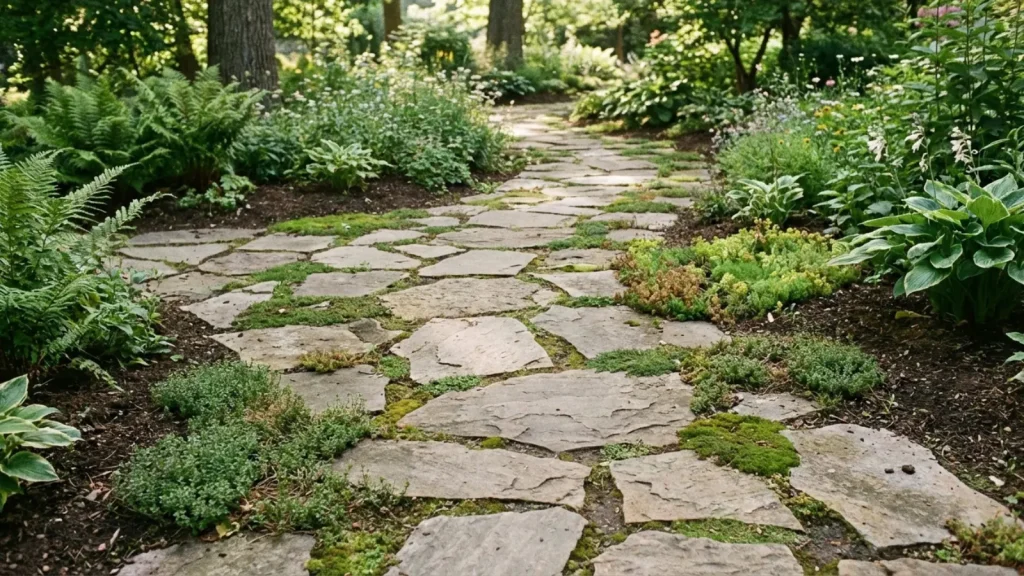
Flagstone’s irregular shapes create a natural, flowing look that suits most garden styles. It holds up well under moderate to heavy foot traffic.
It does need a proper base layer. Without one, the stones shift over time and become uneven.
4. Mulch or Wood Chip Path
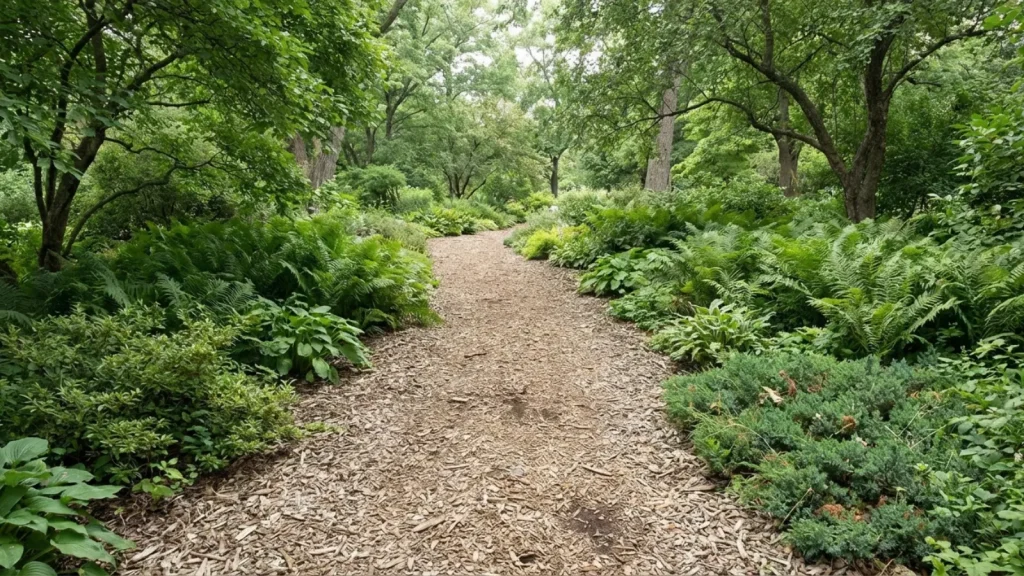
This is the most budget-friendly option. Wood chips are easy to lay and fit naturally in shaded or woodland-style gardens.
The downside is that they break down over time. You’ll need to top them up every season or two.
Modern and Structured Garden Path Ideas
These paths use clean lines and consistent shapes to create a sense of order. Every material is chosen for how it looks just as much as how it performs.
They suit contemporary gardens, formal layouts, and any space where structure is part of the design. If you want a path that feels intentional and precise, this is the right category.
5. Large Concrete or Stone Pavers
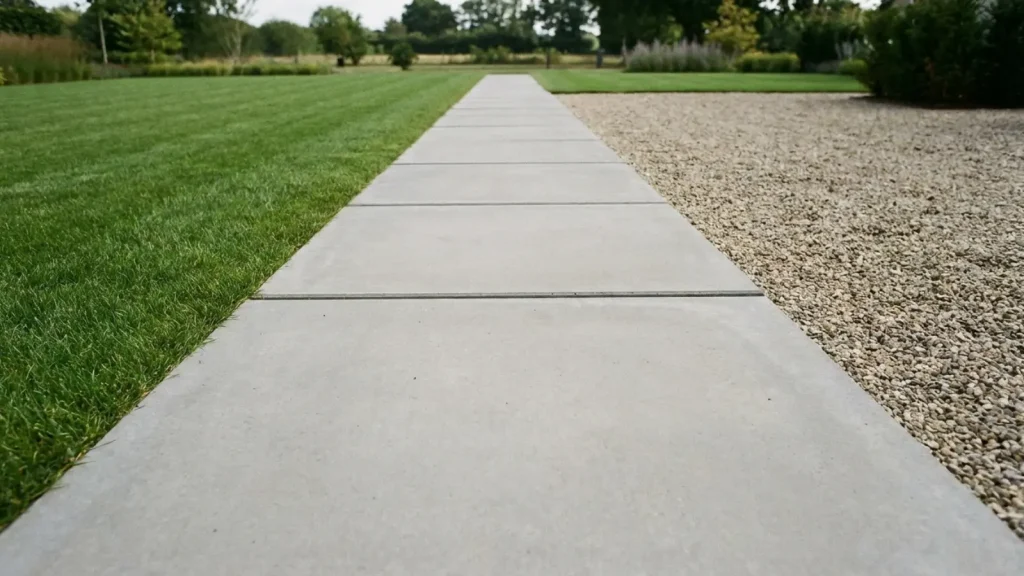
Large pavers create a bold, modern look. Fewer joints mean less visual noise and a cleaner finish.
In small or heavily planted gardens, they can feel too hard-edged. They work best with open space around them.
6. Brick Garden Path
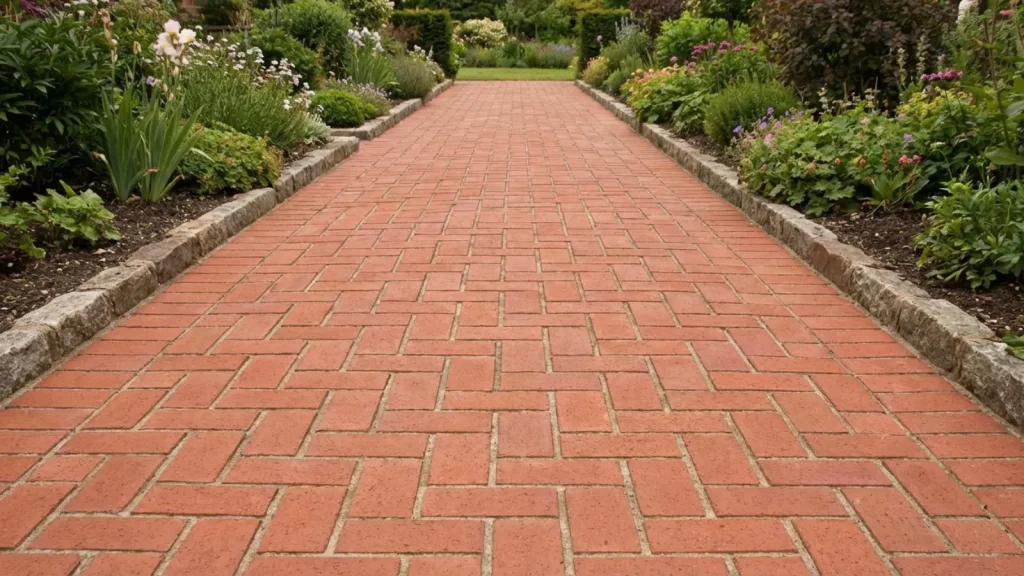
Brick is one of the most durable path materials. Its uniform shape allows for structured patterns like running bond or basketweave.
Weed growth between the joints is common. Regular maintenance keeps it looking sharp.
7. Geometric Stepping Stone Layout
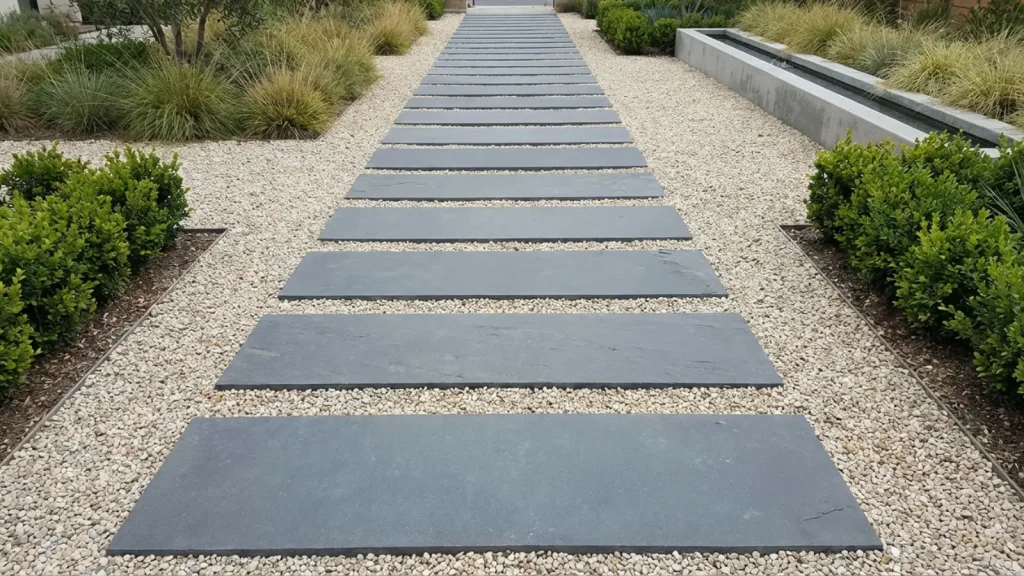
Evenly spaced stepping stones in a symmetrical layout bring visual order to a garden. This style works well in contemporary spaces.
The spacing needs to match a natural walking stride. If it doesn’t, the path feels awkward rather than elegant.
Budget-Friendly Garden Path Ideas
You don’t need to spend a lot to get a path that looks good and works well. Some of the most attractive garden paths are built with the simplest and most affordable materials.
These options keep costs low without sacrificing function. With the right layout and a little effort, a budget-friendly path can look just as good as an expensive one.
8. Reclaimed Stone Path
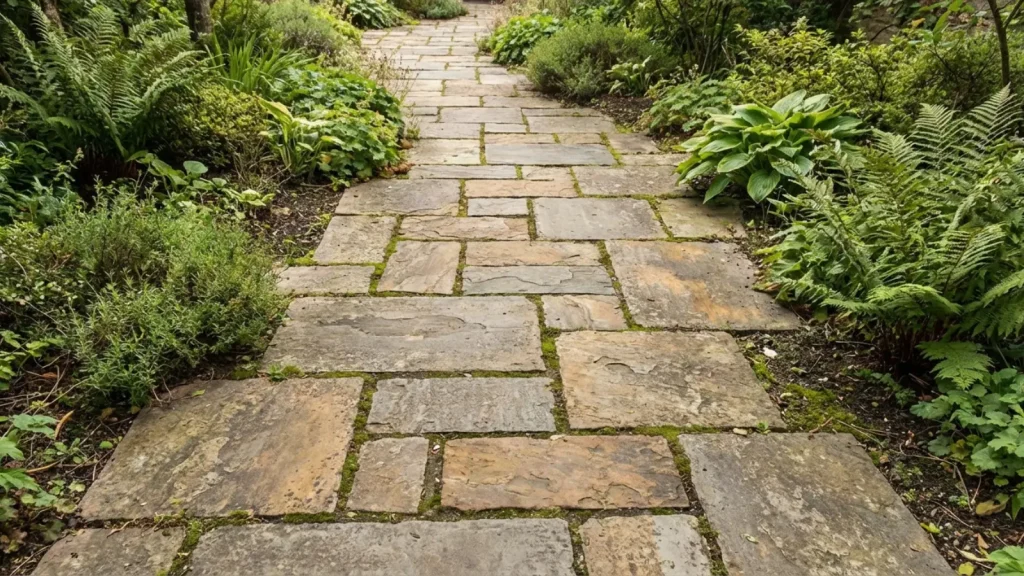
Using reclaimed materials cuts costs while adding character. Old stone has texture and variation that new materials often lack.
It takes some effort to sort and level the pieces. But the result is a path that looks like it’s always been there.
9. Gravel-Only Path
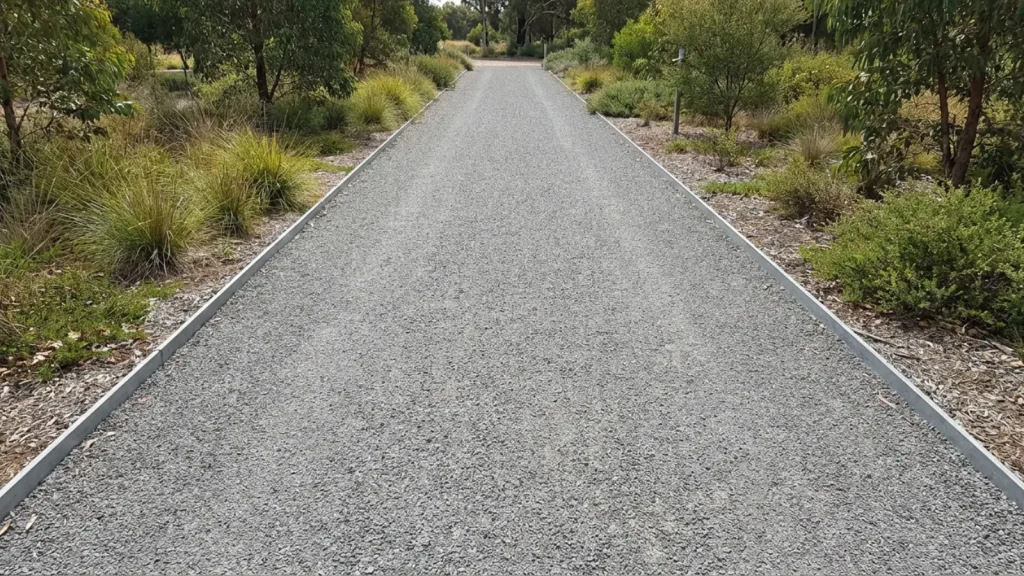
A gravel-only path is one of the lowest-cost options available. It drains well and works in most climates.
It needs to be compacted properly after laying. Loose, uncompacted gravel shifts underfoot and becomes uneven quickly.
Decorative and Feature Garden Paths
These paths are designed to be noticed. They go beyond function and become a visual feature in their own right.
The materials, patterns, and layouts all play a role in how the garden looks as a whole. If you want a path that adds personality and character to your outdoor space, these ideas are worth considering.
10. Curved Garden Path
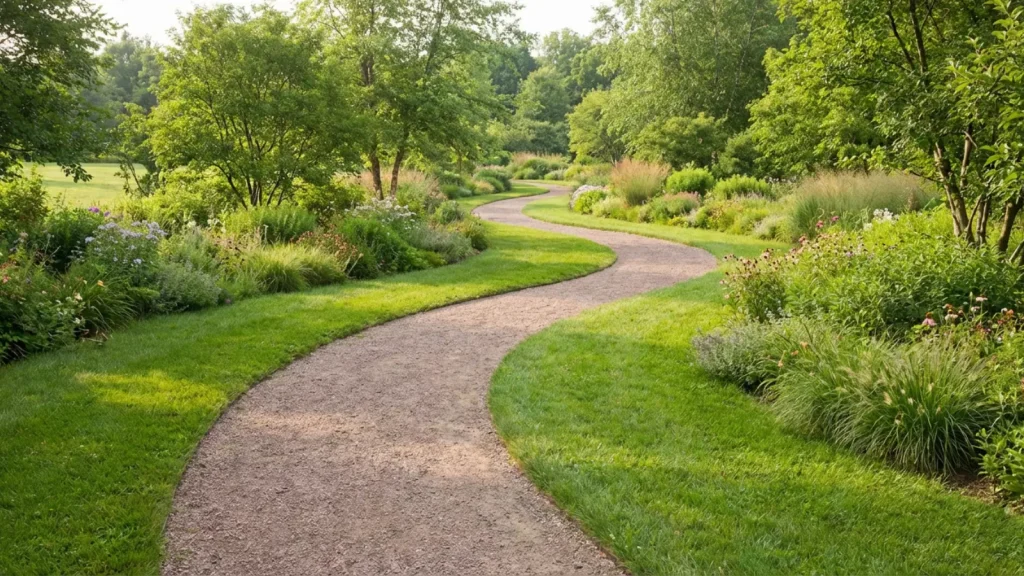
A curved path slows you down, in a good way. It draws the eye through the garden and creates a sense of depth.
It works best in larger spaces. In a small garden, curves waste space and can feel forced.
11. Patterned Stone Path (Herringbone, Mosaic)
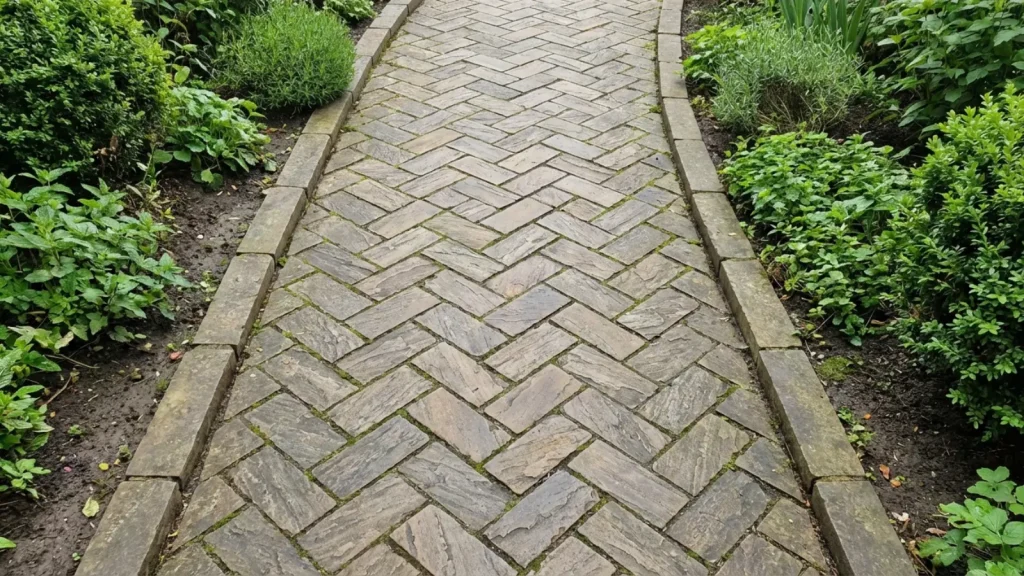
Patterns like herringbone or mosaic add real visual detail. They turn a functional path into a design feature.
They take precision and more time to install. Overdoing patterns in a small area can make the space feel cluttered.
12. Path with Plants Between Stones
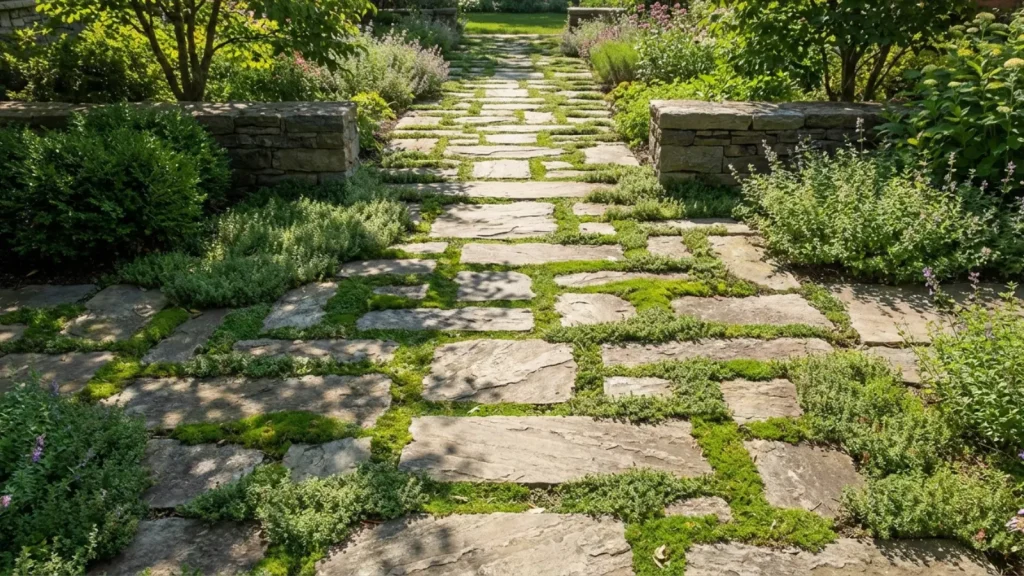
Low-growing plants between stones soften the look of a hard path. Thyme, moss, and creeping groundcovers work especially well.
The plants need to handle foot traffic. Anything too delicate will get crushed and look worse over time.
Functional and Practical Garden Paths
Sometimes a path just needs to do its job, and do it well. Not every garden needs a decorative feature or a bold design statement.
These options focus on usability and durability above all else. They’re built to handle regular foot traffic, stay in good shape over time, and make your outdoor space easier to move through.
13. Straight Pathway
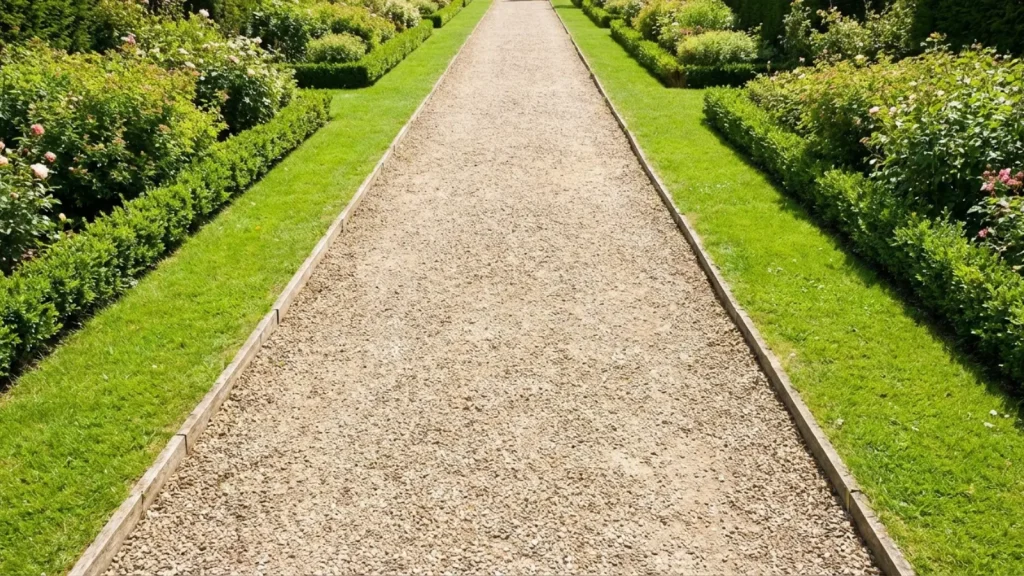
A straight path is direct and efficient. It suits entrances, side yards, and any area where movement matters more than aesthetics.
In a natural or informal garden, it can feel too rigid. Pair it with soft planting on either side to balance the look.
14. Path with Edging or Borders
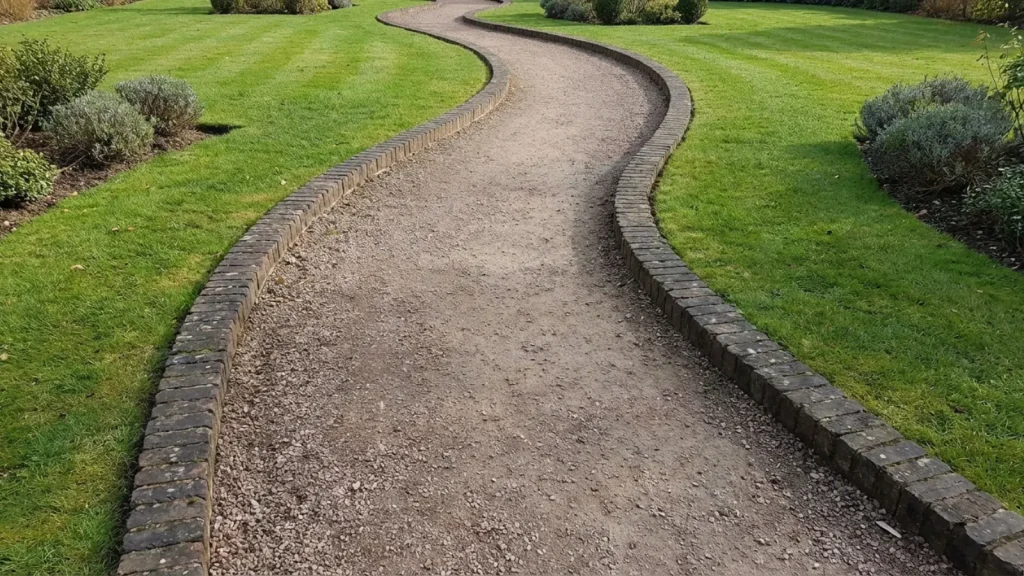
Edging keeps your path material contained and gives it a neat finish. It also protects the edges from wear over time.
Weak or poorly installed edging won’t hold. Use materials like steel, stone, or timber for a border that lasts.
15. Patio-Connected Garden Path
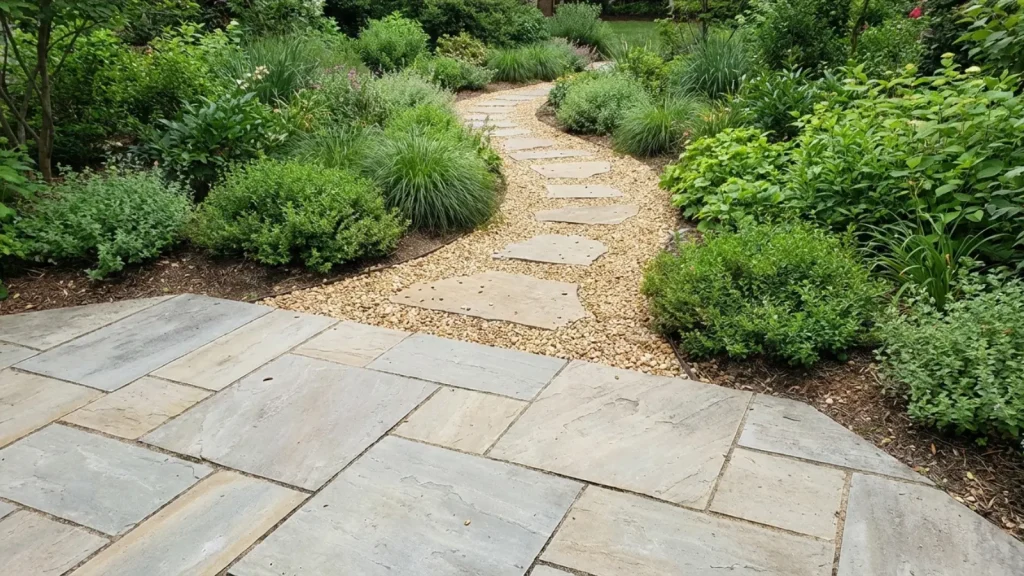
A path that links your patio to other areas improves how the whole garden works together. It makes outdoor spaces feel connected rather than isolated.
The path needs a clear destination. A trail that leads nowhere looks and feels incomplete.
Quick Comparison of Garden Path Ideas
Here’s a side-by-side look at the most popular options to help you decide fast.
| Path Type | Cost Level | Durability | Maintenance | Best Use Case |
|---|---|---|---|---|
| Stepping stones + grass | Low | Medium | Low–Medium | Informal, low-traffic areas |
| Gravel + large stones | Low | Medium | Medium | Drainage-heavy or natural gardens |
| Flagstone | Medium | High | Low | Most garden styles |
| Mulch/wood chips | Very Low | Low | High | Shaded or woodland gardens |
| Concrete / stone pavers | Medium–High | Very High | Low | Modern or contemporary spaces |
| Brick | Medium | High | Medium | Classic or formal gardens |
| Reclaimed stone | Low | Medium–High | Low–Medium | Budget builds with character |
| Gravel only | Very Low | Medium | Medium | Budget-friendly, open areas |
| Patterned stone | High | High | Low–Medium | Feature or decorative paths |
| Curved path | Varies | Varies | Varies | Large gardens with visual flow |
How to Choose the Right Garden Path for Your Style
The look of your garden should guide your material choice. Here’s a quick way to match them up:
- Natural or cottage garden → stepping stones, flagstone, gravel, or wood chips
- Modern or contemporary space → large concrete pavers, geometric layouts, or clean brick
- Small garden → straight paths or spaced stepping stones to avoid visual clutter
- Large garden → curved paths or layered designs that guide movement through the space
When in doubt, match the path material to what’s already in your garden. A natural stone path looks out of place next to a sleek metal fence, and vice versa.
How to Choose Based on Budget and Maintenance
Budget and upkeep are two of the biggest deciding factors. Here’s how to think through both:
Low Budget Options
Gravel, mulch, and reclaimed stone are the most affordable choices. They have low upfront costs and are easy to install without professional help.
The trade-off is maintenance. These materials shift, break down, or spread over time and need regular attention.
Mid-Range Options
Stepping stones and mixed materials sit in the middle. They cost more than gravel but less than full paving.
You get a better balance of durability and affordability. With good installation, these paths hold up well for years.
Low Maintenance Choices
Stone, brick, and concrete are the lowest-maintenance options when installed correctly. A proper base layer prevents shifting, which is the main cause of long-term problems.
The higher upfront cost pays off over time. You spend less on repairs and upkeep as the years go on.
Conclusion
There’s no single best garden path idea. The right choice depends on how you use your garden, the style you’re going for, and what you’re willing to spend.
Start with the function, then layer in the design. A well-chosen path does more than connect two points; it shapes how your whole garden looks and feels.
Ready to get started? Pick one idea from this list that fits your space and budget, and take the first step toward an outdoor area you’ll actually enjoy spending time in.
Which garden path idea are you thinking of trying? Let me know in the comments below!
Frequently Asked Questions
What is the Cheapest Garden Path Option?
Gravel and mulch are the cheapest because they require minimal materials. They cost less upfront but need more maintenance over time.
What is the Most Durable Garden Path Material?
Natural stone and concrete last the longest when installed on a proper base. They resist wear and weather damage better than softer materials.
Are Stepping Stone Paths Practical?
They work well for light use. Spacing and ground stability need to be right to avoid discomfort while walking.
Should I Choose a Straight or Curved Path?
Straight paths suit small or functional spaces. Curved paths work better in larger gardens where visual flow matters.
How Do I Make a Garden Path Low Maintenance?
Use durable materials, proper base layers, and edging. These three things reduce movement, weed growth, and long-term upkeep.


