Flight of Stairs: Definition, Types & Key Facts
Have you ever heard someone say “just one flight of stairs” and wondered what that actually means? Is it 10 steps? 20? Does the shape matter?
It’s one of those terms people use every day without really thinking about it. But the meaning is more specific than most people realize, and it has nothing to do with the number of steps.
A flight of stairs is defined by continuity, not count. Whether you’re in a home, an office building, or a parking garage, the same rule applies.
In this post, I’ll walk you through the exact meaning of a flight of stairs, what separates one flight from another, and the most common myths people get wrong.
What is a Flight of Stairs?
A flight of stairs is a continuous series of steps between two landings or platforms with no interruption in between.
The keyword here is “continuous.” As long as the steps run without a break, they form one single flight, no matter how long or short they are.
In everyday language, people use the term to mean one level change. In architecture and construction, the definition is the same: an uninterrupted run of steps connecting two platforms.
Here’s what that looks like in practice:
- A staircase from your ground floor to the first floor with no landing = one flight
- A staircase that stops at a platform halfway up, then continues = two flights
- A spiral staircase that winds continuously from bottom to top = one flight
A flight is defined by continuity, not count, not shape, not height. Keep that in mind as you read through the rest of this post.
What Separates One Flight from Another?
The only thing that breaks a flight is a landing, a flat platform that interrupts the vertical rise of a staircase.
Here’s how it works:
- Steps run continuously → one flight
- Steps stop at a flat platform → that’s a landing
- Steps continue after the landing → that’s a new flight
This is why a staircase with a midpoint platform counts as two flights, even if it connects just one floor.
One thing worth noting, a direction change alone doesn’t create a new flight. A staircase that curves or turns only becomes two flights if there’s an actual landing at that point. Without one, it’s still one continuous run.
Does the Number of Steps Define a Flight?
No. There is no fixed number of steps that defines a flight of stairs.
Step count depends on three things:
- Floor height → taller floors need more steps to reach the next level
- Riser size → smaller risers mean more steps for the same height
- Building codes → different regions set different standards for step dimensions
You might hear that “one flight equals 10 to 12 steps.” That’s a rough generalization, not a rule.
In a standard home, you’ll typically see 13 to 15 steps per flight. In a commercial building, it could be higher or lower depending on the layout.
Two flights in the same building can even have different step counts if the floor heights aren’t equal. Step count is simply a byproduct of design.
Types of Stair Flights
Stairs come in many shapes and styles, but the definition of a flight stays the same across all of them. Here’s a look at the most common types:
1. Straight Flights
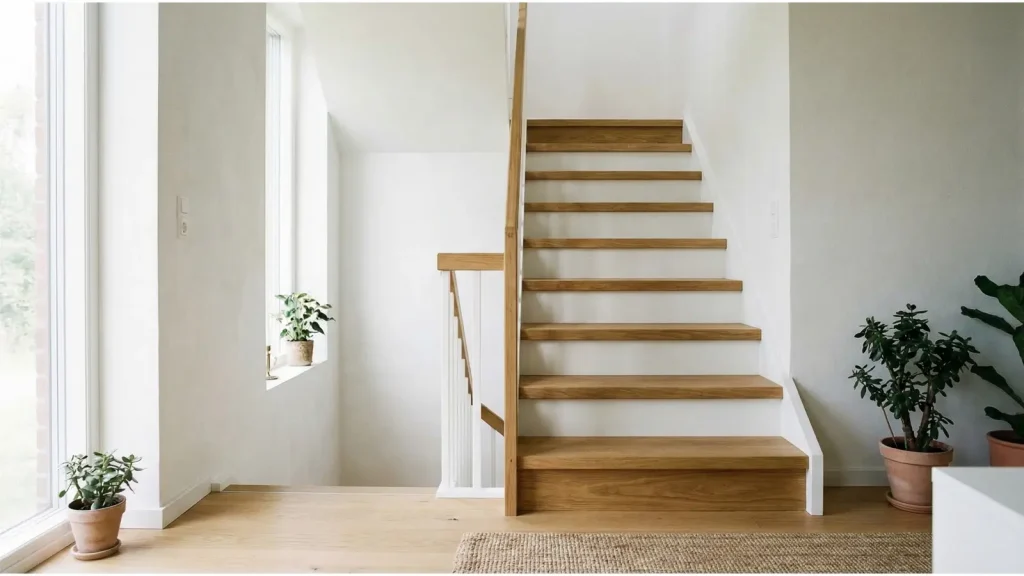
A straight flight runs in one direction from start to finish with no turns or curves.
This is the most common type you’ll find in homes and office buildings. It’s also the easiest to identify; steps go up in a single line, and there’s no ambiguity about where one flight ends.
2. Curved or Spiral Flights

A curved or spiral staircase changes direction as it rises, but that doesn’t make it multiple flights. As long as the steps run without interruption, the entire staircase counts as one flight.
The curve is a design choice; it doesn’t break the continuity. A spiral staircase winding three full rotations from floor to floor is still one flight if there’s no landing in between.
3. Split or Multi-Run Stairs
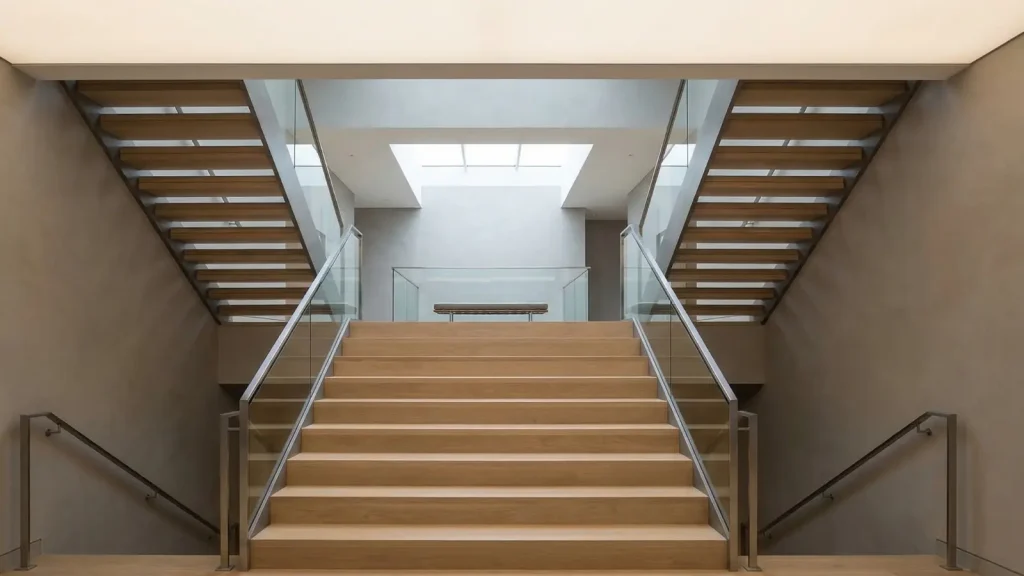
These are staircases that divide into two or more sections connected by landings. Each uninterrupted section between landings is its own flight.
So a staircase with one midpoint landing has two flights. One with two landings has three.
The landings are what create the separation, not the shape or the angle of the steps. Shape doesn’t define a flight. Continuity does.
What “One Flight of Stairs” Means in Real Life
In everyday conversation, “one flight of stairs” usually means going from one floor to the next. In most standard buildings, that’s accurate.
But building layouts vary. Here’s how that plays out:
- Some floors are connected by two shorter flights with a landing in the middle
- Mezzanine levels or split-level homes may have partial flights between levels
- Commercial buildings sometimes use multiple flights per floor for safety and code compliance
This is why people sometimes disagree on what counts as one flight. Two people in different buildings can have genuinely different experiences, and both can be right based on their own staircase.
Common Misunderstandings About Flights of Stairs
A lot of confusion around this term comes from assumptions that seem logical but aren’t quite right. Here are the most common ones, and why they miss the mark.
- A flight = a fixed number of steps: False. Step count varies by building design and floor height.
- A turn creates a new flight: False. Only a landing breaks a flight, not a direction change.
- One flight always = one floor: Not always. Some floors have two flights with a landing in between.
- Short stair sets don’t count: Wrong. Even three uninterrupted steps can qualify as a flight.
Quick Summary: How to Identify a Flight of Stairs Instantly
Not sure if what you’re looking at counts as one flight or two? Just ask yourself these simple questions.
- Are the steps uninterrupted? → Yes = one flight
- Is there a landing somewhere in the middle? → Yes = two separate flights
- Does the staircase curve or turn? → Doesn’t matter, check for a landing, not the shape
- How many steps are there? → Irrelevant, step count doesn’t define a flight
That’s really all there is to it. Forget the shape, forget the number of steps, and forget which direction the stairs go. If the steps run continuously from one platform to another without stopping, it’s one flight.
Use this checklist any time you’re unsure; it works for any staircase in any building.
Conclusion
A flight of stairs is simpler than it sounds; it’s any uninterrupted series of steps between two landings. The shape doesn’t matter. The step count doesn’t matter. What defines a flight is continuity.
Whether you’re in a home, an office, or a multi-story building, the same rule applies. Once you spot a landing, you know a new flight begins.
Now that you know exactly what a flight of stairs means, you can apply it confidently in any setting. Have questions about stair design or building codes? Drop them in the comments below.
Frequently Asked Questions
How Tall is a Flight of Stairs?
In most residential buildings, a flight of stairs has a vertical height of 8.5 to 11 feet. This depends on your ceiling height and the size of each individual step.
What is the Maximum Number of Steps Allowed in A Flight?
Most residential building codes allow up to 16 steps per flight before a landing is required. Fire escapes are stricter; the limit drops to 12 steps. These numbers can vary depending on your local code and building type.
What is the Total Length (Horizontal) of A Flight of Stairs?
For a standard ceiling height of 8 to 9 feet, a flight of stairs typically runs 10 to 14 feet horizontally. The exact length depends on tread depth and the total number of steps.
How Do Fitness Trackers Define a Flight of Stairs?
Fitness trackers use vertical height, not step count or landings. Apple Health counts a flight as roughly 12 feet of vertical climb. Fitbit uses around 10 feet. This is different from the architectural definition, which is based on continuity between landings, not height.