Essential Greenhouse Gardening Tips for Beginners
Most people assume greenhouse gardening is complicated, expensive, or only meant for serious growers. It’s not.
A greenhouse, no matter the size, puts you in control of something outdoor gardening never can: the environment your plants grow in.
Temperature, humidity, light, soil, every variable that typically works against you becomes something you can manage.
And once you understand how these elements work together, the results speak for themselves.
These greenhouse gardening tips cover everything from choosing the right structure to keeping your plants thriving through every season.
The difference between struggling plants and a productive greenhouse often comes down to a few simple adjustments.
What Is Greenhouse Gardening?
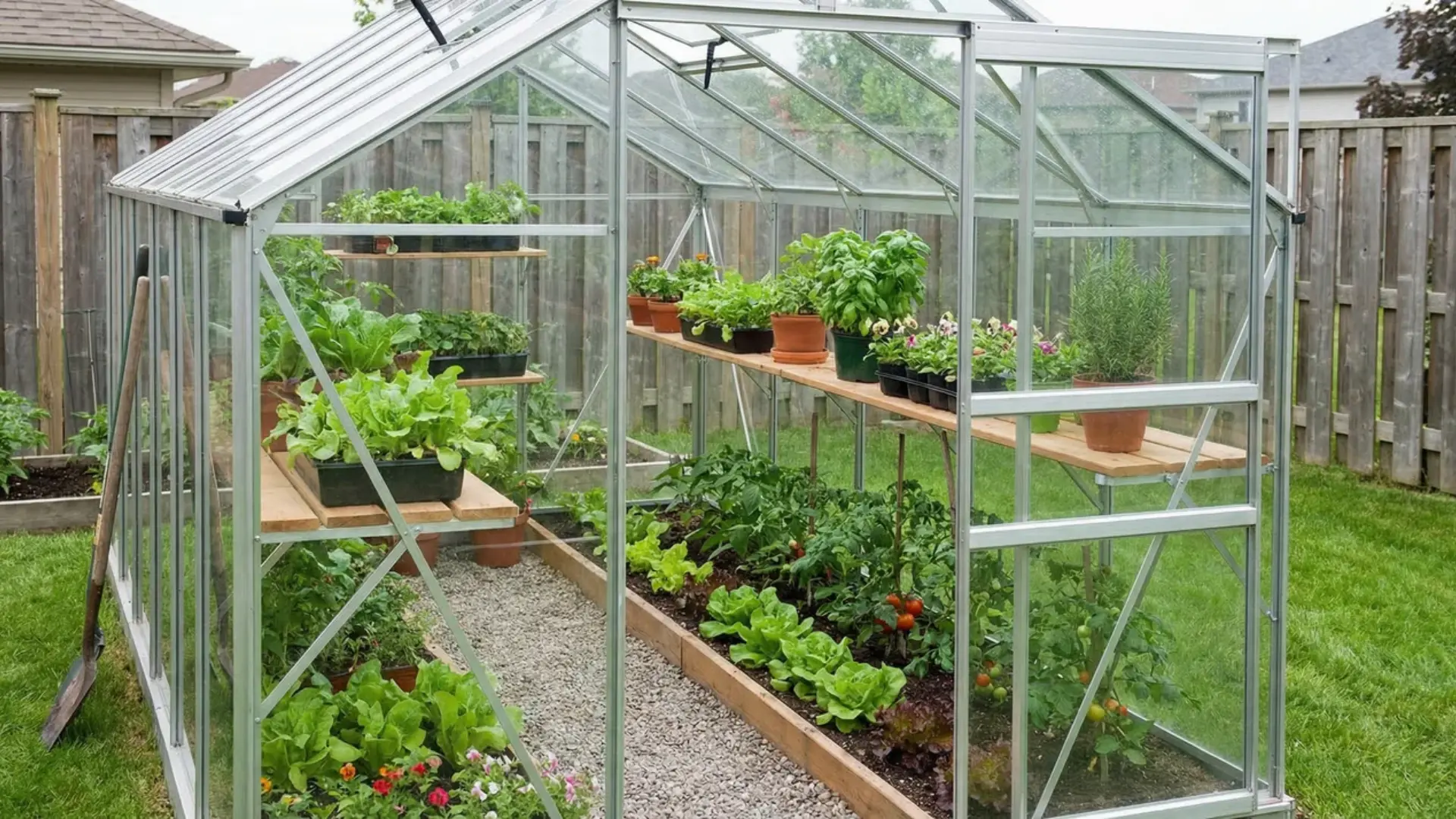
Greenhouse gardening means growing plants inside an enclosed structure made of glass, plastic, or polycarbonate that traps heat and light.
It gives you control over the growing environment regardless of outdoor conditions.
People use greenhouses to grow plants year-round, protect delicate crops, and get a head start on each growing season.
Benefits of Greenhouse Gardening
Growing inside a greenhouse changes what’s possible even in the most unpredictable climates.
Here are some key benefits that make greenhouse gardening worth it:
- Better temperature control keeps plants thriving through cold spells and heat waves.
- Pests and harsh weather stay outside, significantly reducing crop loss.
- A longer growing season means fresh produce and blooms well beyond summer.
Essential Greenhouse Gardening Tips
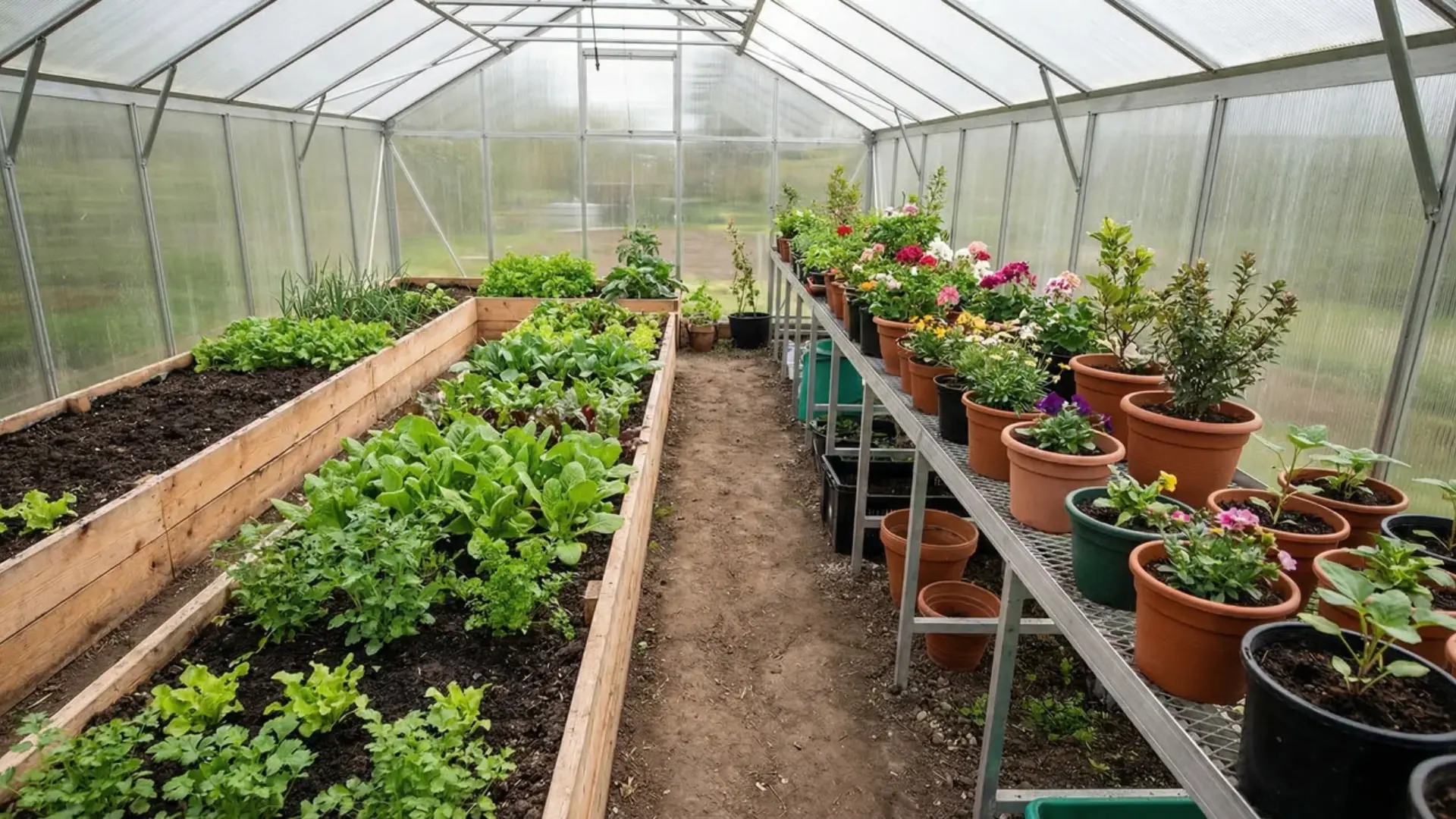
Getting the most out of your greenhouse comes down to a few key habits done consistently right.
Below are the most important greenhouse gardening tips to keep your plants healthy and thriving year-round:
1. Maintain Proper Temperature
Temperature is the single biggest factor affecting how well your plants grow inside a greenhouse.
Most plants thrive between 60°F and 85°F, so keeping an eye on your thermometer daily is non-negotiable.
During summer, shade cloth helps prevent overheating, while a small heater handles unexpected cold snaps in winter.
2. Ensure Good Ventilation
Stale, trapped air is one of the fastest ways to stress your plants or invite disease into your greenhouse.
Opening roof vents or running a small fan for a few hours each day keeps fresh air circulating without dropping temperatures too sharply.
- Prevents mold and fungal growth on leaves and the soil surface
- Reduces heat build-up during warm afternoons
- Strengthens plant stems by simulating natural outdoor airflow
3. Water Plants Correctly
Overwatering is the most common mistake greenhouse gardeners make, and it is far more damaging than underwatering.
Always check soil moisture before reaching for the watering can. If the top inch feels damp, the plant doesn’t need water yet. Morning watering works best as it gives leaves time to dry before temperatures drop at night.
4. Control Humidity Levels
Humidity inside a greenhouse needs a careful balance, too little dries plants out, too much invites disease.
Aim to keep levels between 50% and 70% for the most common greenhouse plants.
A simple hygrometer helps you monitor this daily, and adjusting ventilation is usually all it takes to bring levels back in range.
5. Use the Right Soil
Choosing the right soil mix directly affects how well roots develop and how efficiently plants absorb nutrients.
- Use a nutrient-rich potting mix rather than garden soil, which compacts easily in containers
- Add perlite or coarse sand to improve drainage and prevent waterlogging
- Refresh or replace soil every season to avoid nutrient depletion and disease carry-over
6. Provide Enough Light
Light availability determines how fast and how strong your plants grow, making placement and supplementation equally important.
- Position your greenhouse where it receives at least six hours of direct sunlight daily
- South-facing placement works best in the northern hemisphere for maximum light exposure
- On overcast days or during winter, LED grow lights can fill the gap without generating excess heat
Best Plants for Greenhouse Gardening
Not every plant needs a greenhouse, but the ones that do will reward you with better yields, stronger growth, and a longer harvest window.
Here are some of the best plants to grow in a greenhouse, sorted by category to help you plan your space smartly:
| Plant | Category |
|---|---|
| Tomatoes | Vegetable |
| Cucumbers | Vegetable |
| Basil | Herb |
| Mint | Herb |
| Marigolds | Flower |
| Petunias | Flower |
Choosing the Right Greenhouse
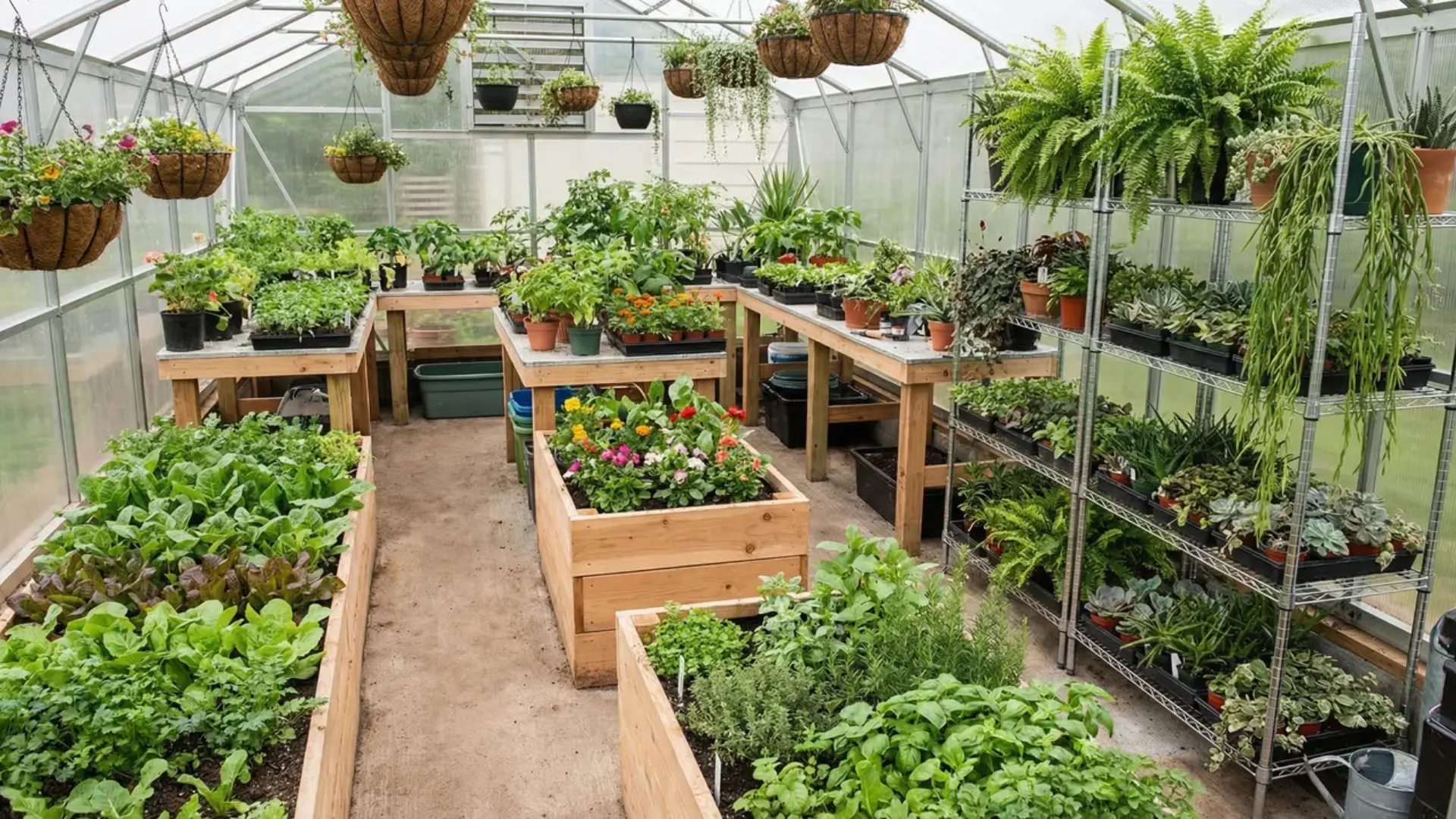
The right greenhouse isn’t the biggest or the most expensive one it’s the one that fits your space, budget, and the plants you actually want to grow.
Types of Greenhouses
The material you choose affects heat retention, light quality, and the lifespan of your greenhouse.
- Glass: Best light transmission, but heavier and more expensive to install.
- Polycarbonate: Lightweight, durable, and retains heat better than glass, ideal for beginners.
- Plastic film: Most affordable and easy to set up, but needs replacing every few seasons.
Size and Space Considerations
Map out your available space before buying. A smaller, well-organised greenhouse will always outperform a large, overcrowded one.
Make sure there’s enough room to move around for watering and pruning.
Budget Basics
- Entry-level plastic or polycarbonate options work well for beginners at a low cost.
- Mid-range models offer better insulation and sturdier frames.
- Factor in ongoing costs like heating, grow lights, and ventilation beyond the initial price.
Conclusion
You now have everything it takes to get started: the right structure, the right plants, the right soil, and the habits that keep a greenhouse running smoothly through every season.
Greenhouse gardening isn’t about doing everything perfectly from day one. It’s about understanding what your plants need and making small, consistent adjustments over time.
Whether you’re managing temperature swings, dialing in humidity, or simply picking the best plants for your space, these greenhouse gardening tips give you a clear path forward without the guesswork.
Start small, stay consistent, and let the results build from there.
Have a greenhouse gardening tip that’s worked wonders for you? Share your experience or favorite method in the comments below we’d love to hear from you!
Frequently Asked Questions
What is the 70/30 Rule in Gardening?
The 70/30 rule suggests dedicating 70 percent of your garden to reliable, easy-growing plants and 30 percent to experimental or new varieties worth trying.
What is the 3-Hour Gardening Rule?
Three focused hours of gardening per week is enough to maintain a healthy garden. Consistency matters far more than spending long, irregular hours tending to your plants.
What are the Most Common Greenhouse Mistakes?
Overwatering, poor ventilation, and overcrowding plants are the most frequent mistakes. Ignoring temperature fluctuations and using the wrong soil mix also slow growth significantly.