
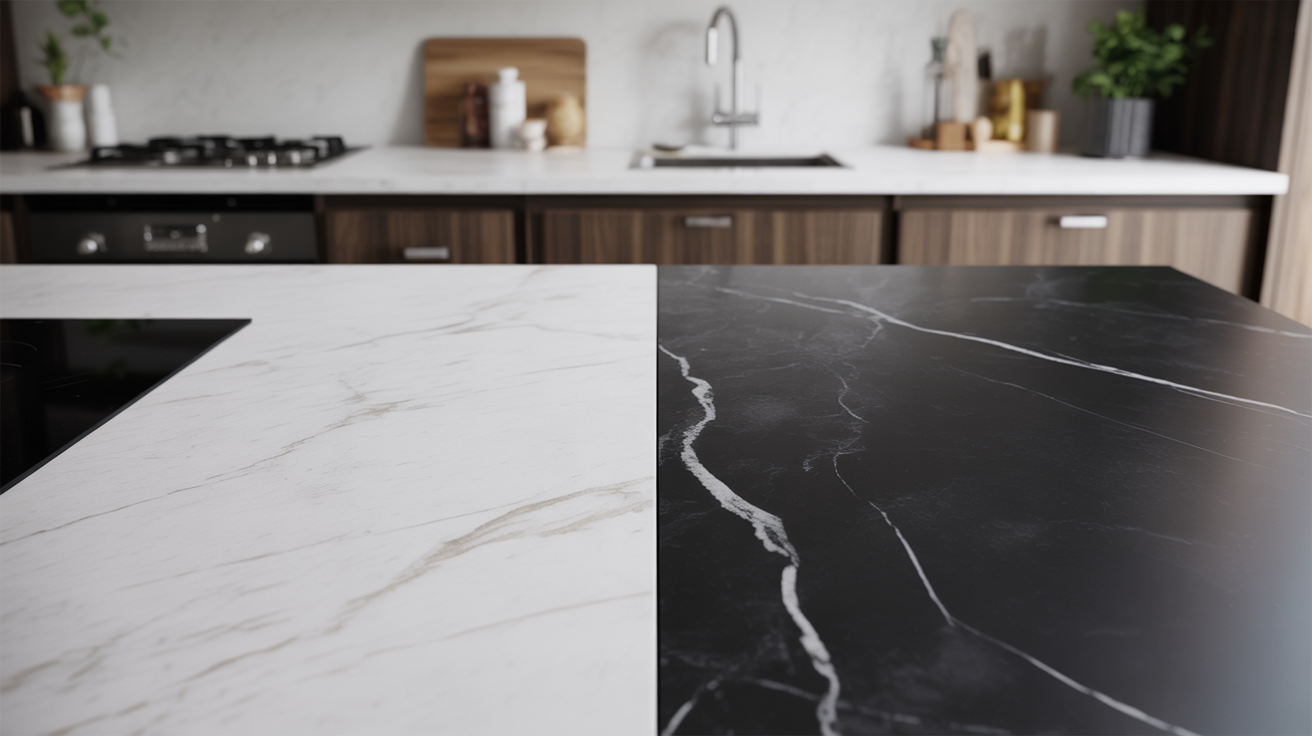
Dekton vs Quartz: Which Countertop Should You Choose
Choosing between Dekton and quartz? Both are durable, low-maintenance engineered surfaces, but they’re built for different needs.
Quartz offers extensive design options at reasonable prices for indoor spaces.
Dekton delivers extreme durability with heatproof, UV-resistant performance for indoor and outdoor use.
This blog compares both materials (Dekton vs. quartz), so you can pick the right one for your space and budget.
Dekton vs. Quartz: Feature-by-Feature Comparison
Here’s a side-by-side breakdown of how Dekton and quartz stack up across key performance, aesthetic, and practical factors to help you make an informed decision.
| Feature | Quartz | Dekton |
|---|---|---|
| Composition | 90–95% crushed quartz + resins | Glass, porcelain, and quartz particles |
| Porosity | Non-porous | Zero porosity |
| Scratch Resistance | Good | Excellent |
| Design Variety | Extensive options | Limited options |
| Indoor/Outdoor Use | Indoor only | Both |
| Durability | Very good | Exceptional |
| Price Range | $60–$120 per sq ft | $75–$150+ per sq ft |
| Maintenance | Low | Very low |
| Best For | Interior countertops, design variety | High-performance areas, outdoor use |
Heat, Stain & UV Resistance
These three factors play a major role in long-term durability, especially in kitchens and spaces exposed to heat, spills, and sunlight.
Heat Resistance
Dekton offers excellent heat resistance and can handle hot cookware without damage. Quartz is heat-sensitive due to its resin content and can discolor or crack when exposed to high temperatures.
Stain Resistance
Both materials are non-porous and resist stains well. Dekton has a slight edge in chemical resistance, while quartz performs reliably with regular cleaning.
UV Resistance
Dekton is UV stable and suitable for outdoor or sun-exposed areas. Quartz is not UV-resistant and may fade or discolor when exposed to direct sunlight.
Aesthetics & Design Options
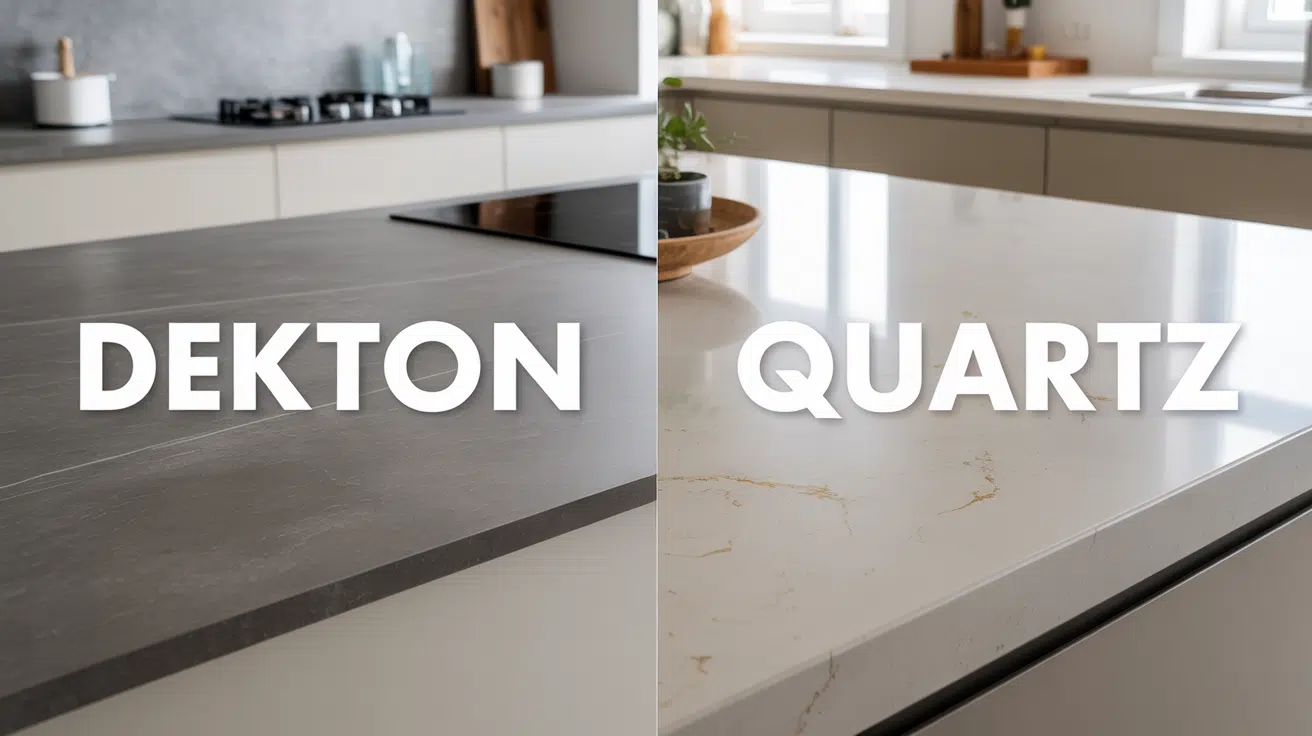
Dekton vs. quartz differ significantly in design flexibility; quartz offers variety, while Dekton prioritizes durability with style.
Quartz
Quartz offers hundreds of colors, patterns, and finishes, from solid colors to marble and granite looks.
Available in whites, grays, blacks, blues, and earth tones with consistent veining. Comes in polished, honed, or textured finishes to match any design style.
Dekton
Dekton provides fewer choices but excels at replicating natural stone with authentic depth and veining.
Available in matte and polished finishes with UV stability, colors won’t fade indoors or outdoors, unlike quartz.
Choose quartz for design variety. Choose Dekton for authentic looks with guaranteed color stability outdoors.
Installation & Fabrication Considerations
Installation and fabrication requirements vary between quartz and Dekton, affecting cost, complexity, and the level of installer expertise needed.
Key Fabrication Steps
- Measure and template cabinets precisely to avoid stress points.
- Cut slabs using water-cooled diamond tools; quartz allows faster cutting, while Dekton requires slower, controlled cuts.
- Create sink and cooktop cutouts; quartz supports complex shapes more easily than Dekton.
- Finish edges and polish surfaces before transport to reduce on-site handling risks.
Installation Challenges
- Dekton’s rigidity makes it more vulnerable to cracking during cutting, transport, or installation if not properly supported.
- Quartz is more forgiving but still requires care around seams and heavy overhangs.
- Large islands or waterfall edges may require cabinet reinforcement, especially for Dekton.
- Limited installer experience with Dekton can increase lead time and cost.
Pros and Cons of Dekton and Quartz
Dekton
- Pros: Exceptional heat resistance, highly scratch and stain-resistant, UV stable for indoor and outdoor use
- Cons: Higher cost, requires expert installation, prone to cracking if mishandled, difficult to repair
Quartz
- Pros: Strong and durable, consistent appearance, easier fabrication, lower installation risk, wide color options
- Cons: Heat sensitive, not suitable for outdoor or direct sunlight exposure
Which is the Best Choice for Your Needs and Preferences
Choosing between Dekton and quartz depends on your priorities, lifestyle, and where you’ll use the surface.
Choose Quartz If
- Design variety matters: you want extensive color and pattern options to match your aesthetic vision.
- Budget-conscious: You need quality at a more affordable price point with lower installation costs.
- Indoor use only: Your countertops are for kitchens or bathrooms without UV exposure concerns.
- Standard performance works: You’re comfortable using trivets and cutting boards as normal precautions.
Choose Dekton If
- Extreme durability is needed: You require superior heat, scratch, and stain resistance for heavy use.
- Outdoor installation: You’re building outdoor kitchens or spaces where UV stability is critical.
- Worry-free maintenance: You want a surface that never fades, stains, or needs special care.
- Heavy cooking habits: You place hot pots directly on surfaces and need maximum performance.
Conclusion
Dekton and quartz are both excellent; they just serve different needs.
Choose quartz for design variety and budget-friendly indoor countertops with reliable performance.
Choose Dekton for extreme durability, outdoor use, and heat-proof performance. You’ll pay more but get virtually indestructible quality.
Think about your priorities: indoor or outdoor, design or durability, budget or premium performance.
Visit local fabricators to see samples and get pricing for your project.
Frequently Asked Questions
Which Surface Feels More Comfortable for Everyday Use?
Quartz feels slightly warmer and softer underhand, while Dekton feels denser and cooler due to its ceramic-based composition.
Do Cabinets Need Reinforcement for Either Material?
Dekton slabs are heavier and may require reinforced cabinetry, especially for large islands or overhangs.
Which Material Is Easier to Fix if Damage Occurs?
Quartz is generally easier to repair, while Dekton repairs often require professional tools or full slab replacement.
Are Seams Noticeable on Countertops?
Quartz seams are usually easier to blend because of consistent patterns, while dekton seams depend more on slab layout.
Can Both Be Used as Backsplashes?
Yes, but Dekton performs better behind cooktops due to its superior heat resistance.


