Commercial Concrete Flooring: A Complete Guide
If you’re thinking about upgrading the floors in your commercial space, commercial concrete flooring might be exactly what you’re looking for.
If you’re managing a high-traffic retail store, a crowded office, or an industrial facility, concrete flooring brings you unbeatable durability and versatility.
With minimal maintenance and long-lasting benefits, concrete floors are the perfect choice for businesses like yours that need a floor that can handle the daily wear and tear.
In this blog, I’ll guide you through the different types of commercial concrete flooring, their key benefits, and help you choose the best option for your specific business needs.
Types of Commercial Concrete Flooring
Choosing the right type of commercial concrete flooring can significantly impact your business operations.
Each option brings unique strengths to the table, and understanding these differences helps you make the smartest investment for your specific needs.
1. Polished Concrete
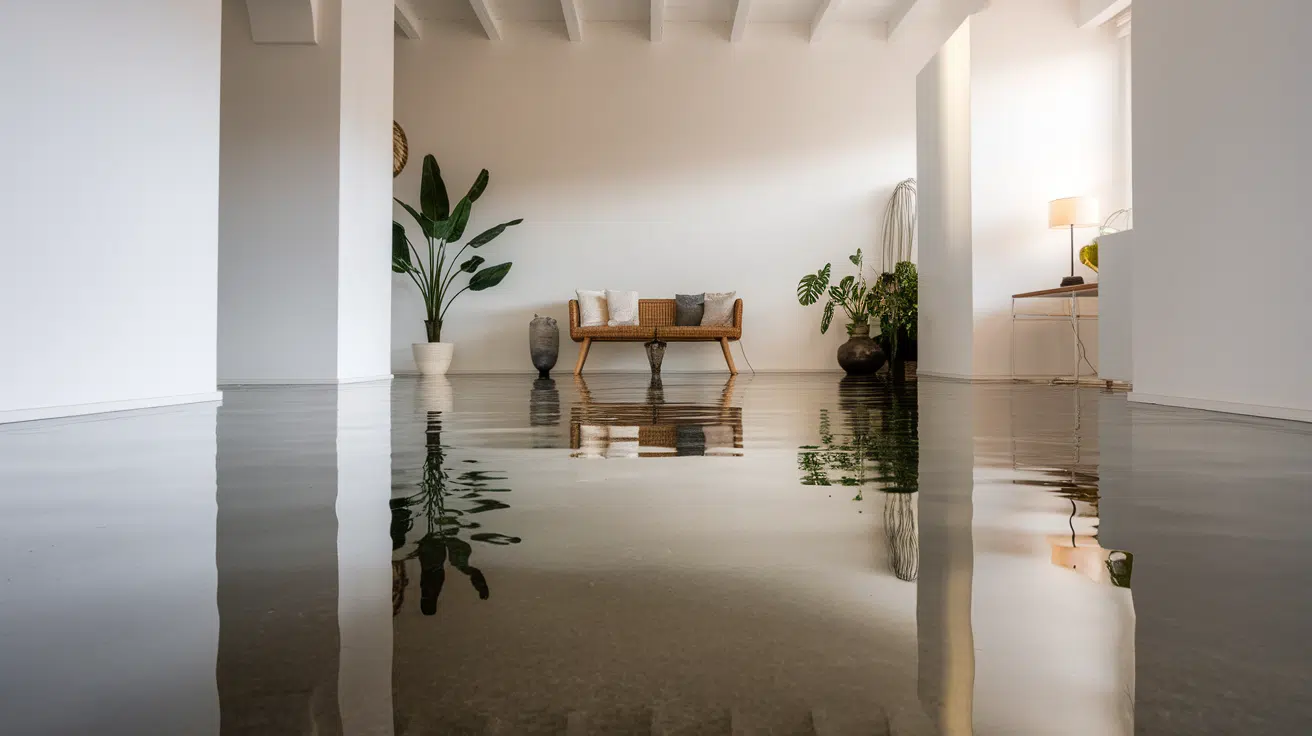
Polished concrete creates a mirror-like, high-gloss finish that reflects light naturally, reducing lighting costs while making spaces appear larger and more open.
This flooring option is ideal for retail spaces, showrooms, and modern office environments where visual impact is paramount.
The sleek, professional appearance impresses both customers and employees, contributing to a positive business atmosphere. Available in various sheen levels to match your specific design preferences.
Polished concrete offers the flexibility to achieve exactly the look your business needs while delivering practical benefits that support your bottom line.
2. Epoxy Coatings
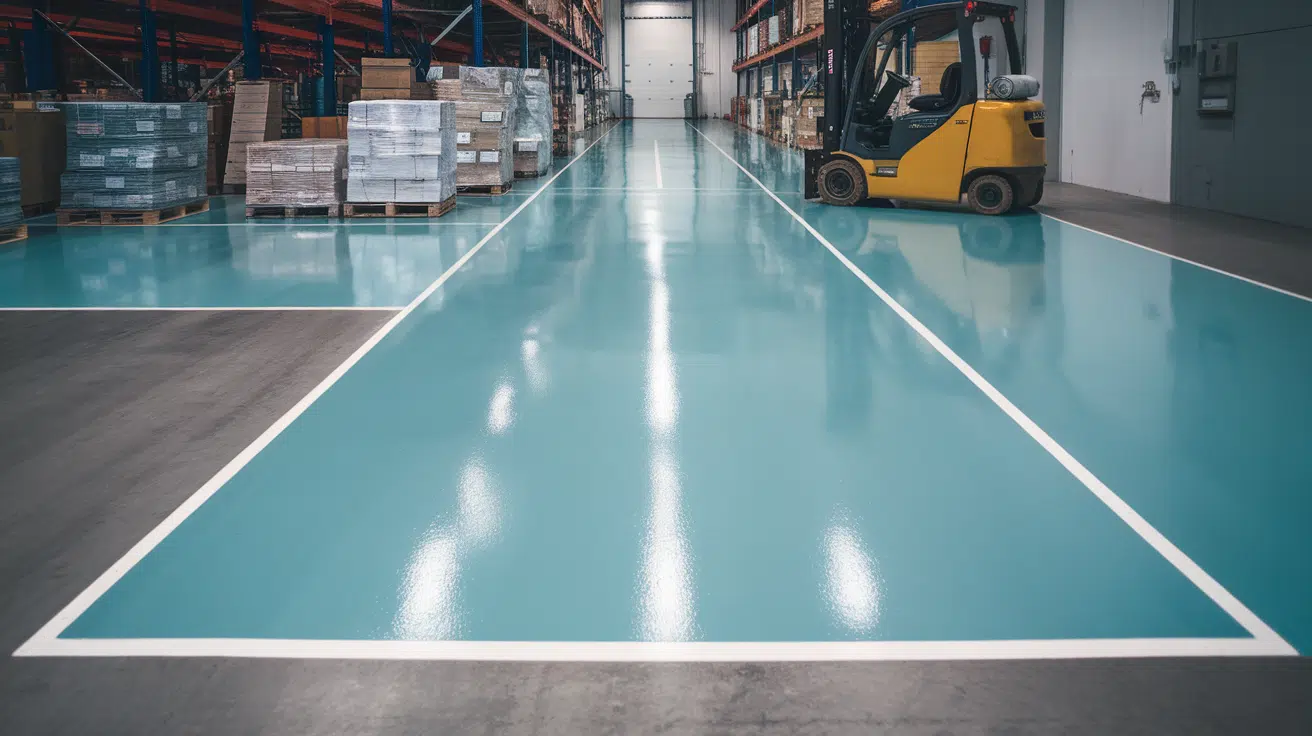
Epoxy coatings bond chemically with concrete to create an incredibly tough, seamless surface that can handle oil spills, chemical splashes, and the impact of heavy equipment wheels effortlessly.
These specialized coatings fill pores and imperfections to prevent bacteria harboring and stain absorption, making them perfect for manufacturing facilities, auto shops, and warehouse environments.
The result is a virtually indestructible surface that withstands daily forklift traffic while maintaining its protective properties and professional appearance.
3. Stained or Dyed Concrete

Stained or dyed concrete opens up a world of color possibilities for commercial spaces. Allowing businesses to customize their floors beyond traditional gray while maintaining concrete’s inherent durability.
Acid stains create rich, variegated tones in earth colors like browns, greens, and blues, penetrating the concrete surface to produce permanent, weather-resistant coloration that won’t peel or chip.
Water-based stains offer a broader spectrum of colors, including vibrant reds, yellows, and purples, providing more consistent coverage and easier application.
4. Office Concrete Slab

Concrete slabs are the base for most office flooring projects that use commercial concrete. The process involves pouring mixed concrete over a prepared surface to create a strong, long-lasting floor.
Installation starts with prepping the site—this includes grading, compacting, and placing reinforcement like rebar or wire mesh for added strength.
Once ready, the concrete is poured in sections, leveled with screed boards, and finished with tools like floats and trowels to get a smooth, clean surface, perfect for office spaces.
Commercial Concrete Flooring Installation Process
Understanding the installation timeline helps you plan your business operations and set realistic expectations.
Concrete flooring isn’t a quick weekend project; it’s a carefully orchestrated process that takes time to do right.
- Step 1: Clear the area, remove existing flooring materials, complete excavation work, and prepare the substrate foundation properly.
- Step 2: Install utilities, drainage systems, electrical conduits, vapor barriers, and insulation before concrete placement begins.
- Step 3: Pour concrete with careful coordination using multiple trucks and crews for proper placement and finishing.
- Step 4: Allow concrete curing time to develop full strength, permitting foot traffic after 24-48 hours only.
- Step 5: Apply surface treatments like polishing, coatings, or decorative finishes during specific curing windows for bonding.
Total Project Timeline: Most commercial concrete flooring projects take 2-6 weeks from start to finish, depending on size, complexity, and weather conditions.
Rush jobs often result in compromised quality, so building adequate time into your schedule protects your investment.
How to Choose the Right Flooring for Your Business
Selecting the right commercial flooring requires careful consideration of your specific business needs and operational demands.
Assess your daily foot traffic patterns and weight loads to determine durability requirements, while balancing initial investment against long-term maintenance costs within your budget constraints.
Consider how flooring supports your visual branding through colors, finishes, and professional appearance that align with your company image.
Industry standards and regulations may dictate specific requirements for hygiene, safety, or performance, making compliance a crucial factor in your decision-making process for optimal business success.
Concrete Flooring vs. Other Commercial Flooring Types
When comparing commercial flooring options, concrete consistently outperforms alternatives in durability and long-term value. Here is the table:
| Flooring Type | Initial Cost | Durability | Maintenance | Lifespan | Best For | Key Pros | Key Cons |
|---|---|---|---|---|---|---|---|
| Concrete | Medium-High | Excellent | Very Low | 25-50+ years | Industrial, Retail | Extremely durable, low maintenance | Higher upfront cost, cold surface |
| Tile | High | Excellent | Medium | 15-20 years | Healthcare, Restaurants | Water resistant, easy to clean | Expensive grout maintenance |
| VCT | Low | Good | High | 10-15 years | Schools, Offices | Affordable, easy installation | Requires waxing, shows scuffs |
| Hardwood | Very High | Good | High | 15-25 years | Upscale Offices | Premium appearance, refinishable | Very expensive, water damage risk |
| Carpet Tiles | Medium | Fair | High | 5-10 years | Offices, Libraries | Comfortable, sound absorption | Stains easily, frequent replacement |
Design & Customization Options
Commercial concrete flooring offers a wide range of design and customization options. Choose from various finishes like glossy, matte, or textured to suit the appeal of your space.
Concrete can be dyed in a variety of colors, allowing for unique and vibrant designs.
Additionally, inlays, logos, and floor graphics can be incorporated to personalize the flooring further, adding brand identity or artistic elements.
These options ensure that the floor not only performs well but also enhances the overall visual appeal.
Maintenance & Longevity Tips for Concrete Flooring
- Sweep daily to remove debris.
- Damp mop weekly with a neutral pH cleaner.
- Perform deep cleaning monthly with a concrete cleaner.
- Clean spills immediately to prevent staining.
- Re-seal every 1-2 years for high-traffic areas, Re-seal every 2-3 years for moderate traffic, Re-seal every 3-5 years for low-traffic areas.
- Signs for re-sealing include dullness or water no longer beading.
- Typical damage includes small cracks, stains, surface wear, and chips.
- Fix small cracks with crack filler, stains with stain removers, surface wear with light polishing or a topcoat, and chips with a matching concrete compound.
Conclusion
Commercial concrete flooring is a smart investment for your business.
With its unmatched durability, low maintenance, and customizable options that align with your brand, it’s the perfect choice for high-traffic areas like warehouses, retail stores, and offices.
While the initial investment might seem high, the 25 to 50+ year lifespan and minimal upkeep will give you long-term value and savings.
Concrete flooring adapts to your needs, offering the reliability and performance you need to keep your operations running smoothly.
So, if you’re looking to make a smart investment for your business, concrete flooring is a choice you won’t regret.
Want more ideas? Check out my other blogs for more tips on making your business space work better for you.