
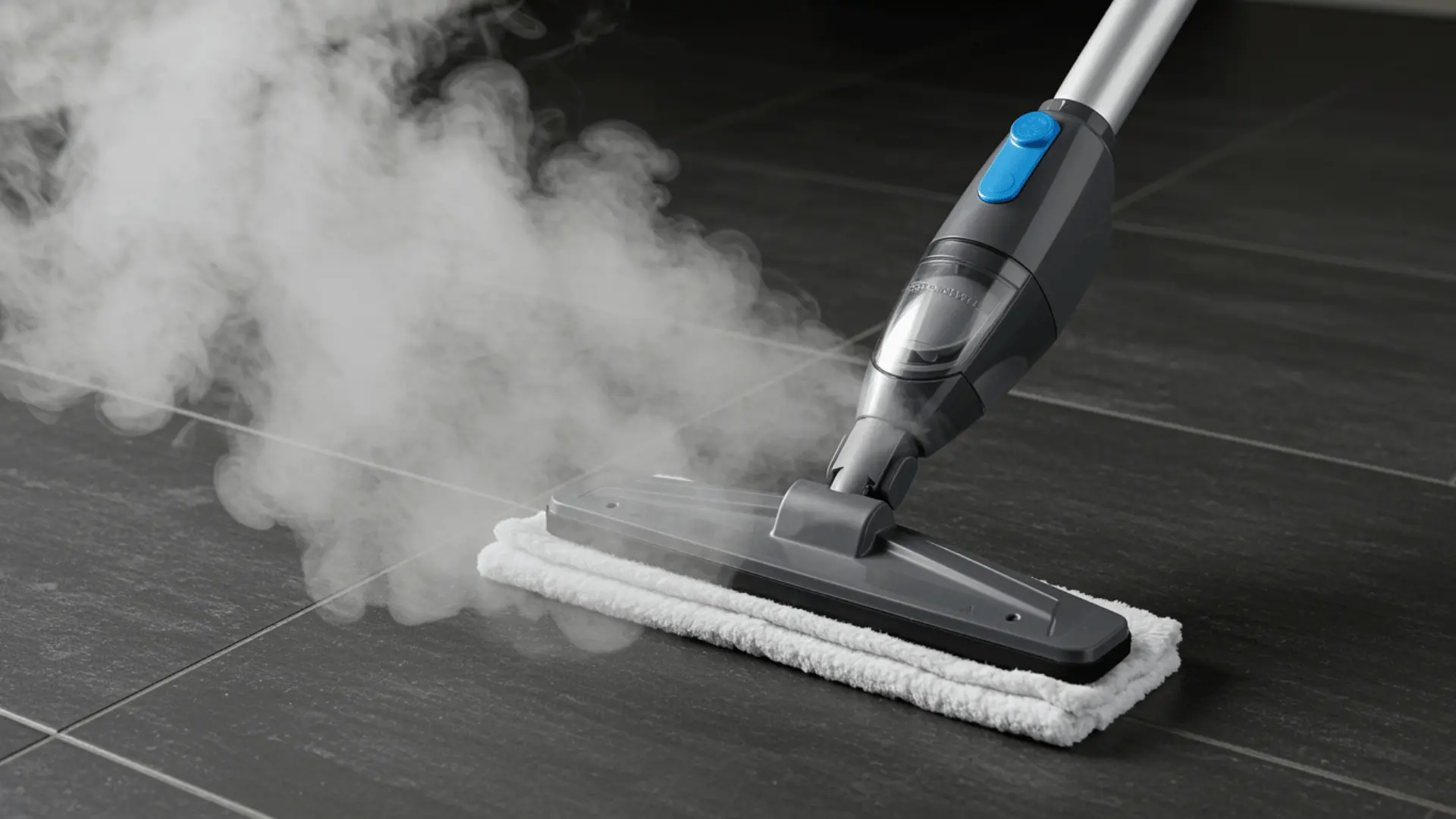
Can You Steam Clean Hardwood Floors Safely?
Steam cleaning has become a popular method for quick and effective floor cleaning, but when it comes to hardwood floors, the debate is real.
While steam mops can make cleaning easy on tile and vinyl surfaces, using them on hardwood can cause damage. Many homeowners wonder if steam cleaning is a safe option for their wooden floors, considering the promises of chemical-free, convenient cleaning.
In this blog, I’ll cover why steam cleaning hardwood floors can be risky, the potential dangers involved, and how to safely maintain your hardwood surfaces.
Let’s protect your investment in wood floors.
Can You Steam Clean Hardwood Floors?
Steam mops are commonly used on tile, vinyl, and other hard surfaces, which leads many people to wonder if the same cleaning method works for hardwood floors.
In most cases, the answer is no, though some experts suggest that steam cleaning may be safe on perfectly sealed hardwood floors with manufacturer guidance. It’s important to follow the manufacturer’s specific instructions to ensure the safety of your flooring.
Most flooring experts, including the National Wood Flooring Association (NWFA), and manufacturers advise against steam cleaning hardwood floors due to the risk of moisture damage and finish wear.
Steam mops release hot moisture onto the floor, and since wood is a natural material, it can absorb moisture through small gaps and seams.
When moisture enters the wood, it can cause problems such as swelling, cupping, or warping. The heat from the steam can also weaken or cloud the protective finish on the surface.
Some sources suggest that steam may be safe for perfectly sealed hardwood floors, but even sealed floors can develop small cracks in the finish over time. Steam can then seep through these weak spots, reaching the wood underneath.
For this reason, many flooring warranties specifically warn against steam cleaning. For regular cleaning, experts recommend methods that use very little moisture to protect the wood.
When Steam Cleaning Might Be Considered Safe (and Why It’s Still Risky)
While steam cleaning might seem like a quick solution for cleaning hardwood floors, certain conditions might make it less risky. However, even in these cases, caution is still needed.
| Situation | Safe: Why | Why It Still Carries Risk |
|---|---|---|
| Perfectly sealed hardwood floors | A strong protective finish can act as a barrier, preventing moisture from reaching the wood. | Finishes can develop tiny cracks over time, allowing steam to seep into the wood beneath. |
| Engineered hardwood flooring | Factory-applied finishes can provide stronger surface protection compared to older wood floors. | Moisture can still enter through seams between boards, damaging the inner layers. |
| Using a low-steam setting | Lower steam output reduces the amount of moisture released onto the floor. | Even small amounts of hot, moist air can build up and affect the wood over time. |
| Keeping the steam mop moving | A short contact time may reduce the likelihood of moisture sitting on the surface. | Steam can still enter joints and edges where the finish may be thinner. |
| Occasional or limited use | Some homeowners believe rare use reduces the chance of damage. | Repeated exposure to heat and moisture can slowly weaken finishes and affect the wood structure. |
Though steam cleaning may be considered safe under specific conditions, the risks still persist, and it’s important to carefully evaluate your floor’s condition before using this method.
Why Steam Cleaning Can Damage Hardwood Floors
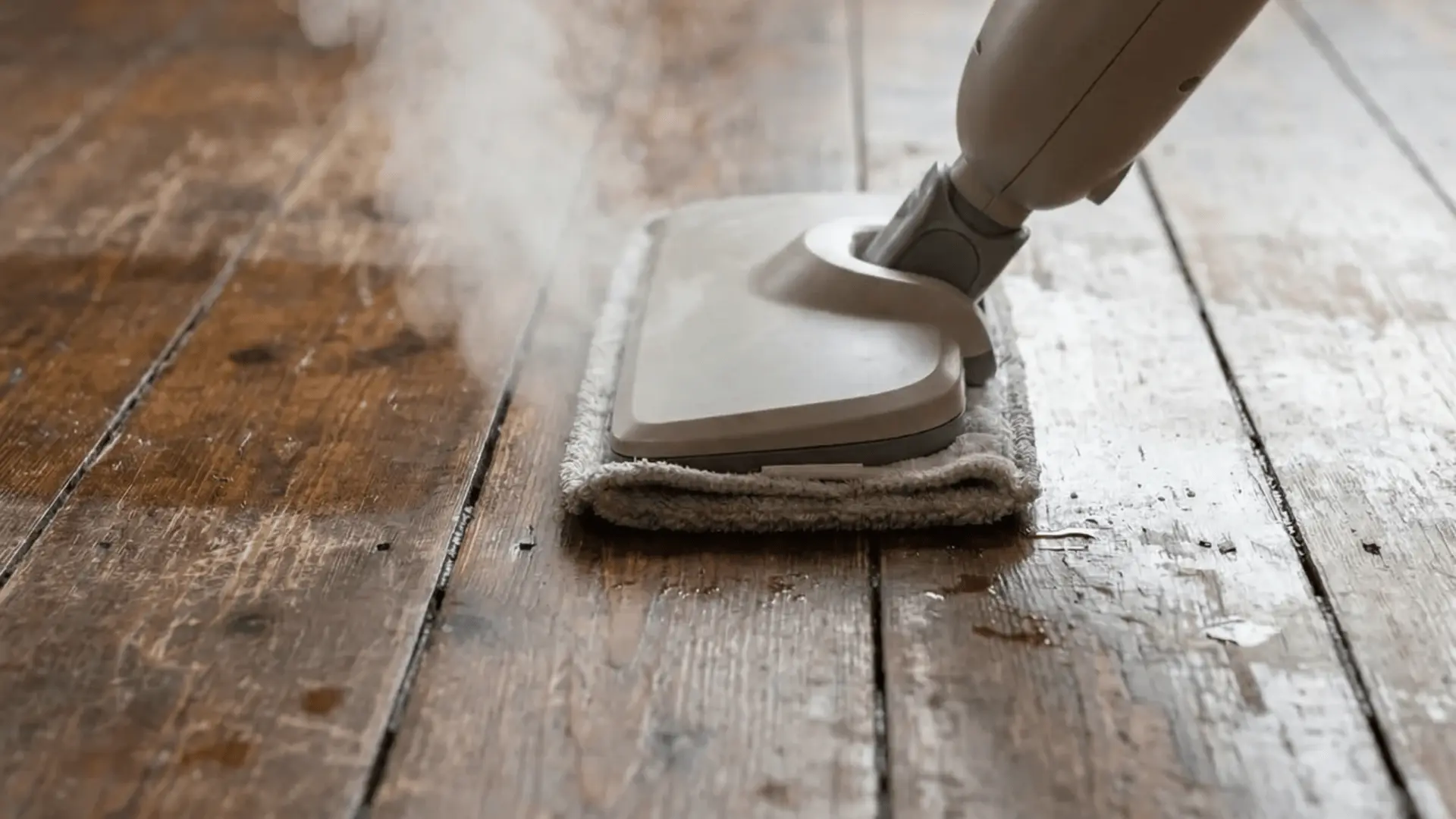
Hardwood floors react differently to heat and moisture than tile or vinyl. Steam cleaning introduces both at once, which can create problems for wood flooring over time.
Below are the main ways steam cleaning can affect hardwood floors.
Heat and Moisture Absorption in Wood
Steam mops release hot vapor directly onto the floor surface. Even if the floor looks sealed, small gaps between boards can allow moisture to pass through. Once moisture enters the wood, the fibers begin to expand. As the wood dries, it contracts again.
Warping, Cupping, and Buckling
Excess moisture can change the shape of hardwood boards. This leads to several common types of floor damage.
- Cupping – the edges of the boards rise higher than the center.
- Warping – boards bend or twist out of shape.
- Buckling – boards lift away from the subfloor.
These issues often appear gradually after repeated moisture exposure.
Damage to Floor Finishes and Sealants
Hardwood floors rely on a protective finish to shield the wood underneath. Steam can weaken this protective layer. High heat may cause the finish to turn cloudy or lose its smooth appearance.
In some cases, it can lead to peeling or uneven patches. This increases the chance of more serious damage to the flooring material.
Situations Where Steam Cleaning Causes the Most Damage
Not all hardwood floors react the same way to steam. Some floor types are far more vulnerable to heat and moisture. Damage often depends on the floor finish, age, and construction.
Floors with weak or missing protection tend to show problems much faster. Understanding these situations helps explain why steam cleaning can lead to serious issues.
1. Unsealed Hardwood Floors
Unsealed hardwood has little protection against moisture. Without a protective finish, steam can enter the wood very quickly. This can cause the boards to swell and change shape.
Repeated exposure may lead to cupping, warping, or permanent damage. Because of this, steam cleaning is strongly discouraged on unsealed wood floors.
2. Waxed Hardwood Surfaces
Some hardwood floors are protected with wax instead of a modern sealant. Wax coatings do not handle heat well. Steam can soften or break down the wax layer. This may leave the surface dull, sticky, or uneven.
Once the wax protection weakens, moisture can reach the wood more easily.
3. Older or Worn Floor Finishes
Over time, floor finishes begin to wear down. Small scratches and gaps can appear across the surface. Steam can pass through these weak areas and reach the wood underneath.
Older floors are therefore more likely to absorb moisture. This increases the chance of swelling or surface damage.
4. Differences Between Solid and Engineered Hardwood
Solid hardwood boards are made from a single piece of wood. They expand and contract more when exposed to moisture. Engineered hardwood uses layered construction. This design can reduce movement compared to solid wood.
For both types, regular steam cleaning increases the risk of long-term damage.
Manufacturer Guidelines and Warranty Risks
Most flooring professionals advise against steam cleaning hardwood floors. The main concern is the combination of heat and moisture, which can damage the wood and its protective finish.
Manufacturers test cleaning methods to determine what is safe for their products. Based on these tests, many brands clearly state that steam mops should not be used on hardwood floors.
Instead, most manufacturers recommend cleaning methods that limit moisture exposure, such as sweeping or vacuuming with a soft brush attachment, using a microfiber mop for routine cleaning, or applying hardwood floor cleaners approved by the manufacturer.
How Steam Cleaning Can Void a Floor Warranty
Hardwood floor warranties often include specific maintenance rules that explain which cleaning methods are allowed. If a homeowner uses a steam mop against these instructions, the warranty may no longer apply.
This means the manufacturer may refuse to cover repairs or replacements if damage occurs.
Following the recommended cleaning guidelines helps protect both the flooring and the warranty coverage.
Safer Ways to Clean Hardwood Floors
Hardwood floors stay in better condition when cleaning methods use minimal moisture. These options remove dirt while protecting the wood and its surface finish.
Dry Cleaning Methods (Dusting and Sweeping)
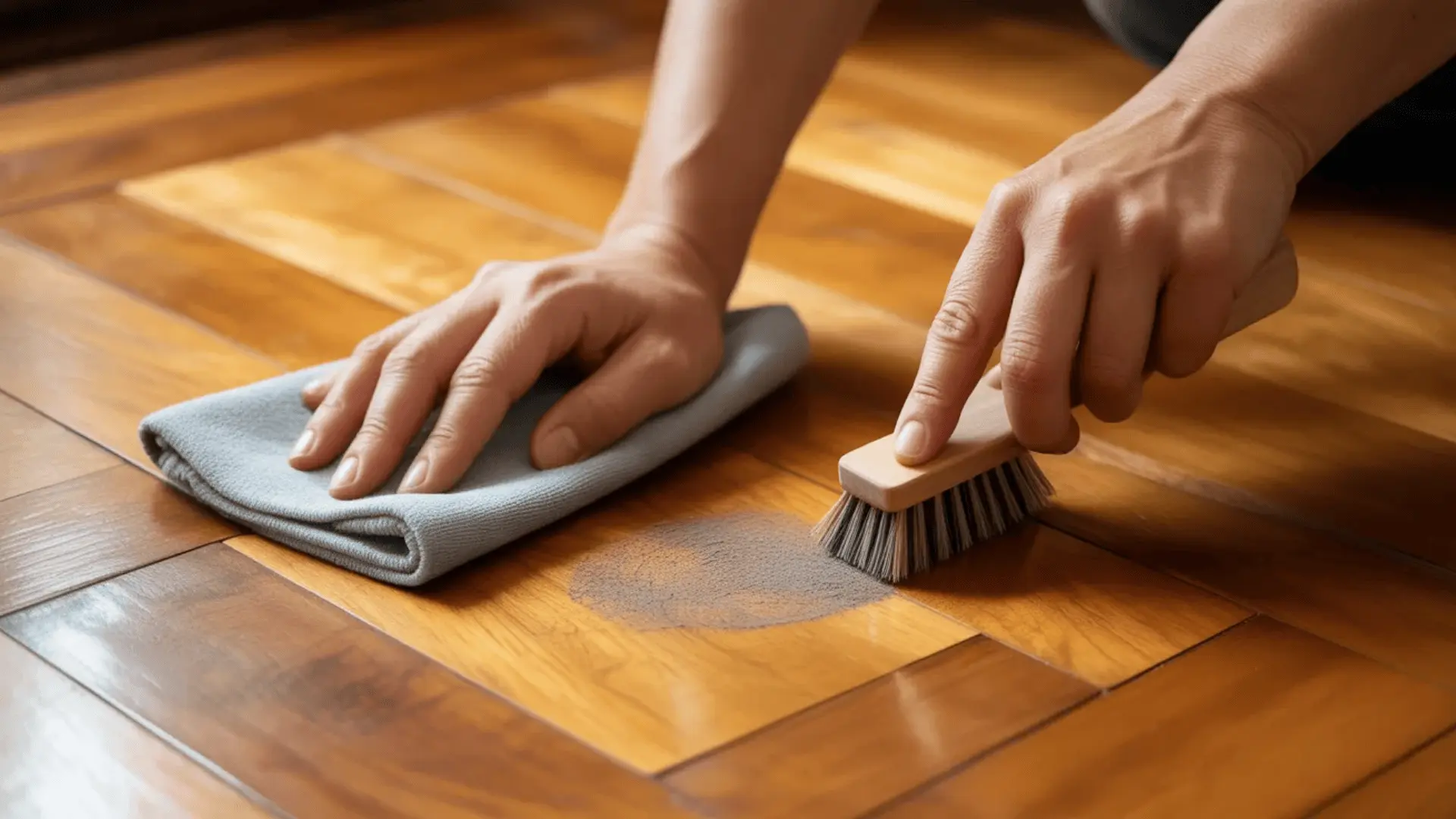
Dust and small debris can scratch hardwood floors if left on the surface. A soft broom or a dry microfiber dust mop helps safely remove loose dirt and keeps the floor clean between deeper cleanings.
Using a Microfiber Mop for Routine Cleaning
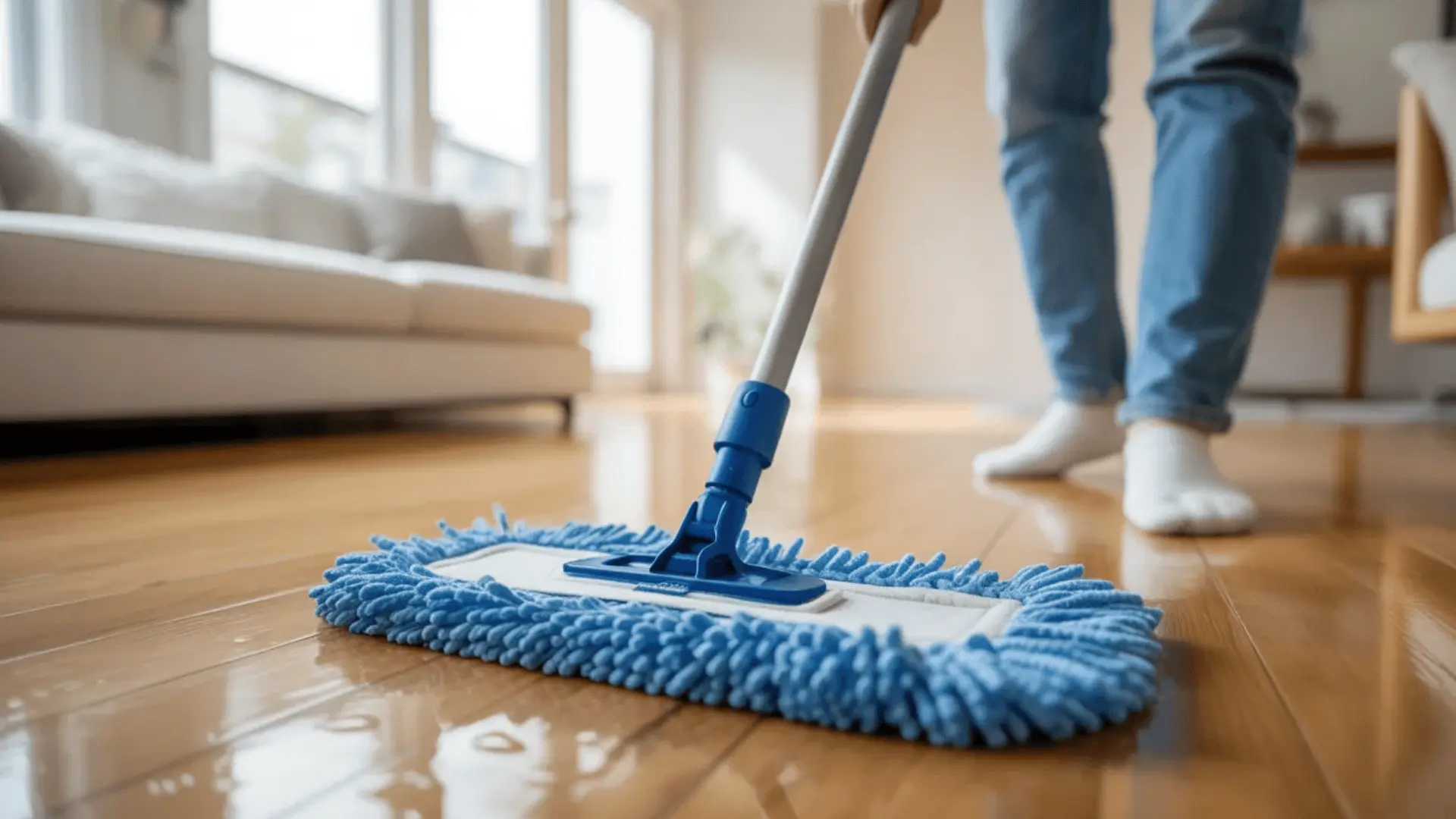
Microfiber mops trap dust and light grime effectively. They are gentle on hardwood finishes and work well for routine cleaning without requiring heavy scrubbing. The fibers attract dirt and small particles, making it easier to clean the surface.
Damp Mopping with Approved Hardwood Cleaners
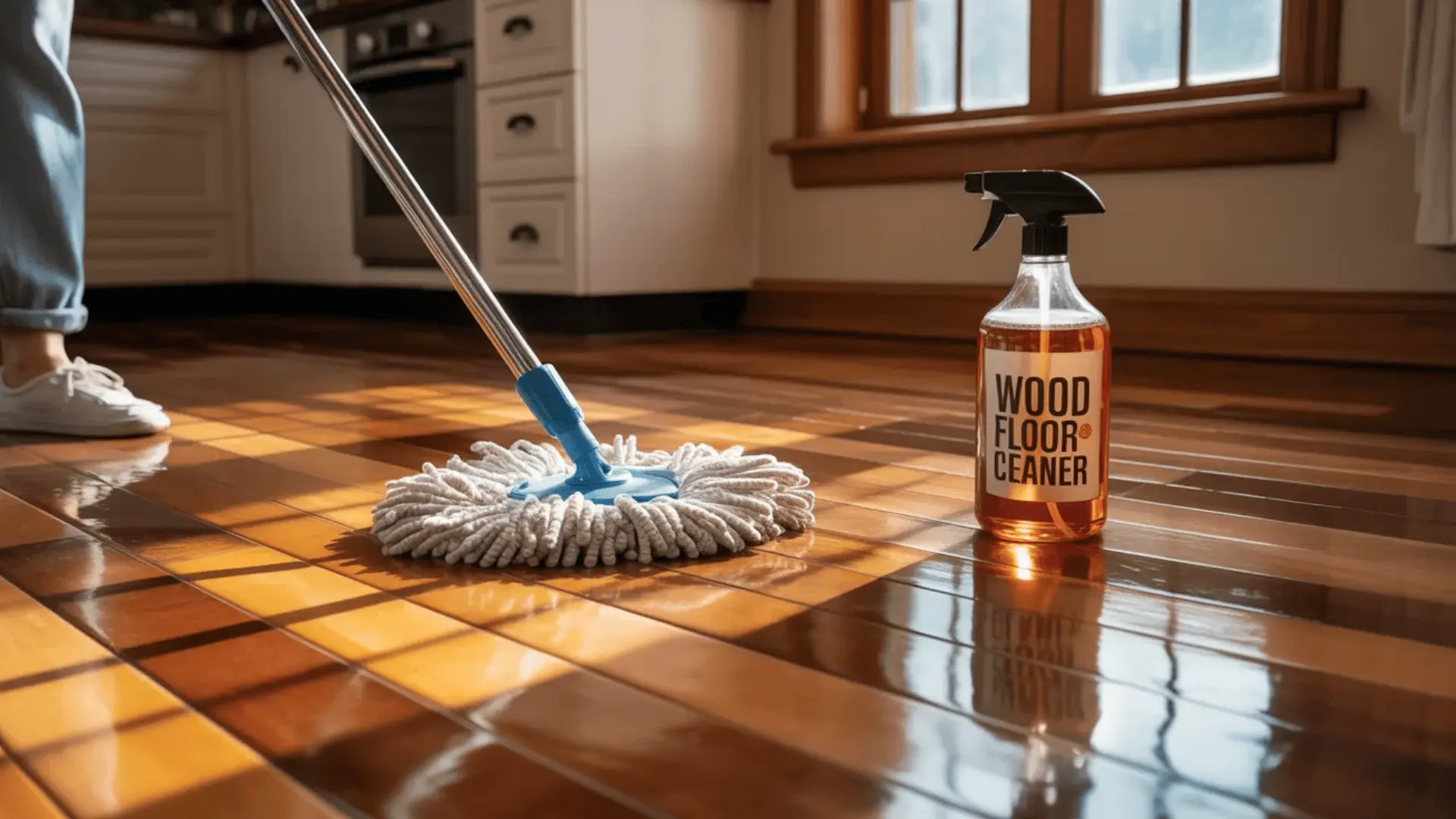
A lightly damp mop can help remove sticky spots or light buildup that dry cleaning may not remove. The mop should always be well wrung out so the floor is slightly damp rather than wet. Excess water should never remain on the surface of hardwood floors.
Products Commonly Recommended for Hardwood Floors
Many manufacturers recommend cleaners made specifically for wood flooring. These products help remove dirt and maintain the appearance of the floor without damaging the protective finish.
Common types of hardwood-safe cleaning products include:
- pH-neutral hardwood floor cleaner
- Water-based wood floor cleaner
- Wood-safe cleaning spray for sealed floors
Conclusion
While steam cleaning offers convenience, it’s not always the best choice for hardwood floors. The combination of heat and moisture can lead to swelling, warping, and damage to your wood’s protective finish.
However, with proper care and the right cleaning methods, you can keep your hardwood floors looking their best without compromising their longevity.
Always follow the manufacturer’s guidelines to avoid unnecessary risks. For safe and effective cleaning, consider using microfiber mops or products specifically designed for hardwood.
Ready to take better care of your floors? Start by exploring safer cleaning options today!


