
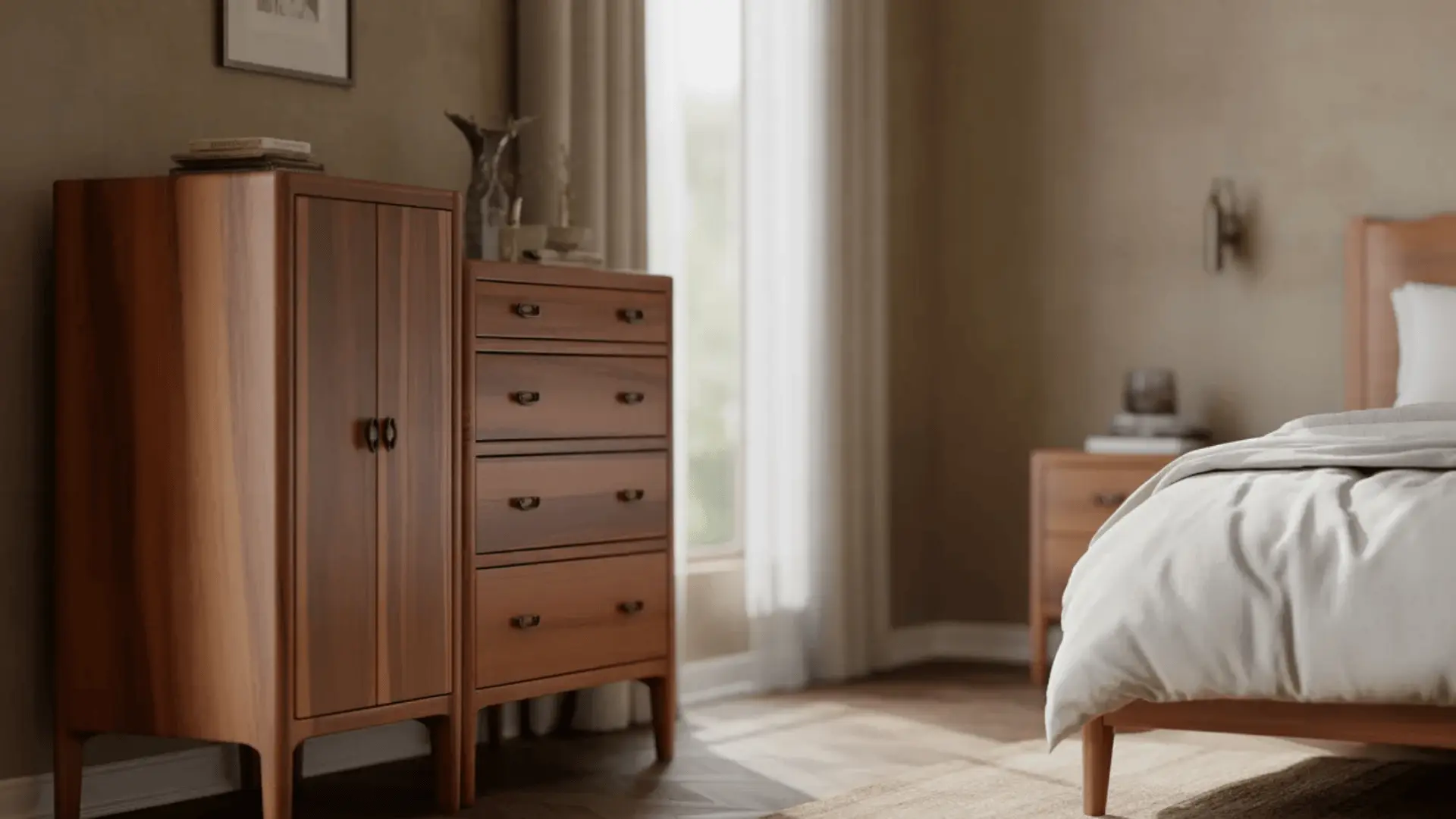
Cabinet vs. Dresser: Key Differences and How to Choose
Choosing between a cabinet and a dresser may seem simple at first, but the decision affects how organized and functional your space feels every day.
When comparing a cabinet vs. a dresser, the differences go beyond appearance. Each piece is built with a specific structure that shapes how it stores items, fits into a room, and supports daily routines.
In this post, I’ll show you how their design, storage layout, placement, and practical benefits compare side by side. By understanding these differences clearly, you can avoid buying furniture that doesn’t match your needs.
Cabinet vs. Dresser: What’s the Core Difference?
At first glance, a cabinet and a dresser can look similar. Both are storage furniture pieces used in homes. But their design and purpose are quite different.
What is a Cabinet?
A cabinet is a storage unit that usually has doors on the front. Inside, you will typically find shelves or compartments.
You will see cabinets used in many parts of a home. Common places include:
- Kitchens for dishes and cookware
- Living rooms for books or electronics
- Bathrooms for towels and toiletries
- Offices for supplies and documents
Cabinets work well when you need flexible storage for different items. The doors help keep things hidden and organized.
What is a Dresser?
A dresser is a low, wide piece of furniture with several drawers stacked vertically. It is mainly used for storing folded clothing.
Dressers are most often placed in bedrooms. People use them to store items such as:
- T-shirts
- Socks
- Underwear
- Sweaters
- Sleepwear
The top surface of a dresser is also useful. Many people place mirrors, lamps, photos, or décor on it.
The Fundamental Design Difference: Drawers vs. Doors
The biggest difference between a dresser and a cabinet is how you access the storage space.
A dresser uses pull-out drawers. Each drawer holds a specific group of items, which helps keep clothing organized.
A cabinet uses doors that open to shelves. Instead of separating items into drawers, you place them on shelves or in compartments.
This design difference changes how you store and retrieve items. Drawers work best for small or folded items. Shelves work better for larger or mixed objects.
How Their Structures Shape How You Use Them
Because of their structure, each furniture piece fits a different type of storage need.
Dressers are designed for quick access to clothing. Each drawer keeps items separated, which makes everyday use simple and organized.
Cabinets are more flexible. Shelves allow you to store objects of different sizes, from dishes and books to office supplies or linens.
In simple terms:
- Dressers specialize in clothing storage.
- Cabinets handle a wider range of household items.
Understanding this difference helps you choose the right furniture for the room and the items you want to store.
Structure and Design Features of Cabinets and Dressers
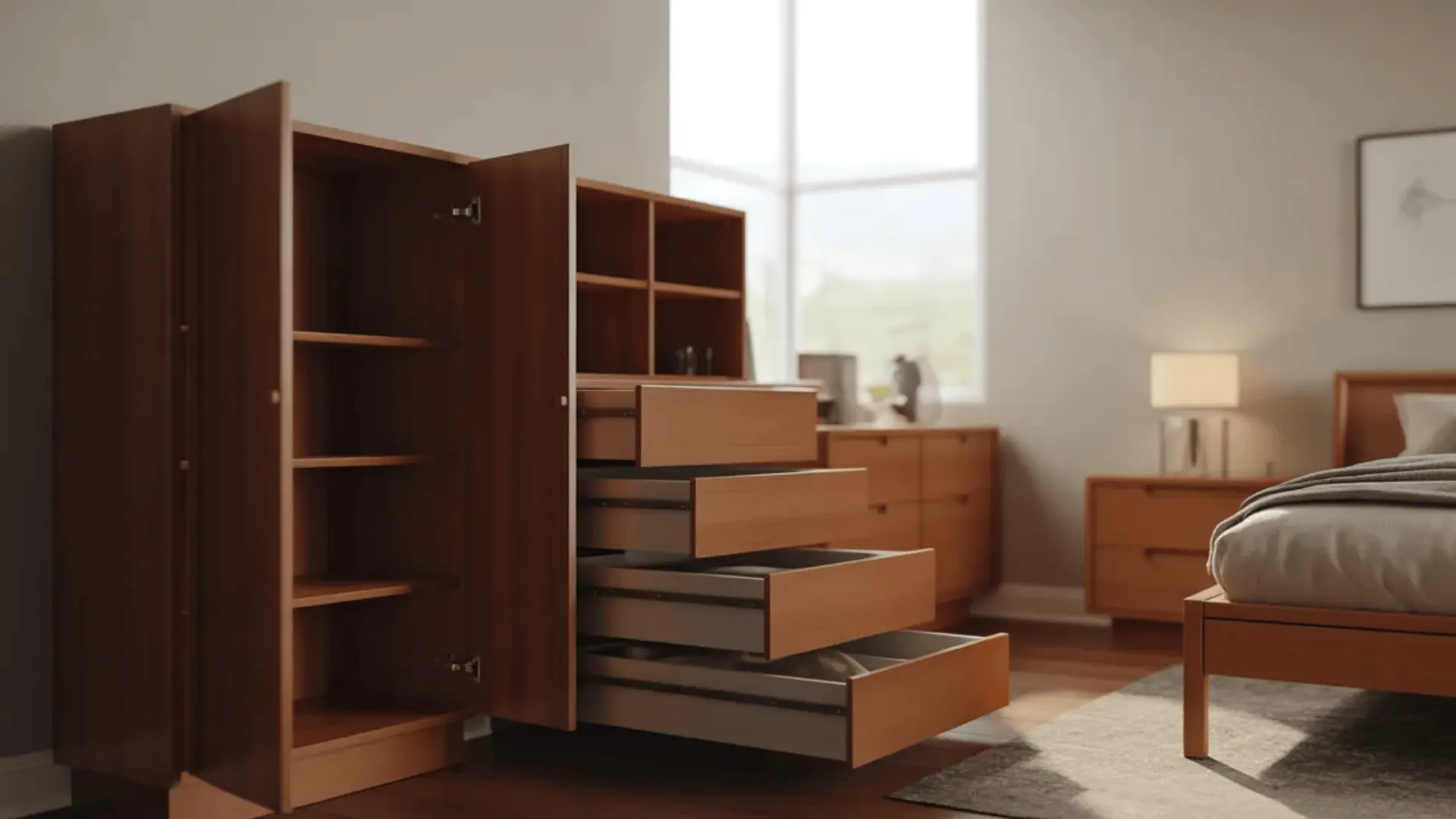
The structural design of storage furniture plays a major role in how it is used. These design choices affect not only what you store but also how easily you can access it.
1. Typical Cabinet Construction and Layout
A cabinet is usually built as a box-shaped unit with one or more hinged doors on the front. Inside, you will typically find shelves or compartments.
Common structural features of cabinets include:
- One or two front doors
- Adjustable or fixed shelves
- Deep storage compartments
- Sometimes a mix of shelves and drawers
Cabinets often focus on enclosed storage. The doors hide the contents and keep items protected from dust. This layout works well for storing larger or mixed items like dishes, books, linens, or office supplies.
Cabinets can also vary widely in height. Some are tall and narrow, while others are shorter and wider depending on the room and purpose.
2. Typical Dresser Construction and Layout
A dresser has a very different internal layout. Instead of doors and shelves, it contains a stack of pull-out drawers.
Most dressers include:
- Multiple wide drawers arranged vertically
- Drawer handles or knobs
- A flat top surface
- A low, horizontal frame
Each drawer creates a separate storage section. This makes it easier to organize clothing by type, such as shirts in one drawer and socks in another.
Because dressers are usually wider than they are tall, they provide both drawer storage and a usable surface on top.
3. Horizontal vs. Vertical Furniture Profiles
Another major difference between cabinets and dressers is their orientation.
Dressers typically have a horizontal profile. They are wide and relatively low, which makes them easy to access while standing. This design also allows them to fit well under mirrors, windows, or wall décor.
Cabinets often follow a vertical profile. Many cabinets are taller and narrower, using height to provide more storage without taking up as much floor space.
This vertical design is useful in rooms where maximizing storage while saving floor space is important.
4. Surface Space and Top Usage
Surface space is another area where dressers and cabinets differ.
Dressers usually have a large, flat top surface. People often use this space for:
- Mirrors
- Lamps
- Picture frames
- Decorative items
- Small electronics or TVs
Cabinets may also have a top surface, but it is not always the main focus of the design. Some cabinets are tall enough that the top is rarely used, while others are mounted on walls and do not offer surface space at all.
Because of this, dressers often serve both as storage and as a functional surface within a bedroom. Cabinets are typically designed with storage efficiency as the main priority.
Storage Purpose: What Each Piece is Designed to Hold
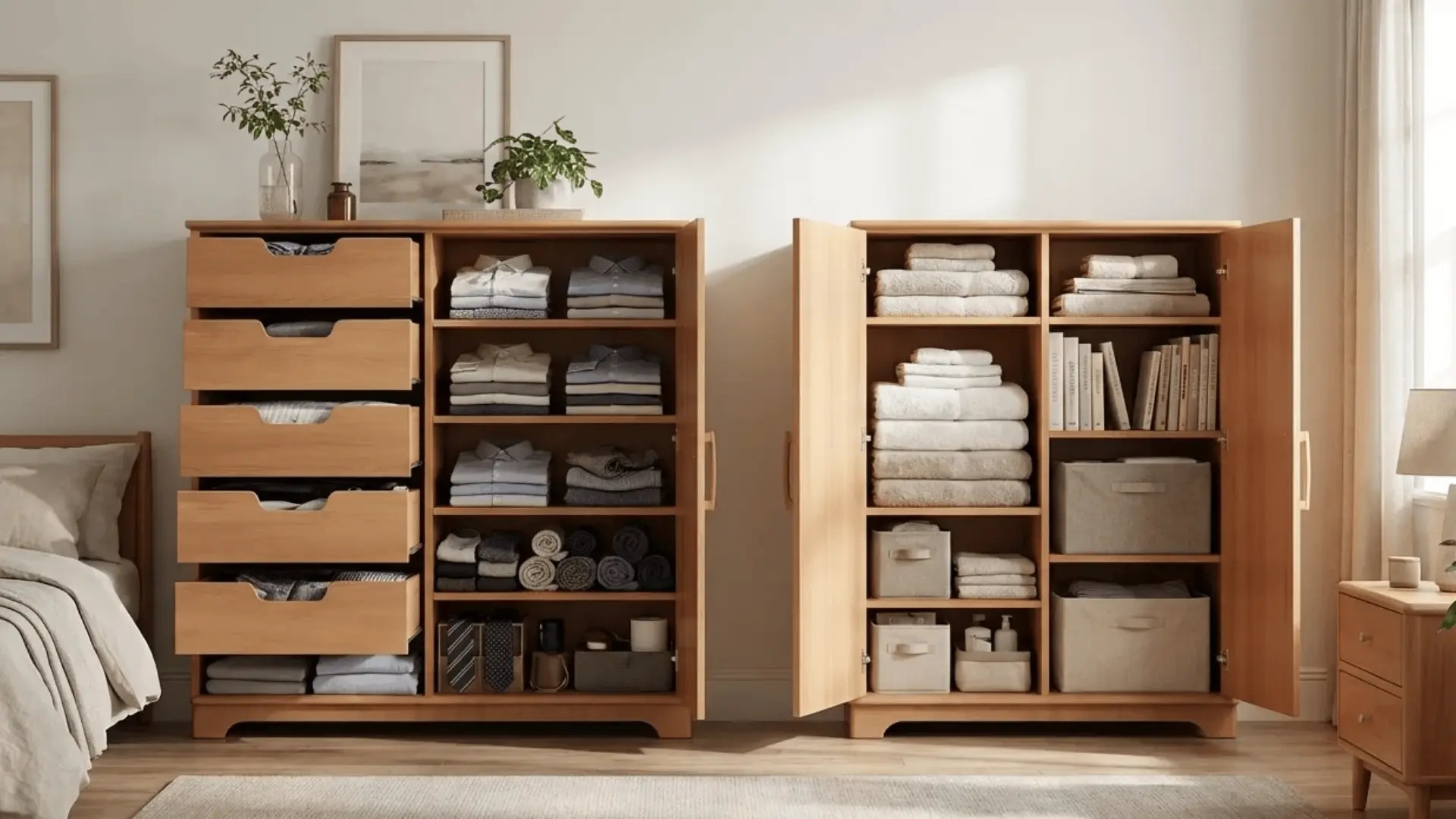
The biggest difference comes down to what each piece is meant to store. Their design directly influences the type of items they hold and how those items are organized. Because of this, each piece works best for different storage needs in the home.
Why Dressers Are Designed for Clothing Storage
Dressers are specifically designed to store folded clothing. The stacked drawer layout allows clothes to be sorted into separate sections.
This structure makes everyday clothing storage easier. Each drawer can hold a specific type of item, which helps maintain organization.
For example, many people use dresser drawers like this:
- One drawer for T-shirts
- One for underwear and socks
- One for pajamas or workout clothes
- One for sweaters or seasonal clothing
The shallow drawer depth also helps keep clothes visible and easy to reach without stacking too many layers.
Why Cabinets Support Multi-Purpose Storage
Cabinets are designed to hold a wider range of household items. Their shelves allow you to store objects that vary in size and shape.
Unlike drawers, shelves provide open compartments where items can be placed, stacked, or grouped together. This makes cabinets useful for storage in many rooms.
You will often find cabinets used for:
- Kitchen dishes and cookware
- Pantry supplies
- Books and documents
- Towels and linens
- Office supplies
Because of their flexible layout, cabinets work well when the stored items are not all the same size.
Access, Visibility, and Organization Differences
Another difference between dressers and cabinets is how you access and organize the contents.
Dressers provide separate compartments through drawers. This helps keep small items organized and prevents everything from mixing together.
Cabinets rely on open shelf storage behind doors. While this allows you to store larger items, it can sometimes make organization slightly harder if items are stacked.
In simple terms:
- Drawers help with detailed organization.
- Shelves support flexible storage for mixed items.
Each design supports a different style of organization depending on what you are storing.
Where Each Piece is Usually Placed in a Home
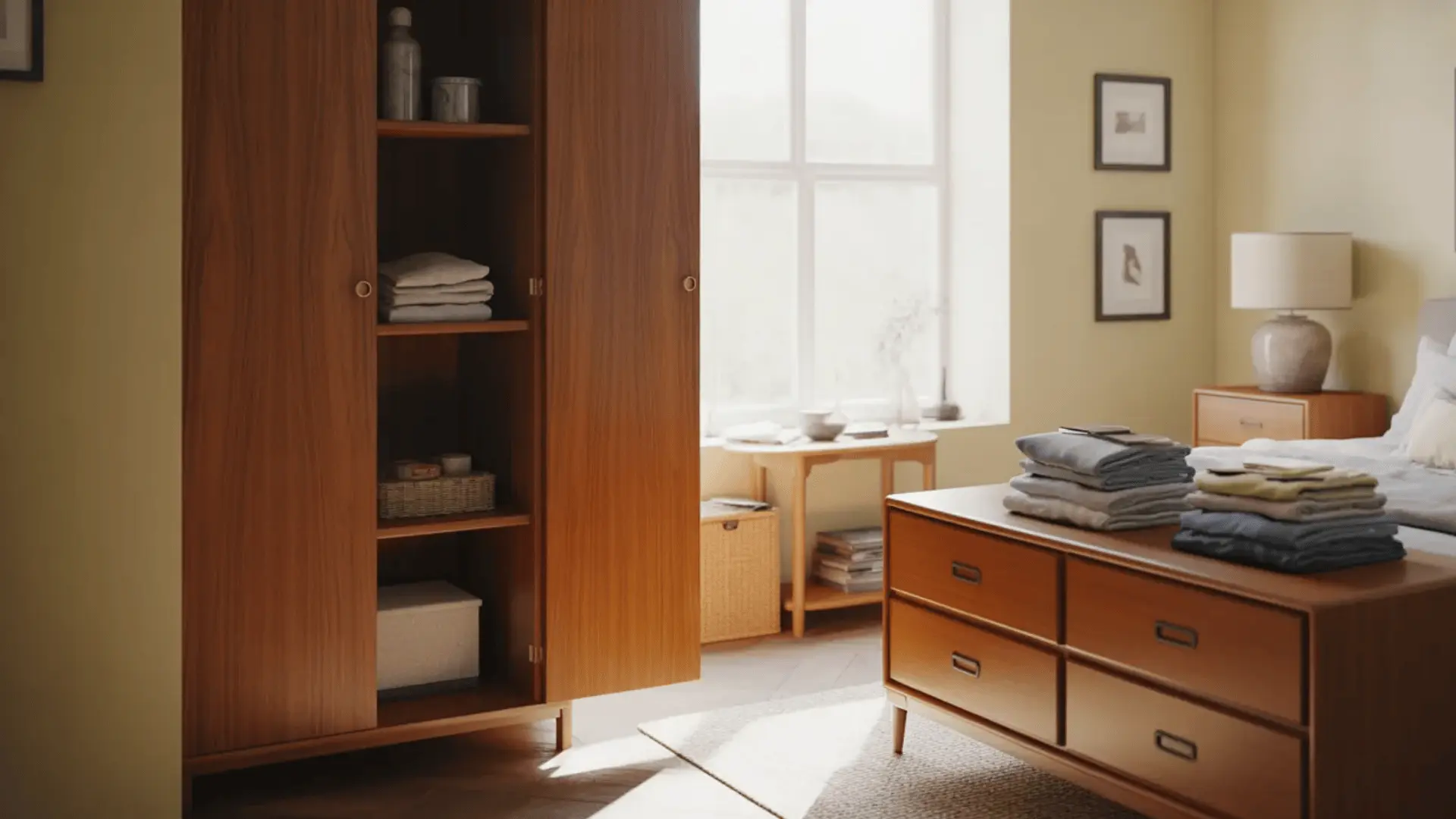
Dressers are closely tied to bedroom furniture because they store clothing and personal items. Cabinets, however, are used across many areas of the home because they support more flexible storage.
The room’s function usually determines which piece makes more sense.
Why Dressers Are Primarily Bedroom Furniture
Dressers are most commonly found in bedrooms because they are designed for clothing storage. Their drawers help organize folded garments and personal items that you use daily.
You will often see a dresser placed near a closet or along a bedroom wall. Many people also position a mirror above it or use the top surface for small bedroom items.
Common bedroom uses for dressers include storing:
- Everyday clothing
- Sleepwear and undergarments
- Accessories like belts or scarves
- Personal items such as watches or jewelry
Because of their height and layout, dressers are easy to access while getting dressed.
Where Cabinets Are Commonly Used in A Home
Cabinets appear in many different rooms because they can store a wide variety of items. Their shelves and enclosed doors make them useful for both organization and keeping clutter hidden.
Some common places where cabinets are used include:
- Kitchen: dishes, cookware, and pantry items
- Bathroom: towels, toiletries, and cleaning products
- Living room: books, décor, or electronics
- Dining area: serving dishes and tableware
- Home office: documents and supplies
Cabinets are often built into the room, but they can also be freestanding furniture pieces.
How Room Function Influences the Right Choice
The purpose of the room often determines whether a cabinet or a dresser is the better option.
Bedrooms focus on clothing and personal storage, which is why dressers are commonly used there. The drawer design helps keep clothing organized and easy to access.
Rooms like kitchens, bathrooms, and offices require storage for many different types of items. Cabinets work better in these spaces because shelves allow objects of different sizes to be stored together.
In simple terms, dressers support bedroom clothing storage, while cabinets provide flexible storage across multiple rooms in the home.
Practical Advantages and Limitations of Each
Before deciding which piece fits your space best, let’s look at the practical strengths and weaknesses of both options.
Dresser: Pros and Cons
| Pros | Cons |
|---|---|
| Drawers keep clothing separated and organized | Not ideal for storing large or bulky items |
| Easy access to folded clothes | Takes up more horizontal floor space |
| Wide top surface for décor or mirrors | Limited flexibility for mixed storage |
| Comfortable height for daily bedroom use | Mostly suited for clothing only |
Dressers work best in bedrooms where organized clothing storage and quick daily access are the priority.
Cabinet: Pros and Cons
| Pros | Cons |
|---|---|
| Flexible shelf storage for mixed items | Smaller items can become cluttered on shelves |
| Suitable for many rooms in the home | Less efficient for folded clothing |
| Enclosed doors hide clutter | Items may need stacking, reducing visibility |
| Vertical designs save floor space | Organization may require baskets or dividers |
Cabinets are ideal when you need versatile, multi-room storage that handles different item sizes efficiently.
How to Choose Between a Cabinet and a Dresser
Choosing between the two becomes easier when you focus on what you need to store and how the room will be used.
Choose a Dresser if You Need Clothing Storage
A dresser is the better option when your main goal is storing folded clothes. The drawer design helps keep garments organized and separated.
You should consider a dresser if you need storage for:
- T-shirts and folded shirts
- Socks and underwear
- Pajamas and lounge wear
- Small clothing accessories
Dressers are especially useful in bedrooms where quick and organized access to everyday clothing matters.
Choose a Cabinet for Flexible Household Storage
A cabinet is a better choice when you need to store items of different sizes or types. Shelves provide more open space, which makes it easier to store larger or mixed objects.
Cabinets are commonly used for storing:
- Kitchen dishes and cookware
- Books and documents
- Towels and linens
- Office supplies or household items
Because of their flexible storage layout, cabinets can work well in many rooms across the home.
Consider Room Layout and Available Space
The size and layout of your room can also influence the decision.
Dressers are usually wide and low. They require more horizontal wall space but provide a large top surface that can hold mirrors, lamps, or decorative items.
Cabinets often use vertical space more efficiently. Taller cabinets can offer more storage without taking up as much floor area, which can be helpful in smaller rooms.
Looking at both floor space and wall space will help you choose the option that fits your room best.
Wrapping Up
Understanding the real difference in cabinet vs. dresser comes down to purpose, structure, and room function.
A dresser supports organized clothing storage with separate drawers, while a cabinet offers flexible shelving for a wide range of household items.
Neither option is better in every situation. The right choice depends on what you plan to store and how much space you have available.
Read more home and furniture blogs on the website to make smarter, more confident choices for every room in your home.


