Board and Batten vs. Wainscoting: A Simple Guide
Ever look at your walls and feel like they’re just… missing something? I’ve definitely had that feeling. A blank wall can leave a room feeling flat or unfinished.
If you’re looking to add some character without jumping into a full remodel, you’re in the right spot. This blog is your simple guide to board and batten vs. wainscoting.
I’ll walk you through how they differ, what they cost, where they work best, and how to decide which one suits your home. You’ll also get tips on installation, pros and cons, and how to choose the right style.
Ready to give your walls a little upgrade? Let’s figure out which option fits you best.
Board and Batten vs. Wainscoting: Key Differences
Both of these are popular ways to decorate walls and add texture to a room. They both make plain walls look more finished and give the space extra style.
Board and batten uses tall wooden boards placed vertically, with narrow strips called battens covering the spaces between them.
This creates a clean, lined pattern that often runs from the floor all the way to the ceiling. It’s a great choice if you want a bold, modern look that also feels neat and organized.
Whereas, wainscoting is different because it usually covers just the bottom part of a wall. It can go up one-third, halfway, or even three-quarters of the wall’s height.
It often includes decorative trim or molding on top, which adds a classic or fancy touch. It’s a good option if you want your room to feel cozy, traditional, or a little more formal.
How These Wall Styles Change a Room
Wall treatments like board and batten or wainscoting do more than just dress up a wall; they shape how a room feels.
Board and Batten

Board and batten adds a pattern of evenly spaced vertical boards, which gives the wall a sense of order and rhythm. In traditional homes, this look brings style and character.
It fits naturally in farmhouse, colonial, or cottage-style spaces, especially when paired with warm tones and rustic details.
In modern interiors, board and batten is often simplified. Straight, clean lines and minimal trim help the design feel sleek and understated.
Painted in bold or neutral shades, it works great in entryways, bedrooms, or even stairwells. It’s a smart way to add texture without cluttering the room.
Wainscoting

Wainscoting usually covers the lower third of the wall and is often topped with a horizontal molding. This setup helps anchor the room visually.
It adds weight to the bottom half of the wall, which can make high or wide spaces feel more balanced and cozy.
Traditionally, wainscoting was used in formal spaces like dining rooms or sitting areas. Today, it’s also a favourite in hallways, bathrooms, and even mudrooms.
You can paint it white for a vintage look or use bold colors for something more modern. Either way, it adds polish and definition to any space.
Board and Batten vs. Wainscoting: Pros and Cons
Wall treatments come with their own benefits and challenges. Knowing the ups and downs of each can help you pick the one that fits your home and style best.
| Feature | Board and Batten | Wainscoting |
|---|---|---|
| Pros | Adds visual depth and texture | Offers a classic architectural look |
| Easy for experienced DIYers | Protects walls from scuffs and damage | |
| Makes rooms feel taller | Hides imperfections in older walls | |
| Works with many design styles | Adds stylish visual interest | |
| Durable in high-traffic areas | Great for traditional and transitional spaces | |
| Cons | May overwhelm small rooms | Installation is more complex |
| Needs careful measurements | It can seem outdated without modern updates. | |
| May feel too bold in small or minimalist rooms | Costs more in materials and labor | |
| Higher material costs are possible. | Less impact in rooms with unique architecture | |
| Requires regular upkeep | Needs skilled carpentry for best results |
Both can bring a lot of personality to your space; you really can’t go wrong. It all comes down to what you like, how big the room is, and how much effort you’re ready to put in.
Cost and Installation Differences
Before you start a wall project, it helps to know what it might cost, what you’ll need, and who should handle the work.
Materials: Both board and batten and wainscoting use similar items. You’ll likely need:
- Plywood or MDF panels
- Wood trim pieces
- Nails, wood glue, and wood filler
- Sandpaper, paint, or stain
- Measuring tape, level, and saw
The kind of wood and paint you pick affects the price and the final result. Solid wood costs more but can last longer and hold up better.
DIY or Hiring a Pro
If you’ve worked on home updates before, board and batten is usually doable with careful measuring and steady cuts.
Wainscoting takes more precision and may be tougher to get right without experience.
If you’re unsure about cutting angles or getting smooth seams, hiring someone might be the better route. A pro can help avoid gaps, uneven lines, or wasted materials.
Doing it yourself saves labor costs, but the final look depends on your skill and time.
Board and Batten vs. Wainscoting: Which is Right for You
Each wall style has its own look and feel. Picking the right one depends on where you’re using it and how your home is styled.
Based on Room Type

Some rooms work better with certain wall styles. Wainscoting is great for powder rooms, dining areas, and hallways because it adds a clean, finished look without covering the full wall.
Board and batten works well in offices, bedrooms, or entryways where you want to make a bold statement. Think about the room’s purpose and how much wall coverage you want.
Based on Home Style

The style of your home matters, too. Board and batten fits perfectly in farmhouse, rustic, or coastal homes where natural textures are popular.
Wainscoting mixes well with colonial or traditional homes and adds style to classic spaces. If you have a modern home, simpler board and batten can work better with clean lines and neutral colours.
Wall Treatment Comparison Table
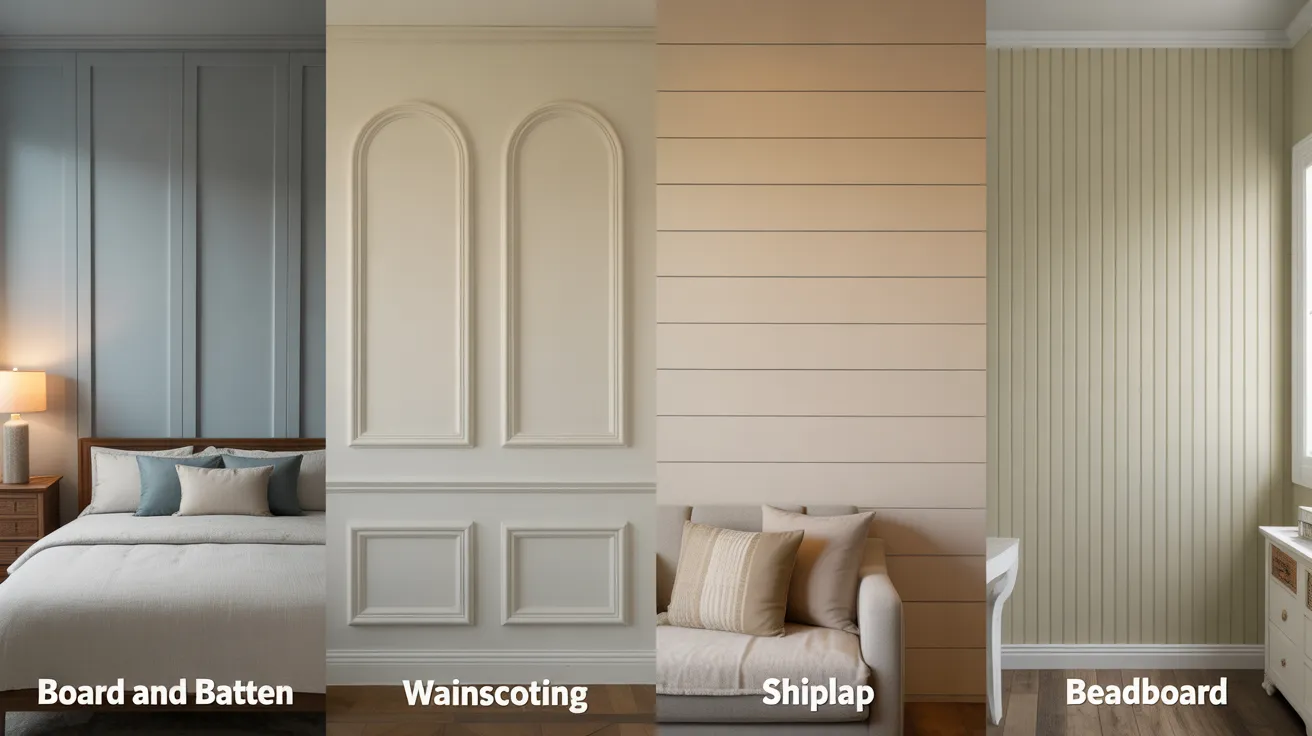
Board and batten and wainscoting aren’t the only options for wall treatments. Beadboard and shiplap are also popular and worth comparing side by side.
| Feature | Board and Batten | Wainscoting | Shiplap | Beadboard |
|---|---|---|---|---|
| Panel Direction | Vertical boards with battens covering seams | Flat panels with decorative trim, often vertical | Horizontal boards with slight overlaps | Narrow vertical grooves |
| Wall Coverage | Often full wall height | Lower third to three-quarters of the wall | Full wall or accent wall | Usually, the lower wall section |
| Style Vibe | Bold, modern, or farmhouse | Traditional, classic, formal | Relaxed, rustic, farmhouse | Soft, cottage-like, vintage |
| Best For | Entryways, bedrooms, and offices | Hallways, dining rooms, and bathrooms | Living rooms, bedrooms, and accent walls | Bathrooms, kitchens, kids’ rooms |
| Installation Skill | Moderate DIY or pro | Advanced carpentry is often needed | Easy to moderate DIY | Easy for most DIYers |
| Visual Impact | Strong vertical lines add height | Adds structure and charm to lower walls | Wide horizontal lines open the space. | Cozy texture with fine lines |
How These Wall Panels Last Longer
These wall styles aren’t just about looks; they also need to be maintained when it comes to cleaning and lasting through everyday use.
Cleaning and Maintenance
Both board and batten and wainscoting are easy to clean with a soft cloth or sponge. Painted surfaces can usually be wiped without damage.
But you have to be careful with dents or scratches, especially on wood. Wainscoting with trim may collect dust in the edges.
Long-Term Use in Humid Rooms
Bathrooms and kitchens get steamy and wet, so the wall treatment you choose should hold up well in those spaces.
Wainscoting is often used in bathrooms because it can resist moisture when painted properly.
Board and batten can work too, but you need to use water-resistant materials like MDF and good paint. Sealing all the edges well helps prevent water damage in both styles over time.
Tips to Enhance Wall Panels
Small details can make a big difference. Trim and accents help your wall treatments look more polished and complete.
- Add crown molding at the top to make the ceiling feel taller and the room more finished.
- Use chair rails to separate wall treatments from paint or wallpaper above.
- Install baseboards for a clean edge where the wall meets the floor.
- Choose trim sizes that match your room’s scale. Larger rooms can handle thicker pieces.
- Paint all trim the same colour as the wall or use contrast for a bold look.
Trim gives both board and batten and wainscoting a professional, built-in appearance. Don’t skip the details; they tie the whole room together.
Conclusion
Adding texture to your walls can totally change how a room feels. I’ve seen it happen in my own home. Now that you know the difference between board and batten vs. wainscoting, think about which one fits your space best.
You’ve seen how they look, where they work, and how simple they are to install. Even one accent wall can make things feel more complete. I started small, and it really helped me figure out my style.
If this helped you choose a direction, you’re ready for the next step. Keep browsing through other blogs on the website, I’ve shared more easy home updates you can try.