Board and Batten Calculator: Spacing & Materials
If you’re looking to add character and beauty to your walls, board and batten might be the perfect solution. With a board and batten calculator, you can easily calculate the right spacing and materials for your project.
If you’re aiming for a rustic feel or a modern touch, this versatile design choice can work in any space.
In this guide, I’ll walk you through everything you need to know, from calculating the right spacing for your boards to choosing the right materials.
I’ll also share expert tips on installation and maintenance to make sure your board and batten walls look beautiful for years to come. Ready to get started? Let’s dig in.
Understanding Board and Batten Design
Board and batten is a popular wall treatment that uses wide boards spaced apart with narrow battens covering the seams. It creates a clean, rustic, or modern look depending on the style.
The two common styles are vertical and horizontal. Vertical board and batten adds height to a space, while horizontal creates a more expansive feel.
The spacing between the boards and battens plays a crucial role in the design’s visual impact and the amount of material required for installation.
Understanding these elements helps ensure the right look and accurate calculations.
How to Calculate Board and Batten Spacing
Follow these steps to calculate the spacing and determine the number of battens required for your project.
Step 1: Measure the Wall Width
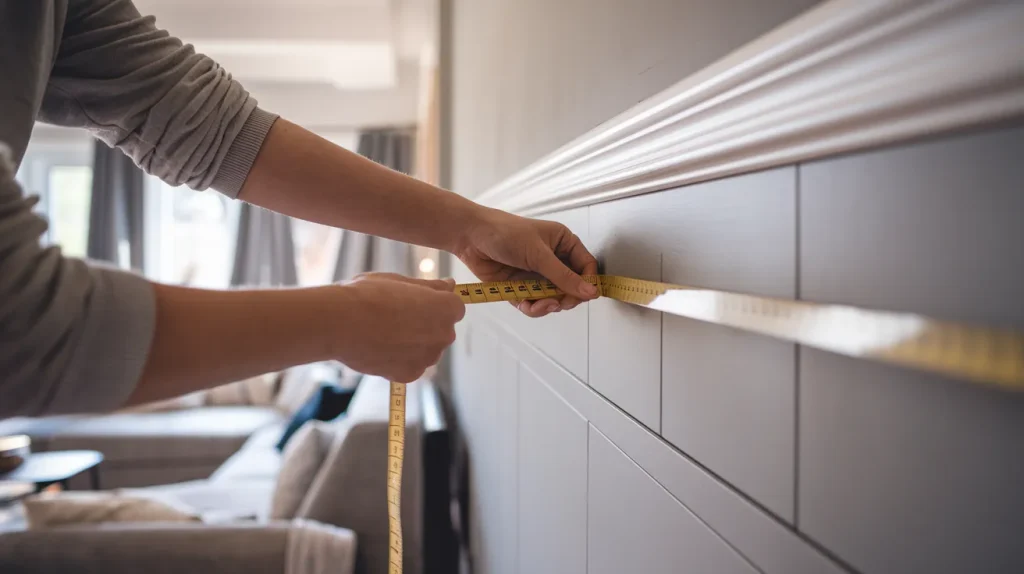
Start by measuring the total width of the wall where you want to install the board and batten.
Use a tape measure to obtain an accurate reading, ensuring that your measurement encompasses the entire area from one side to the other, including any corners or obstacles that may impact placement.
Step 2: Decide on Batten Spacing

Select the desired spacing for the battens. Typically, battens are spaced between 8 and 12 inches apart; however, you can adjust the distance according to personal preference or design goals.
Keep in mind that wider spacing creates a more modern look, while narrower spacing adds a more traditional, classic appearance to the wall.
Step 3: Calculate the Number of Battens

To calculate how many battens you need, divide the total wall width by the desired spacing (including the width of each batten).
This calculation provides a rough estimate of the number of battens required. Round the result up or down based on how you want the design to look, ensuring complete coverage.
Step 4: Use a Board and Batten Calculator

For accurate and quick results, use an online board and batten calculator. Simply enter your wall width, the width of your battens, and the desired spacing between them.
The calculator will automatically provide the precise spacing, number of battens needed, and an estimate of the materials required for your project, saving time and effort.
Cost Estimation for Board and Batten Projects
When estimating the cost of a board and batten project, you need to account for both materials and additional expenses. The cost per square foot can vary depending on the material chosen.
For example, pine may cost around $2 to $3 per square foot, while oak could range from $5 to $7, and MDF typically costs $1 to $2.
Use a cost calculator to quickly estimate the overall price based on your wall dimensions, material choice, and spacing.
Additionally, factor in the costs for tools, paint, finishes, sealants, and any professional labor you might need.
Step-by-Step Guide to Installing Board and Batten
Follow these simple steps to properly install your board and batten walls, ensuring accurate measurements and a professional finish.
Step 1: Measure the Wall Width

Start by measuring the total width of the wall where you want to install the board and batten.
Use a tape measure to get an accurate reading, ensuring that your measurement includes the entire area from one side to the other, including any corners or obstacles that may affect placement.
Step 2: Decide on Batten Spacing

Next, decide on the spacing between your battens. The typical spacing is between 8 to 12 inches, depending on your design preference.
Wider spacing gives a more modern look, while narrower spacing offers a more classic, traditional feel. Adjust the spacing as needed to achieve your desired design.
Step 3: Use a Board and Batten Calculator

For accurate and quick results, use an online board and batten calculator. Enter your wall width, batten width, and desired spacing.
The calculator will automatically provide the precise spacing, number of battens, and an estimate of the materials required for your project.
Step 4: Install the Right and Left Vertical Boards

Start by installing the farthest right and left vertical boards on your wall. Use a level to ensure both boards are straight.
Once secured, install the top horizontal board. Double-check the horizontal board’s level before nailing it in place. This will ensure proper alignment for the rest of the boards.
Step 5: Fill Nail Holes and Seams

After all the boards are installed, fill any nail holes with nail hole filler and smooth them out using a putty knife.
Fill the seams between the boards and the wall with caulk. Smooth the caulk with your finger for a seamless, polished finish.
Step 6: Prime and Paint the Boards

Once the caulk and filler have dried, apply a coat of primer to the boards. After the primer dries, paint the boards with your chosen color. Apply multiple coats as needed for an even, professional finish.
Watch the video for a detailed, step-by-step installation guide:
Material Requirements for Your Board and Batten Project
Learn how to calculate the number of materials needed, select the right materials, and find trusted suppliers for your project.
How to Calculate the Number of Materials
To calculate the materials needed for your board and batten project, use the spacing calculations from the previous section.
Multiply the number of battens by the height of the wall to determine how many battens are required.
Then, use the width of the boards and the total wall width to determine how many boards you’ll need. This will give you the precise quantity of materials required for the project.
Recommended Materials
For a classic board and batten look, wood is often the preferred material due to its natural appeal and durability. Standard options include pine, cedar, and oak.
Pine is a cost-effective choice, while cedar offers natural resistance to decay and a pleasant scent, ideal for outdoor projects.
For a more modern look, MDF can be used as a less expensive option. Choose the wood type based on the project’s location (indoor or outdoor) and your desired aesthetic.
Where to Buy
To find quality materials for your board and batten project, consider trusted suppliers like Lowe’s or Trestlewood for wood and paneling options.
Websites like Amazon and Wayfair also offer a variety of materials, from boards to nails and trim. Many of these suppliers provide convenient delivery options.
Make sure to compare prices and check user reviews before purchasing to ensure you’re getting the best quality for your project.
Maintenance and Care for Board and Batten Walls
Proper maintenance is key to keeping your board and batten walls looking beautiful and durable. Clean your walls regularly using a soft cloth and mild soap to remove dust and debris.
Inspect for any signs of wear or damage, especially around the battens or seams. If you notice cracks, dents, or warping, use wood filler to repair the areas and sand them smooth before repainting or staining.
For outdoor installations, apply a high-quality exterior sealant or paint to protect the wood from moisture, sun, and rot. Reapply as needed to ensure long-lasting protection.
Common Mistakes to Avoid
When calculating board and batten spacing, there are several common errors that can affect the final result. Be mindful of these mistakes to ensure a successful installation:
- Not Accounting for Batten Width: Forgetting to include the batten width in the spacing calculation can lead to uneven spacing between the boards and battens.
- Incorrectly Measuring Wall Width: Make sure to measure the full width of the wall, including any trim or corners, to avoid inaccuracies in your calculations.
- Inconsistent Spacing: Using inconsistent spacing between battens can create a jarring or uneven look. Always double-check your measurements before installation.
- Rounding the Numbers Too Early: Avoid rounding off your calculations too soon, as this can lead to mismatched spacings. Only round when necessary to fit your final layout.
Conclusion
Now that you have all the tools you need for your board and batten project, you can confidently move forward with your design.
By following the tips on spacing, material selection, and installation, your wall will not only look amazing but also stand the test of time.
Remember, proper maintenance is key to preserving your new design. Take the time to care for your project, and it will reward you with lasting beauty.
Want more tips and inspiration? For more information, please visit my other blog posts.