Best Window Types for Your Home: Simple Guide
Not sure which window is right for your home? I’ve been in that spot too. With so many window types to choose from, it’s easy to feel overwhelmed. But don’t worry, this simple guide is here to help.
You’ll learn about the most common styles, how each one works, where they fit best, and what materials to keep in mind. I’ll also walk you through how to choose based on your room, home design, and local climate.
By the end, you’ll have a clear idea of what works for your space, your budget, and your style.
Let’s skip the guesswork and find the perfect fit for you.
Choosing the Right Type of Window for Your Home
Choosing the right window starts with knowing the basics. Here’s what makes one type different from another and what you should think about before deciding:
What Defines a Window Type?
A window type is based on how the window looks and works. It usually depends on:
- How it opens or stays fixed
- Where it’s placed in the wall or roof
- How much light or air it allows in
Each type has its own style, function, and best use in the home.
Key Features to Consider
When picking a window, think about these simple but important features:
- How it opens: Some windows slide, some swing open, and others don’t open at all.
- What it’s made of: Common materials include vinyl, wood, aluminum, and fiberglass. Each has its pros and cons.
- Energy use: Good windows help keep your home warm in winter and cool in summer. Look for energy-saving options.
- The view: Picture windows give wide, clear views. Others may have frames that block some of the outside.
- The look: Match your windows with your home’s design. Some types fit modern homes better, while others suit classic styles.
By keeping these points in mind, you can find a window that fits both your space and your needs.
Most Common Window Types Explained
Let’s break down the most popular window styles. Each one has its own look, function, and ideal spot in your home.
1. Single-Hung Windows

Single-hung windows have two stacked sashes, but only the bottom one moves. You open them by sliding the bottom sash upward while the top sash stays fixed in place.
This type of window has been around for a long time and is known for its simple design and cost-effectiveness.
Pros: affordable, easy to use, energy-efficient, fits most home styles
Cons: limited airflow, harder to clean the exterior, less flexible than double-hung windows
Best For: bedrooms, bathrooms, small spaces, or homes with a traditional look
2. Double-Hung Windows

Double-hung windows look like single-hung, but both the top and bottom sashes move. You can slide either one up or down to control airflow and make cleaning easier.
Pros: better airflow, easier to clean, flexible ventilation
Cons: more expensive than single-hung, can let in more air drafts if not sealed well
Best For: any room where you want airflow and easy maintenance
3. Casement Windows
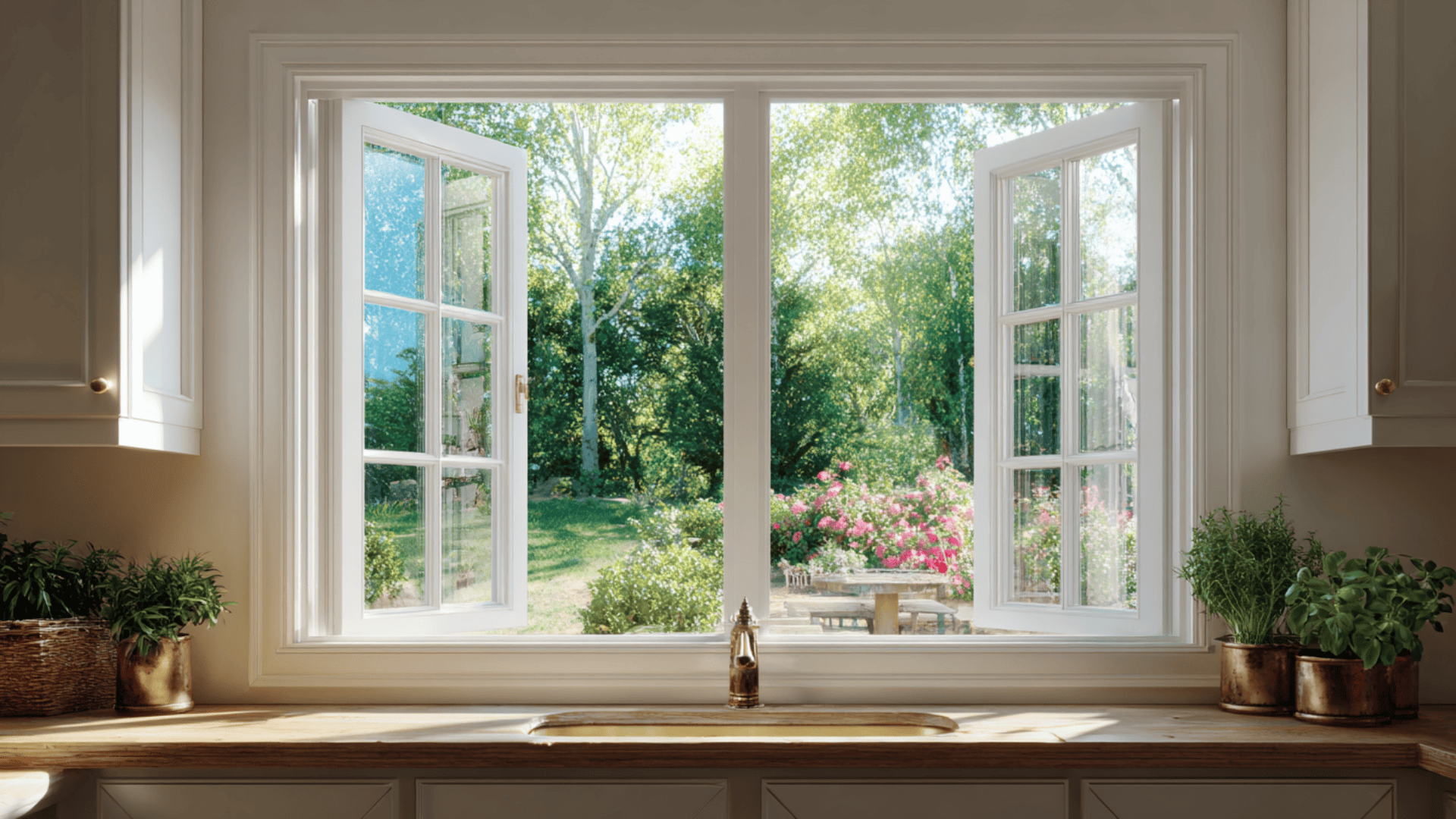
Casement windows open outward using a crank. They’re hinged on the side, like a door, and swing open fully to let in lots of fresh air.
Pros: great ventilation, full opening, energy-efficient when closed
Cons: may not work well near walkways, cranks can wear out over time
Best For: kitchens, hard-to-reach spots, or areas needing more airflow
4. Awning Windows

Awning windows are hinged at the top and open outward from the bottom. They’re great for letting air in while keeping rain out.
Pros: good ventilation even during rain, secure design, modern look
Cons: not ideal for emergency exits, limited views when open
Best For: bathrooms, basements, or under larger fixed windows
5. Picture Windows

Picture windows don’t open. They’re fixed in place and made to give wide, clear views of the outdoors and let in lots of light.
Pros: best for views, highly energy-efficient, low maintenance
Cons: no airflow, not usable as an exit
Best For: living rooms, staircases, or any space where the view matters
6. Sliding Windows

Sliding windows open by sliding one panel horizontally over another. They’re easy to use and are often used in modern homes.
Pros: simple to operate, great for wide openings, low maintenance
Cons: limited to half opening, tracks may collect dirt
Best For: living rooms, kitchens, or any place with a wide wall space
7. Bay Windows

Bay windows stick out from the wall and usually have three panels: one in the center and two angled sides. They create extra space and give panoramic views.
Pros: adds space, lots of light, boosts curb appeal
Cons: higher cost, more complex installation
Best For: living rooms, front-facing walls, or reading nooks
8. Bow Windows

Bow windows are similar to bay windows but have more than three panels, forming a smooth curve. They give a soft, rounded look to the outside of your home.
Pros: elegant style, extra seating or shelf space, great light
Cons: expensive, needs a wide wall area, and is harder to install
Best For: formal rooms, large walls, or homeowners who want a grand look
9. Garden Windows

Garden windows are like tiny greenhouses that extend outward. They have glass on all sides and a shelf inside for plants or small décor.
Pros: perfect for plants, brings in lots of sunlight, adds charm
Cons: can let in heat or cold, needs proper sealing
Best For: kitchens, especially over the sink
10. Skylight Windows

Skylights are windows built into the roof. They let in natural light from above and sometimes open to help with airflow.
Pros: brightens dark rooms, saves wall space, great for privacy
Cons: harder to install and clean, may leak if not sealed well
Best For: bathrooms, attics, or any room needing more natural light
11. Hopper Windows

Hopper windows are small and open inward from the top. They’re often found in basements or laundry rooms.
Pros: good for tight spaces, secure when closed, blocks drafts
Cons: limited size, not ideal for wide openings
Best For: basements, garages, or utility rooms
12. Jalousie Windows

Jalousie windows have glass slats that tilt open like blinds. They’re great for warm climates and allow full ventilation.
Pros: great airflow, tropical style, affordable
Cons: not energy-efficient, less secure, hard to seal
Best For: porches, sunrooms, or older homes in warm areas
13. Arched Windows

Arched windows have a rounded top and add a stylish touch. They often don’t open and are used to make a space feel more elegant.
Pros: decorative, unique look, adds height
Cons: may not open, custom size can be costly
Best For: entryways, above doors, or high ceilings
14. Transom Windows

Transom windows sit above doors or larger windows. They let in extra light and come in many shapes, including rectangles and arches.
Pros: brings light, adds detail, can be fixed or operable
Cons: may need custom sizing, offers limited airflow
Best For: above front doors, in hallways, or rooms with tall ceilings
15. Custom-Shaped Windows

Custom-shaped windows come in almost any design you can imagine, triangles, circles, stars, and more. They’re made to match your unique space or style.
Pros: fully personalized, stands out, fits tricky spaces
Cons: higher price, may not open, longer wait time to make
Best For: accent walls, architectural features, or non-standard layouts
Specialty Window Categories
Some windows are built with extra features to solve specific problems. If you care about saving energy, reducing noise, or adding tech to your home, these options are worth considering.
16. Energy-Efficient Windows

These windows help keep your home warm in winter and cool in summer. They lower your energy bills and make your home more comfortable year-round.
What to look for:
- U-Factor: Measures how well the window keeps heat inside. Lower numbers are better.
- SHGC (Solar Heat Gain Coefficient): Tells how much heat from sunlight comes through. Lower is better in hot places.
- ENERGY STAR label: Shows the window meets national energy-saving standards.
Best For: all homes, especially in places with extreme weather
17. Soundproof Windows

Soundproof windows are made to block outside noise. They have thick glass or extra layers to reduce sound coming in from traffic, neighbors, or construction.
Pros: quieter living spaces, better sleep, added privacy
Cons: higher cost, heavier glass
Best For: homes near busy streets, airports, or loud neighborhoods
18. Smart Windows

Smart windows use tech to adjust how much light or heat gets in. Some change tint with the sun. Others work with apps or remotes. Some even generate solar energy.
Features to consider:
- auto tint or shading
- remote or app control
- solar-powered options
Best For: modern homes, tech lovers, or anyone looking to cut energy use with style
How to Choose the Right Window
The best window for your home depends on the room, your home’s style, and your local weather. Use this simple guide to match function with design:
By Room
- Living Room: Go for picture, bay, bow, or sliding windows. These styles let in a lot of natural light and give you a wide, open view. They also boost curb appeal.
- Kitchen: Casement, sliding, and garden windows work best here. They’re easy to open, even over sinks, and help bring in fresh air while you cook.
- Bathroom: Choose awning, frosted casement, or hopper windows. These keep your space private and resist moisture, while still allowing airflow through top or bottom openings.
- Bedroom: Double-hung, sliding, and casement windows are great options. They allow for proper ventilation and meet safety rules for emergency exits.
- Basement: Go with hopper or awning windows. They’re compact, fit in tight spaces, and help move stale air out of the room.
- Home Office: Try picture, sliding, or smart windows. These styles offer lots of natural light and keep your workspace quiet and comfortable
By Home Style
- Modern Homes: Use picture, sliding, or casement windows. These types have simple lines and big glass panes that fit a sleek, modern design.
- Colonial Homes: Double-hung, bay, and transom windows work well here. They match the balanced, symmetrical look common in traditional homes.
- Craftsman Homes: Go with casement, awning, or transom windows. These styles fit the warm, detailed charm of craftsman design, especially with divided panes.
- Farmhouse Style: Try double-hung, picture, or arched windows. They create tall, open views and keep with the farmhouse’s simple and practical feel
By Climate
- Hot Climates: Use tinted glass, awning, or casement windows. These help block heat and boost airflow. Look for windows with low SHGC ratings.
- Cold Climates: Double-pane casement or picture windows are best. They hold in warmth and cut down on drafts. Choose ones with low U-factors.
- Windy or Storm-Prone Areas: Pick impact-rated casement or double-hung windows. These hold up better during storms and have strong seals that keep air and water out.
- Humid or Rainy Zones: Use awning windows and vinyl frames. They resist moisture and seal tightly to stop leaks. Avoid wood, which can swell and rot.
Feature and Cost Comparison
Use this quick chart to compare the most popular window types based on airflow, view, energy savings, and average cost. It’ll help you spot the best fit for your needs and budget.
|
Window Type |
Ventilation |
View Quality |
Energy Efficiency |
Avg. Cost |
|
Single-Hung |
Low |
Moderate |
High |
$150–$400 |
|
Double-Hung |
Medium |
Moderate |
Moderate |
$300–$600 |
|
Casement |
High |
High |
High |
$300–$750 |
|
Awning |
Medium |
Moderate |
High |
$350–$800 |
|
Picture |
None |
Very High |
Very High |
$200–$1,000 |
|
Sliding |
Medium |
High |
Moderate |
$250–$600 |
|
Bay/Bow |
Medium |
Very High |
Moderate |
$1,200–$3,500+ |
|
Hopper |
Low |
Low |
High |
$150–$400 |
|
Garden |
Low |
High |
Moderate |
$500–$1,200 |
Note: Prices are estimates and may vary based on size, material, features, brand, and location. Always request local quotes for the most accurate cost.
Window Materials & Frames
The type of frame you choose affects how your window looks, lasts, and performs. Here’s a quick breakdown of the four most common window materials and how they compare:
1. Vinyl
Vinyl is one of the most popular window frame options. It’s made from PVC and is often the most affordable.
It doesn’t need painting or sealing, and it resists moisture well. However, color options are limited, and it may not offer the same look as wood or metal.
Best for: budget-friendly projects, low-maintenance homes
2. Fiberglass
Fiberglass frames are strong, stable, and built to last. They hold up well in extreme temperatures and resist warping or cracking.
They’re more expensive than vinyl but can be painted and mimic the look of wood. They’re a great balance between performance and style.
Best for: energy-conscious homes, long-term value
3. Aluminum
Aluminum is lightweight and durable. It has a clean, modern look and is often used in commercial or contemporary homes.
It’s not as energy-efficient as other options and can feel cold to the touch. But it’s very low maintenance and handles heat and humidity well.
Best for: modern designs, warm climates, large window frames
4. Wood
Wood frames offer a classic, natural look. They’re great for adding warmth and charm to a home, especially in traditional or custom builds.
Wood needs regular upkeep, like painting or sealing, to prevent rot or damage. It’s also the most expensive of the four.
Best for: historic homes, high-end builds, detailed interiors
Window Frame Materials Compared: Maintenance, Cost, Efficiency & Style
Use this quick chart to see how each window frame material compares in key areas like upkeep, cost, and style:
|
Material |
Maintenance |
Durability |
Energy Efficiency |
Cost |
Appearance |
|
Vinyl |
Low |
Good |
High |
Low |
Basic, clean |
|
Fiberglass |
Low |
Excellent |
Very High |
Mid–High |
Wood-like, sleek |
|
Aluminum |
Very Low |
Good |
Moderate |
Mid |
Modern, minimal |
|
Wood |
High |
Moderate |
High |
High |
Warm, classic |
Choose a material that fits your climate, style, and how much maintenance you’re willing to do.
Conclusion
Choosing the right window doesn’t have to feel overwhelming. I’ve been through the process, and it gets easier once you understand your options.
Now that you’ve learned about different window types, materials, and which ones work best for each room or climate, you’re in a great spot to make smart, confident decisions.
Think about what matters most to you: natural light, airflow, energy savings, or just the right look, and match that to your space. The right window can really change how your home feels and works day to day.
One last tip from me: always compare before you buy.
Want to keep learning? Read other blogs on the website for simple guides on home upgrades and smart picks.