
How Can You Grow Healthy Beans With the Right Plant Care Guide?
Short answer: warm soil (16°C or above), full sun, a strong support, regular water at the base, and very little nitrogen feed. Beans make their own. The rest of this is about reading what your plants are telling you, because a plant care guide is only useful if it helps you work out why something’s gone wrong.
Picture this. You sow a lovely straight row in May. Seven days on, there are gaps. By June the plants that did come up have gone yellow. So you water them. Then they look worse, so you water them again. Sound familiar? I’ve done it myself, and it’s the classic beginner’s loop (plenty of experienced growers fall into it too).
Soil Temperature First
Forget the date on the packet. “After the last frost” is the earliest you can sow, which isn’t the same as the best time. Cold, soggy soil is where bean seed goes to rot. A cheap soil thermometer, pushed in about 5cm first thing in the morning, saves a lot of heartache. Wait for 16°C. If that means sowing a fortnight later than you planned, so be it, because the later seedlings will usually overtake the early ones anyway.
Got gaps already? Dig down and find a seed that never came up. Swollen and mushy means rot. Empty shell, or nothing there at all? Slugs, or a bird that’s had a free lunch. And the old advice to soak beans overnight? Skip it in cool soil. The seed coat splits and rot walks straight in.
Watering
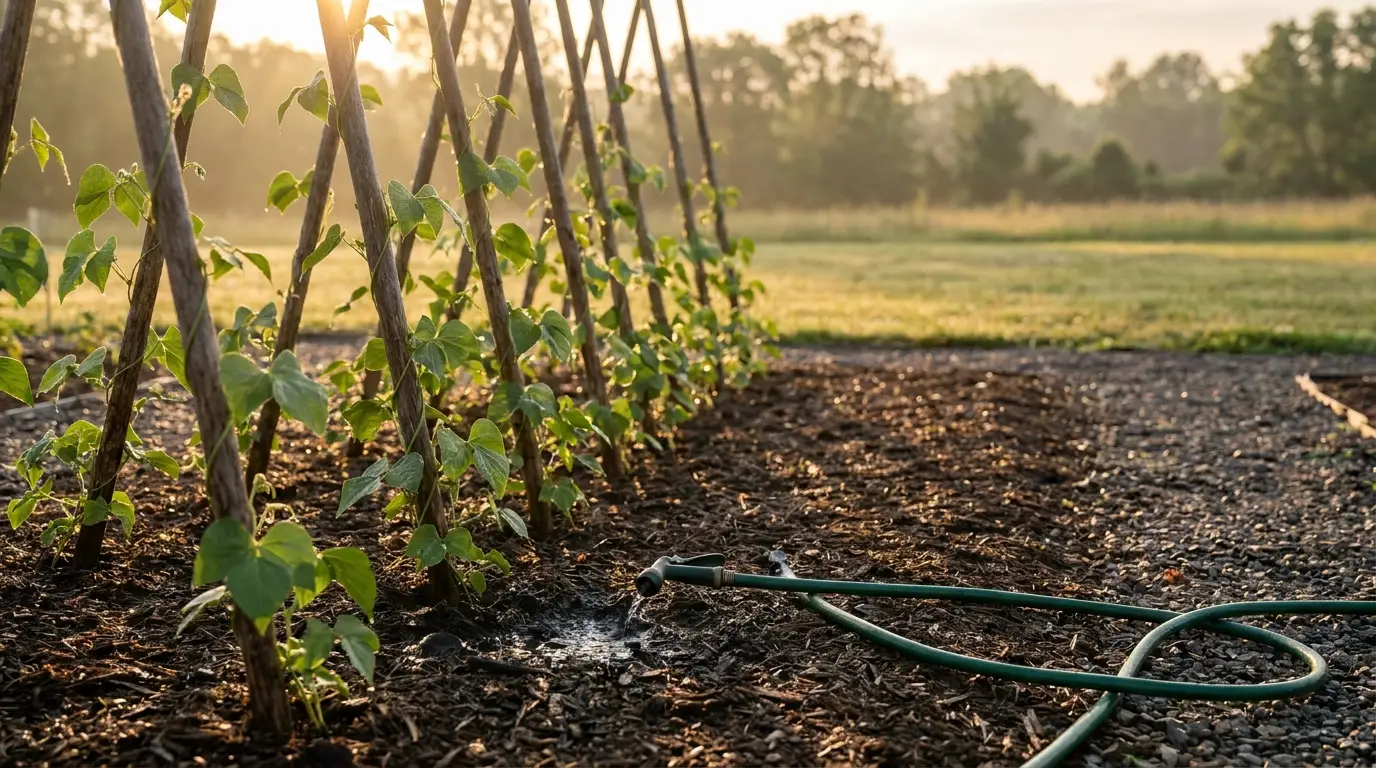
Flowering is the moment that matters. Let the soil dry out then and the plant simply drops its flowers, and no flowers means no pods. That’s it, really.
So: a deep soak once or twice a week beats a daily dribble. Water at the base, ideally in the morning, so the foliage dries off before night. Damp leaves after dark are an open invitation to fungal problems. Mulch about 5cm deep helps a lot between waterings.
Feeding (or Rather, Not Feeding)
Here’s the odd thing about beans. Bacteria living in nodules on the roots pull nitrogen out of the air for them. Pour on a high-nitrogen feed and the plant stops bothering with the arrangement. You get a jungle of leaves and about six pods. Dig in compost before you sow, and once flowers appear switch to something high in potash, like a tomato feed.
One more thing. Yellowing on the oldest, lowest leaves late in the season? Usually fine. The plant’s moving everything into the pods.
What a Good Plant Care Guide Actually Does
Yellow leaves have at least four possible causes: too much water, cold nights, not enough nitrogen, or a virus. Treat the wrong one and you’ve lost weeks. A good guide doesn’t just list symptoms. It gives you a quick test to tell the causes apart. That’s the approach we take in the Bean Growing plant guides, across houseplants and outdoor plants alike, and it works just as well in a bean row.
A quick cheat sheet for the usual suspects:
|
What you see |
Check this first | Likely cause |
|
Gaps, no seedlings |
Dig up a missing seed | Rot in cold, wet soil |
|
Old leaves yellow, soil soggy |
Finger 5cm down |
Overwatering |
| Flowers appear, then fall | Soil moisture, daytime heat |
Dry spell, or temperatures over about 29°C |
| Curled, sticky tips | Look underneath for insects |
Aphids |
Use the middle column before you buy any spray or feed.
Supports, Picking, Pests
Put the support in before you sow. Digging posts afterwards means stabbing roots. Pole and runner beans want at least 1.8m of height, and sturdier than you think, because a full-grown row catches wind like a sail.
Pick often and pick young. Let the seeds swell and the plant takes it as a signal that its work is done, so flowering slows right down. Picking every few days keeps it going for weeks.
Aphids tend to turn up on the tips. Pinch the tip off or hose it, and leave the sprays in the shed so the ladybirds stay.
Warning: raw kidney beans are poisonous. They contain a lectin that causes severe vomiting and diarrhoea. Boil dried kidney beans hard for at least 10 minutes, then simmer until tender. Runner beans should always be cooked as well, never eaten raw.
The Bottom Line
Almost every bean problem is the plant reacting to something you can measure or check. Cold soil. A dry spell at the wrong moment. Too much feed. Look first, act second. Do that and your crop starts to feel less like luck, and a decent guide just speeds up the looking.