How to Choose Kitchen Wallpaper That Works with Your Space
Select the appropriate kitchen wallpaper to suit your daily meal preparation routine and layout. To begin, select which walls you will be applying wallpaper to. Next, take into account the environment, the cabinets, the lighting and other elements of furniture.
Separate decorative walls from working surfaces
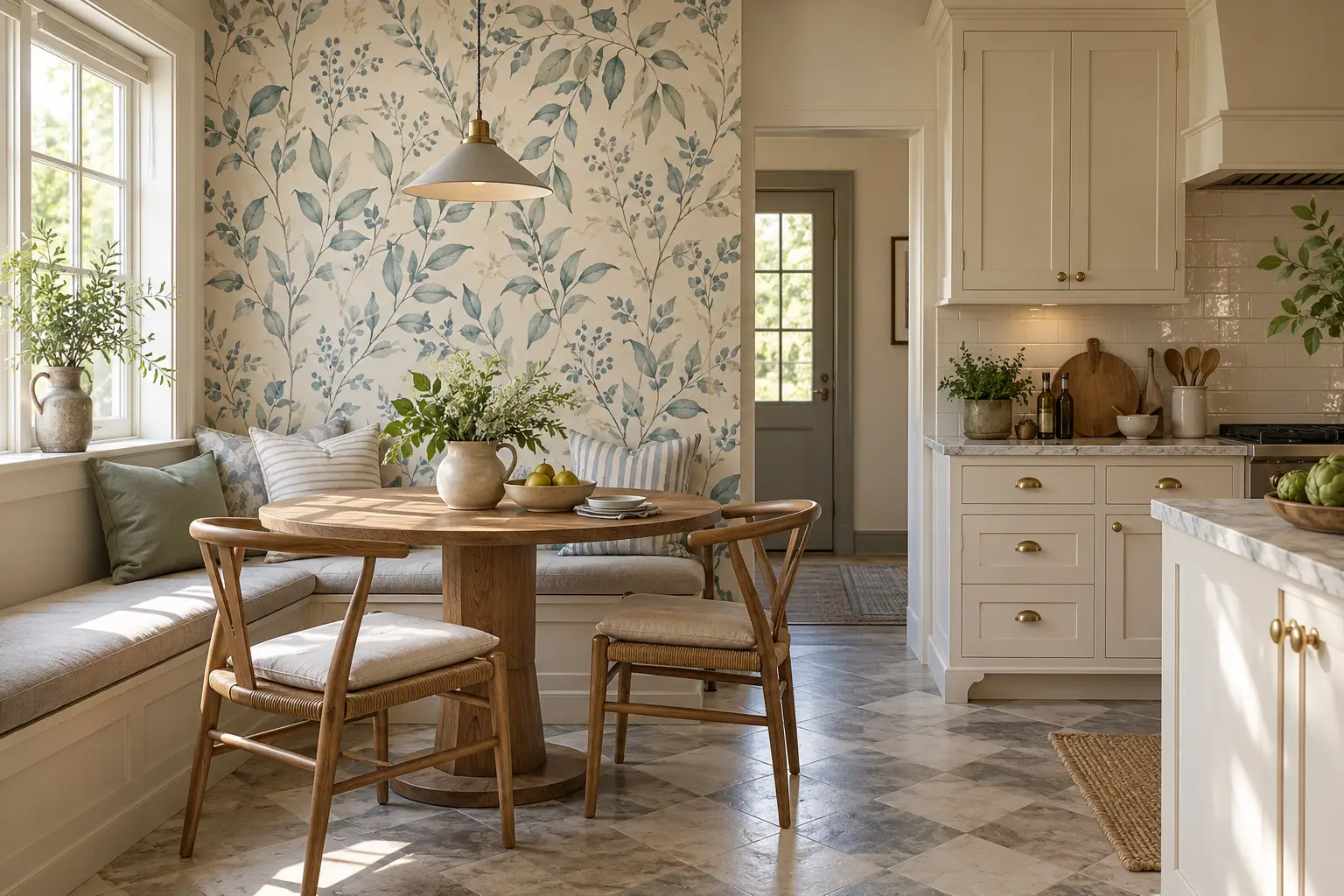
The breakfast nook is separated from cooking splashes by being in a different area of the kitchen than where the walls are subjected to grease, steam and/or heat. The suitability will depend on the wallpaper used, the type of adhesive, the condition of the wall, how well ventilated the room is, and the manufacturers’ recommendations.
Do not expect water, oil/grease, heat and/or washability from normal wallpaper. Wallpaper does not provide the same benefits as a good backsplash for use over a kitchen sink or cooktop. When placing wallpaper next to appliances, always refer to the clearance requirements for those appliances, and the wallpaper manufacturers installation instructions.
When comparing Kitchen Wallpaper, consider how well the design of the paper matches up with where you plan to install it.
Choose the mood and focal wall
The background is provided by soft contrasts and the emphasis is created by strong patterns. The cabinet tone that is shared connects the scheme, and the contrast highlights the cabinetry.
The use of a breakfast nook as a frame for seating, and the use of the wall that is directly visible upon entering, as a primary focal point, are two ways to select the most appropriate wall for creating the focal point. Select the wall that provides the best view.
Measure the size of the area, then make note of where there will be doors, windows, countertops, backsplashes and how high your cabinets will be. If your dining room table is off center you can put your art on either side of the table or on the largest available space.
Tall cabinets may obscure the primary tree in a mural. Place focal elements next to obstructions, and ask for a crop view of your design. Include shelves, appliances and extractor hoods. Sloped areas will cause pattern cuts; separate layout and lighting reviews are needed for alcoves.
Judge scale by visible space
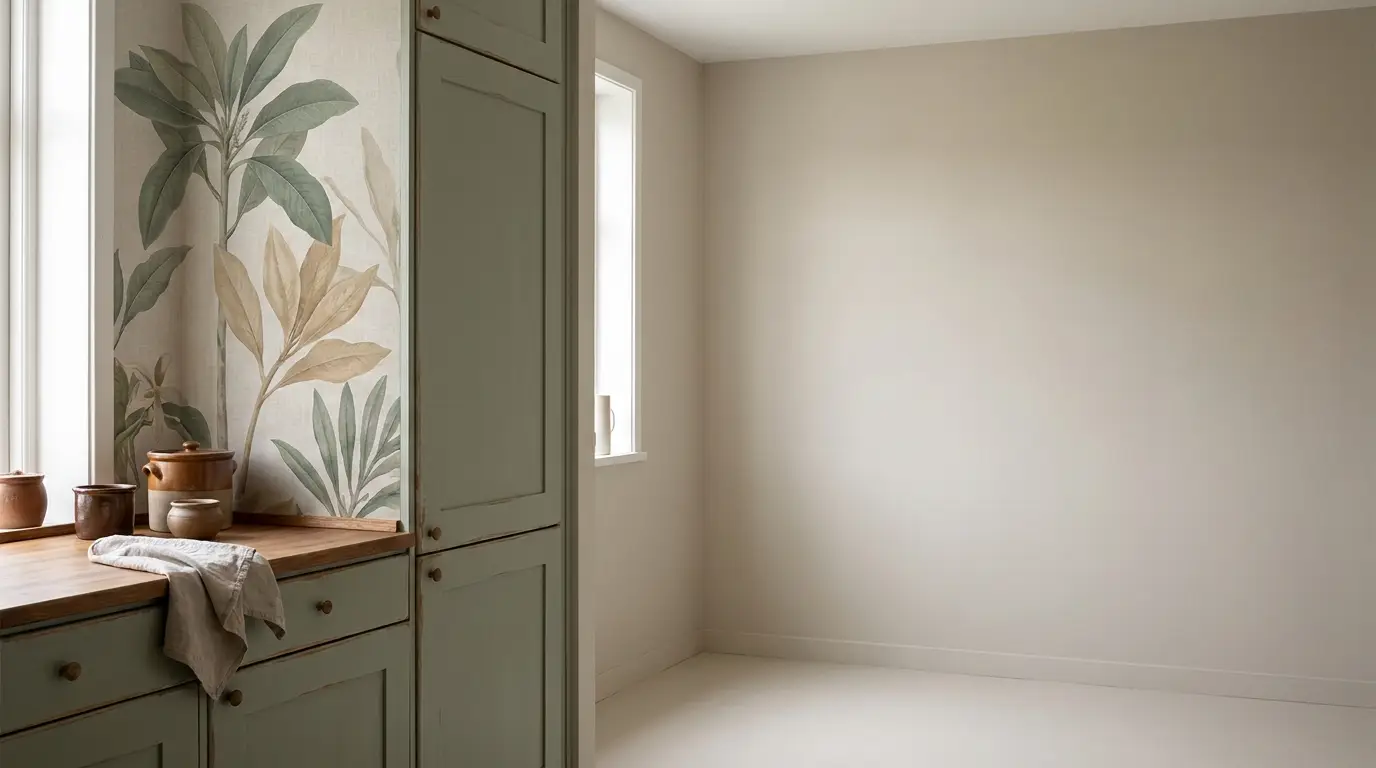
The size of the room and the amount of continuous wall space should be taken into account when choosing wallpaper. Large, spread out patterns can be used in smaller kitchen spaces as long as there is some portion of the pattern that will still be visible.
For a small kitchen with little light, use a soft contrast in your design and limit the number of items on your countertops. Paper that is pale will not make up for not having enough light.
Repeated patterns allow for door and cabinet space; when designing a kitchen wall mural there must be adequate space for the entire pattern. Use the true measurements of the design (not just the thumbnail).
Test colors under your lights
Compare your color choices for walls with your countertops, flooring, and other permanent features in your home. Although dark wallpapers may give an intimate atmosphere, how they will affect your space depends on the amount of contrast used, the pattern of the wallpaper, the amount of light that enters the room, and the proportion of the wall space covered by the wallpaper.
Evaluate each of the samples in typical kitchen lighting. The various areas of the kitchen can be illuminated by both pendant and under cabinet lights which could potentially alter the perception of the temperature of those areas.
Screens are a source of light whereas printed material reflects it. Your screens settings and the way that the surface has been finished can change how you perceive the colors. Place the actual physical sample(s) you have selected for your short list of decorative wallpaper, against the wall(s) where you plan to install them in an upright position. Evaluate the daylight against the real evening lighting.
Coordinate textiles, paint and coverage
For those who use patterned floor tile, you might want to try to find a wallpaper with less pattern and the same color as the floor tile. When combining different types of patterns, it’s best if they are different in terms of scale and contrast.
The detailed wallpaper would look better if you chose plain blinds, simple seat cushions, and understated kitchen textiles. You should select the other wall and trim paint based on one of the background or supporting tones, then test it out with some samples.
A single feature wall is appropriate for displaying bold artwork, or for applying a finish that has a lot going on. On the other hand, multiple, or even all, suitable walls may be used for creating a subtle repeat pattern, or a design that covers everything in the space.
Keep future changes flexible
Choose wallpaper for kitchen areas with durable finishes so accessories may be changed. Adjoining dining areas can either use the same design or connect using the same paint color.
Sample product before you order, check your crop as well as your obstacles prior to installation. Verify the preparation, installation and clean-up requirements for each type of product and where it will be installed.