Are Olives a Fruit: What Science Says
Fruit is not defined by sweetness alone, which is why some everyday foods create confusion when their flavor does not match what people typically expect from a fruit.
The question“are olives a fruit?” becomes clearer when looking beyond taste and focusing on how they grow, develop from flowers, and form seeds as part of the plant’s natural process.
In grocery aisles and kitchens, olives are often grouped with savory ingredients, making their botanical identity easy to overlook.
This difference between culinary use and plant structure explains why olives can seem unusual while still meeting the botanical definition of a fruit.
Are Olives a Fruit: The Botanical Explanation
Olives are fruits because they develop from fertilized flowers and contain a seed inside a hard inner pit. In botanical terms, they are drupes, just like peaches, plums, and cherries.
Their bitter, salty, or savory taste does not affect their classification as a fruit. Botany focuses on how they grow, not how they taste.
Processing methods like curing, stuffing, or pressing olives into oil do not change what they are. They remain fruits because they meet the basic botanical definition of a fruit.
Many people assume fruits must be sweet, but botanical fruits like olives, coffee beans, and pistachios can be savory and still contain seeds.
Understanding the Drupe Structure of Olives
Olives may seem different from common fruits, but their internal structure tells a different story. Their skin, flesh, and pit follow the same pattern found in other drupes.
- Exocarp (Outer Layer): Forms the thin, smooth skin that covers the olive.
- Mesocarp (Middle Layer): Becomes the soft, fleshy, and oily part that is eaten.
- Endocarp (Inner Layer): Hardens into the woody pit that protects the seed inside.
Olives have the same basic design as other stone fruits, with a protective skin, fleshy layer, and a hard inner pit surrounding the seed.
The three-layer structure of an olive explains why it belongs to the drupe family. Its unique taste does not change the botanical classification it shares with stone fruits.
Green vs. Black Olives
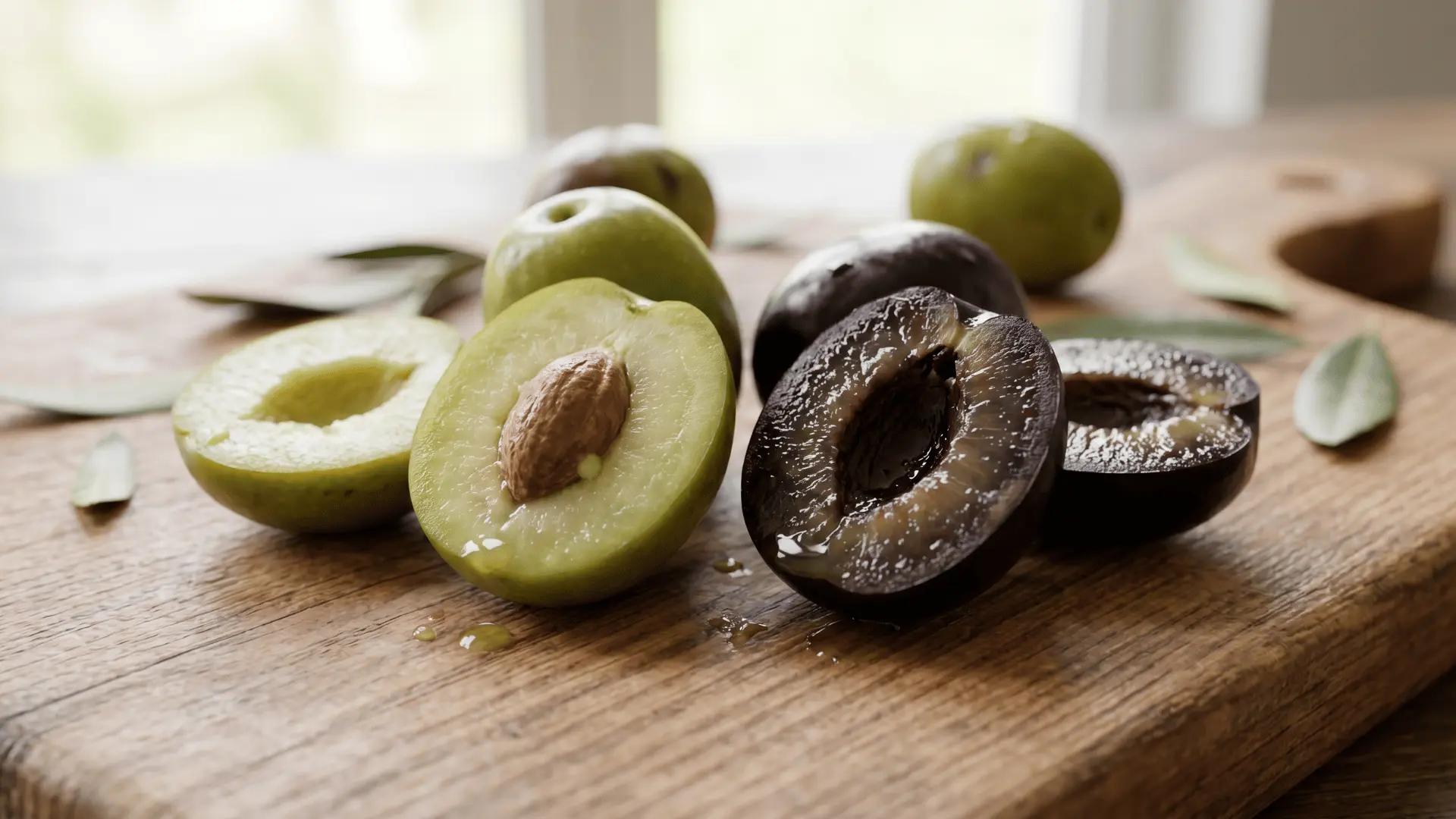
Green and black olives come from the same olive tree but differ mainly in their stage of ripeness. Their color, flavor, texture, and oil content change as the fruit matures.
| Aspect | Green Olives | Black Olives |
|---|---|---|
| Ripeness | Harvested early before full maturity | Fully ripened on the tree |
| Appearance | Bright green | Dark purple to black |
| Texture | Firm and dense | Softer and smoother |
| Taste | Sharper and more bitter | Richer and milder |
| Oil Level | Lower natural oil content | Higher natural oil content |
| Raw Edibility | Extremely bitter because of high oleuropein levels | Less bitter, but still usually processed before eating |
| Processing Need | Commonly cured or brined to reduce bitterness | Also cured or brined for better flavor and texture |
| Botanical Identity | Same drupe fruit | Same drupe fruit |
Despite their differences, green and black olives are the same botanical fruit at different stages of development. Both are drupes that are typically processed to enhance flavor and reduce bitterness.
Why Are Olives Called Vegetables in Cooking?
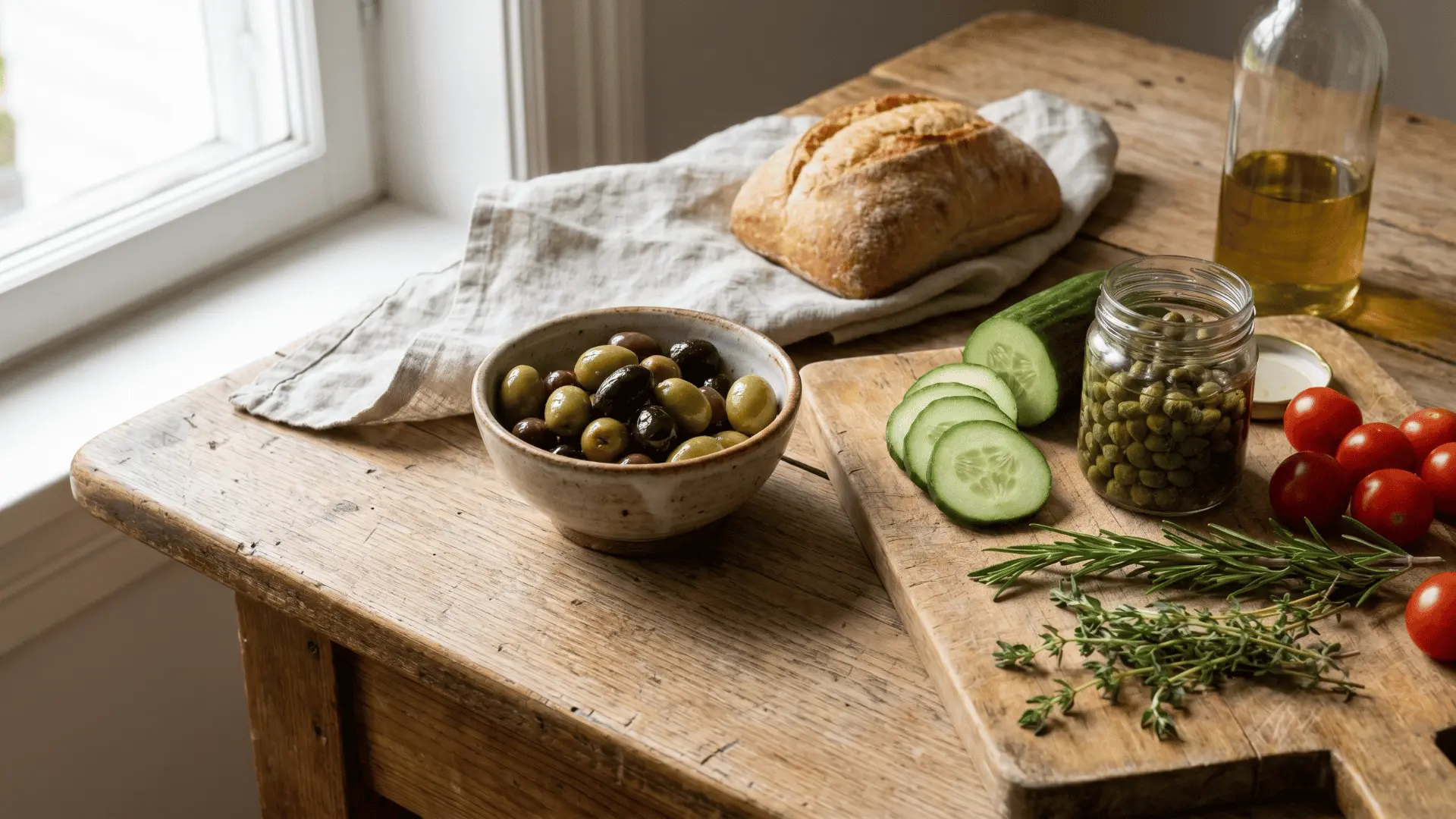
Olives are often called vegetables in cooking because of their salty, savory flavor and common uses in meals. However, botanically, they are fruits because they grow from flowers and contain seeds.
Cooking classifies foods based on taste and how they are used in recipes. This places olives alongside vegetables like pickles, capers, and other savory ingredients.
From a botanical view, an olive is a fruit. From a culinary view, it is often treated like a vegetable.
This difference also applies to foods like tomatoes, cucumbers, avocados, and bell peppers. How we cook them does not change their true botanical classification.
Are Olives Good for You?
Yes, olives can be a healthy choice when eaten in moderation. They provide healthy fats, antioxidants, and nutrients that make them more than just a topping. Key nutrients in olives include:
- Oleic Acid: A monounsaturated fat also found in olive oil, known for its healthy fat profile.
- Oleuropein: An antioxidant compound that gives raw olives their natural bitterness.
- Sodium: Many cured olives are high in salt, especially brine-packed varieties.
- Calories: Olives are nutrient-rich but calorie-dense, so a small serving is usually enough.
Conclusion
Olives show how food classification can depend on the system being used, as the same ingredient can be viewed differently in botany and everyday cooking.
Their place in meals, recipes, and traditions may make them seem different from typical fruits, but their plant structure tells the real story.
The answer to whether olives are a fruit comes down to their origin, not their flavor or appearance. This small fruit also highlights how many everyday foods have surprising botanical identities.
These differences can make food choices and conversations more interesting by showing how everyday foods can have different identities depending on how they are classified.
Share your thoughts or mention another food with a surprising classification in the comments below.
Frequently Asked Questions
Are Olives Naturally Bitter when They Grow on Trees?
Yes, fresh olives are naturally very bitter because they contain oleuropein, a compound that protects the fruit. Processing removes much of this bitterness before eating.
Can You Eat Olives Directly from The Tree?
No, freshly picked olives are usually too bitter to eat. They need curing methods such as brining, drying, or oil curing to improve their flavor.
Is It Okay to Eat Olives Every Day?
Yes, olives can be eaten daily in moderation. They provide healthy fats and antioxidants, but watch sodium levels, especially in brine-cured varieties. Choose lower-salt options when needed.