Your Front Door Is the Most Underrated Feature of Your Home’s Exterior: Here’s Why That Needs to Change
Ask homeowners which exterior upgrade has the biggest impact on their home, and you’ll hear the familiar answers: fresh paint, new landscaping, a resurfaced driveway, updated exterior lighting. All valid. All meaningful. But they consistently overlook the single feature that commands the most attention, bears the greatest functional responsibility, and anchors the entire façade: the front door.
Your entry door is more than a point of access. It’s the architectural statement your home makes to the world. It’s the first thing visitors focus on as they approach and the element that shapes their initial impression of everything inside. It’s a critical component of your home’s thermal envelope. It’s a primary security asset. And, perhaps most importantly for homeowners thinking about resale, it’s one of the highest-return investments in all of home improvement.
Despite all of this, entry door replacement tends to sit near the bottom of renovation priority lists. It’s time to reconsider.
First Impressions Are Instantaneous and Lasting
Research in environmental psychology consistently shows that people form impressions of spaces within the first few seconds of encounter. Before a visitor reaches your porch steps, their brain has already begun processing signals about the home. The front door is one of the primary inputs.
A door that’s faded, warped, dated in style, or simply unimpressive communicates something — and it’s not what you want. It suggests that the home may not have received the attention it deserves. It creates a slight psychological hesitation in prospective buyers. It establishes an expectation that may not be easy to overcome once the door has already done its work.
A striking, well-maintained entry door does the opposite. It stops people in their tracks. It signals confidence, quality, and care. Real estate professionals consistently observe that a memorable front door accelerates buyer decision-making and can meaningfully support a higher offer price.
Entry Doors and Energy Efficiency
Beyond aesthetics, your front door is a significant component of your home’s thermal boundary — and an underperforming one is quietly costing you money.
Signs that your entry door is losing the energy battle include:
Visible daylight around the frame — If you can see light around the edges of a closed door, you’re also letting in outside air year-round.
Drafts at floor level — The threshold seal is one of the most common failure points in older doors. When it goes, you feel it every winter.
The door feels cold or hot to the touch — This indicates that heat is conducting through the door itself rather than being blocked by it. Doors with adequate insulation cores maintain a much more neutral surface temperature.
Increasing HVAC costs — An underperforming entry door contributes to heating and cooling loads in ways that are real but rarely attributed to the door itself.
Modern entry doors address these issues with polyurethane-foam insulation cores, multi-point locking systems that compress weatherstripping uniformly around the entire frame when locked, and thermally broken thresholds that prevent heat conduction through the base of the door. The improvement in air sealing and thermal performance compared to a typical older door can be immediately felt.
Security: What Your Front Door Is Actually Protecting
Your front entry is statistically one of the most targeted points in a residential break-in. The quality of your door, frame construction, and hardware matters enormously for the security of your home and everyone in it.
Many older wooden doors — even beautiful ones — are vulnerable to forced entry. Wood can split around lock points under impact, frames can separate from the rough opening if not properly reinforced, and standard mortise locks offer limited resistance to determined forced entry.
Modern fiberglass and steel entry doors are engineered with security as a primary design criterion. Multi-point locking systems engage at three or more points along the frame when locked, distributing force and dramatically increasing resistance. Reinforced frame anchoring systems and steel-reinforced lock stiles add further layers of protection that older doors simply don’t offer.
If your entry door is more than 15 years old, there’s a good chance that modern security standards have advanced significantly beyond what it was designed to provide.
Choosing the Right Style for Your Home
Entry doors are available in a remarkable variety of styles, and the right choice depends on your home’s architectural character, your personal aesthetic, and your design goals.
Traditional Colonials and Brick Homes call for raised-panel doors in classic proportions — often with sidelights flanking the entry and a transom window above. Color choices like deep navy, black, forest green, or burgundy against a light brick or painted exterior make powerful, timeless statements.
Craftsman and Bungalow Styles benefit from doors with glass panel inserts, often with distinctive craftsman-style grilles or divided-light patterns. Stained wood-look fiberglass finishes complement the handcrafted character of these homes beautifully.
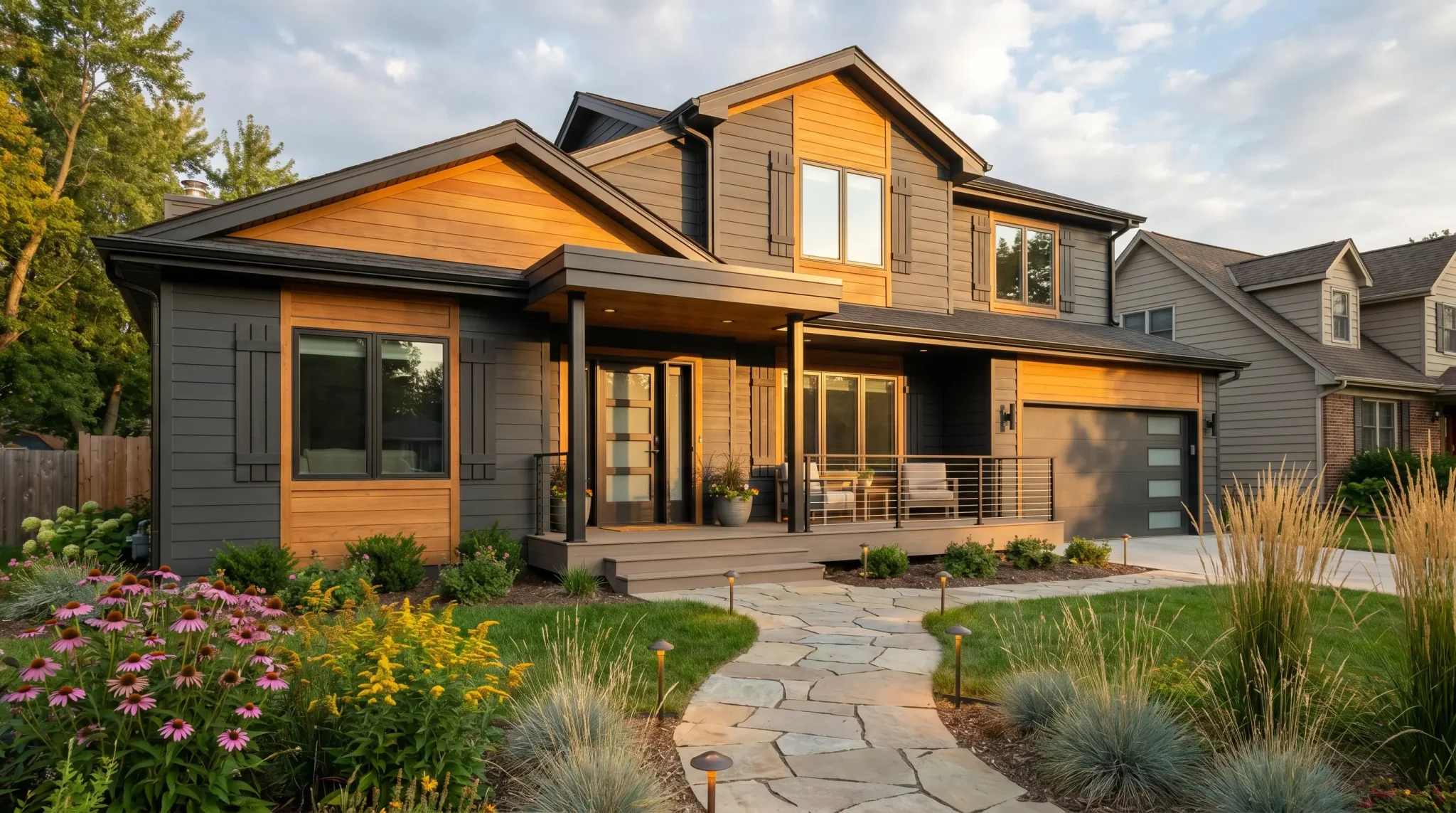
Contemporary and Modern Homes favor clean-lined doors with minimal ornamentation — flush panels, large glass inserts in geometric configurations, and bold dark finishes (matte black or dark bronze) that emphasize the home’s architectural precision.
European and Mediterranean Estates carry the scale for more dramatic treatments: arched-top doors, wrought-iron decorative hardware, sidelights with decorative glass, and door systems that command the entrance rather than simply marking it.
Color deserves its own mention. The front door has become one of the most expressive design choices available to homeowners — a vivid color against a neutral exterior creates instant personality and warmth. Some of the most memorable and admired homes in any neighborhood have a front door color as their most distinctive feature.
Material Matters: Making the Right Choice
Wood is beautiful and traditional, but demands regular maintenance — painting, sealing, checking for swelling and cracking — particularly in humid climates like Georgia’s. A wood door left without attention in Southern heat and humidity can deteriorate surprisingly quickly.
Steel is highly secure and durable, with excellent insulation properties when filled with polyurethane foam. Steel doors are less vulnerable to warping than wood but can dent and may develop surface rust if the finish is compromised.
Fiberglass is the premium choice for homeowners who want the best of all categories. Fiberglass entry doors resist denting, don’t warp or swell, can be made to look precisely like stained or painted wood, and require almost no maintenance. They insulate better than most wood or steel equivalents, and their resistance to humidity makes them particularly well-suited to Southern climates. For Georgia homeowners who want a door that looks stunning and performs flawlessly for decades, fiberglass is the clear answer.
What the Data Says About Return on Investment
This is where the entry door story becomes particularly compelling. Entry door replacement is one of the best-returning home improvement investments available, with some product categories recouping more than 80 percent of their cost at resale according to industry data — among the highest of any renovation project.
Paired with the energy savings from improved sealing and insulation and the daily quality-of-life improvement of a door you’re genuinely proud of, the case for upgrading becomes difficult to argue against.
Homeowners ready to explore custom fiberglass entry door options — and get a no-pressure, transparent proposal from a team that knows the product — can start the conversation with NG Windows, which offers a full range of premium entry door options alongside professional installation across Georgia.
Make Your Front Door Mean Something
Your entry door is the punctuation mark at the end of your home’s exterior design sentence. It pulls the façade together, sets the tone for everything inside, and makes a statement to every person who approaches your home — whether they’re a guest, a neighbor, a delivery driver, or a prospective buyer.
It deserves better than neglect. And when you finally make the change, you’ll wonder why it took you so long.