Navigating Multi-Story Living: How to Stay Safe and Independent on Your Home’s Stairs
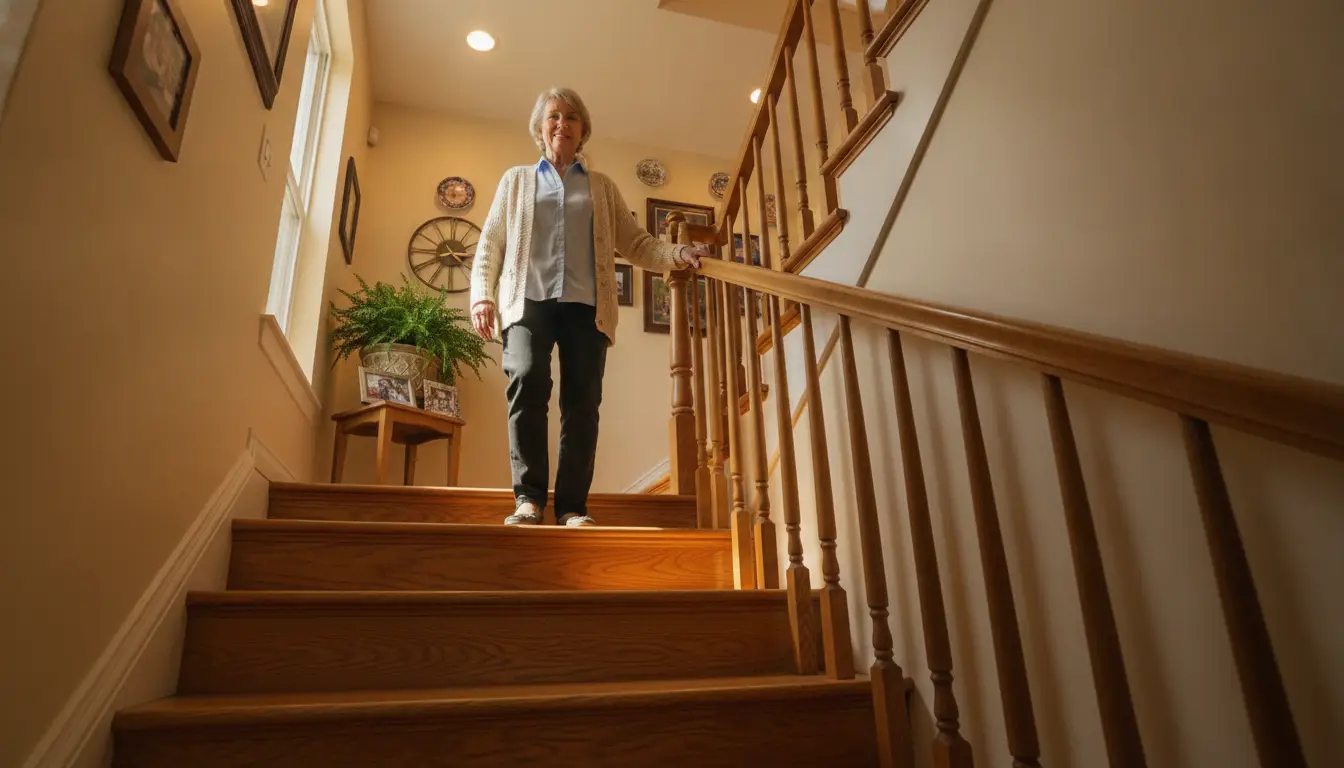
Martha stands at the top of her staircase every morning, coffee in hand, doing quick mental math. Is her hip acting up today? Did she leave anything on the steps? Is the lighting good enough to see the third step from the bottom, the one that always trips people up? This isn’t dramatic. It’s just Tuesday. For millions of homeowners with two-story houses, the staircase has quietly become the most negotiated space in the home, a daily obstacle course dressed up as ordinary architecture.
Nobody plans for stairs to become a problem. A house gets purchased in your thirties with a staircase that feels like a design feature, a place for family photos and a nice banister. Then years pass. Knees stiffen. Balance gets less reliable. What used to be a non-event, walking up to bed, now requires planning, pauses, and sometimes a hand gripping the rail so tightly the knuckles go white. The stairs didn’t change. The person navigating them did.
Understanding why this happens matters more than most people realize. Age-related changes in vision, muscle strength, and joint flexibility don’t arrive all at once; they accumulate. Peripheral vision narrows slightly. Reaction time slows by fractions of a second, just enough to matter on a step. Medications prescribed for unrelated conditions can cause dizziness or drowsiness. None of these changes are dramatic on their own, but stacked together, they turn stairs into a genuine hazard. Families searching for California Mobility stair lift solutions are often responding to exactly this slow accumulation rather than a single scary incident, though sometimes it takes a scary incident to prompt the search.
The risks here are not abstract. Falls remain one of the leading causes of injury among older adults, and stairs are involved in a disproportionate number of those incidents. A fall on stairs is rarely minor; the combination of height and hard edges tends to produce fractures, head injuries, or long hospital stays. Beyond the physical injury, there’s a secondary cost that gets less attention: the psychological toll of losing confidence in your own home. Once someone falls, or nearly falls, the fear of it happening again can shrink their world dramatically, leading to isolation on one floor of the house or reluctance to live independently at all.
Why Stairs Become a Problem as We Age
Stairs demand a combination of strength, balance, coordination, and vision that most people take for granted until one of those systems weakens. Arthritis in the knees or hips makes the simple act of bending and extending painful. Reduced grip strength affects how securely someone can hold a railing. Even mild vestibular issues, the kind that cause brief dizziness when standing, become dangerous on a staircase in a way they wouldn’t be on flat ground. These aren’t hypothetical scenarios; they describe the daily reality for a huge share of older homeowners.
The Real Risks: Falls, Injuries, and Independence
The Bureau of Labor Statistics tracks workplace injury data that includes falls as a major category, and while that reporting focuses on employment settings, it underscores a broader truth echoed by the Bureau of Labor Statistics: falls are a persistent, measurable safety concern across environments, home included. In residential settings specifically, stair falls often lead to the kind of injuries that force a move out of a beloved home, not because the person wants to leave, but because the stairs have made staying unsafe.
Environmental Modifications That Work
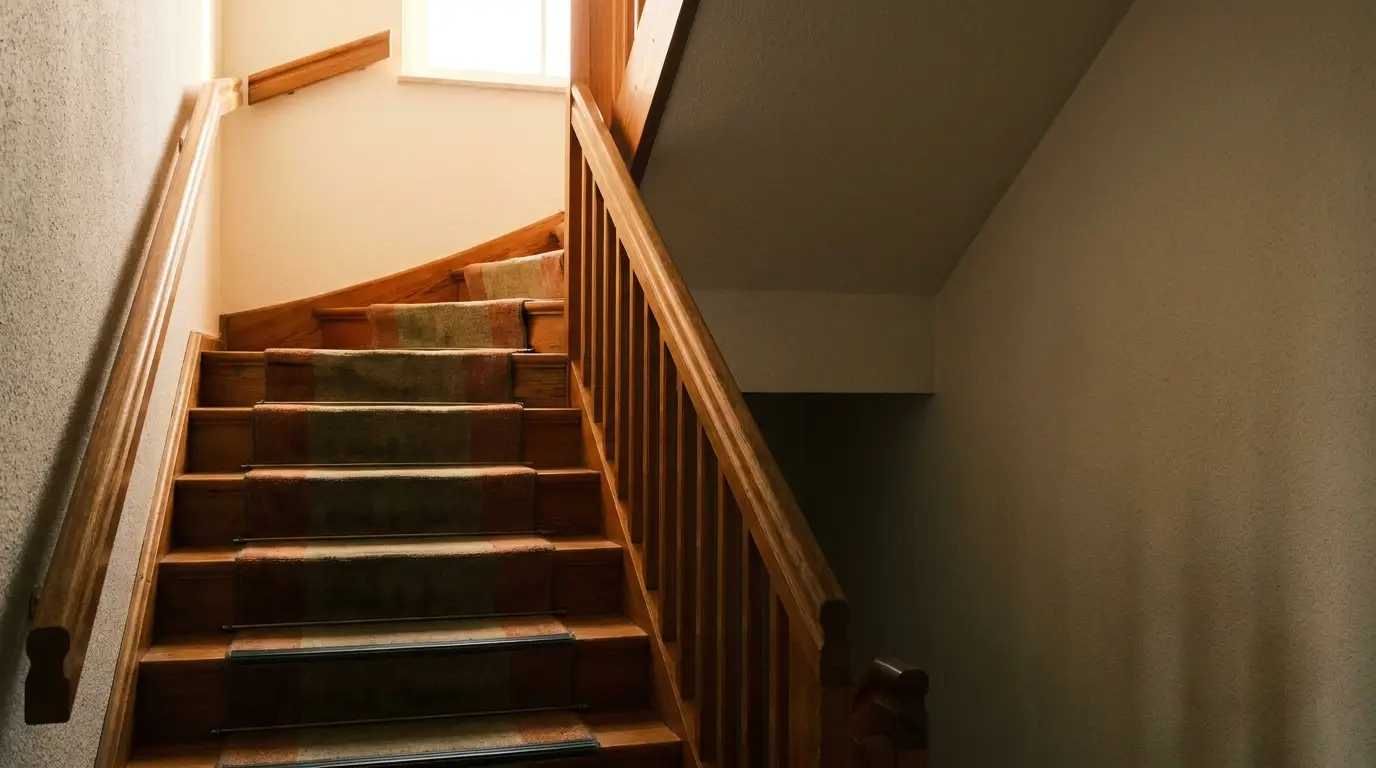
Before investing in equipment, many households benefit from simple environmental fixes. Improved lighting, non-slip treads, and securely fastened handrails on both sides of the staircase reduce risk considerably. Clearing clutter from steps, a surprisingly common hazard, and ensuring contrast between step edges and the surrounding floor can help those with declining vision judge distances more accurately. These changes are inexpensive and immediate, and they pair well with the sturdier solutions that follow.
|
Modification |
Average Cost |
Fall Risk Reduction |
|
Handrail installation (both sides) |
$150-$400 |
Moderate |
|
Non-slip stair treads |
$100-$300 |
Moderate |
|
Improved stair lighting |
$75-$250 |
Low to Moderate |
|
Stair lift installation |
$2,500-$5,000 |
High |
Mobility Aids and Assistive Devices
For those who can still manage stairs with support, mobility aids offer a middle ground. Sturdy canes designed for stair use, properly fitted walkers, and even temporary stairlift rentals for recovery periods after surgery can bridge the gap without requiring a permanent installation. These tools work best when paired with honest assessment; a device that doesn’t match someone’s actual physical capability can create a false sense of security that leads to a fall rather than preventing one.
Professional Stair Lift Installation for Long-Term Safety
When environmental fixes and mobility aids aren’t enough, a professionally installed stair lift becomes the most reliable long-term solution. Unlike makeshift accommodations, a properly fitted lift removes the physical demand of climbing altogether, letting someone sit and travel between floors safely regardless of how their strength or balance changes over time. Installation quality matters enormously here; a poorly fitted lift can introduce new hazards, so working with experienced technicians who understand local building layouts and codes makes a real difference.
Choosing the Right Solution for Your Home
The right choice depends on staircase shape, available space, budget, and the specific physical needs of the household member using it. Curved staircases require custom rail systems, while straight staircases often accommodate standard models at lower cost. A thoughtful consultation, ideally in person, helps match the right equipment to the actual home rather than a generic solution. Homeowners updating other parts of their living space around the same time might also find inspiration in furniture choices that refresh a home while accommodating mobility needs throughout.
Maintaining Your Stair Safety System Over Time
Whatever combination of solutions a household chooses, regular maintenance keeps it effective. Handrails loosen over time and need periodic tightening. Stair lift batteries and mechanical components benefit from annual professional inspection. Lighting fixtures burn out and get forgotten. Building a simple seasonal checklist, even a short one, prevents small issues from becoming safety failures down the road.
Reclaiming Independence in Your Multi-Story Home
Stairs shouldn’t dictate whether someone gets to stay in the home they love. With the right combination of environmental changes, mobility aids, and when necessary, professional equipment, multi-story living remains entirely possible well into later years. The goal isn’t just safety for its own sake; it’s preserving the freedom to move through a home without hesitation, fear, or calculation each morning.