What to Consider Before Installing a Sauna at Home
A home sauna used to be something you found at a gym, a spa, or a luxury hotel. Falling equipment prices and a growing interest in home wellness have changed that, and more people are now fitting one into a spare room, a garage, or a quiet corner of the garden. Before you order a unit, though, a handful of practical decisions will shape how well it works, how safe it is, and how much it costs to run.
Why a Home Sauna Appeals to So Many People
The draw goes well beyond having a warm room to sit in. Regular sauna use is linked to real well-being benefits, and the evidence behind it has grown considerably over the past decade. Coverage from Harvard Health points to research connecting regular sauna use with lower blood pressure and a reduced risk of fatal heart problems, alongside the relaxation and recovery benefits most people are after.
For most homeowners, the appeal is simpler than the science. A sauna at home is a private space to unwind after a long day without booking a spa or driving to the gym. It turns recovery into a routine rather than an occasional treat, and for households with the space, it also becomes a quiet social spot to share with family or friends.
There is a practical side too. A well-chosen, well-installed sauna adds a genuine feature to a home and can make a property more appealing to buyers who value wellness at home. Treated as a considered addition rather than an impulse buy, it holds its value in a way that many gadgets do not.
Choosing the Right Type of Sauna
Saunas fall into a few broad categories, and the one you pick affects everything from installation to your monthly bills:
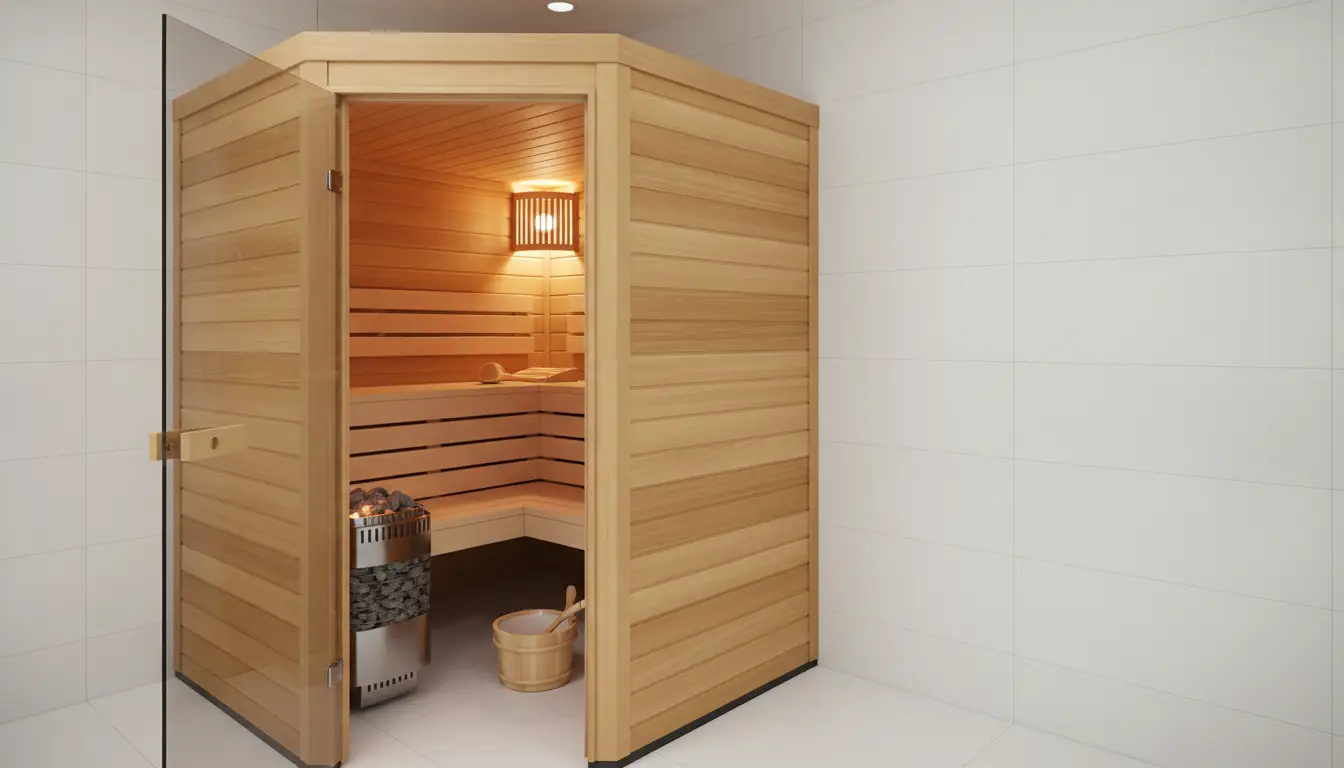
- Traditional saunas heat stones with an electric or wood-burning heater, warming the air to create the classic dry heat you can turn to steam by adding water. They feel authentic but take longer to warm up and draw the most power.
- Infrared saunas use panels that warm your body directly rather than heating the whole room. They reach a comfortable temperature faster and use noticeably less electricity.
- Portable and single-person units sit at the budget end and suit smaller spaces or anyone who wants to test the habit before committing to a fixed installation.
- Steam rooms run on moist rather than dry heat and tend to use the most energy of all, and they demand more waterproofing and drainage, making them a bigger commitment than a dry sauna.
The gap in energy use between these types is worth understanding before you buy, because it feeds directly into your ongoing bills. A traditional heater rated at six to ten kilowatts costs far more per session than an infrared unit drawing a fraction of that, so it pays to read up on sauna electricity costs and match the type to how often you actually plan to use it. Someone stepping in most days will feel the difference in running costs far more sharply than an occasional weekend user.
The choice of heat source matters within the traditional category, too. Electric heaters are simpler to install and control, while wood-burning stoves give a more traditional feel but need a flue, a fuel supply, and somewhere to store logs.
Size matters here as well. A single-person infrared cabin and a four-seat traditional room are very different propositions in both purchase price and power draw, so be honest about how many people will realistically use it at once.
Finding the Right Spot for It

Location decides a surprising amount. Indoor saunas are protected from the weather and hold their heat more easily, which keeps running costs down, but they need a suitable room with the right flooring and proper moisture management. A converted bathroom or wet area often works well, and if you are already reworking that space, it makes sense to plan the sauna alongside other changes rather than retrofitting later. A full spa bathroom transformation covers many of the plumbing and layout points that overlap with fitting a sauna, so tackling both together can save money and disruption.
Outdoor saunas free up space inside and create a proper retreat at the bottom of the garden, but they raise a question many people overlook: do you need planning permission? In most cases, a garden sauna is treated as an outbuilding under permitted development, though there are limits on size, height, and where it can sit relative to your boundaries. The UK Planning Portal sets out those conditions clearly, and it is sensible to check them or confirm directly with your local authority before any groundwork begins. Rules can also differ if your home is listed or in a conservation area.
Whichever you choose, leave enough clearance around the unit for airflow, access, and maintenance, and make sure the floor beneath it can handle heat and the occasional splash of water.
Electrical and Ventilation Requirements
A sauna combines electricity, heat, and moisture, which makes safe installation something you cannot cut corners on. Most units need a dedicated circuit sized to the heater, and higher-powered traditional models often require a hard-wired connection rather than a standard plug. This is not DIY territory. A qualified electrician should handle the supply, and guidance from Electrical Safety First explains why wiring near water and steam needs proper protection, correct positioning, and the right certification. Getting this signed off correctly also protects you if you ever come to sell.
Ventilation matters just as much and gets far less attention. A sauna produces heat and, in traditional setups, steam, so the room needs airflow to clear moisture and prevent damp from building up in the surrounding structure. Good ventilation keeps the experience comfortable, protects the timber lining over time, and prevents the mold and warping that quietly ruin a poorly planned installation. A simple intake and extraction setup is usually enough, but it needs to be planned in rather than bolted on afterwards.
Budgeting Beyond the Purchase Price
The price on the unit is only the starting figure. Installation, electrical work, any flooring or building changes, and delivery all add to the upfront total, and outdoor saunas may need a level base or foundation prepared first. It is easy to focus on the headline cost of the cabin and forget the work that surrounds it.
Then there are the running costs, which vary widely by type and by how often the sauna gets used. A well-insulated, energy-efficient model usually costs more to buy but less to heat, so the cheapest option on paper is rarely the cheapest to own. Treating the sauna as part of wider energy-efficient home design, rather than a bolt-on, helps keep those long-term costs down. Working out a rough cost over a few years of use gives a far more honest picture than the purchase price alone, and setting aside a small buffer for maintenance and the odd repair keeps the whole project grounded in reality.
Keeping It Running Well
A sauna benefits from a little regular upkeep. Wiping down the benches, keeping the interior dry between sessions, and checking the heater and controls now and then all extend its life and keep it running efficiently. Traditional saunas need their stones inspected and replaced occasionally, while infrared panels generally ask for less attention.
Simple habits also keep your bills in check without changing how much you enjoy the sauna:
- Heat it only when you actually plan to use it.
- Fit a timer so it is never left running longer than needed.
- Run sessions during off-peak electricity hours where your tariff allows.
- Keep the door closed and the unit well insulated to hold the heat.
Small adjustments like these add up over a year of regular use.
Who Should Take Extra Care
A sauna is safe for most healthy adults, but heat exposure is not right for everyone without a little caution. Anyone who is pregnant, has a heart condition, deals with low or high blood pressure, or takes medication that affects the body’s response to heat should consult a doctor before making sauna use a regular habit. Alcohol and saunas are a poor mix, and it is easy to underestimate how much fluid you lose during a session, so keeping water nearby is a sensible rule.
This is also worth thinking about at the installation stage rather than after the fact. If children or older relatives will use the sauna, controls that limit the maximum temperature and a reliable timer are useful features to specify up front. Building good habits in from day one is easier than retrofitting caution later.
A Space Worth Getting Right
Installing a sauna at home is a rewarding project when the groundwork is done properly. Choosing the right type, finding a suitable location, sorting safe electrics and ventilation, and being honest about the full cost all decide whether it becomes a space you use for years or an expensive novelty. Take the planning seriously, and the payoff is a private retreat that genuinely fits your home and your routine.