
A Designer’s Slow-Travel Route Through Lisbon, Marrakech and Reykjavik: One Month, Three Houses, A Travelling Home Office
You take a one-month sabbatical from the studio and, like most people, you instinctively start pricing hotels. Stop. Hotels are excellent for three nights. They are dreadful for week-long video calls, slow mornings with a notebook and a coffee, and the kind of quiet, deliberate observing that actually feeds a designer’s eye.
What you want, if you’re going to bring your work with you, is a house. Three of them, in this case,each chosen for what its architecture might teach you, each booked long enough to stop being a guest and start being a temporary local. The whole point of slow-travel as a designer is that you are not collecting destinations. You are collecting rooms.
This is the route a friend and I sketched on a napkin last winter, then actually ran in March. We moved every seven days. We worked four days a week and walked the other three. We came home with two suitcases of linen, a stack of indigo postcards, and an entirely changed opinion about ceiling height.
Week 1,Lisbon: The Pastel Apartment That Re-Trained Your Eye for Colour
Lisbon does not announce itself. You arrive late at Humberto Delgado, the taxi drops you in Alfama, and you drag your bag up cobbled steps that the driver politely warned you about.
You set the desk up against the window. A folding café table from the kitchen, a linen napkin under the laptop to stop it scratching the wood, the host’s reading lamp dragged across the floor. By Tuesday morning you stop calling it “the work corner” and start calling it your office.
What Lisbon teaches a designer is colour temperature. The light in Alfama at 7am is the colour of unbaked pastry; by 1pm it is the colour of a peach skin; by sunset, it is the colour you have been trying and failing to mix for paint chips back home. You will spend a week photographing walls. You will eat too many custard tarts.
Best for: the pastel-loving designer who wants to retrain their colour eye and live above a working bakery for seven mornings.
Creates / Adds: a soft warm-grey starting point for every interior project you take on for the next year.
Week 2,Marrakech: The Riad That Taught You About Quiet Geometry
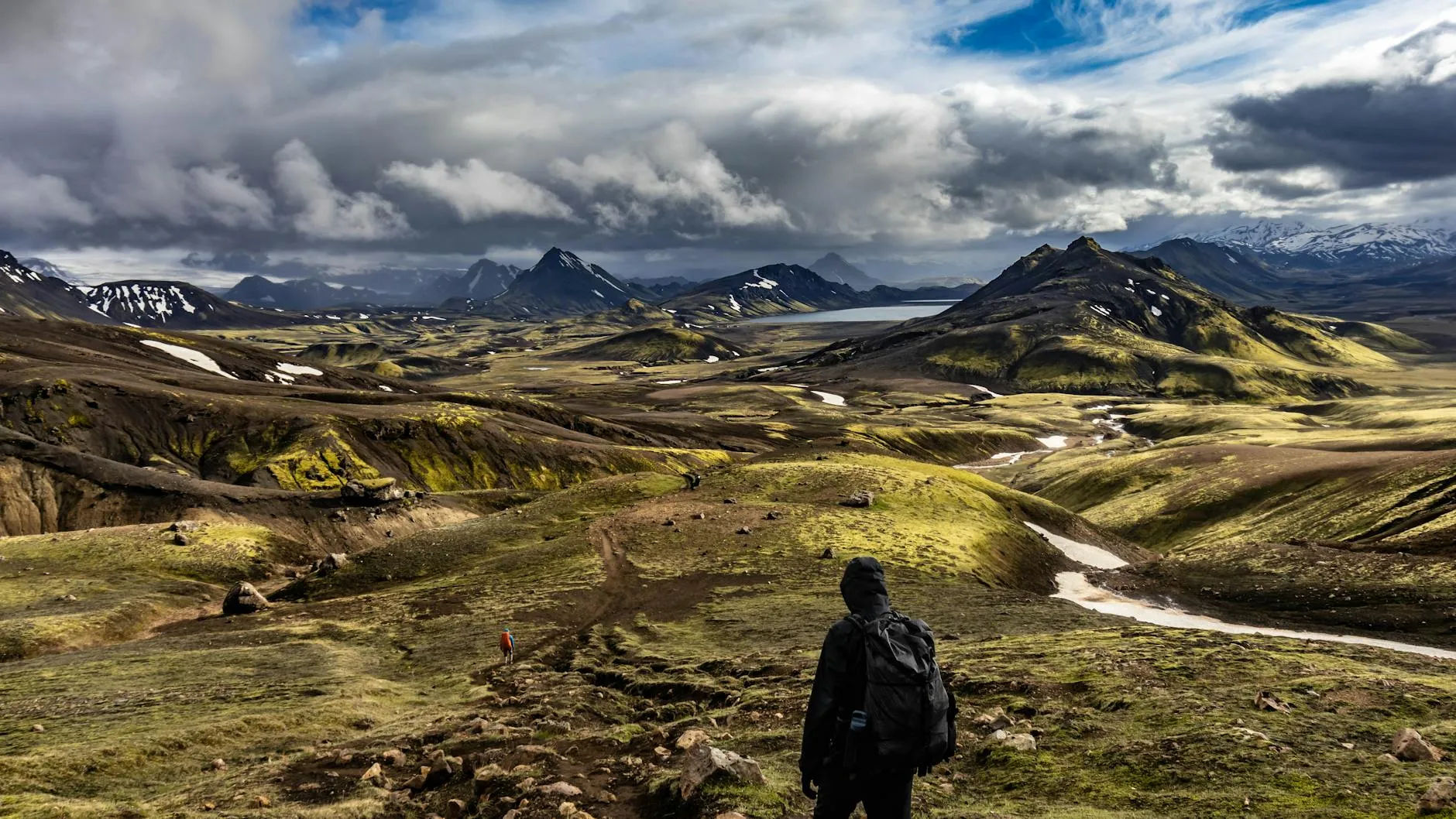 Explore the dramatic landscape of Landmannalaugar, Iceland. Ideal for adventure lovers.
You fly Lisbon to Marrakech in three hours and twenty minutes. The shift is total.
Your riad is in the Medina, ten minutes’ walk from the Bahia Palace, and the front door is so unremarkable from the alley that you walk past it twice. Then it opens, and you are in a courtyard with a small fountain, four orange trees, a tiled floor laid in a pattern that you will be sketching in your notebook before your bag is even unpacked.
The host hands you a brass desk lamp. “For your machine,” she says.
She is right. The riad’s courtyard light is filtered, indirect, the colour of cool ivory.
Best for: the designer who wants to learn pattern restraint — how a single repeating zellige can do the work of ten accessories.
Creates / Adds: a fascination with brass that you will, twelve months later, regret having installed in three bathrooms.
Staying Online Across the Route
You don’t romanticise this part. The whole month falls apart if you can’t take a 10am call from the studio.
What the connection actually looks like in each house
Lisbon’s apartment runs on a fibre line that is, frankly, fine. Marrakech’s riad uses a shared building WiFi that gets thin in the courtyard after 8pm when the rooftop terraces fill up. Reykjavik’s A-frame, twenty minutes from the city, has line-of-sight to a town tower and is the most reliable WiFi of the three, which surprises absolutely nobody who has been to Iceland.
The honest pattern is: house WiFi is enough for video calls 80% of the time. The 20%;the morning the router restarts, the afternoon you decide to work from a café, the evening you and the host both stream,is what kills a remote worker’s reputation.
A local carrier line per country, set up before you board
You do not want to be the person hunting for a SIM kiosk in arrivals while your team is on hold. The smarter setup is to add a country-specific data line to your phone before each flight, so the moment you switch out of airplane mode at the gate, you’re already on a local network.
In Lisbon, your phone connects to MEO with strong city-wide LTE down to the river. In Marrakech, it picks up Maroc Telecom, which holds 4G across the Medina and even inside the riad’s courtyard, where the building WiFi struggles. In Reykjavik, you are on Síminn, which has surprisingly good coverage on the Ring Road and is the reason you can confidently take a Tuesday call from a black-sand beach without your client ever knowing.
A travel eSIM is the simplest way to handle the three swaps without changing physical SIMs. The route I ran used HelloRoam’s travel eSIM, which rode Vodafone as the local carrier, which loads as a QR code on your phone and lets you select a Portuguese, Moroccan or Icelandic data plan before each leg. Your home UK number stays live for two-factor codes; the local data line carries the work calls. One install, three countries, no kiosk queues.
Coverage snapshot

Week 3,Reykjavik: The Black A-Frame That Reset Your Idea of Negative Space
You fly Marrakech to Reykjavik with one stop in Paris and land at Keflavík at an hour your body refuses to identify. The drive out of the airport is the strangest part of the route.
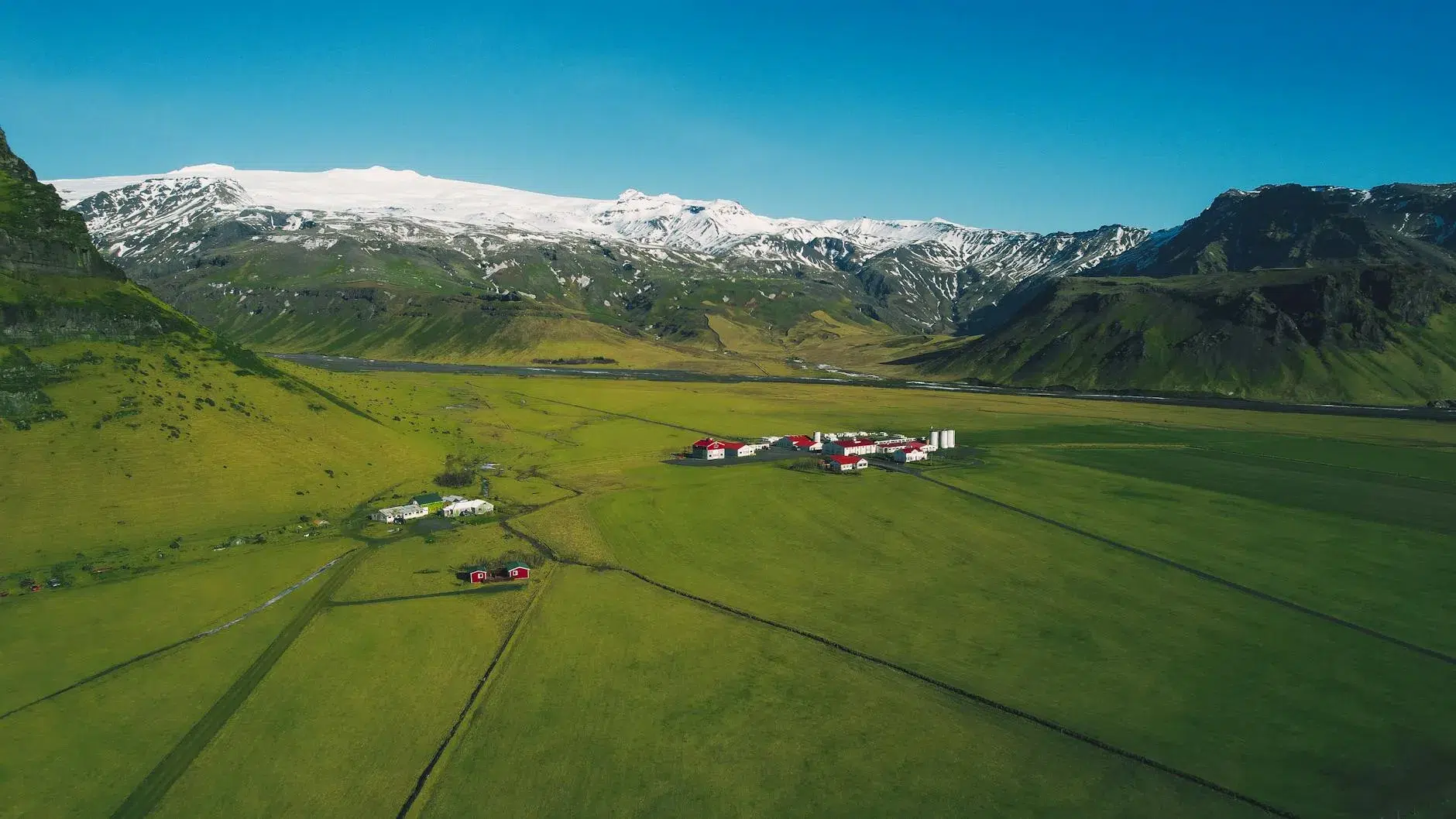
The house is a small black-timber A-frame twenty minutes north of the city. Inside, it is the colour of bone.
You set your laptop up on a long pale-wood table by the window. Outside, the light does not behave like light you have worked in before.
What Reykjavik teaches a designer is restraint. You spend a week realising how much you over-decorate at home.
Best for: the designer who needs to be quietly broken of maximalism for a week.
Creates / Adds: a permanent commitment to one good wool throw, instead of three mediocre ones.
The Travelling Home-Office Kit (One Carry-On, Honestly)
You can do this whole route with one cabin bag and one tote. The trick is not packing for three climates,it’s packing for one body that moves through three climates.
The working list, after running it twice:
- A 14″ laptop in a soft felt sleeve (no hard shell — they crack)
- A 100W folding charger that takes UK, EU and US pins (you’ll need the US pin shape in Iceland, despite the country being European)
- One thin Bluetooth keyboard, because hotel-desk laptops are a wrist injury waiting to happen
- A linen napkin you will use under the laptop in every house to stop it scratching wood (you will thank yourself in Marrakech)
- One small folding tripod for video calls,pointed at the window in Lisbon, the courtyard in Marrakech, the lava field in Reykjavik
- Two notebooks, one A5 and one A6, plus three pens
- Noise-cancelling earbuds for the riad courtyard calls
- A travel eSIM already installed before you board flight one
That’s it. The rest is clothes you can layer up or strip down. Linen for Marrakech, merino for Reykjavik, a single black blazer that quietly works in all three video frames.
FAQ
Why these three cities specifically? Each one teaches a different design lesson;Lisbon teaches you about colour temperature, Marrakech teaches you about pattern restraint, Reykjavik teaches you about negative space. Run the route in the other direction and the lessons still land.
What’s the best time of year to do this route? Late February through mid-April. Lisbon is warm enough for the balcony, Marrakech is before the summer heat, and Reykjavik is just starting to thaw with proper daylight by week three. Avoid July anywhere on this list.
Is this realistic if I have a full-time job, not a sabbatical? Yes, if your team is set up for remote work and your manager will sign off on time-zone overlap. Lisbon, Marrakech and Reykjavik are all within two hours of UK time, which makes the calendar workable. The schedule that worked for us was four full work days, three travel-and-observe days, each week.
What about working from the houses with patchy WiFi? The honest answer is that you carry your own data plan and you stop relying on the host’s router for anything important. A local carrier line,set up before you fly into each country,is the only thing between you and a missed pitch.
Will I actually come home with anything that changes my work? You’ll come home with three notebooks of colour swatches, a phone full of doorway photographs, and a quietly different sense of what a room needs. The biggest change for me was permission to leave more empty space on the wall.
Wrapping Up
This is not a holiday. It’s not a city break, and it’s not a press tour.
The kit fits in a cabin bag. The route fits in four weeks.


