Solar Pool Skimmers: A Smarter Way to Handle Surface Debris
Solar Pool Skimmers: A Smarter Way to Handle Surface Debris
A beautiful backyard pool can lose its calm, clean look quickly when the surface starts collecting leaves, bugs, pollen, flower petals, grass clippings, dust, or light oils. Even if the water underneath is balanced, floating debris can make the whole outdoor space feel unfinished.
Surface debris matters because it is easiest to remove while it is still floating. Once leaves and pollen sink, they become a floor-cleaning problem. Once oils and dust sit around the edge, they can turn into waterline buildup. Once organic material breaks down, the filter and sanitizer have more work to do.
For homeowners who care about a clean outdoor space, the pool surface is part of the overall design. It affects how the patio feels, how ready the backyard looks for guests, and how much time the owner spends cleaning before using the pool. Solar pool skimmers are a smart way to reduce that daily surface mess, but they still work best as part of a full pool-care routine.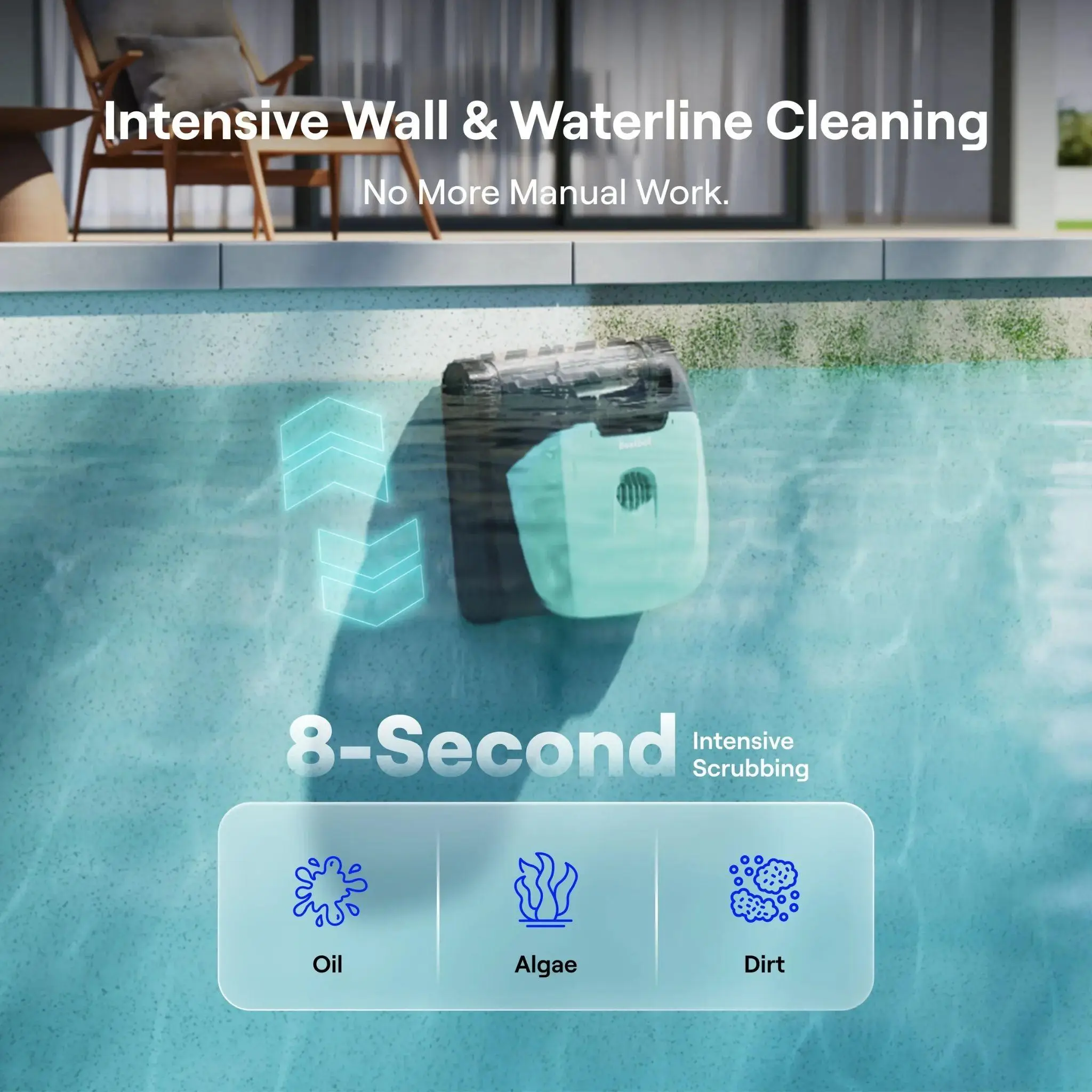
How Solar Pool Skimmers Work
Solar Charging and Surface Movement
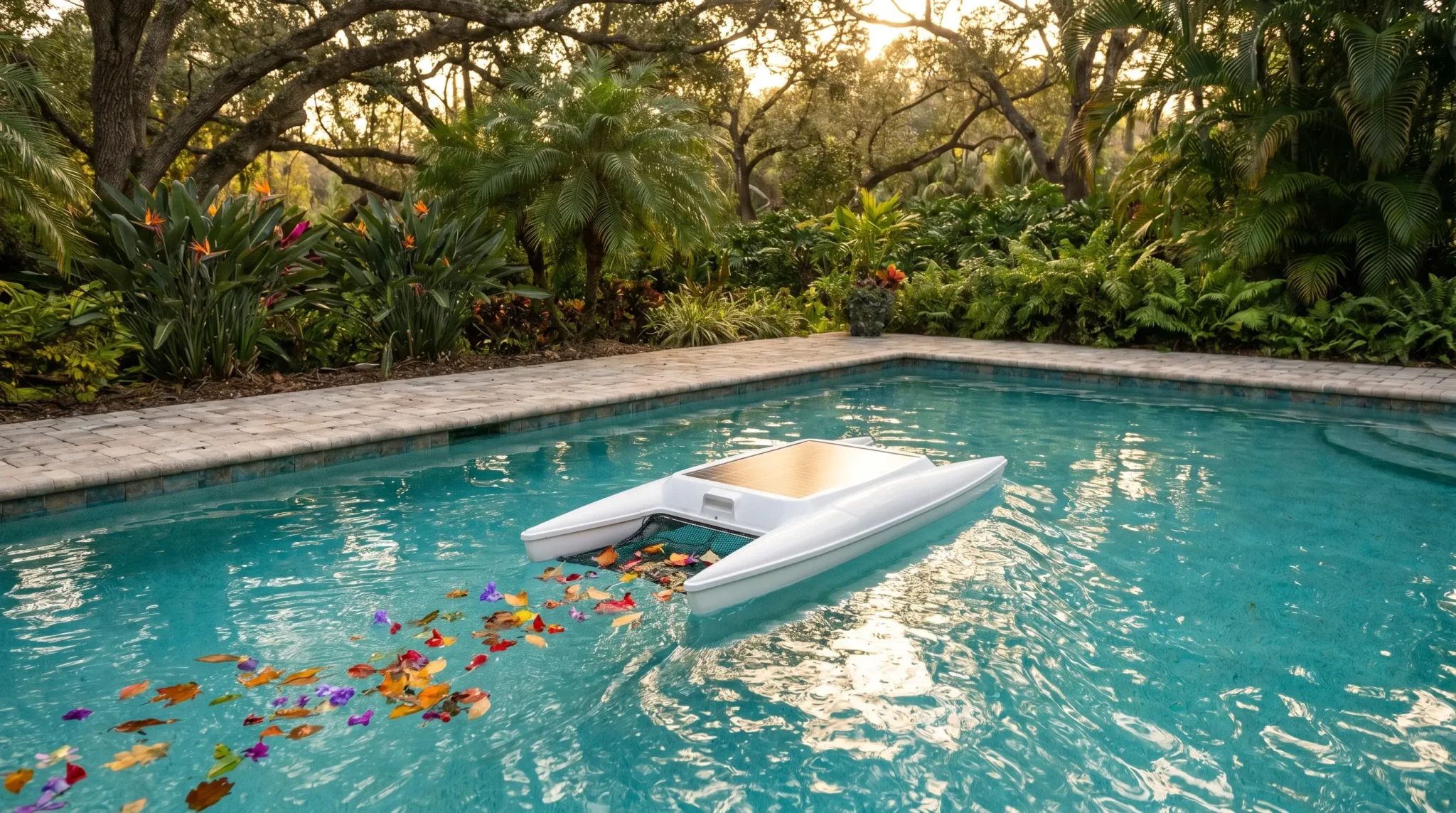
A solar pool skimmer is designed to float on the water surface and collect debris before it sinks. Most models use a solar panel to help charge the unit during daylight, while a battery supports operation when sunlight changes. Instead of connecting to the pool’s main pump like a built-in skimmer, a robotic surface skimmer moves across the pool on its own.
The basic idea is simple: catch floating debris early. Leaves, insects, pollen, and small garden debris are pulled into a basket or collection tray while the unit moves around the surface. For pools near trees, lawns, flower beds, or open patios, that can reduce the need to grab a hand net several times a day.
Different models vary in runtime, basket size, sensor quality, charging design, and control options. A shaded backyard, heavy debris load, or several cloudy days can affect performance, so homeowners should understand how each unit is meant to work before buying.
Sensors Help Avoid Walls and Obstacles
Many newer solar skimmers use sensors to help them avoid walls, corners, steps, and floating toys. This matters because a surface cleaner that keeps getting stuck is not very helpful. Smart movement allows the device to cover more of the pool instead of sitting in one area.
Sensors do not make a skimmer perfect, but they can reduce frustration. In a real backyard, the pool may have benches, ladders, curves, ledges, or floats in the water. Better obstacle handling helps the cleaner keep moving and collect debris more consistently.
What Solar Skimmers Are Best at Removing
Solar skimmers are strongest when debris is still floating. That includes leaves after windy weather, pollen during spring, flower petals near garden beds, insects during warm evenings, and grass clippings after mowing. They can also help with light surface dust and some floating residue before it reaches the waterline.
This makes them useful for homeowners who often find the pool surface messy even when the floor is not too dirty. A few leaves are easy to skim by hand. A steady daily layer of pollen, bugs, and small debris is more annoying. That is where automatic surface cleaning starts to feel valuable.
For modern backyards, this is also why many people compare solar skimmers with otherwireless pool cleaners. The goal is convenience. A cleaner pool area feels easier to enjoy when small debris is handled before it turns into a bigger job.
Still, a solar skimmer has a clear role: it works on the surface. It is not designed to clean sand from the pool floor, scrub algae from walls, or remove scale from the waterline.
Where Solar Pool Skimmers Still Have Limits
Solar skimmers are useful, but they are not a complete pool maintenance solution. They do not vacuum the bottom. They do not scrub walls. They do not clean the waterline deeply. They do not balance pH, chlorine, alkalinity, or calcium hardness.
Basket size also matters. If the pool gets heavy leaf drop, the basket may need frequent emptying. If the pool is shaded for much of the day, solar charging may be less reliable. If storms bring large branches or muddy runoff, manual cleanup will still be needed.
A solar skimmer also cannot fix cloudy water by itself. Cloudy water may come from poor filtration, low sanitizer, unbalanced pH, algae growth, or fine particles suspended in the water. Surface cleaning helps reduce the load, but it does not replace testing, filtration, and brushing.
The best way to think about a solar skimmer is as an early-control tool. It catches surface debris at the easiest stage. It does not take over every part of pool care.
How Solar Skimming Fits Into a Complete Pool Routine
A good pool routine has several layers. Surface cleaning comes first because floating debris is easiest to remove early. The built-in skimmer, pump, and filter keep water circulating. A vacuum or robotic cleaner handles dirt that settles on the floor. Brushing helps with walls, steps, and the waterline. Water testing keeps the pool safe and comfortable.
When these tasks work together, pool care feels easier. When one part is skipped, the workload often shifts somewhere else. If surface debris is ignored, it sinks. If floor debris is ignored, it clouds the water. If waterline residue is ignored, it becomes harder to scrub. If filters are ignored, particles keep circulating.
Solar skimmers can reduce the surface-cleaning burden, especially for leafy or windy backyards. But homeowners still need a plan for the rest of the pool.
A Practical Solar Skimmer for Everyday Surface Debris
For homeowners who mainly struggle with floating leaves, pollen, bugs, grass clippings, and flower debris, Beatbot iSkim Ultra fits the topic naturally because it is designed as a robotic pool skimmer. Its role is different from a floor vacuum or a wall-cleaning robot. It works on the water surface, collecting debris before it sinks and becomes harder to remove. That makes it useful for backyards with trees, lawns, gardens, or open patios where new debris can land throughout the day.
In daily use, this type of surface cleaner can help keep the pool looking guest-ready between normal maintenance sessions. Instead of waiting for leaves, insects, and pollen to drift into corners or sink to the bottom, Beatbot iSkim Ultra helps remove them earlier in the process. This can also reduce sudden overload in the built-in skimmer basket after breezy weather or garden work.
The recommendation should stay realistic. iSkim Ultra is a surface skimmer, not a full pool cleaner. It does not vacuum sand from the floor, scrub walls, clean deep waterline stains, or replace chemical testing and filter care. It is best positioned as a smart tool for homeowners who want surface debris handled more consistently, while the rest of the pool routine still includes filtration, brushing, vacuuming, and water balance.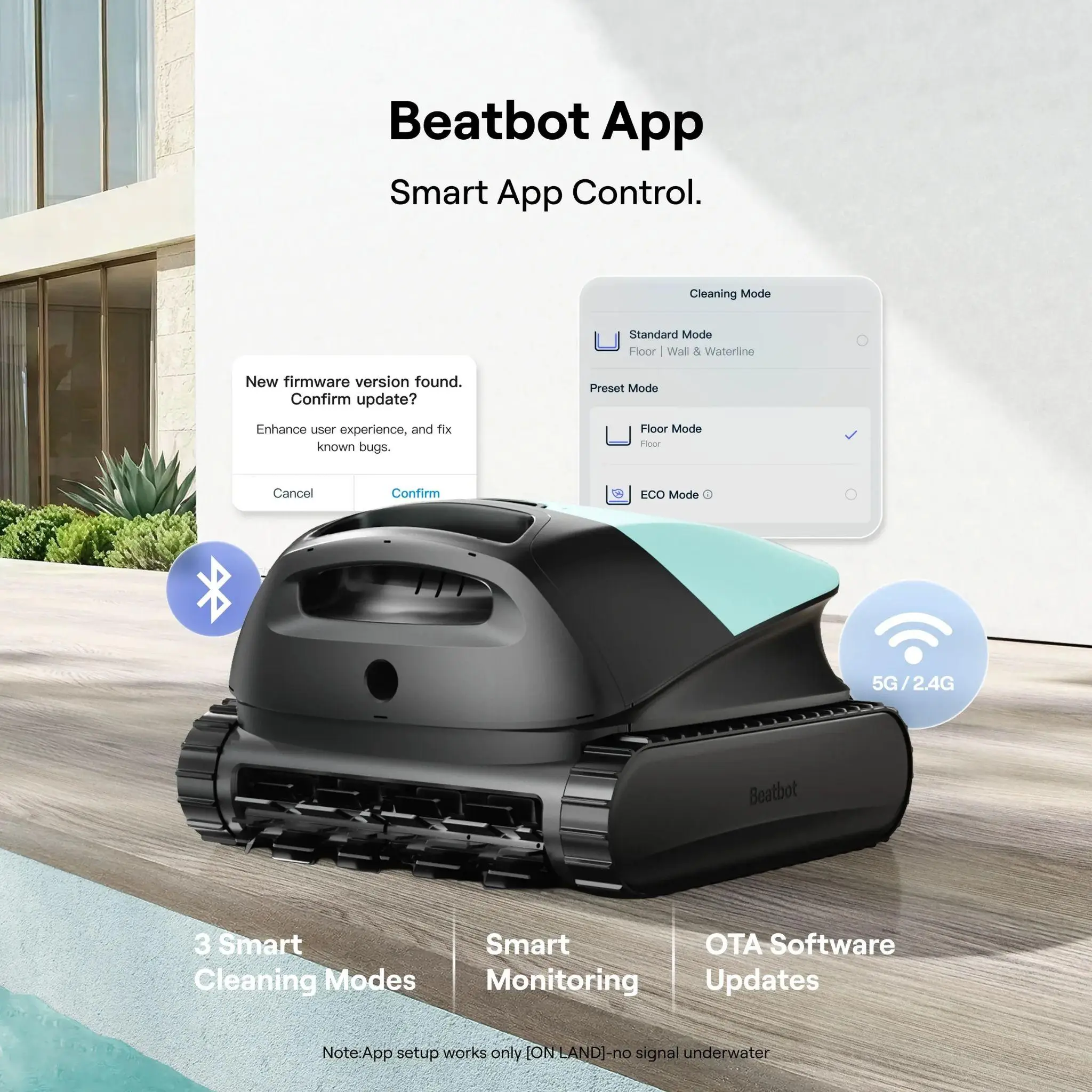
Solar Skimmer vs Broader Robotic Pool Cleaner
| Cleaning Need | Solar Pool Skimmer | Broader Robotic Cleaner |
|---|---|---|
| Floating leaves and bugs | Strong fit | Strong fit if surface cleaning is supported |
| Pollen on the surface | Helpful for early removal | Helpful if surface mode is included |
| Sand on the floor | Not designed for this | Better fit |
| Waterline residue | Not designed for this | Better fit if waterline cleaning is supported |
| Wall buildup | Not designed for this | Better fit |
| Solar charging | Yes, depending on model | Not necessarily |
| Full pool routine replacement | No | Still no, but broader coverage |
This comparison helps avoid confusion. Solar skimmers are excellent for early surface debris control. Broader robotic cleaners are better when debris appears in several places: surface, floor, walls, and waterline. Neither one removes the need for water testing, filter care, or basic pool safety habits.
Someone looking for thebest above ground pool vacuum may need a different tool if the main issue is settled dirt on the floor. But if the biggest daily frustration is floating leaves, pollen, and bugs, a solar pool skimmer is often the more direct solution.
Choosing the Right Surface Cleaning Setup for Your Backyard
The right choice depends on the pool and the backyard around it. A pool under trees may need daily surface support. A pool near flower beds may deal with pollen and petals. A pool used by children, guests, or pets may need both surface cleaning and floor cleaning.
If the pool is shaded most of the day, think carefully before relying only on solar charging. If sand and dust are common, choose a cleaner that handles the floor too. If the waterline often looks dull, add waterline brushing or a cleaner that supports that area. If the goal is a guest-ready outdoor space, combine surface cleaning with a simple weekly routine.
A smarter pool is not just one with more gadgets. It is one where each tool solves the right problem. Solar skimmers help with floating debris. Broader robotic cleaners help when the mess spreads across the pool. With the right setup, the backyard stays cleaner, calmer, and easier to enjoy.