What Is BIM Coordination in Construction and Why It Matters?
BIM coordination is one of the most impactful processes in modern construction. It brings together architects, engineers, contractors, and project stakeholders to align their models before a single element is built on site. The goal is direct: detect conflicts early, avoid costly mistakes, and deliver a smoother construction process from design through handover.
This guide covers what bim coordination is, how the process works, which tools support it, and how construction professionals can apply it effectively.
What Is BIM Coordination?
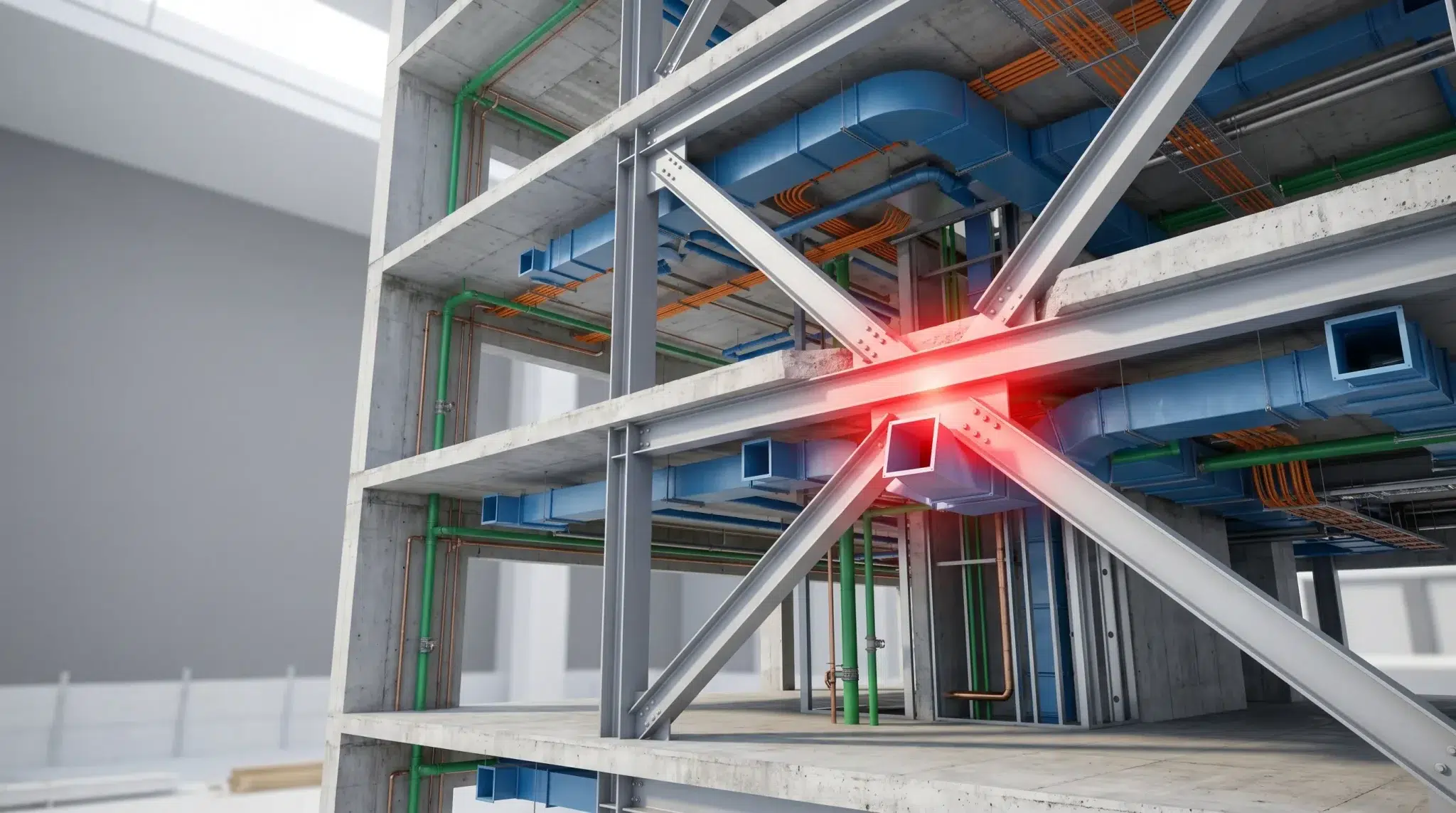
BIM Coordination – Building Information Modeling Coordination – is a process of integrating models developed by different disciplines into a single, unified model. Each project team develops its own BIM model: architects develop the model of the building envelope, structural engineers develop the model of the load-bearing systems, MEP contractors develop the models of the mechanical, electrical and plumbing systems. BIM coordination combines these into a federated model, where conflicts between different systems – a structural beam intersecting a duct, for example – can be identified and resolved before construction begins.
Coordination in BIM is a proactive approach that runs through the design process and into pre-construction, giving project stakeholders clear visibility before work begins on site. Many firms also combine internal teams with outsourcing architectural services to improve coordination capacity and support multidisciplinary project delivery.
The BIM Coordination Process Step by Step
The bim coordination process follows a consistent workflow across most project types. Understanding each stage helps project teams implement effective bim coordination from the beginning.
Step 1: Model Submission & Federated Model Setup
Each discipline (structural, MEP, architecture) submits its BIM model to a common collaboration environment. The linked models are then compiled into a federated model for review. Communication is critical at this stage: coordinate systems, file formats, and naming conventions need to be aligned before any coordination can take place.
Step 2: Running Clash Detection
Once models are linked, teams run clash detection with specialized software. Coordination rules are set to flag hard clashes (physical overlaps), soft clashes (clearance violations) and workflow clashes (sequencing conflicts). Identifying issues early is one of the most cost-effective steps in the entire construction process – resolving issues in the design phase is a fraction of the cost of fixing them on site.
Step 3: Coordination Meetings and Issue Resolution
In coordination meetings, resolution is achieved. BIM coordinators, design teams and project stakeholders review flagged issues, assign ownership and agree on fixes. Regular coordination meetings help the whole model move forward. Issue management tools track each clash through to resolution so that all team members stay accountable and nothing is missed.
Step 4: Documentation & Sign-Off
When the coordination is complete, all issues are thoroughly documented and signed off by all stakeholders involved. This supports quality control through construction and creates a reliable record for the general contractor and project management team.
Benefits of BIM Coordination in Construction
When implemented correctly, bim coordination delivers clear value across every phase of a project.
Early clash detection reduces cost.
Identifying a conflict between a structural beam and an HVAC duct during the design phase costs far less than fixing it during construction. Early identification of these issues is the most widely accepted financial benefit of bim coordination.
Improved collaboration across disciplines.
A collaborative environment where architects, engineers, and contractors share and update a common model eliminates silos that lead to miscommunication and rework. Better collaboration drives better decision making and cuts unnecessary back-and-forth between teams.
Improved project efficiency.
Teams that use bim coordination tools regularly generate fewer RFIs, fewer change orders, and fewer delays – all of which improves overall project efficiency and protects client schedules.
Smoother construction process on site.
Less interruption to field crews when design conflicts are resolved prior to construction. General contractor can manage resources and sequencing with greater confidence, which translates directly to better project quality.
Reduced risk on complex projects.
BIM coordination gives project stakeholders a clear understanding of how all construction elements will fit together before anything is installed, reducing risk at every stage.
BIM Coordination vs BIM Management
These roles are closely related but serve distinct purposes.
|
BIM Coordination |
BIM Management |
|
|---|---|---|
|
Focus |
Detecting and resolving model conflicts |
Setting BIM standards and strategy |
|
Who performs it |
BIM coordinator, trade teams |
BIM manager, project management |
|
When |
Design phase and pre-construction |
Full project lifecycle |
|
Key activity |
Clash detection, coordination meetings |
BIM Execution Planning, quality control |
|
Output |
Coordination-complete federated model |
BIM Execution Plan, standards library |
The bim coordinator operates within the framework that the BIM manager establishes. Both roles are essential for effective bim coordination on complex projects – they simply function at different levels.
What Does a BIM Coordinator Do?
The bim coordinator is the central figure in the bim coordination process, sitting at the intersection of technology and communication. Core responsibilities include:
- Scheduling and running coordination meetings with all relevant team members
- Running clash detection and configuring clash detection rules
- Logging, assigning, and tracking issues through to resolution
- Maintaining the federated model and enforcing submission standards
- Communicating coordination status to the general contractor and project stakeholders
- Supporting design teams and trade teams in resolving conflicts efficiently
A skilled bim coordinator needs both technical bim expertise – including proficiency with tools like Autodesk Revit and coordination platforms – and strong interpersonal skills. Managing project teams across different disciplines requires clear communication and practical experience with how construction projects actually run.
Best BIM Coordination Software Tools
The right tools make the bim coordination process faster and more reliable. These are the platforms most used by construction professionals today:
Autodesk Navisworks – The industry standard for clash detection. Supports linked models from multiple disciplines and offers powerful clash detection rules configuration.
Autodesk Revit – The primary modeling tool for architects and structural engineers. Autodesk Revit models integrate directly into most coordination workflows.
BIMcollab – A cloud-based issue management and coordination platform built specifically for bim workflows, with integrations across major modeling tools.
Autodesk BIM 360 / ACC – A project collaboration platform connecting design teams and construction teams in a shared environment.
Choosing tools depends on project scale, existing bim workflow, and the software preferences of the teams involved.
BIM Coordination Best Practices
Effective bim coordination requires a structured approach and consistent execution. These practices define how the best project teams run it.
Start early in the design process. The earlier coordination begins, the more value it delivers. Early coordination reviews are far less disruptive than changes discovered during construction.
Define standards before modeling begins. Model standards, coordinate systems, naming conventions, and bim coordination protocols must be agreed upon before teams submit models. Skipping this step creates compatibility issues that slow the entire process.
Hold coordination meetings on a fixed schedule. Irregular meetings create backlogs of unresolved issues. Consistent cadence – weekly or bi-weekly during active design phases – is one of the simplest and most effective coordination practices.
Use issue management tools, not spreadsheets. Dedicated tools ensure every clash is assigned, tracked, and closed. Manual tracking breaks down quickly on complex projects with multiple trade teams.
Involve all disciplines from day one. BIM coordination works best when architects, engineers, and contractors are part of the process from the beginning. Late additions create rework and slow resolution cycles significantly.
Document everything. Detailed documentation of clashes, resolutions, and model changes supports quality control and protects all parties through construction and handover.
If you’re scaling BIM coordination across multiple projects, MastTeam can support coordination, drafting, and documentation workflows.