10 Small Playroom Ideas To Maximize Every Inch
Every kid deserves a space to play, imagine, and grow. But not every home comes with a big room to make that happen.
Here’s the thing: You don’t need a large space to create a great playroom. With the right small playroom ideas, even a tiny corner can become a place kids love.
It’s all about smart planning, the right furniture, and a layout that actually works for how kids play. Small rooms come with real challenges, limited floor space, too much clutter, and furniture that just doesn’t fit.
But with a few smart changes, these problems are easy to fix.
Starting from scratch or refreshing an existing space, this resource will help you make every square foot count. Let’s get started.
Key Features of a Well-Designed Small Playroom
A good small playroom isn’t just about looks. It’s about creating a space where kids can play, learn, and grow.
- Open Floor Space: Kids need room to move, jump, and build. Keep the center clear for active play.
- Smart Storage: Use bins and shelves to neatly store toys. Good storage stops clutter from taking over.
- Defined Play Zones: Give each activity its own spot. This helps kids know where things belong.
- Right-Sized Furniture: Choose pieces that fit the room’s scale. Oversized furniture makes the space feel cramped.
- Balanced Design: Keep colors simple and avoid busy patterns. A calm space helps kids focus better.
Small Playroom Ideas That Actually Work
Small playrooms can be just as fun and functional as larger ones. You just need the right ideas to make every inch count.
1. Use Open Shelving for Toy Storage
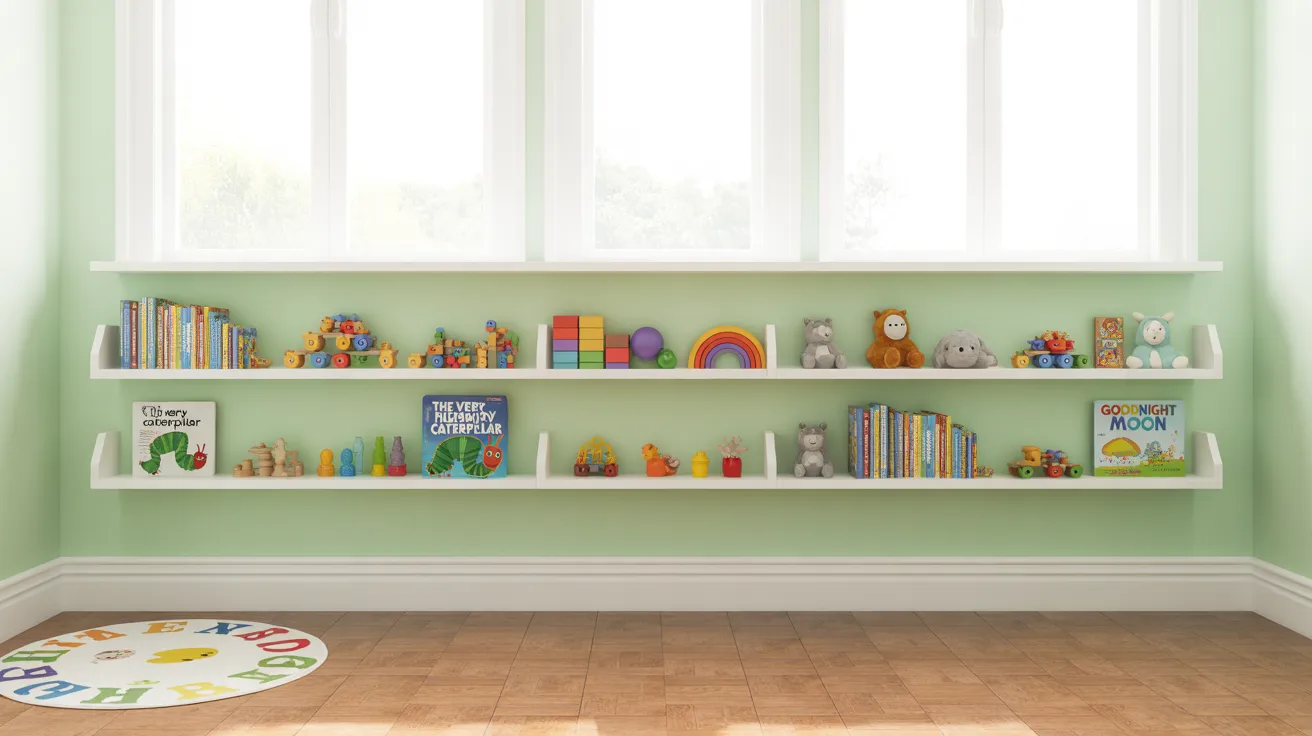
Open shelves are one of the easiest ways to organize a small playroom. They keep toys visible and within reach, which helps kids find and put things back easily.
Just avoid overcrowding the shelves, too many items create visual clutter and make the room feel messy. A clean, well-spaced shelf always works better than a packed one.
2. Add Storage Bins or Baskets
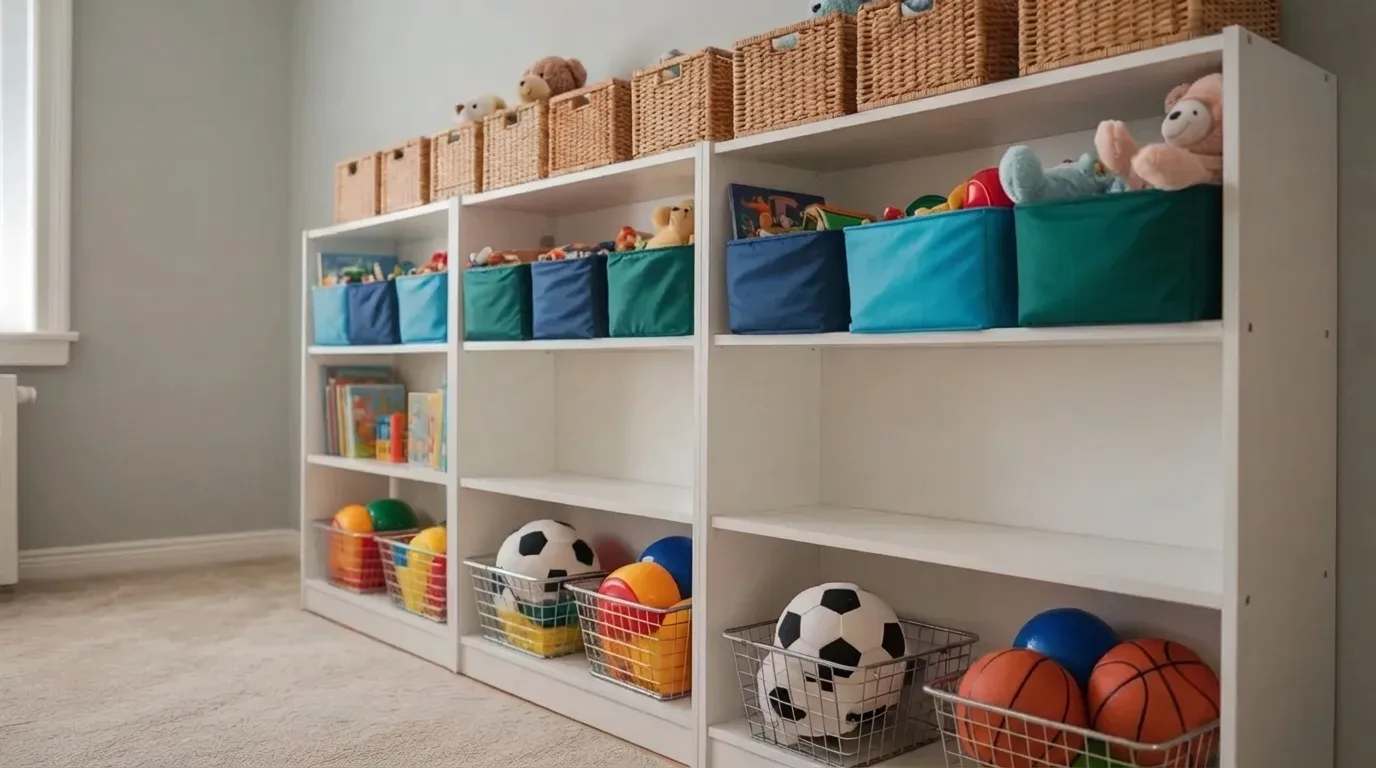
Bins and baskets are simple, affordable, and widely used in playrooms. They group similar toys together, making cleanup faster and easier.
Stick to a few large bins instead of many small ones to keep things tidy and manageable. Labels or color coding can make sorting even simpler for young kids.
3. Create a Small Reading Corner
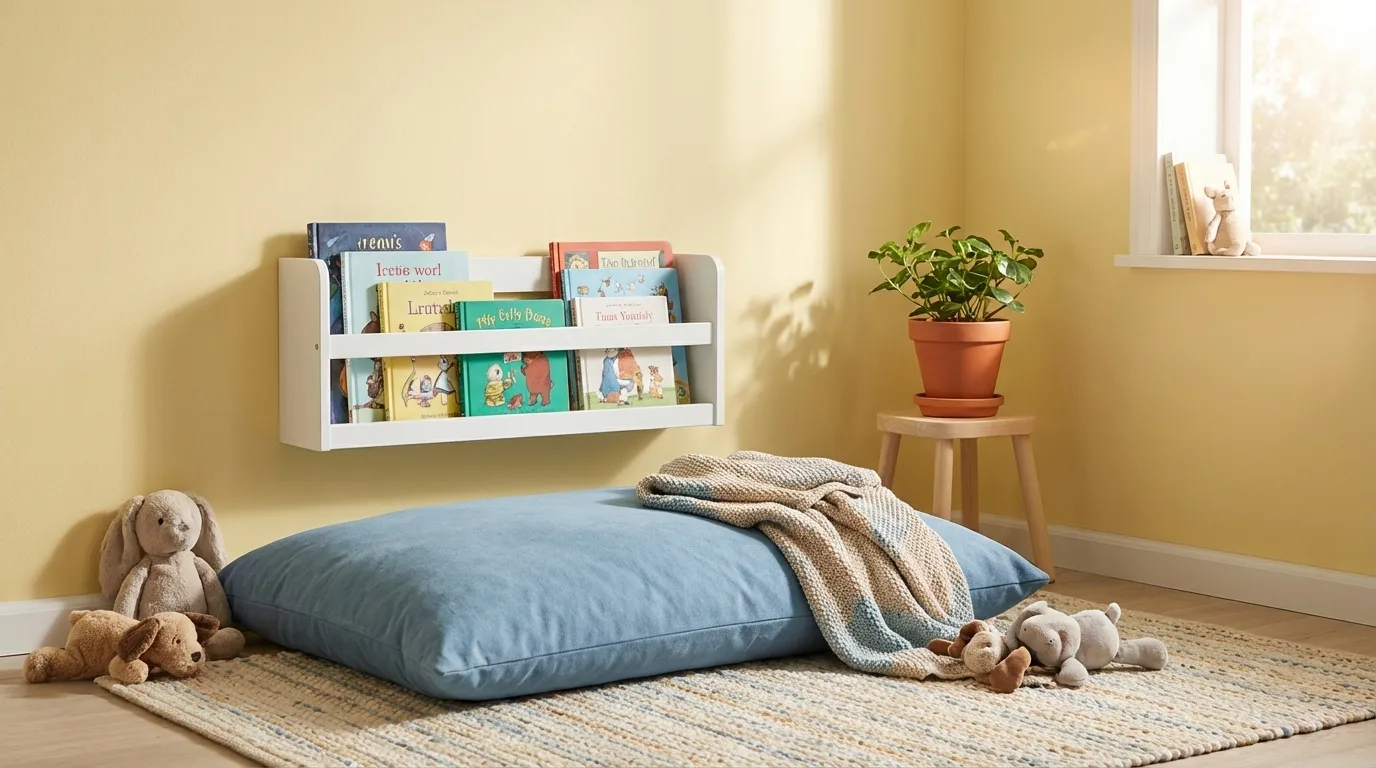
A reading corner is one of the most common and effective playroom setups. All you need is a soft rug, some cushions, and a small bookshelf.
Keep it compact so it doesn’t take over valuable play space in the room. A well-placed reading nook also gives kids a calm spot to wind down.
4. Use a Play Mat or Rug to Define the Space
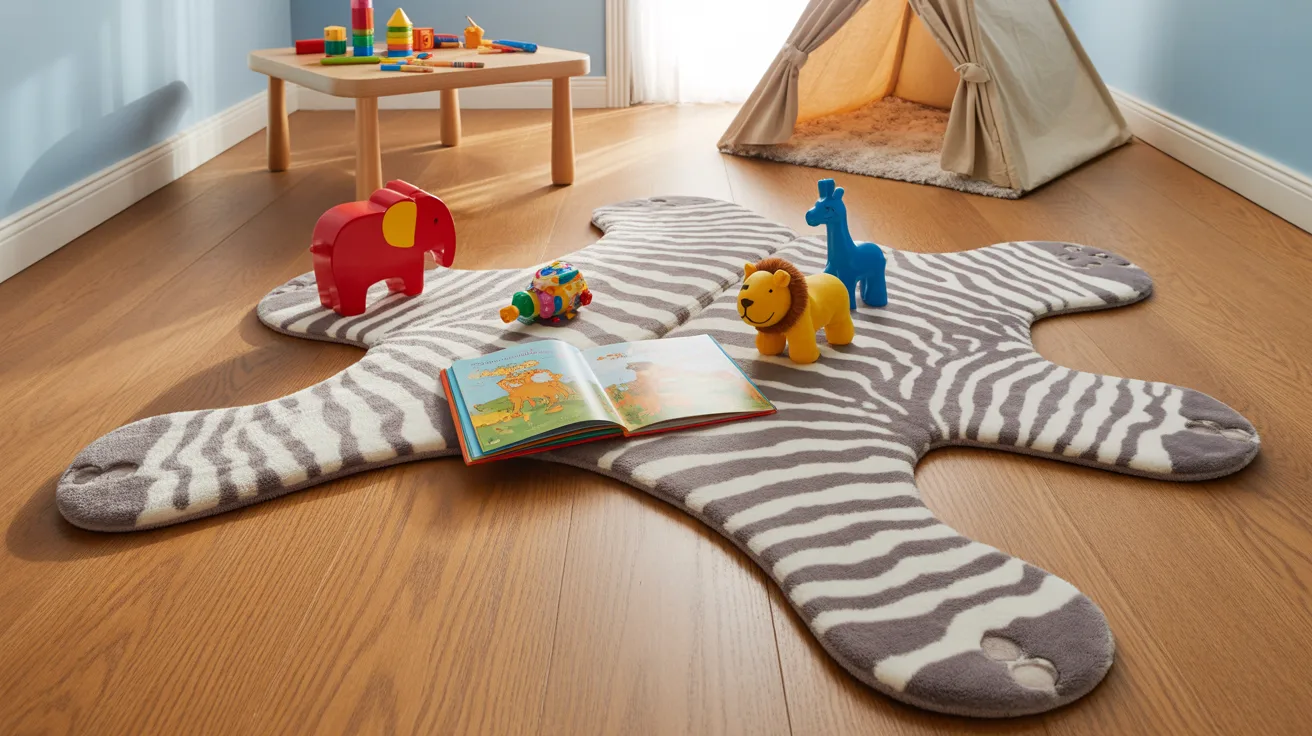
A rug instantly defines the play area without adding any furniture. It gives kids a clear spot to sit, play, and spread out.
Choose a size that fits the room well, oversized rugs can make a small space feel cramped. A fun pattern or bright color can also add personality to the room.
5. Keep Furniture Low and Kid-Sized
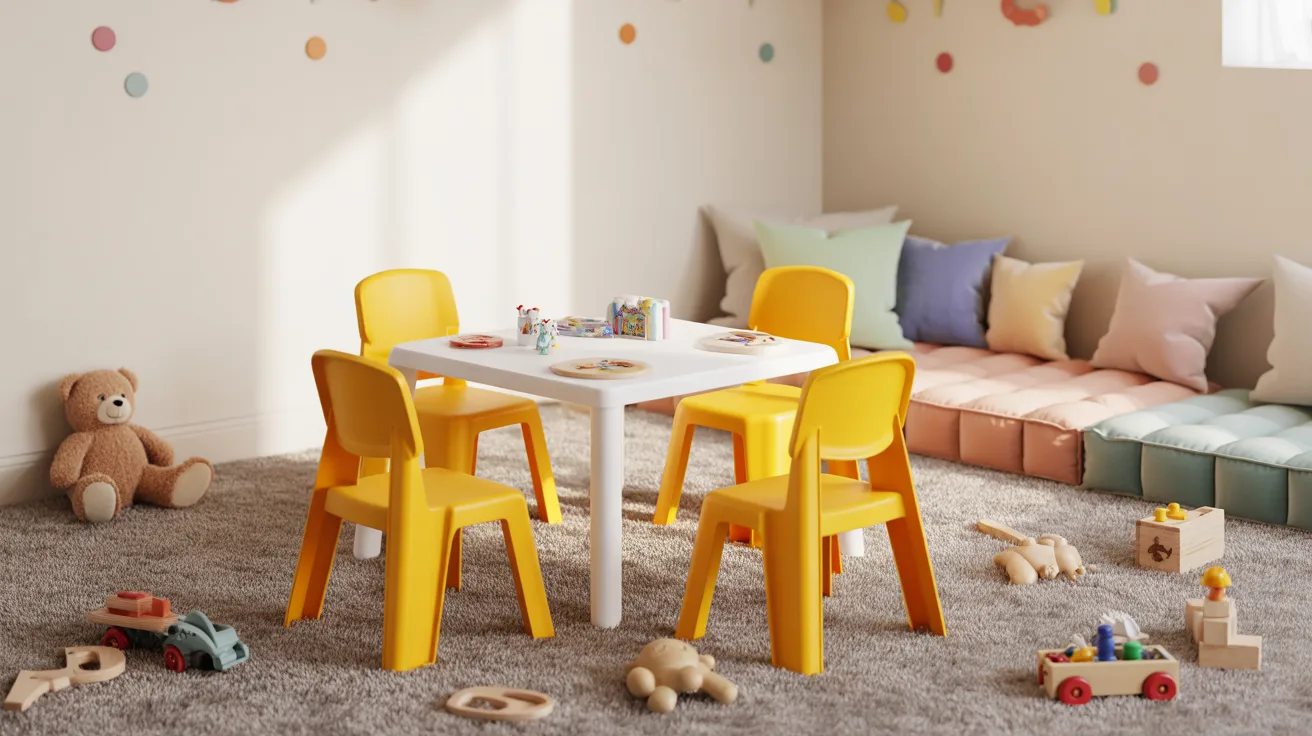
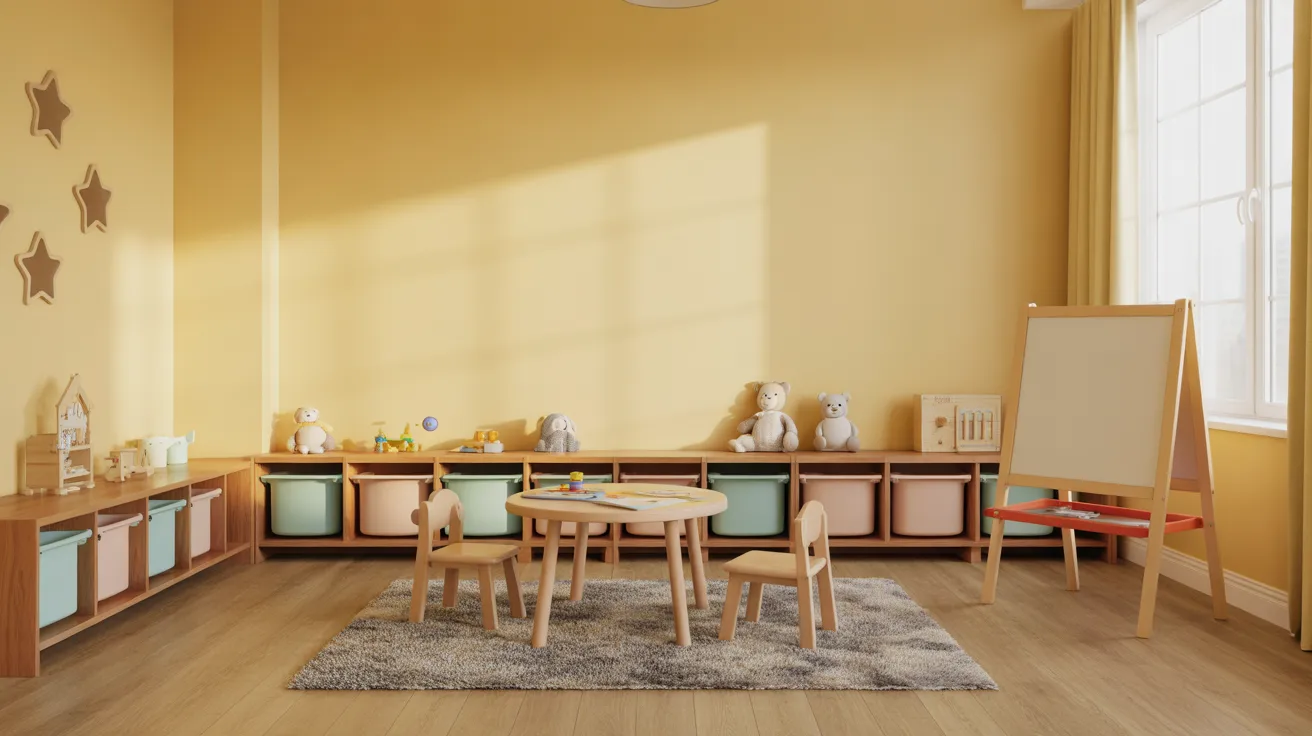
Low shelves, small tables, and kid-sized chairs work best in small playrooms. They make the space feel open, safe, and easy for kids to use independently.
Large or tall furniture can quickly overwhelm the room and limit movement. Scaled-down pieces also give kids a sense of ownership over their space.
6. Use Wall Shelves to Save Floor Space
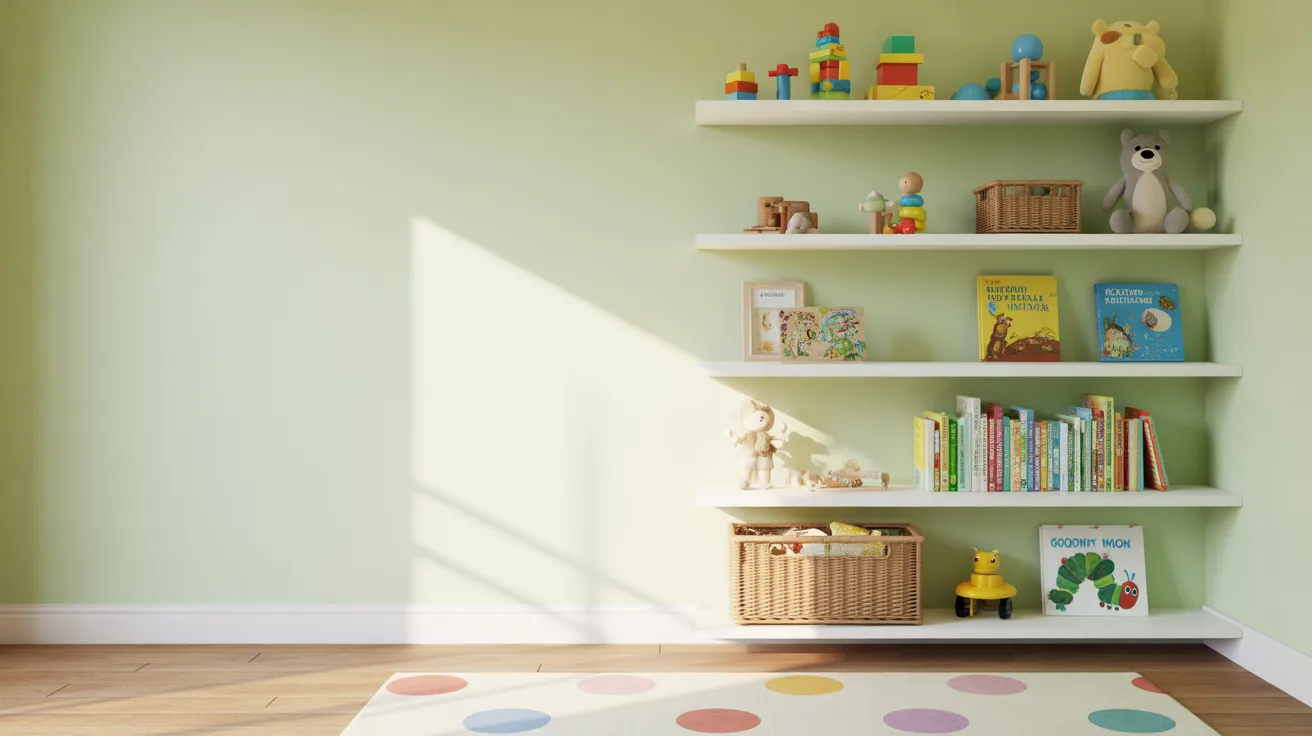
Wall-mounted shelves store books and toys without taking up any floor space. This keeps the play area open and free for movement.
Make sure shelves are installed securely and positioned within easy reach for kids. This simple addition can significantly increase storage without shrinking the room.
7. Keep Only a Few Toys on Display
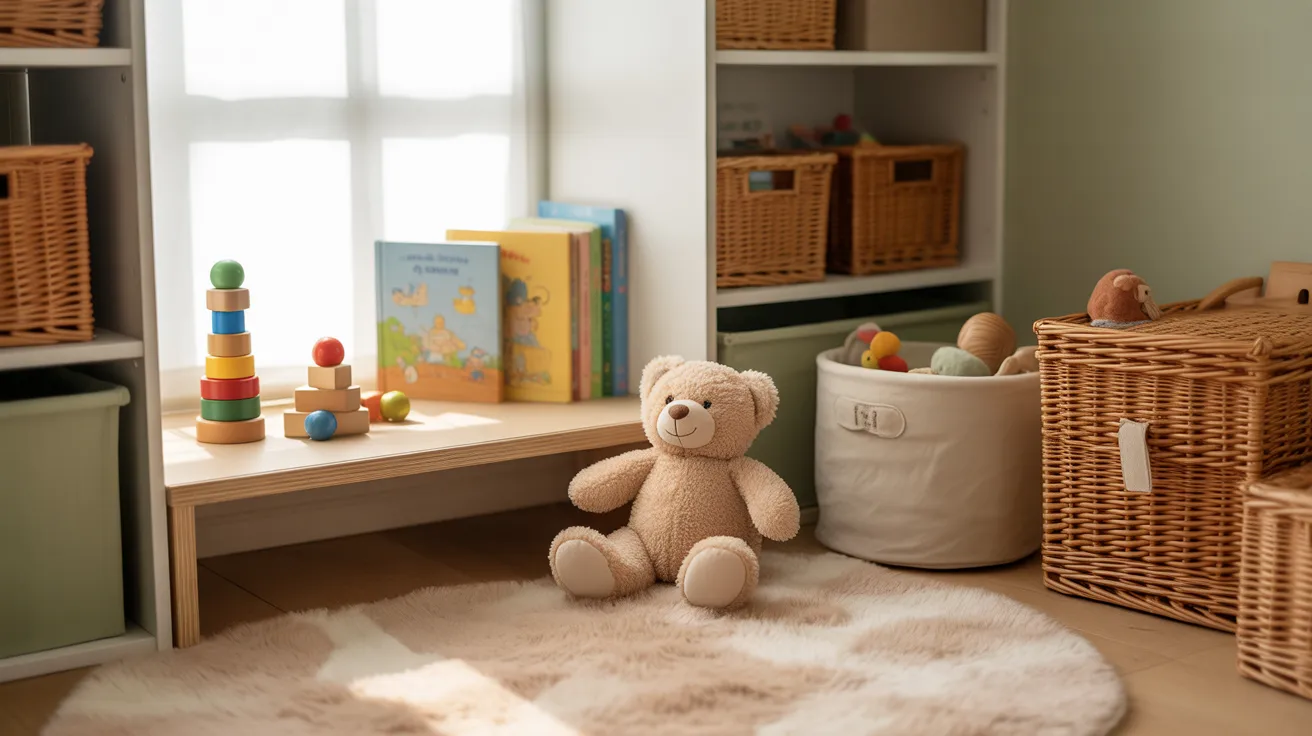
Instead of showing everything at once, keep a limited number of toys out at a time. This reduces clutter and helps kids focus better on what’s available.
Store the rest away and rotate them occasionally to keep things fresh. Fewer choices often lead to longer, more focused play sessions.
8. Add Soft, Movable Seating
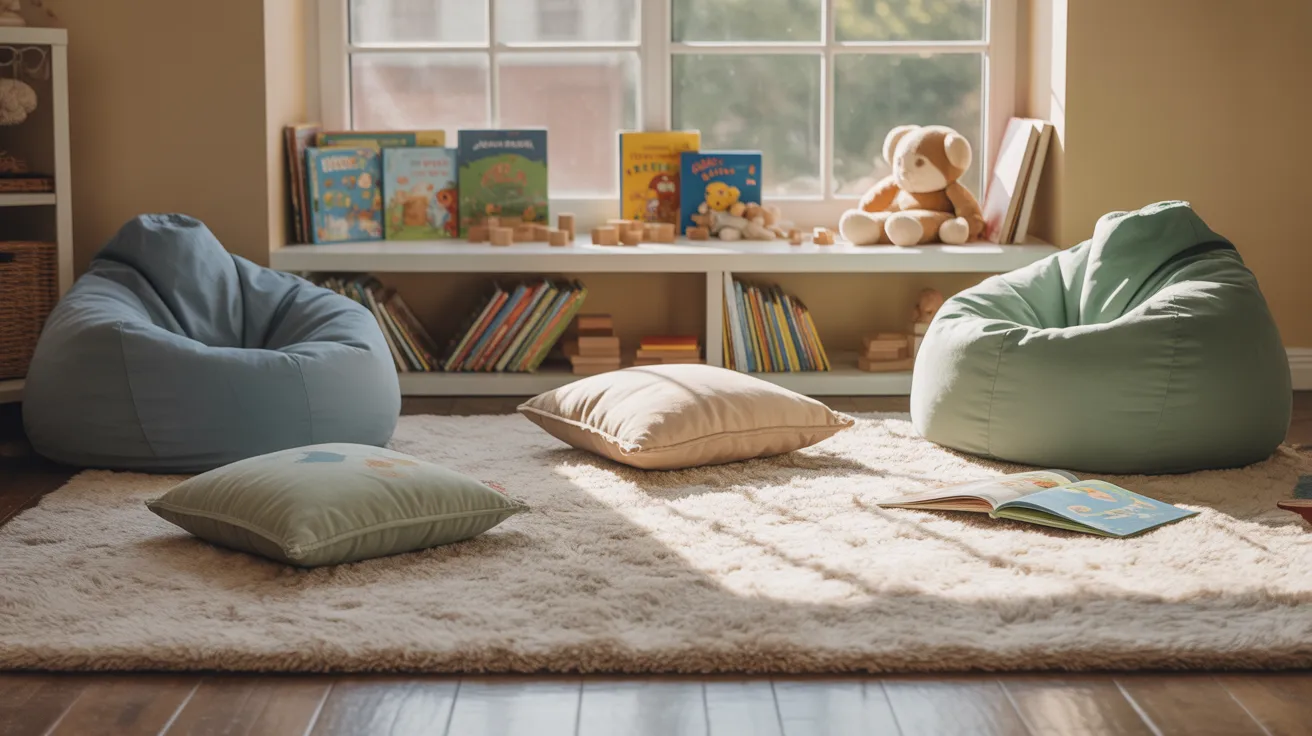
Bean bags, floor cushions, or poufs are easy to move and rearrange as needed. They adapt to different activities without locking the room into a fixed layout.
Just avoid adding too many loose items, they pile up and create clutter fast. One or two good-quality pieces are all the room really needs.
9. Keep Wall Decor Simple
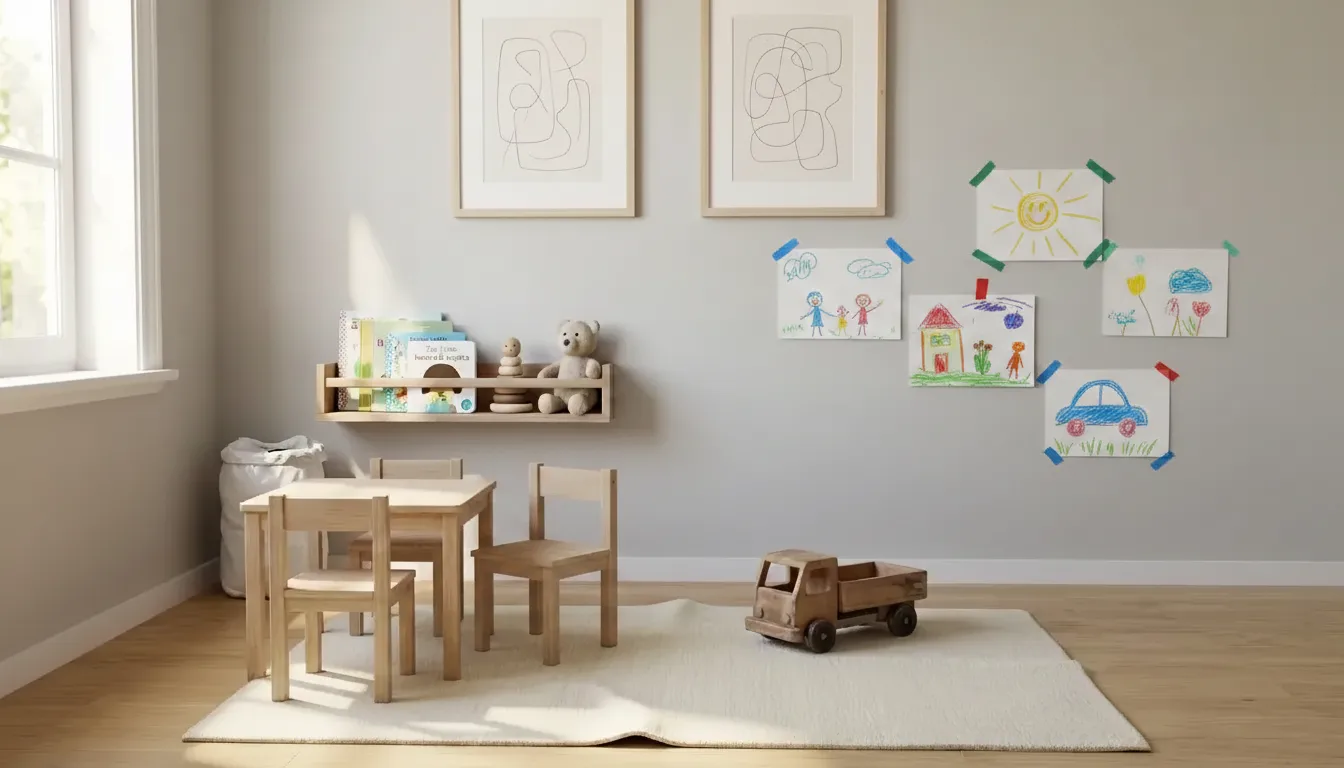
A few framed prints or small wall art pieces are more than enough. Too much decor makes the room feel busy, overwhelming, and smaller than it actually is.
Simple walls help maintain a clean, calm look that works better for kids. When in doubt, less is always the smarter choice in a small space.
10. Use Multi-Purpose Storage Furniture
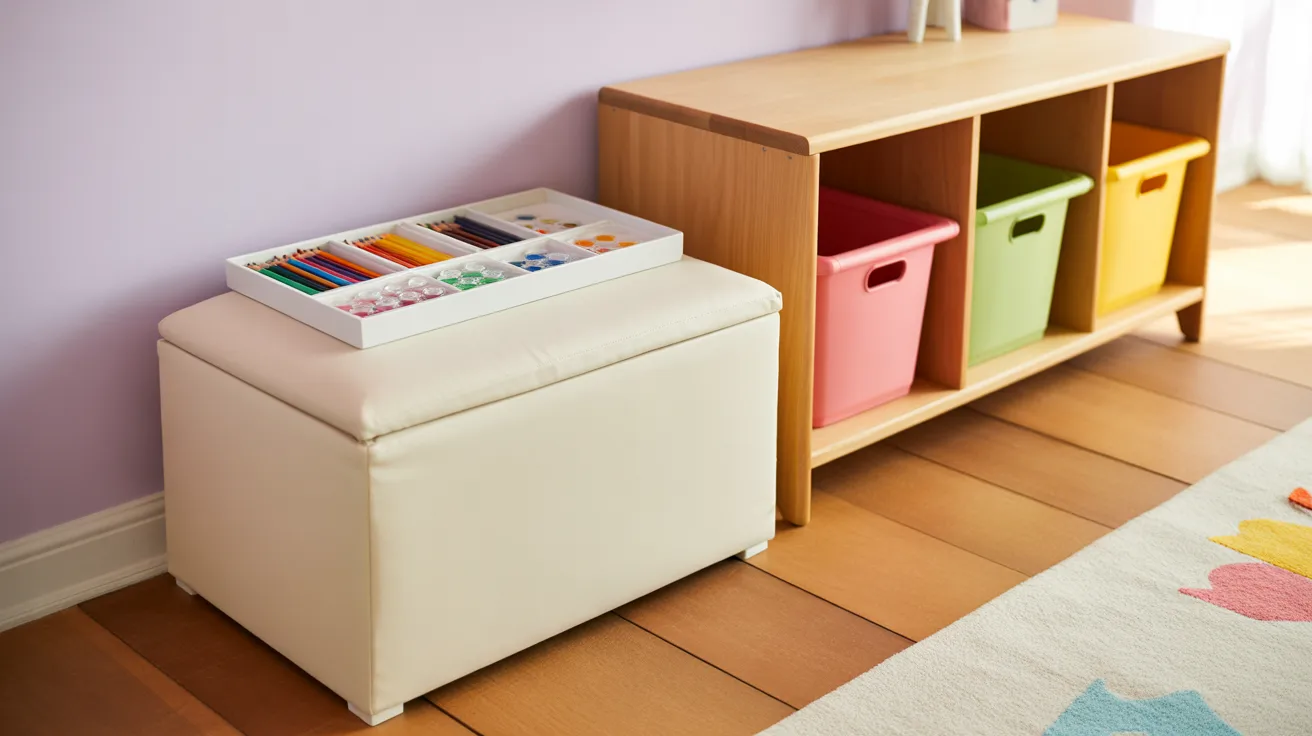
Storage benches and ottomans hold toys and serve as seating. They reduce the need for extra furniture and keep the room looking neat.
Avoid bulky designs, they defeat the purpose and take up too much valuable space. The best multi-purpose pieces are compact, sturdy, and easy for kids to use independently.
With the right ideas, even the smallest playroom can become a space kids love to use every day.
Conclusion
A small playroom doesn’t have to feel limiting. With the right setup, it can become one of the most-used spaces in your home.
Start with the basics, clear the floor, add smart storage, and define your zones. These three steps alone can change how the room feels and functions every day.
You don’t need to do everything at once. Pick one idea, apply it, and build from there. Small changes add up faster than you think.
A well-planned playroom grows with your child and continues to work for years. The effort you put in now pays off every single day.
Got a small playroom idea that worked for your home? Comment down below.
Frequently Asked Questions
What Age Group Benefits Most From A Dedicated Playroom?
Playrooms work best for kids aged 2 to 10. Younger kids need open space for sensory and active play. Older kids benefit from zones for crafts and reading. As kids grow, the room can be adjusted to match their changing needs.
How Much Natural Light Does A Playroom Need?
Natural light is helpful but not essential. A well-lit playroom feels more open and welcoming. If natural light is limited, use warm overhead lighting and avoid harsh shadows. Good lighting also makes the space safer for active play.
Should A Playroom Be Soundproofed Or Noise-Managed?
Full soundproofing isn’t necessary, but managing noise helps. Use rugs, cushions, and soft furnishings to absorb sound. This keeps noise from spreading to other rooms and also makes the playroom more comfortable for kids during quieter activities.