How to Use Trees to Transform Your New Jersey Home’s Curb Appeal
New Jersey homeowners have a landscaping advantage that’s easy to overlook. The state’s climate supports an incredible variety of trees—from stately oaks that thrive in South Jersey’s sandy soils to ornamental maples that light up North Jersey neighborhoods every fall. Yet most of us treat the trees on our property as background scenery rather than the design powerhouses they actually are.
That’s a missed opportunity. Trees frame your home, direct the eye, filter light, and set the tone for every other landscaping decision you make. Get your trees right, and everything else falls into place. Ignore them, and even the most carefully planned garden beds can feel disconnected from the overall design.
Here’s how New Jersey homeowners can think about trees as intentional design elements rather than just plants that happen to be growing in the yard.
Why Trees Matter More in New Jersey Landscapes
New Jersey’s diverse geography—from the Pine Barrens in the south to the rocky terrain of the northern highlands—means tree selection and care varies significantly depending on where you live. A tree that thrives in Cape May County might struggle in Sussex County, and vice versa.
The Garden State also has distinct architectural traditions that influence how trees interact with homes. Shore communities feature different housing styles than inland suburbs. Victorian neighborhoods in places like Cape May or Morristown have different design needs than mid-century ranches in Central Jersey or newer developments throughout the state.
Understanding these regional differences helps you make smarter decisions about which trees to keep, which to remove, and where to plant new ones.
Trees That Thrive in New Jersey’s Climate
New Jersey falls primarily in USDA hardiness zones 6 and 7, with some southern coastal areas reaching into zone 7b. This range supports a wide selection of trees, but some perform better than others given our hot, humid summers and cold, sometimes harsh winters.
Native trees worth considering:
Red maple and sugar maple deliver spectacular fall color and adapt well throughout the state. White oak and red oak provide structure and shade while supporting local wildlife—a single oak can host hundreds of caterpillar species that feed songbirds. Eastern red cedar offers year-round evergreen screening and tolerates the sandy, acidic soils common in the Pine Barrens region. American holly provides winter interest with its glossy leaves and red berries.
Ornamental favorites for New Jersey:
Flowering dogwood remains a classic choice for understory planting, though anthracnose disease has reduced its numbers in some areas—the Kousa dogwood variety offers similar appeal with better disease resistance. Japanese maple adds sculptural interest and works beautifully near entries and patios. Yoshino cherry brings spring drama, particularly striking in neighborhoods that coordinate plantings. Sweetbay magnolia tolerates wet conditions common in many New Jersey properties.
Trees to approach with caution:
Bradford pear, once planted extensively across New Jersey subdivisions, has fallen out of favor due to weak branch structure and invasive tendencies—many municipalities now discourage or ban new plantings. Silver maple grows fast but drops branches in storms and has aggressive roots that damage sidewalks and foundations. Norway maple, while common, is now considered invasive in New Jersey and crowds out native species.
Matching Trees to New Jersey’s Regional Architecture
Different areas of New Jersey have distinct architectural characters, and trees should complement rather than compete with your home’s style.
Shore and coastal communities from Sandy Hook down through Cape May feature a mix of Victorian cottages, beach bungalows, and contemporary builds. Salt tolerance matters here—consider trees like Eastern red cedar, American holly, or Japanese black pine that handle salt spray and sandy conditions. Smaller ornamental trees work well with modest lot sizes typical in shore towns.
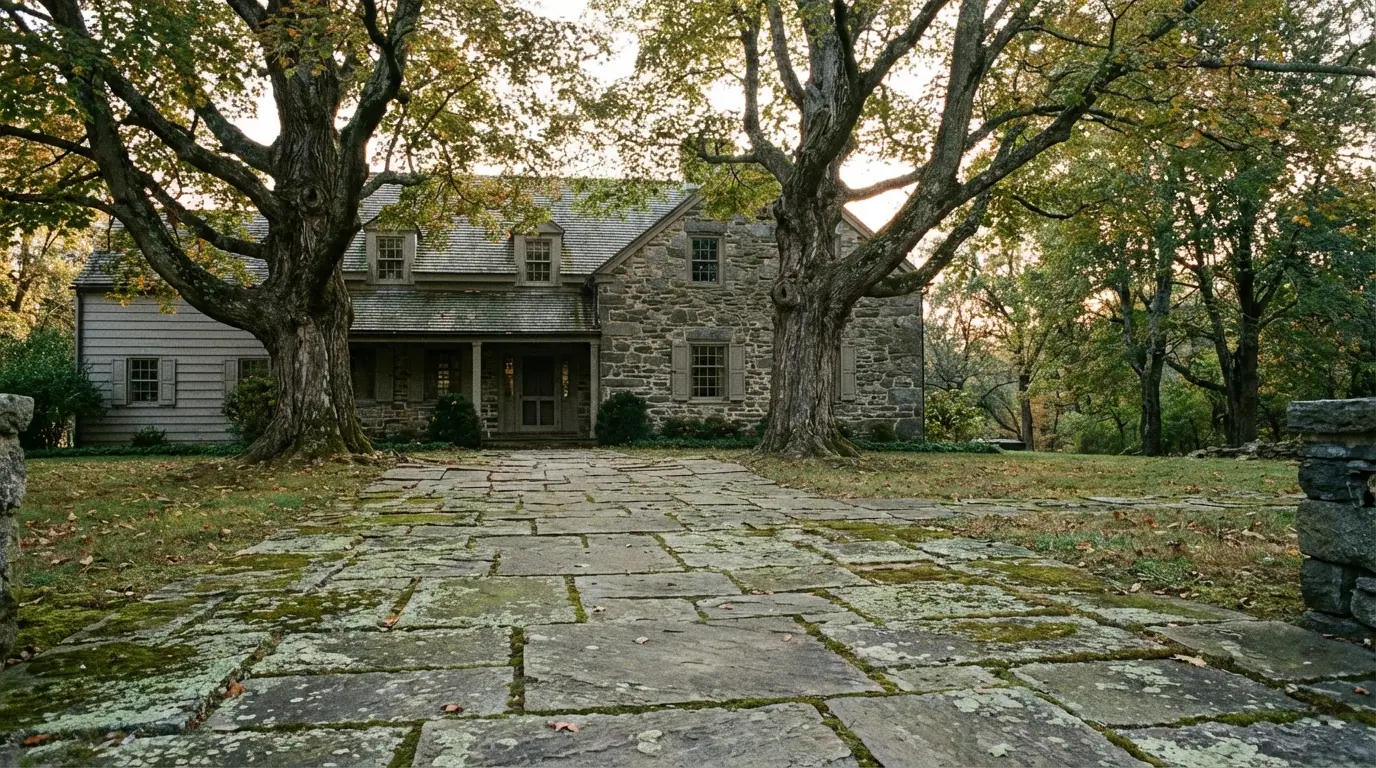
South Jersey’s inland areas including Burlington, Camden, Gloucester, and Atlantic counties often feature ranch homes, colonials, and newer construction on larger lots. The sandier soils support different species than North Jersey’s clay-heavy ground. Pin oak, sweetgum, and tulip poplar all perform well here. Many properties in this region have mature trees that predate the homes and need thoughtful integration into landscape plans.
Central Jersey suburbs tend toward mid-century ranches, split-levels, and colonials on quarter-acre to half-acre lots. Medium-sized shade trees—red maple, zelkova, and honeylocust—provide scale appropriate to these homes without overwhelming smaller properties.
North Jersey’s older communities from the Oranges through Montclair, Maplewood, and into Bergen County feature beautiful tree-lined streets with mature specimens. Maintaining and restoring these established trees often matters more than new plantings. The clay soils here support different species than South Jersey’s sandy loam.
Creating Curb Appeal with Strategic Tree Placement
Curb appeal comes down to controlling what visitors see and how their eyes move across your property. Trees are your most powerful tools for directing that visual flow.
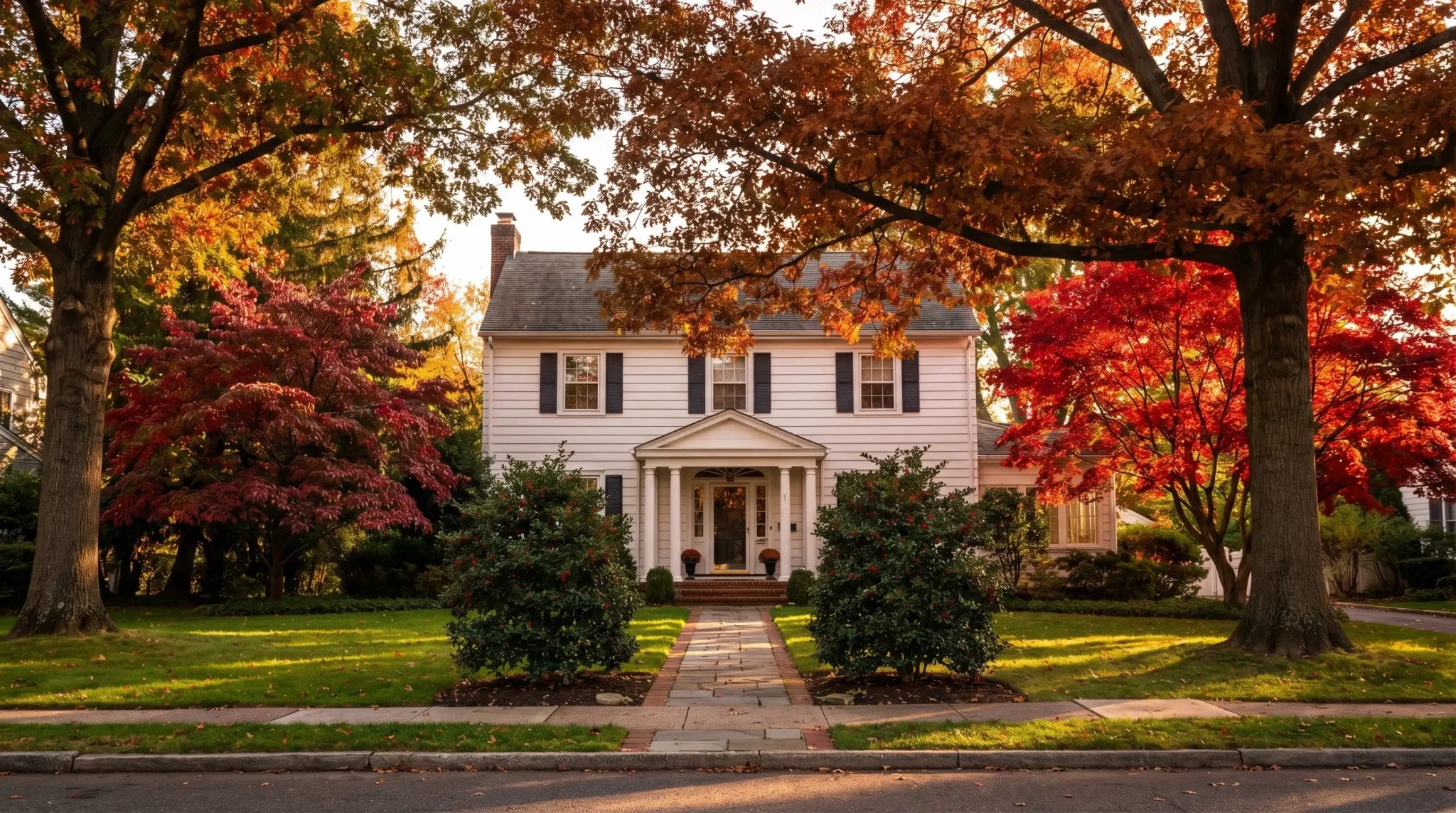
Frame the entrance. Trees positioned on either side of a walkway or driveway create a sense of arrival. This works particularly well with New Jersey’s many colonial-style homes, where symmetry reinforces the architecture.
Screen problem areas. Every property has eyesores—utility boxes, AC units, views of neighboring structures. Strategically placed evergreens like American holly or Eastern red cedar hide these distractions year-round without making the screening obvious.
Work with your lot’s character. Shore properties might embrace wind-sculpted forms and salt-tolerant species. Wooded lots in the Pinelands should maintain native character rather than fighting it. Suburban properties benefit from a mix of shade trees and ornamental specimens.
Consider mature size. New Jersey lots tend toward the smaller side compared to other states. That compact red maple sapling will eventually spread 35 feet wide. Plan for the tree’s mature dimensions, not its nursery size.
When trees aren’t supporting your design goals—or worse, actively working against them—consulting certified arborists in New Jersey can help you understand which specimens are assets and which might need removal, reshaping, or replacement to improve your property’s appearance.
Seasonal Planning for Year-Round Interest
New Jersey’s four distinct seasons mean your landscape needs to perform in every condition—spring mud, summer humidity, fall glory, and winter’s gray months.
Spring arrives unevenly across the state, with South Jersey blooming weeks ahead of the northern counties. Flowering cherries, dogwoods, and magnolias provide early color after winter’s monotony. Timing varies—shore areas warm faster than inland valleys.
Summer brings lush canopies that provide essential shade during New Jersey’s humid months. Strategically placed shade trees can reduce cooling costs significantly, particularly important given our high energy prices. Consider how dense canopy trees will affect air circulation and mold potential in our humid climate.
Fall is when New Jersey landscapes truly shine. Sugar maples, red maples, sweetgums, and oaks put on displays that rival New England. Plan sightlines from key windows and outdoor spaces to maximize fall color views.
Winter reveals structure. Interesting bark, branching patterns, and evergreen forms carry the landscape when deciduous trees are bare. Holly, pine, and cedar provide color and screening during the months when you need it most.
Dealing with Storm Damage and Tree Hazards
New Jersey’s position along the Atlantic coast means we experience our share of severe weather. Nor’easters, hurricanes, and summer thunderstorms take their toll on trees, and properties with large specimens need to plan accordingly.
Some trees handle storms better than others. Oaks, with their deep taproots and strong wood, generally weather storms well. Silver maples, with their shallow roots and brittle branches, are often the first to fail. Bradford pears split apart with alarming regularity.
Signs that a tree might be a storm hazard include dead branches in the canopy, visible trunk decay, fungal growth at the base, cracks in major limbs, and significant lean that has developed over time. Trees with these issues near structures, parking areas, or outdoor living spaces warrant professional evaluation.
Post-storm cleanup is another reality of New Jersey tree ownership. Having a relationship with a reputable tree service before an emergency means you’re not scrambling to find help when everyone else is too. The aftermath of major storms often brings out unlicensed contractors who do substandard work—or worse, damage healthy trees through improper pruning.
Managing Tree Roots in New Jersey’s Varied Soils
Root problems differ across New Jersey based on soil conditions. South Jersey’s sandy soils drain quickly but offer less stability for large trees. North Jersey’s clay holds moisture longer but can become compacted, stressing root systems.
Common root-related issues include:
Sidewalk and driveway damage. Surface roots from maples and other shallow-rooted species lift and crack concrete throughout the state. Solutions range from root pruning to replacing hardscape with permeable materials that accommodate root growth.
Foundation concerns. Trees planted too close to houses can cause issues as they mature. While tree roots rarely directly damage foundations, they can exacerbate existing cracks by extracting moisture from clay soils, causing shrinkage and settlement.
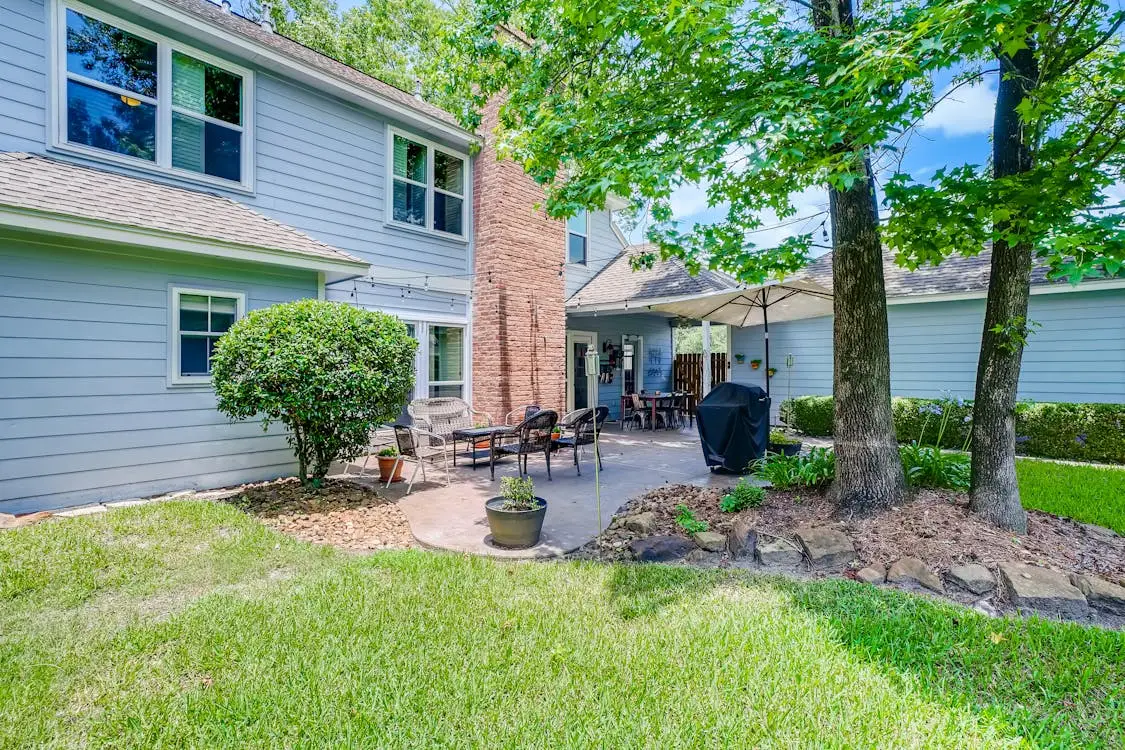
Lawn competition. Established trees with extensive surface roots make growing grass underneath nearly impossible. Rather than fighting this battle, consider converting these areas to mulched beds with shade-tolerant groundcovers—a lower-maintenance approach that looks more intentional.
When Removal Makes Sense
Not every tree deserves to stay. Sometimes the best design decision is removing a tree that’s creating more problems than it solves.
Legitimate reasons for removal include:
Trees in serious decline that cannot be restored. Hazardous specimens threatening structures or outdoor living areas. Poorly placed trees that block desirable views or crowd building envelopes. Invasive species like Norway maple that suppress native vegetation. Trees whose roots are causing significant infrastructure damage.
Poor reasons for removal include:
Minor inconveniences like leaf drop or shade that could be managed. Healthy trees removed simply because a new owner doesn’t want them. Mature specimens sacrificed for lawn space that will never match their environmental value.
Removal should be a considered decision, not an impulse. Mature trees take decades to replace and provide benefits—shade, property value, wildlife habitat, air quality—that new plantings won’t match for years.
Working with What You Have
Most New Jersey homeowners inherit their trees rather than choosing them. The previous owner planted that silver maple in an awkward spot. The builder left that one scraggly oak in the corner. The neighbor’s tree hangs over your fence.
Rather than fighting these situations, work with them:
Pruning transforms problem trees. An overgrown, shapeless tree can often be restored through selective pruning over several seasons. Raising the canopy opens views and allows light through. Thinning reduces wind resistance and improves the tree’s appearance.
Understory plantings integrate awkward specimens. A tree that looks out of place standing alone might work better surrounded by shrubs and perennials that tie it into the broader landscape.
Sometimes removal opens possibilities. Taking out a single problematic tree can transform a cramped, dark space into an open area with entirely new potential.
The goal isn’t perfection but improvement. Your landscape will never look like a magazine spread, and that’s fine. What matters is creating outdoor spaces that work for your life and enhance your enjoyment of your property.
Start with Assessment, Not Action
If your landscape feels disjointed and you’re not sure where to begin, resist the urge to start planting. Instead, spend time observing what you already have.
Walk your property at different times of day. Notice how light moves across the space throughout the seasons. Stand at the street and observe what draws your eye. Look from inside key windows and note what frames your views. Identify where you naturally want to spend time outdoors and where you avoid.
This observation often reveals that the biggest improvements come not from adding trees but from editing what exists. A single removal can transform a space. Selective pruning can reshape an overgrown tree from an obstacle into an asset. Sometimes the best investment is maintaining and enhancing the healthy trees you already have.
Trees are the longest-term investment in any New Jersey landscape. The white oak that shades your patio might outlive your grandchildren. The decisions you make today will shape your property for decades. That’s worth taking the time to get right.