
What I Wish I’d Known About the Trees in My Yard Before That Storm
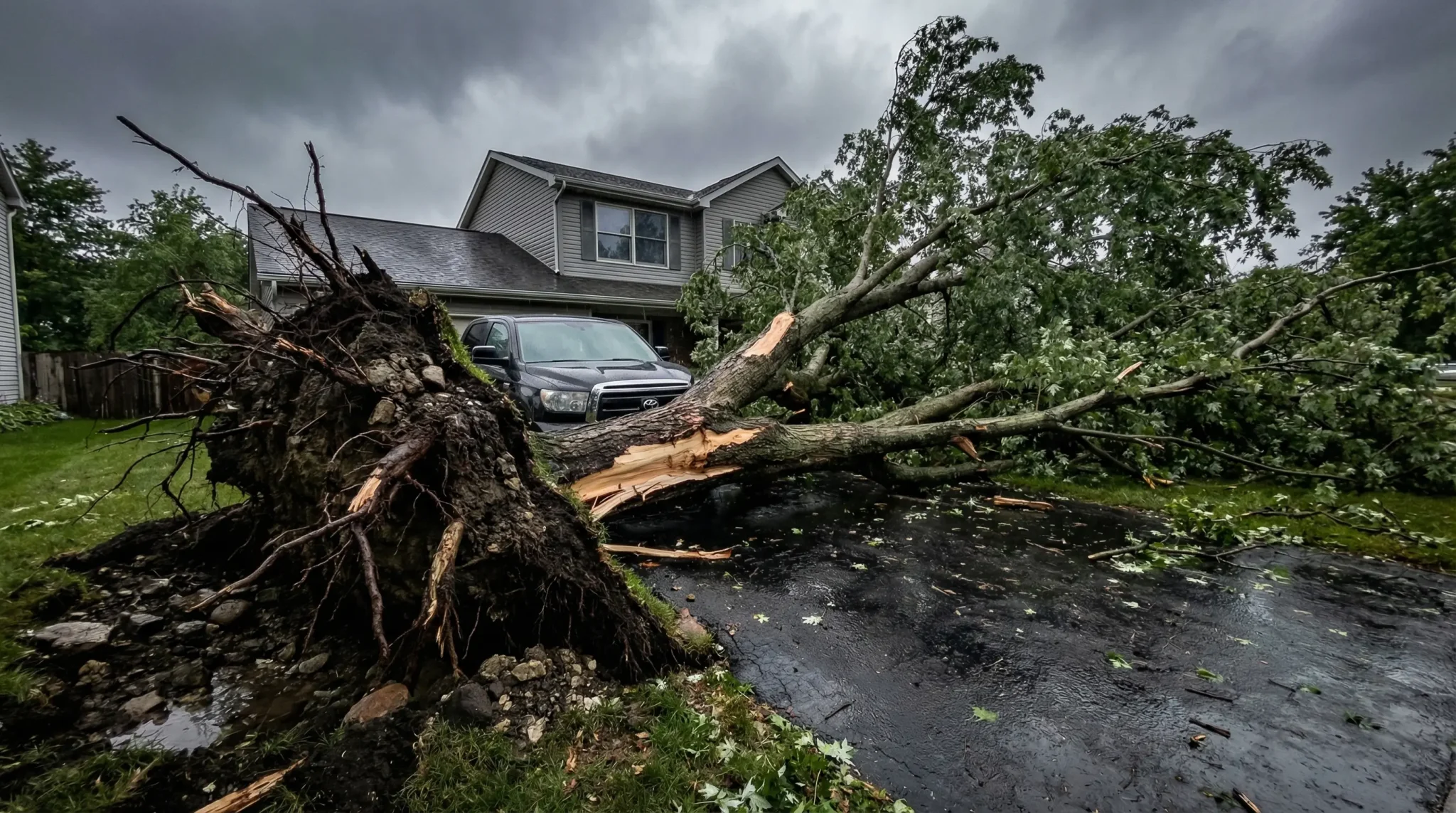
I’ll never forget the sound. It was 3 AM, the rain was hammering sideways, and then came this slow, groaning crack that seemed to last forever. By the time I made it to the window, our 40-year-old silver maple was lying across the driveway, inches from my husband’s truck.
We got lucky. Our neighbors last spring? Not so much. Their oak went straight through the master bedroom ceiling.
That night changed how I look at every tree on our property. And honestly, it’s made me a little evangelical about sharing what I’ve learned since—because most of this stuff isn’t complicated. You just have to know what to look for.
The Warning Signs That Were There All Along
Here’s what kills me: looking back at photos from that summer, the signs were obvious. I just didn’t know how to read them.
That Lean Wasn’t Always There
Our maple had started tilting toward the house maybe two years before it fell. I’d noticed it, kind of, but figured trees just… grow however they grow. Turns out, a tree that’s developing a new lean—especially after heavy rain or construction nearby—is a tree with root problems. The soil underneath is shifting or the roots are failing.
A tree that’s always grown at an angle? Usually fine. A tree that’s suddenly leaning more than it used to? That’s a red flag.
The Trunk Told the Whole Story
There was this vertical crack running up the bark that I’d walked past a hundred times. I thought it was just how the tree looked. But cracks like that—especially deep ones that expose the wood underneath—mean the tree is literally splitting under its own weight. Same goes for spots where the bark is falling off or looks sunken in. That’s decay, and it’s often worse inside than what you can see.
Dead Branches Aren’t Just Ugly
We had a few bare branches up in the canopy that I kept meaning to “deal with eventually.” Those dead limbs are called widow-makers for a reason. They can snap off and fall without warning—not just during storms, but on perfectly calm Tuesday afternoons. If a branch doesn’t have leaves when everything else does, it’s dead, and it needs to come down before it decides to come down on its own.
What I Do Differently Now
Every spring, I walk the property with fresh eyes. I look at each tree like it might be plotting something—which sounds paranoid, but here we are.
The 10-Foot Rule
Nothing hangs over the house anymore. I keep at least ten feet of clearance between any branch and the roof. It’s not just about a branch punching through shingles—it’s about what a falling limb can drag down with it when it’s got momentum. Gutters, fascia, the whole edge of your roof. Ten feet of buffer buys you a margin of error.
I Actually Look at the Ground
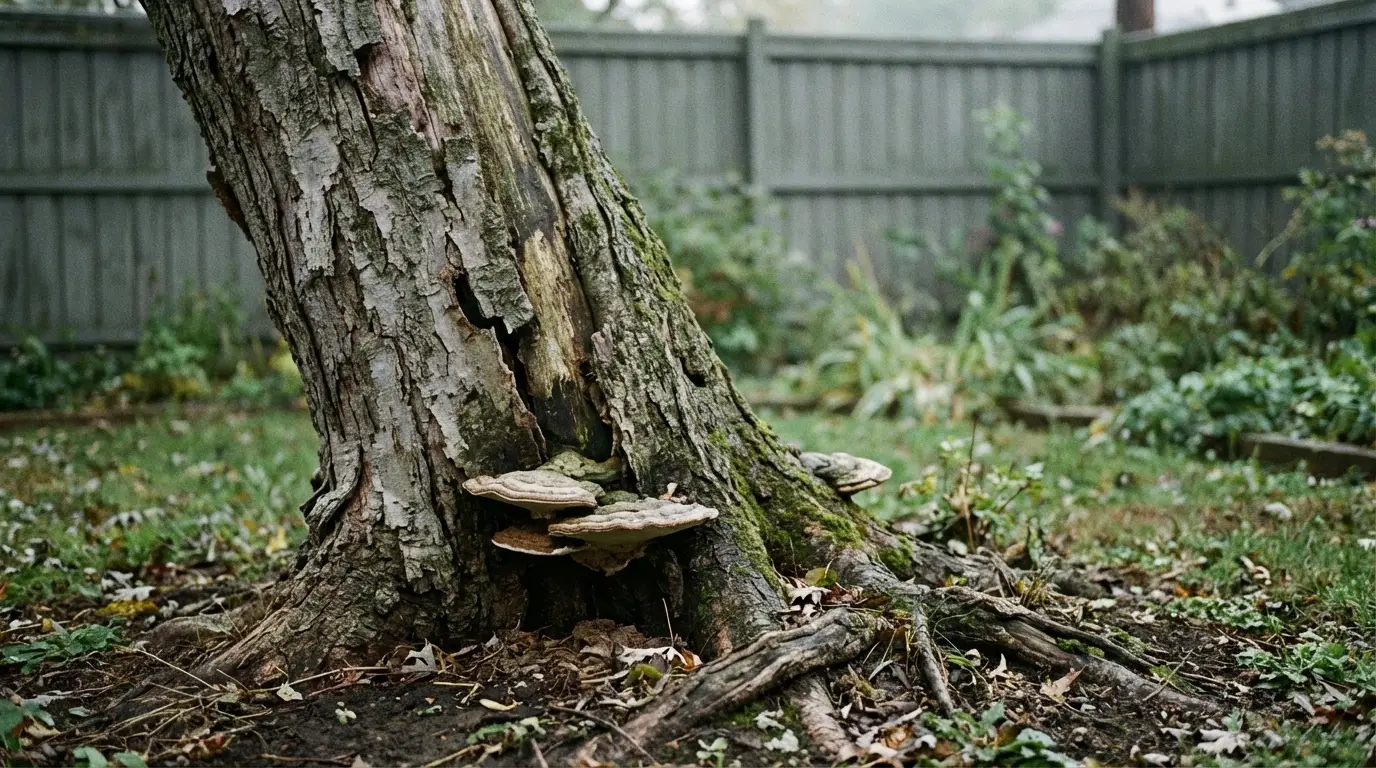
Mushrooms growing at the base of a tree? That’s fungus feeding on decay—usually root decay you can’t see. Soil that’s cracked or heaving near the trunk? The roots might be lifting. I used to walk right past this stuff. Now I stop and pay attention.
Some Trees Just Aren’t Worth the Risk
This one’s hard because nobody wants to lose a mature tree. But silver maples, Bradford pears, willows—they’re beautiful and they grow fast, which is exactly why they’re dangerous. Fast growth means soft wood. Soft wood means branches that snap instead of bend.
We had a landscaper tell us our remaining silver maple was “probably fine.” We took it down anyway. I sleep better.
The Part Nobody Wants to Think About
Look, I’m all for DIY. I’ll re-grout a bathroom, install a ceiling fan, paint anything that holds still. But trees? Trees can kill you.
Anything over four inches thick, anything that requires a ladder, anything near power lines—that’s not a weekend project. That’s a call-the-professionals situation.
This is especially true in the Northeast, where nor’easters and summer storms can turn a backyard oak into a serious threat overnight. Having a go-to team for emergency tree removal in New Jersey means one less thing to panic about when the wind picks up. We found ours after the maple incident, and honestly, just having that number in my phone makes storm season less stressful.
The guys who came out knew immediately which trees were problems and which ones just needed some attention. They also spotted issues I never would have caught—like a perfectly healthy-looking cherry tree with a rotted-out core that could’ve gone any time.
Before the Storm, Not During
The worst time to find a tree service is when everyone else is looking for one too. After a big storm, you’re competing with your entire zip code for attention. The companies doing good work are booked solid. The ones with availability? There’s usually a reason.
So here’s my advice: pick a calm weekend this month and walk your property. Look up. Look at the base of each trunk. Look for the dead branches, the new leans, the cracks. Take photos of anything that concerns you.
Then—and this is the part I skipped for years—actually call someone about it. Get a professional opinion before you need an emergency response.
What If It’s Too Late?
Sometimes storms don’t wait for your maintenance schedule. If a tree does come down:
Take photos before anyone touches anything—your insurance company will want them. Keep everyone away from the area, including pets. Partially fallen trees are unpredictable; they can shift without warning. If the tree is anywhere near power lines, don’t go near it—call the utility company first. Then call your insurance company before authorizing any work, so you know what’s covered.
And if the tree is blocking your driveway at 3 AM and the rain is still coming down? Honestly, just go back to bed. It’ll still be there in the morning, and you’ll make better decisions with daylight and coffee.
The Peace of Mind Thing
I never thought I’d be someone who worries about trees. But losing that maple—and seeing what could’ve happened—changed my perspective.
Now I actually enjoy the walk-around every spring. It takes maybe twenty minutes. I know what I’m looking for. And when the next big storm rolls through, I’m not lying awake wondering if tonight’s the night.
The trees are still beautiful. I just know them better now.


