What is a Twin Home? Key Facts Explained
If you’re comparing housing options, a twin home might come up more often than you expect. It sits right between a fully detached house and more compact housing types, offering a mix of privacy and cost savings.
What makes it interesting is how ownership works, you get your own land and full control, even with a shared wall. That setup raises a few important questions around value, lifestyle, and long-term flexibility.
In this guide, I’ll walk you through how these homes are built, how they differ from similar properties, and what you should look at before making a decision.
Let’s start by understanding the structure.
What is a Twin Home?
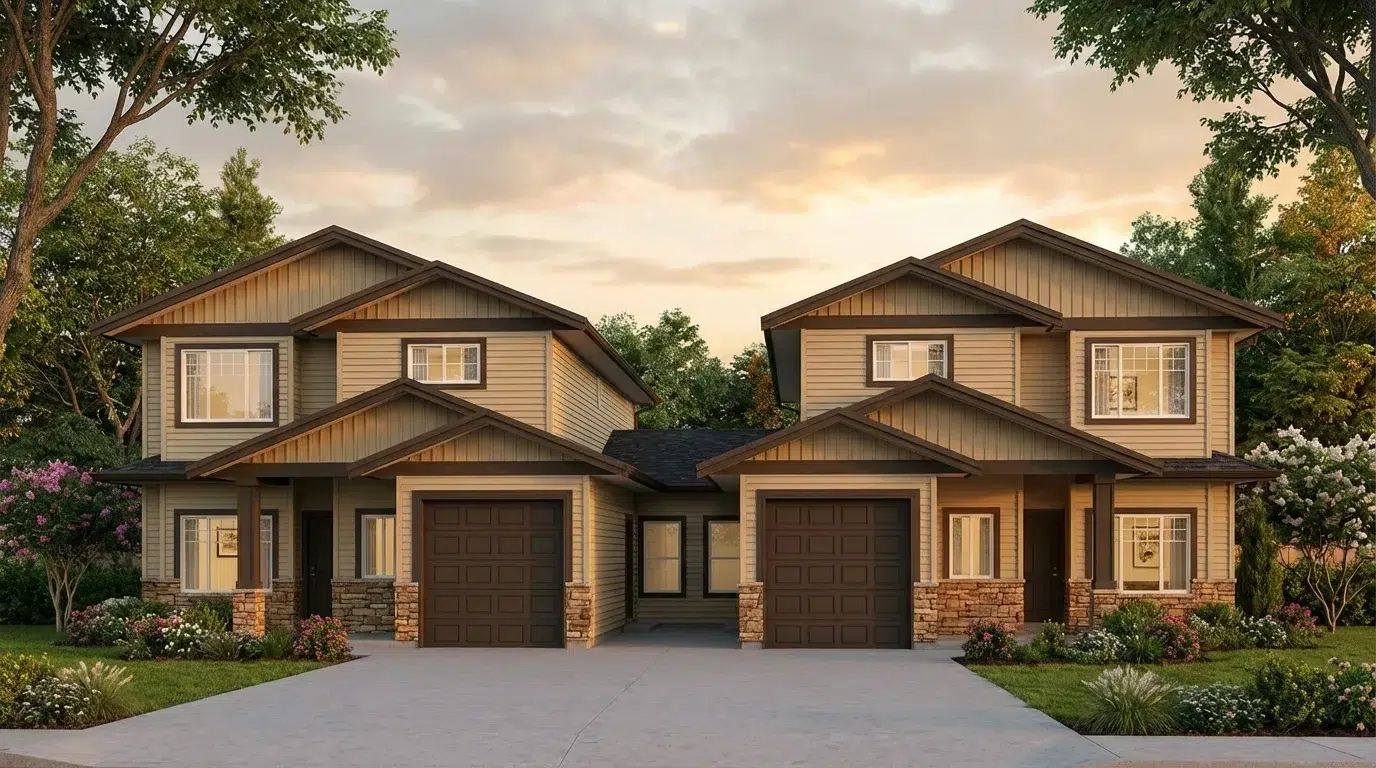
A twin home is a residential property where two houses are built side by side and connected by one shared wall. Each unit is a separate home with its own entrance, layout, utilities, and land ownership.
You’re not sharing living spaces, just the wall in between. Everything else works like an independent house, from daily use to long-term ownership.
In many regions, twin homes are also called semi-detached homes. The naming changes by location, but the structure and ownership model remain the same.
How is a Twin Home Designed?
A twin home is split into two equal units that sit next to each other. Most are built as mirror layouts, which helps keep construction simple and cost-efficient.
Here’s what you’ll usually find:
- Separate entrances: each unit has its own front door
- Independent layouts: no shared rooms or internal connections
- Individual utilities: electricity, water, and gas are billed separately
- Private outdoor space: each side often includes its own yard, driveway, or garage
- One shared wall: also called a party wall, this is the only structural connection
Because of this setup, daily life feels very close to living in a detached home. The only real difference is having a neighbor on the other side of the wall.
Why Do Twin Homes Exist?
Twin homes solve a simple problem in housing: how to create more homes without needing more land.
Instead of building one large detached house on a plot, developers can build two homes side by side. This makes better use of available space, especially in areas where land is limited or expensive.
There are a few reasons why this model continues to be widely used:
- Efficient land use: two homes fit on a single plot footprint
- Lower construction cost: one shared wall reduces material and labor costs
- More affordable pricing: buyers often pay less than for a detached home
- Neighborhood fit: twin homes blend well with single-family housing areas
This setup offers a balance. You get the feel of a private home while keeping costs more manageable, which is why twin homes remain a common choice in residential projects.
Key Characteristics of a Twin Home
A twin home is defined by a clear mix of shared structure and independent ownership. These characteristics help you quickly understand how it works and how it differs from similar housing types.
- One Shared Wall: The two units are connected by a single central wall, with no shared interiors, hallways, or common areas.
- Separate Ownership and Titles: Each unit has its own legal identity, including a separate deed and ownership of the land it sits on.
- Private Living Setup: Each home includes its own entrance, utilities, and outdoor space, allowing fully independent day-to-day living.
- Individual Maintenance Responsibility: All repairs, property taxes, insurance, and utility costs are handled separately by each owner.
- Shared Wall Responsibility: The only joint element is the shared wall, which may require coordination if repairs or structural work are needed.
- Mirror-Image Design: Most twin homes are built with similar layouts on both sides, often flipped versions of the same floor plan.
In simple terms, a twin home offers the feel of a standalone house, with the shared wall being the only structural connection.
Twin Home vs. Duplex: Key Differences
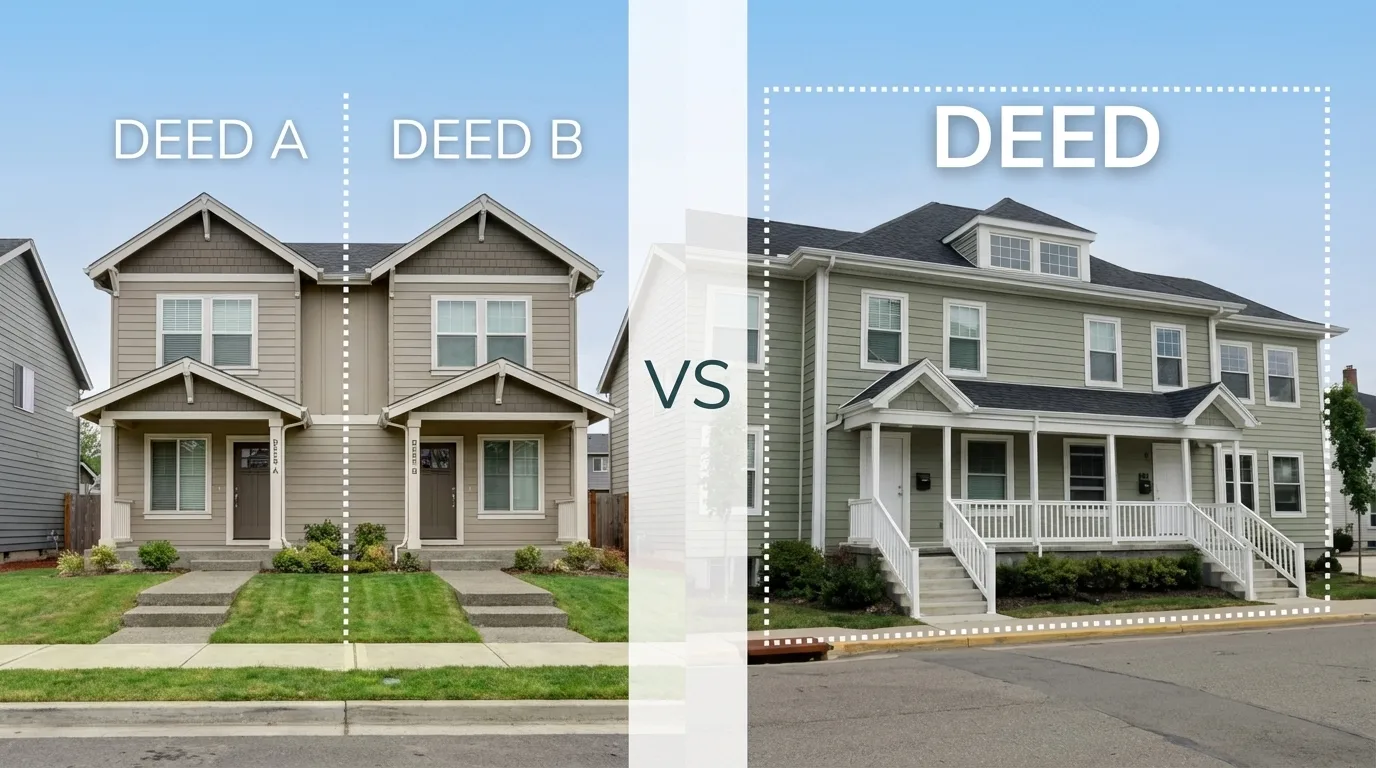
A twin home and a duplex can look similar at first glance, but they differ in ownership, structure, and how they’re used.
A duplex is a single building with two units, either side by side or stacked, under one ownership. A twin home splits everything, including ownership and land. Here’s a clear comparison:
| Feature | Twin Home | Duplex |
|---|---|---|
| Ownership | Each unit has its own title and deed | One owner holds a single title for both units |
| Lot Division | Each unit sits on its own divided lot | Entire building sits on one shared lot |
| Financing | Standard home loans with regular rates | Often treated as investment property with higher rates |
| Privacy | Higher privacy with separate yards and no shared interiors | Moderate privacy, especially in stacked layouts |
| HOA | May exist in some communities | Rare, usually self-managed |
| Usage | Mostly owner-occupied, limited rental use | Commonly used for rental income |
| Resale | Each unit can be sold separately | Usually sold as one property |
In simple terms, a twin home aligns more with independent homeownership, while a duplex is typically structured for rental and investment use.
Twin Home vs. Other Similar Housing Types
Twin homes are often confused with townhouses and detached houses because they can look similar from the outside. The differences come down to how many walls are shared, how ownership works, and how much control you have over the property.
Twin Home vs. Townhouse
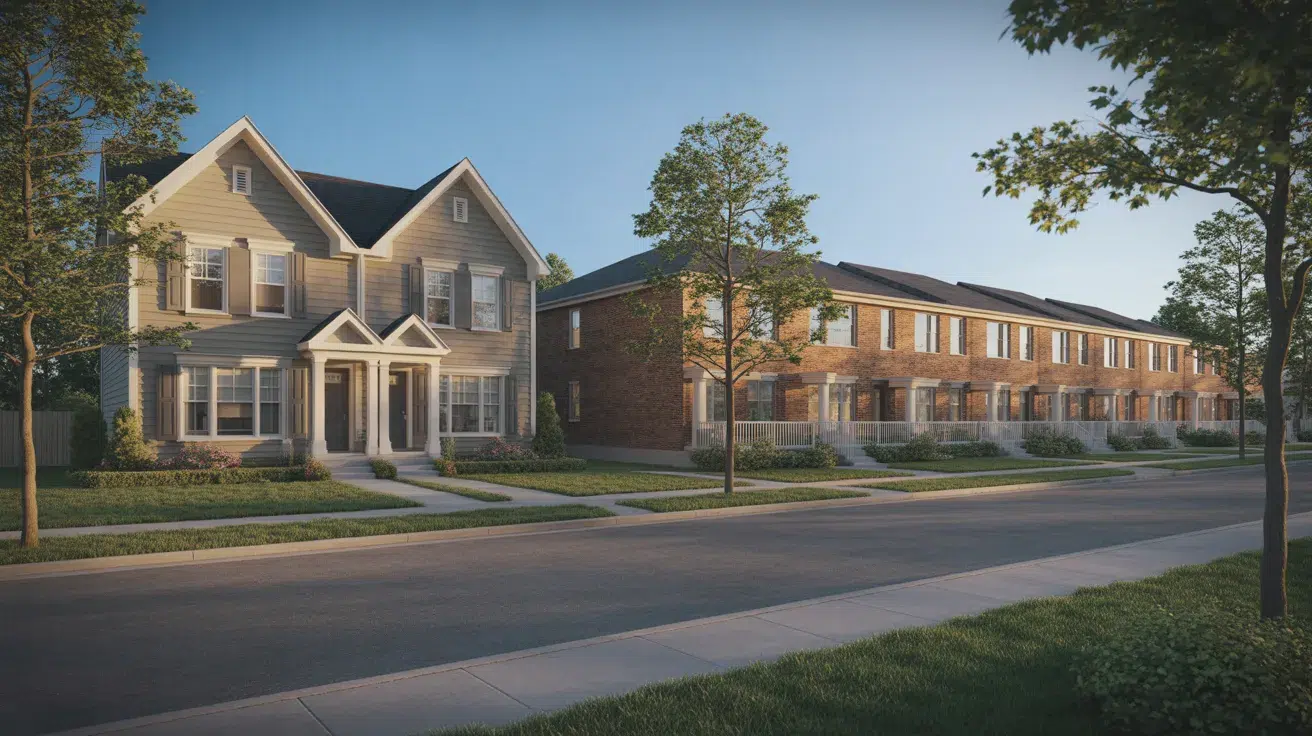
A townhouse is part of a row of homes, sharing walls on both sides. A twin home shares only one wall, connecting you to a single neighbor.
That difference changes how the space feels and functions.
- Wall Sharing: Twin homes share one wall, while townhouses share two
- Position: Twin homes sit side by side in pairs; townhouses are part of a continuous row
- Ownership: Both are individually owned, but townhouse ownership often comes with more restrictions
- HOA Involvement: Townhouses usually have an HOA managing exteriors and common areas, while twin homes may or may not have one
- Control Over Property: Twin homeowners typically own both the structure and land, while townhouse owners may only control the interior
In short, a twin home offers more independence, while a townhouse is more community-managed.
Twin Home vs. Detached Single-Family House
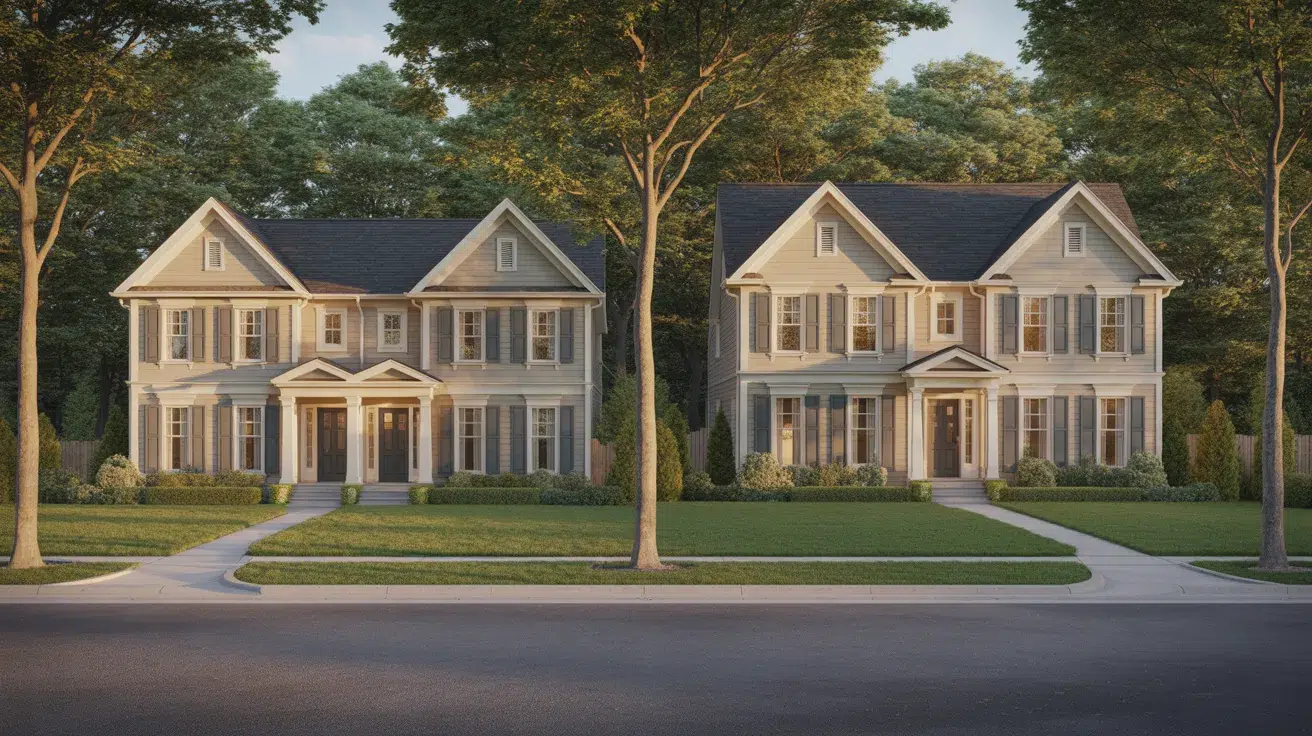
A detached house stands alone with no shared walls or structural connections. A twin home is very similar in layout and use, but shares one wall with a neighbor.
- Structure: Detached homes are fully separate, twin homes are attached on one side
- Privacy: Detached homes offer maximum privacy, while twin homes have a nearby neighbor
- Cost: Twin homes are usually more affordable in the same area
- Appearance: Both can look almost identical from the street
For many buyers, the choice comes down to budget versus privacy. A twin home gives you a similar living experience at a lower cost, with the shared wall being the main trade-off.
Pros and Cons of Living in a Twin Home
Twin homes offer a solid mix of privacy, ownership, and affordability. But a few practical factors can shape your experience more than you might expect.
| Feature | Advantage | Drawback |
|---|---|---|
| Price | More affordable than detached homes in the same area | Not always the cheapest option compared to townhouses |
| Outdoor Space | Private yard, driveway, and often a garage | Lot size is usually smaller |
| Privacy | No shared interiors or common spaces | Shared wall can lead to noise |
| Ownership | Full ownership of home and land | Shared wall decisions may need coordination |
| Maintenance | Full control over repairs and upgrades | All costs are your responsibility |
| Neighbor Factor | Only one direct neighbor | Your experience can depend on how well you get along |
One thing many buyers miss is this: your day-to-day comfort depends a lot on soundproofing and your neighbor. If both are good, it feels like a detached home. If not, it can feel very different.
A twin home works best if you want independence without stretching your budget too far, and you’re okay sharing just one wall.
Is A Twin Home Considered A Single-Family Home?
Yes, in most cases, a twin home is classified as a single-family home. Each unit has its own deed, its own lot, and a separate owner, which is what defines it legally.
You buy, sell, and pay taxes on your unit just like you would with a detached house. The shared wall does not change its classification in most markets.
Lenders and insurers usually treat it the same way:
- Financing: Qualifies for standard home loans with regular rates
- Insurance: Covered under a typical homeowner’s policy
The only variation comes from local zoning rules. Some areas may classify twin homes differently because two units share one structure.
That’s why it’s important to double-check with your local authority and lender before buying, just to avoid surprises later.
Important Things You Need To Check Before Buying
A twin home can be a smart purchase, but small details can make a big difference after you move in. Taking a closer look at a few key areas helps you avoid surprises later.
Here’s what you should check before making a decision:
- Shared Wall Construction: Look at insulation and soundproofing quality to understand how much noise may carry between units
- Property Boundaries: Review a survey to clearly confirm lot lines and avoid future disputes
- HOA Rules (If Any): Check what’s covered, any restrictions, and monthly costs before committing
- Shared Wall Agreements: Confirm how repairs, maintenance, and costs are handled between both owners
- Neighbor Situation: Find out if the other unit is owner-occupied or rented, as this can affect your living experience
- Resale Trends: Look at how similar twin homes in the area have performed in terms of pricing and demand
A quick extra step that many buyers skip is checking build quality and past repairs. This gives you a better sense of long-term maintenance and potential costs.
Spending time on these checks upfront can help you avoid conflicts, unexpected expenses, and regret later on.
Conclusion
A twin home gives you a middle-ground option that balances independence with affordability.
You get many of the benefits of a detached house without paying the same price, but you still need to consider the shared wall and how that affects daily living.
From ownership rights to resale potential, every detail plays a role in whether it’s the right fit for you. If you’re clear on what matters most, space, budget, or privacy, this type of property can make a lot of sense.
Take the next step by comparing listings in your area and reviewing property details carefully before you decide.
Frequently Asked Questions
Can I Renovate My Twin Home without My Neighbor’s Approval?
Interior changes are fully under your control. But if the work touches the shared wall, roof, or exterior, you may need your neighbor’s approval. Always check local rules first.
What Happens if The Shared Wall Gets Damaged?
Both owners are usually responsible since the wall sits on the boundary. Costs depend on the cause and any prior agreement. It’s best to clarify this before buying.
Can Both Sides of A Twin Home Look Different?
Yes, each owner can make changes to their side. This includes paint, landscaping, and design. The only limit would be any HOA rules in the community.
Is It Possible to Buy Both Units of A Twin Home?
Yes, if both units are for sale. You can own the full property, live in one unit, and rent out the other if you choose.