
Why Do Plants Need Sunlight? The Real Science
Plants are everywhere, in gardens, forests, windowsills, and fields. But take away one thing, and they all struggle: sunlight.
It’s not just a preference. It’s a core requirement that keeps every plant alive.
Most people know plants need sun, but few understand why. What actually happens inside a leaf when light hits it? How does that light turn into growth, shape, and survival?
This blog breaks down the real science in simple terms, including what happens when plants get too little or too much of it.
What Sunlight Actually Does for Plants
Sunlight is the primary energy source for plants. Without it, nothing else works, not water, not soil, not nutrients.
Here’s an important distinction:
- Water and soil areinputs: they supply raw materials.
- Sunlight is theenergy driver: it powers the system that uses those materials.
Plants don’t eat food the way animals do. They make their own food using light energy. Sunlight isn’t the food itself; it’s what makes food production possible.
How Plants Convert Sunlight Into Food (Photosynthesis Process)
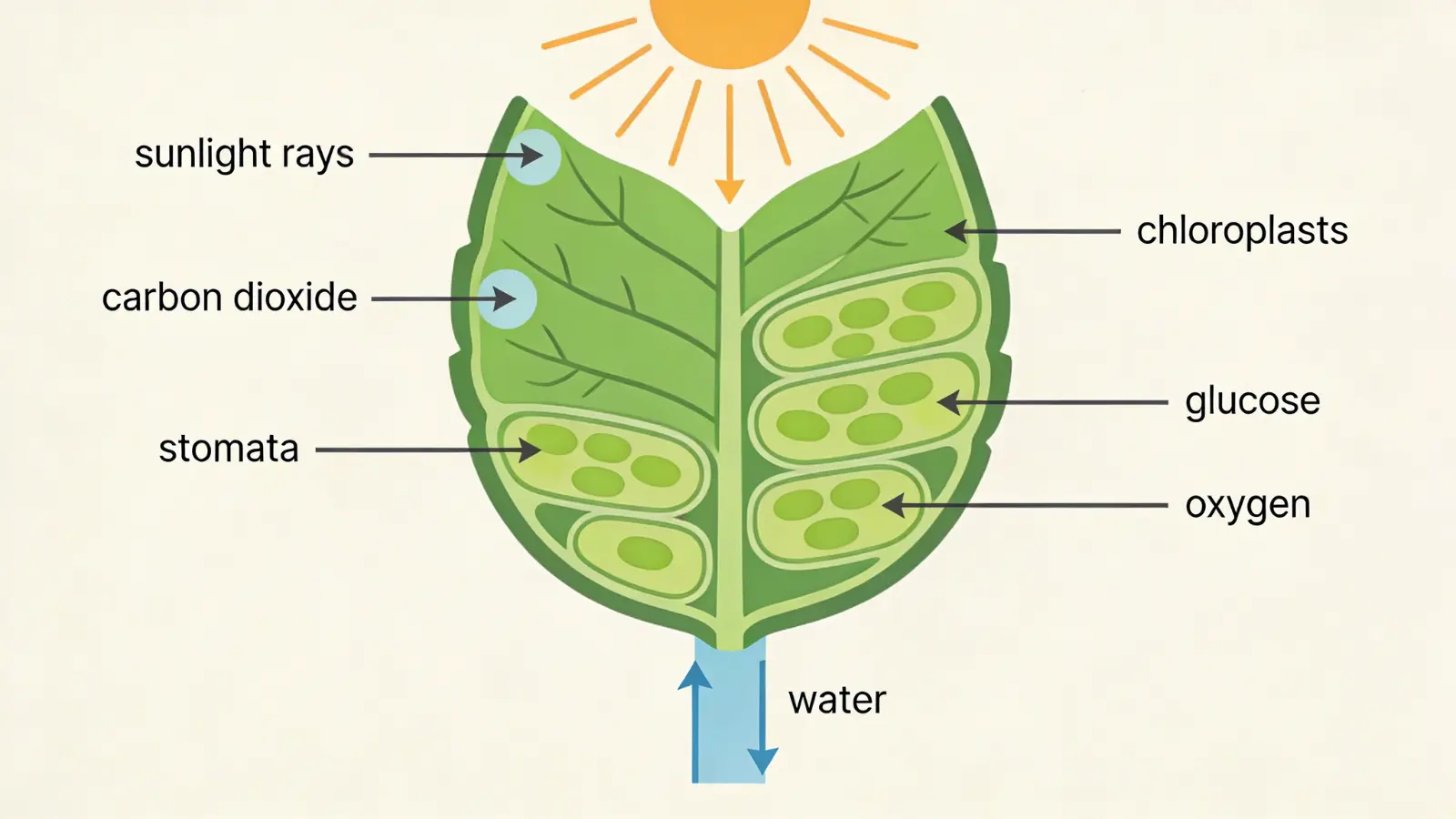
Photosynthesis is the process plants use to turn light into usable energy. It happens deep inside the leaf, at the cellular level, where tiny structures called chloroplasts do all the work.
This isn’t a simple absorption process; it’s a chain of chemical reactions that transforms raw ingredients into fuel. Understanding how it works explains why light is so much more than just a growth condition for plants.
Here’s exactly what happens when light hits a leaf:
- Chlorophyll absorbs light energy: Chlorophyll is the green pigment inside plant cells. It captures specific wavelengths of light, mainly red and blue.
- Water molecules split: The absorbed energy breaks apart water molecules pulled up from the roots.
- Carbon dioxide enters: the CO₂ comes in through tiny pores on the leaf surface called stomata.
- Chemical reactions produce glucose: The energy, water components, and CO₂ combine through a series of reactions to create sugar (glucose).
Why This Process Works?
Light provides the activation energy needed to kick off these chemical reactions. Without it, the reactions simply cannot start.
Chlorophyll’s molecular structure allows it to absorb light efficiently. It acts almost like a solar panel, capturing energy and converting it into a form the plant can use.
What Plants Produce From This Process?
Two things come out of photosynthesis:
- Glucose: used by the plant for energy and to build new tissues.
- Oxygen: released as a byproduct through the stomata.
When sunlight is absent, photosynthesis stops entirely. In low light, the process slows, producing less glucose, thereby slowing growth.
How Sunlight Drives Plant Growth and Development
Once glucose is produced, it fuels every part of the plant’s physical development.
Glucose powers:
- Cell division: creating new cells that form new growth
- Cell expansion: allowing existing cells to grow larger
- Structural development: building leaves, stems, and roots
Energy from photosynthesis also supports more complex processes, such as flowering and fruiting. A plant needs a consistent supply of energy reserves to reach these stages.
The relationship is straightforward:
More sunlight → more glucose → stronger, faster growth
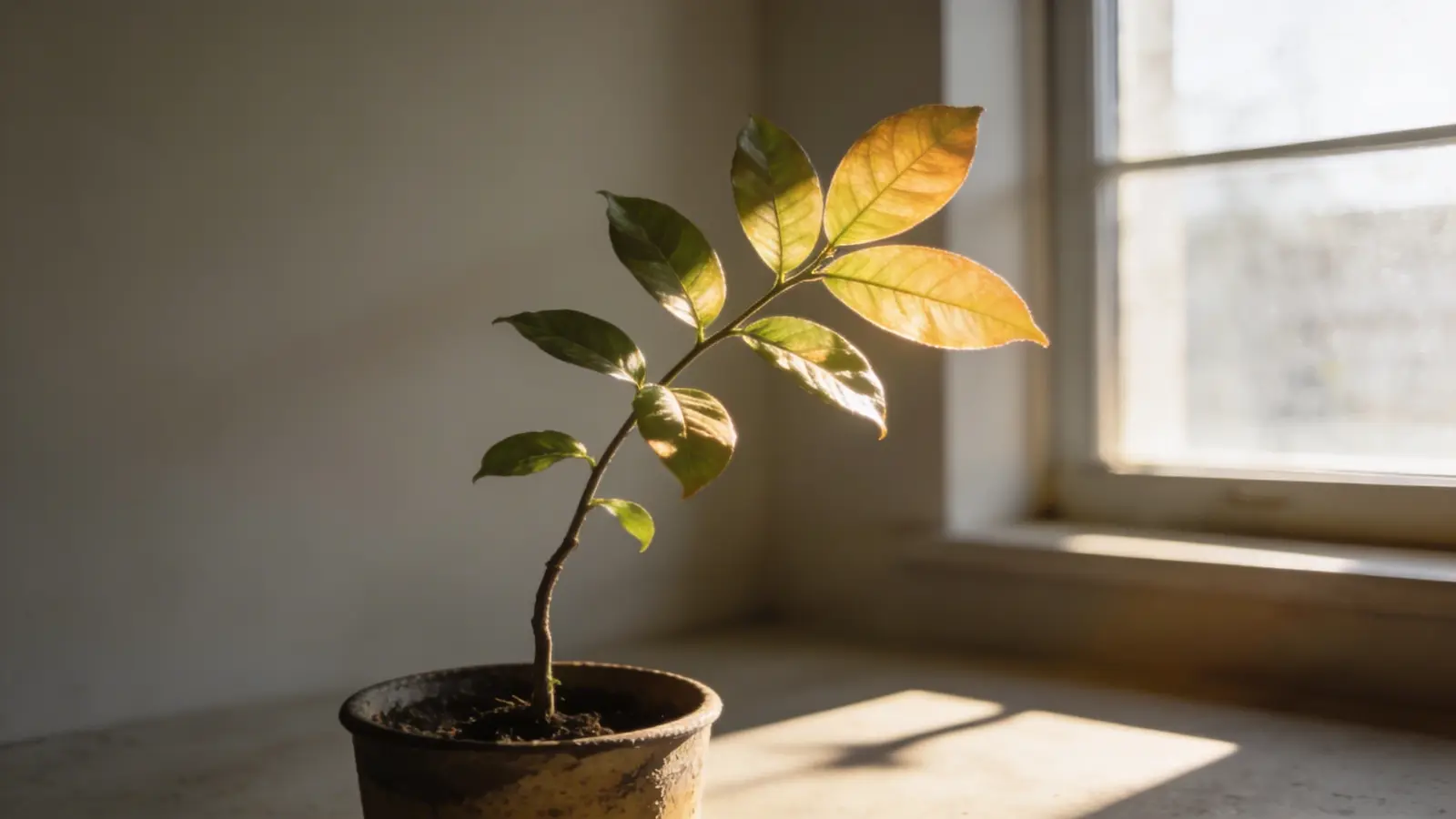
When energy is low, plants can’t divide cells properly. The result is weak stems, smaller leaves, underdeveloped roots, and delayed or absent flowering.
How Sunlight Controls Plant Shape and Behavior?
Sunlight doesn’t just fuel growth; it also directs it. Plants actively respond to the direction from which light is coming.
This is called phototropism, the ability of a plant to grow toward a light source.
Here’s the mechanism behind it:
- Plants have light receptors that detect the direction of incoming light.
- These receptors trigger the movement of growth hormones called auxins.
- Auxins shift to the shaded side of the stem.
- Cells on the shaded side elongate faster, bending the plant toward the light.
Light duration also matters. Plants use day length to regulate biological cycles, including when to flower, when to go dormant, and how to adjust for seasonal changes.
When light is uneven or insufficient, plants lose their compact shape. Indoor plants stretching toward a window are a visible example of this response.
What Happens When Plants Don’t Get Enough Sunlight
Low light doesn’t just slow growth; it triggers specific stress responses in the plant. Here’s a breakdown of what each condition looks like, why it happens, and what it leads to.
| Condition | Cause | Mechanism | Outcome |
|---|---|---|---|
| Weak and Leggy Growth (Etiolation) | Plant prioritizing height over strength | Rapid cell elongation with minimal structural development | Long, thin, fragile stems with wide spacing between leaves |
| Yellowing Leaves (Chlorosis) | Reduced energy available for pigment maintenance | Chlorophyll breaks down faster than it’s replaced | Leaves turn pale yellow, losing their ability to photosynthesize effectively |
| Stunted Growth or Death | Energy deficit at the cellular level | Glucose production drops below the minimum needed for basic cell functions | Growth halts, existing tissues deteriorate, and the plant eventually dies |
Each of these conditions worsens the longer the plant stays in low light; catching them early gives you the best chance to recover the plant.
Can Plants Get Too Much Sunlight?
Yes, and this is something most people overlook. More sunlight is not always better.
Here’s what happens when light intensity becomes excessive:
- The photosynthesis system gets overwhelmed; it can only process so much energy at once.
- Excess energy triggers oxidative stress, which damages cell structures.
- The plant loses water faster than it can absorb it, leading to dehydration.
The visible signs include:
- Scorched or bleached patches on leaves.
- Dry, crispy leaf edges.
- Slowed or completely stalled growth despite bright conditions.
Excess light essentially forces the plant into a defensive shutdown to prevent further damage.
Why Different Plants Need Different Amounts of Sunlight
Not all plants are built the same. Each species evolved in a specific environment, and its internal systems reflect that.
Full sun plants (like succulents and tomatoes):
- Thick leaves that resist water loss.
- High chlorophyll concentration to process intense light.
- Efficient heat management systems.
Shade plants (like ferns and peace lilies):
- Broader, thinner leaves to capture as much low light as possible.
- Optimized chlorophyll structure for low-intensity absorption.
- Lower light saturation points, they reach full photosynthesis capacity at lower light levels.
Putting a shade plant in direct sun overwhelms its system, causing burns. Putting a sun plant in shade starves it of the energy it needs.
Matching a plant to its natural light conditions isn’t just a preference; it’s what keeps its internal biology functioning correctly.
Quick Summary: Why Sunlight Is Essential for Plants
- Sunlight powers photosynthesis, the process that creates glucose.
- Glucose fuels cell growth, structural development, and reproduction.
- Light also acts as a directional and behavioral signal for the plant.
- Too little light causes etiolation, chlorosis, and eventual death.
- Too much light causes oxidative stress, burns, and dehydration.
- Different plants are adapted to different light intensities.
Conclusion
Sunlight is the foundation of every plant’s survival. It powers photosynthesis, fuels growth, and even shapes how a plant develops over time.
Without the right amount of light, plants can’t produce the energy they need to function, and too much can be just as damaging. Understanding this helps you grow healthier plants, indoors or out.
Want to learn more about giving your plants the best conditions to thrive?
Explore our other plant care guides for practical tips you can start using today.
Frequently Asked Questions
Do Plants Need Sunlight Every Day?
Most plants need regular, consistent light to maintain energy production. The exact duration varies by species, but gaps in light exposure reduce glucose reserves over time.
Can Artificial Light Replace Sunlight?
Yes, under the right conditions. Artificial grow lights can support photosynthesis if they emit the correct wavelengths, particularly red and blue. Intensity also needs to match the plant’s requirements.
Why Do Plants Grow Toward Sunlight?
Auxins (growth hormones) accumulate on the shaded side of the stem. That side grows faster, physically bending the plant in the direction of the light source.


