Mansard Roof: Design, Features, and Cost Breakdown
Ever noticed those charming French-style roofs with steep sides and dormer windows? That’s a mansard roof, and it’s been popular for centuries.
This distinctive design does more than look good; it creates an entire extra floor of living space right under your roof.
But is a mansard right for every home? While it offers space-saving benefits and timeless appeal, it also comes with higher costs and maintenance needs.
In this blog, we’ll break down what is a mansard roofs, types of roofs, how it compares to other styles, and whether one might work for your home.
What a Mansard Roof Is and the Features That Define It
Four-sided roof with two slopes on each side. The lower slope is steep and nearly vertical, while the upper slope is gentle and almost flat. This French design maximizes attic living space.
Key Features
- Double-Slope Design: Each side has two slopes: a steep lower section at 70 degrees and a gentle upper section at 30-40 degrees.
- Four-Sided Structure: The roof wraps around all four sides of the building, providing extra space throughout the entire attic area.
- Dormer Windows: Dormer windows are built into the steep lower slope, bringing natural light into the attic space.
- Extra Living Space: The nearly vertical lower slope creates usable attic space that functions like a regular room, not cramped storage.
- French Origin: Named after 17th-century architect François Mansart, this style originally helped homeowners avoid taxes on additional stories.
- Multiple Material Options: Mansard roofs can be built with asphalt shingles, slate, metal, or zinc, depending on your needs and budget.
Types of Roofs: How Does a Mansard Roof Compare?

Mansard stands out among roofing types for its unique double-slope design and space-creating ability.
Here’s how they compare to other common roof styles.
1. Mansard vs. Gable Roof
Gable roofs have two sloping sides meeting at a central ridge.
They’re the most common and affordable roof type. Mansard roofs provide full-height living space instead of a limited attic room but require more complex construction.
Best Uses: Gable for budget builds and simple designs; mansard for maximizing space in height-restricted areas.
2. Mansard vs. Hip Roof
Hip roofs slope on all four sides at 20-40 degrees. They offer excellent wind resistance and moderate attic space.
Use steep 70-degree lower slopes to create an additional story instead of just attic space.
Best Uses: Hip for coastal and windy areas needing weather protection; mansard for urban homes needing extra interior space.
3. Mansard vs. Gambrel Roof
Gambrel roofs have two slopes on two sides only, like barns.
Extend this design to all four sides, providing 25-30% more interior space throughout the building.
Best Uses: Gambrel for barns, sheds, and storage buildings; mansard for city homes and townhouses requiring space efficiency on all sides.
4. Mansard vs. Flat Roof
Flat roofs have minimal slope (1-10 degrees) and are the most budget-friendly option.
Mansard roofs add 40-50% more usable square footage and increase home value significantly.
Best Uses: Flat for modern commercial buildings and warm climates; mansard for residential properties needing added living space and property value.
Installation Costs by Roof Type
| Type of Roof | Cost per Square Foot | Estimated Cost for 1,500 sq ft |
|---|---|---|
| Gable Roof | $4–$9 | $6,000–$13,500 |
| Hip Roof | $6–$12 | $9,000–$18,000 |
| Gambrel Roof | $7–$11 | $10,500–$16,500 |
| Flat Roof | $5–$10 | $7,500 – $15,000 |
| Mansard Roof | $10–$15 | $15,000–$22,500 |
Value Analysis
Cost 60-80% more than basic gable roofs, but add living space worth $50,000-$100,000 in home value.
They’re more cost-effective than ground-level additions, which run $80-$200 per square foot, while providing similar square footage benefits.
Costs and value estimates are averages and may vary by location, materials, labor, and project complexity. Actual home value impact depends on market conditions and how the added space is finished.
How and Where Mansard Roofs Are Used in Architecture
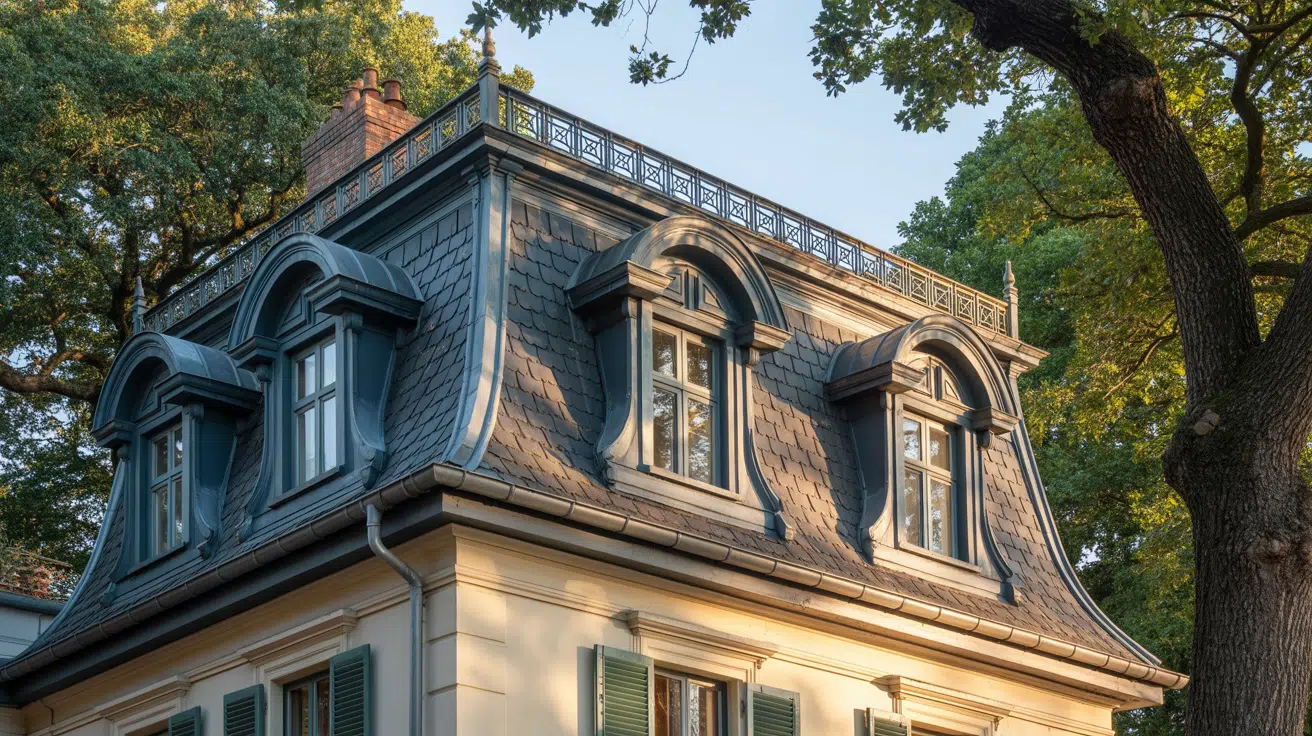
Mansard roofs feature a double slope on all four sides, with a steep lower pitch and a gentler upper one.
This design maximizes attic space without adding extra stories.
Historic Uses
- 19th-century Paris: It became famous in Parisian apartments and chateaus. They helped property owners avoid high taxes.
- Second Empire Movement: The style spread to America in the 1850s-1880s, appearing on mansions, city halls, hotels, and train stations.
- Victorian Era Popularity: Victorian homes used roofs for ornate curb appeal and architectural sophistication.
Modern Applications
- Urban Development: Urban townhouses and commercial buildings use mansard roofs to maximize square footage without exceeding height limits.
- Suburban Revival: The “French Provincial” style revived mansard roofs in the 1960s-1980s on suburban homes and duplexes.
- Contemporary Innovations: Modern mansard roofs incorporate reflective materials and solar panels for energy efficiency.
Pros and Cons of a Mansard Roof
It offers unique benefits but also comes with specific challenges. Here’s what you need to know before choosing this style.
| Pros | Cons |
|---|---|
| Creates full-height attic rooms with maximum living space. | 60-80% more expensive than standard roofs. |
| Adds square footage without expanding footprint. | Poor snow drainage causes ice dams and leaks. |
| Bypasses zoning height restrictions. | Requires frequent inspections and higher maintenance. |
| Distinctive French design adds curb appeal. | Needs specialized roofers with higher labor costs. |
| Easy to add dormers later. | Not ideal for heavy snow climates. |
| Boosts home value by 60-80% at resale. | Limited contractor availability delays projects. |
Is a Mansard Roof Right for Your Home?
A roof works well if you need extra living space and like French-style architecture.
It creates full-height rooms under the roof without expanding your home’s footprint, which is great for small city lots.
The design adds unique curb appeal that stands out.
However, mansard cost 60-80% more than basic roofs and need more maintenance, especially in snowy areas.
Before choosing one, check your budget, local zoning laws, and available contractors. If everything lines up, it adds both space and style to your home.
Common Problems & How to Prevent Them
Offer great benefits, but their design can lead to specific issues if not properly maintained.
Understanding these problems and how to prevent them can help extend the life of your roof and avoid costly repairs.
1. Water Pooling on the Upper Slope
Prevention: Install proper drainage systems, keep gutters clear, and schedule regular inspections.
2. Ice Dams and Snow Buildup
Prevention: Improve attic insulation and ventilation, and consider heat cables in snowy regions.
3. Flashing Failures
Prevention: Use high-quality flashing materials and have them checked annually by a professional.
4. Material Wear on Steep Slopes
Prevention: Choose durable roofing materials and address small issues before they become major problems.
With proper design, quality materials, and routine maintenance, most roof problems can be effectively prevented.
Conclusion
Mansard roofs blend style and function beautifully.
They add character while creating extra living space without expanding your footprint, making them perfect for small lots or height-restricted areas.
However, they cost more and need extra maintenance. Consider your budget, climate, and home style before deciding.
If everything aligns, a roof adds practical space, timeless appeal, and lasting value to your property.