
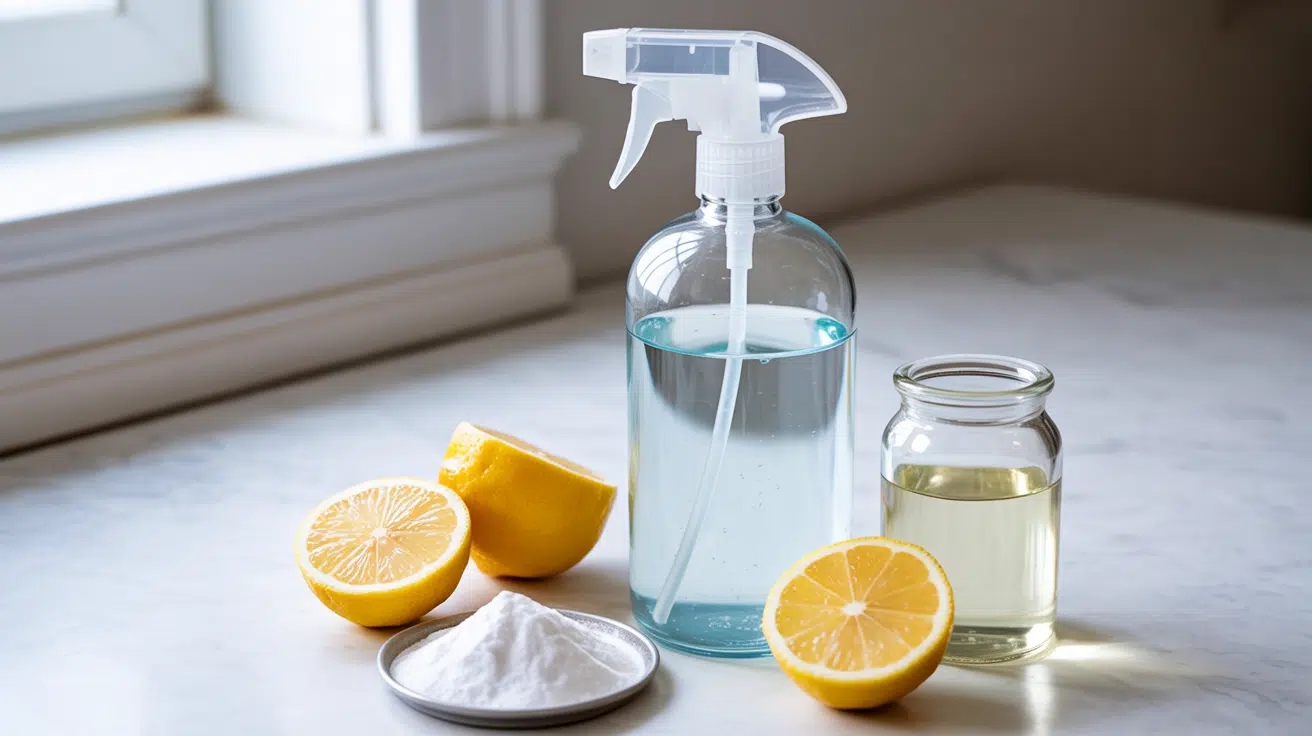
DIY Disinfectant Spray That Kills Germs (Not Just Smells Good)
You spray, you wipe, and you assume the germs are gone. But is your DIY disinfectant actually killing anything?
Most homemade recipes don’t work. Vinegar and essential oils smell great, but they won’t kill harmful viruses or bacteria. Worse, ineffective sprays create dangerous false security.
So do DIY disinfectant sprays really work? Yes, but only with correct ingredients at proper concentrations.
This blog reveals what truly kills germs, which recipes fail, critical safety rules, proper contact times, and step-by-step instructions. Stop guessing and start disinfecting properly.
Do DIY Disinfectant Sprays Really Work?
DIY disinfectant sprays work only when made with the right ingredients at proper concentrations. Alcohol-based sprays (60-70% alcohol), 3% hydrogen peroxide, or diluted bleach can effectively kill germs.
However, popular recipes using vinegar, essential oils, or dish soap only clean surfaces; they don’t actually disinfect.
The key issue is that cleaning removes dirt while disinfecting kills bacteria and viruses, and most homemade sprays only do the former.
Even with the correct ingredients, the spray must stay wet on surfaces for several minutes to work. Store-bought disinfectants are tested and proven effective, while DIY versions offer less certainty.
Ingredients That Actually Disinfect (Science-Backed)
Only a few ingredients have proven germ-killing power:
| Ingredient | Concentration | Effectiveness | Limitations |
|---|---|---|---|
| Isopropyl Alcohol | 60-70% | Kills most bacteria and viruses | Evaporates quickly; needs 30 seconds |
| Hydrogen Peroxide | 3% or higher | Kills bacteria, viruses, fungi | Can bleach fabrics |
| Bleach | 1/3 cup per gallon | Kills virtually all pathogens | Toxic fumes; expires in 24 hours |
| White Vinegar | 5% acetic acid | Some bacteria only | Doesn’t kill most viruses |
| Essential Oils | Varies | Minimal effect | Not reliable for disinfection |
| Quats | Specific amounts | Bacteria and some viruses | Uncommon in DIY recipes |
Only alcohol, hydrogen peroxide, and bleach truly disinfect. Everything else cleans but doesn’t kill germs effectively.
Safety Rules Before Making DIY Disinfectant Spray
Making disinfectants involves chemicals that can be dangerous if mishandled.
- Never Mix Bleach and Vinegar
- Never Mix Bleach and Ammonia
- Never Mix Hydrogen Peroxide and Vinegar
- Work in Ventilated Areas
- Wear Protective Gloves
- Use Clean Spray Bottles
- Label All Bottles
- Store Safely
- Test Surfaces First
- Follow Exact Measurements
How to Make a Homemade Disinfectant Spray (Easy Step-by-Step)

Follow these steps to create an effective DIY disinfectant spray that kills germs.
What You’ll Need:
- Clean spray bottle (16 oz)
- Isopropyl alcohol (70-91%), hydrogen peroxide (3%), or bleach
- Distilled water
- Essential oils (optional, for scent)
- Measuring cup and funnel
- Labels and markers
- Protective gloves
Step 1: Choose Your Disinfectant Base
Pick one: 70% isopropyl alcohol (kills most germs), 3% hydrogen peroxide (gentle on surfaces), or bleach (strongest but harshest).
Never mix these together; it creates toxic fumes.
Step 2: Clean Your Bottle
Wash the spray bottle with hot soapy water. Rinse thoroughly and dry completely. Old chemical residue can cause dangerous reactions.
Step 3: Measure Accurately
- For alcohol: Mix 12 oz alcohol with 4 oz distilled water (maintains disinfecting strength).
- For hydrogen peroxide: Use straight, no dilution.
- For bleach: Mix 1/3 cup bleach per gallon of cold water.
Step 4: Combine Ingredients
Pour your disinfectant into the bottle using a funnel. Add water only for the alcohol spray. Use an opaque bottle for hydrogen peroxide since light breaks it down. Mix bleach solutions in ventilated areas only.
Step 5: Add Scent (Optional)
Add 10-15 drops of essential oil for fragrance if desired. Skip this for bleach solutions. Essential oils don’t disinfect; they’re only for smell.
Step 6: Mix Well
Close tightly and shake gently for 10-15 seconds. Don’t shake bleach vigorously, it releases harmful fumes.
Step 7: Label Clearly
Mark the bottle with contents, concentration, date made, and expiration. Alcohol lasts 2-3 months, hydrogen peroxide lasts 30-60 days, and bleach lasts 24 hours only.
Step 8: Test First
Spray a hidden spot on surfaces to check for damage. Wait 10 minutes. Some disinfectants harm wood, fabrics, or colored materials.
Spray until the surface is completely wet.
Let’s sit.
- 30 seconds for alcohol
- 1 minute for hydrogen peroxide
- 5 minutes for bleach
Don’t wipe early; contact time kills germs. Wipe with a clean cloth after proper dwell time.
Keep in cool, dark places away from heat and sunlight. Store away from children and pets. Never use unmarked containers. Discard if color changes or odor develops. Make bleach fresh daily.
Best DIY Disinfectant Spray Recipes (Easy + Effective)
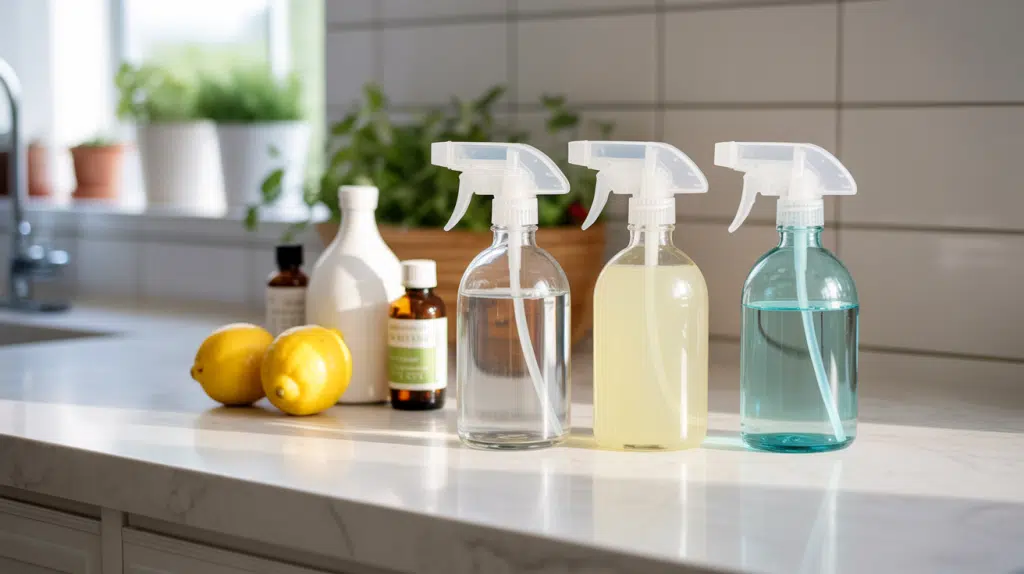
These proven recipes use science-backed ingredients to kill germs effectively.
1. All-Purpose Alcohol Spray (Most Popular)
- 12 oz isopropyl alcohol (70% or higher)
- 4 oz distilled water
- 15 drops tea tree or lavender essential oil (optional)
Mix in a spray bottle. Kills most bacteria and viruses in 30 seconds. Lasts 2-3 months. Safe for most surfaces except wood and granite.
2. Hydrogen Peroxide Spray (Gentle Formula)
- 16 oz hydrogen peroxide (3%)
- No dilution needed
Pour straight into an opaque spray bottle. Effective against bacteria, viruses, and mold. Let’s sit for 1 minute. Lasts 30-60 days. Safe for most surfaces but may bleach fabrics.
3. Heavy-Duty Bleach Spray (Strongest Option)
- 1/3 cup bleach
- 1 gallon of cold water
Mix in a ventilated area. Kills virtually all pathogens in 5 minutes. Made fresh daily, expires in 24 hours. Use on hard, non-porous surfaces only. Avoid metals and colored fabrics.
4. Kitchen Counter Spray
- 1 cup water
- 1 cup isopropyl alcohol (70%)
- 10 drops lemon essential oil
Combines cleaning and disinfecting. Works on countertops, sinks, and appliances. Let sit 30 seconds before wiping.
5. Bathroom Disinfectant
- 2 cups water
- 1/2 cup hydrogen peroxide (3%)
- 1 tablespoon dish soap
- 10 drops of eucalyptus oil
Tackles soap scum while disinfecting. Let’s sit 1-2 minutes. Rinse thoroughly on shower surfaces.
6. Glass and Mirror Cleaner
- 1 cup water
- 1 cup isopropyl alcohol (70%)
- 1 tablespoon white vinegar
Cleans and disinfects glass without streaks. Spray and wipe immediately with a microfiber cloth.
Usage Tips:
- Always spray until the surface is visibly wet
- Respect contact times for each recipe
- Test on hidden areas first
- Don’t mix recipes or add extra ingredients
- Store in labeled bottles away from sunlight
What NOT to Do:
- Never combine bleach with vinegar or ammonia
- Don’t use hot water with bleach
- Avoid mixing hydrogen peroxide with vinegar
- Don’t dilute below the recommended concentrations
Stick to these tested recipes with proper ratios. Adding random ingredients or changing measurements reduces effectiveness and can create safety hazards.
How Long Do DIY Disinfectant Sprays Last?
Homemade disinfectants lose germ-killing power over time. Here’s when to replace them.
Shelf Life by Type:
| Disinfectant Type | Shelf Life | Storage | Signs of Expiration |
|---|---|---|---|
| Isopropyl Alcohol Spray | 2-3 months | Tightly sealed, cool place | Weaker smell, lighter bottle |
| Hydrogen Peroxide Spray | 30-60 days | Opaque bottle, dark cabinet | Color change, reduced fizzing |
| Bleach Solution | 24 hours only | Make fresh daily | The chlorine smell fades |
| Vinegar Cleaners | 6 months | Any sealed container | Cloudiness, sediment |
What Shortens Shelf Life: Heat, sunlight, air exposure, and plastic bottles speed breakdown.
Storage Tips:
- Keep in cool, dark cabinets (60-75°F).
- Use glass bottles when possible.
- Close lids tightly.
- Label with creation and expiration dates.
Expiration Signs: Color changes, unusual odors, ingredient separation, or lighter bottle weight mean it’s time to replace.
Date all bottles and replace them as scheduled. Expired disinfectants look identical to fresh ones but don’t kill germs, giving dangerous false security.
Store-bought versions last 1-2 years due to stabilizers that DIY sprays lack.
Conclusion
DIY disinfectant sprays work only with the right ingredients at proper concentrations. Most recipes using vinegar and essential oils just clean; they don’t kill germs.
Real disinfection needs 70% alcohol, 3% hydrogen peroxide, or diluted bleach with correct contact times.
Don’t trust trendy recipes that create false security. Stick to science-backed formulas, follow safety rules, and replace solutions on schedule.
Your family’s health depends on disinfectants that actually work, not ones that just smell good.




Thanks for clarifying what actually disinfects – I was wondering if my DIY house cleaner really killed germs. But now I’m confused. If DIY cleaners only disinfect at a certain strength, why do you have recipes for “disinfecting” cleaners that are 1:1 for alcohol and 4:1 for hydrogen peroxide?
Thanks Dawn W