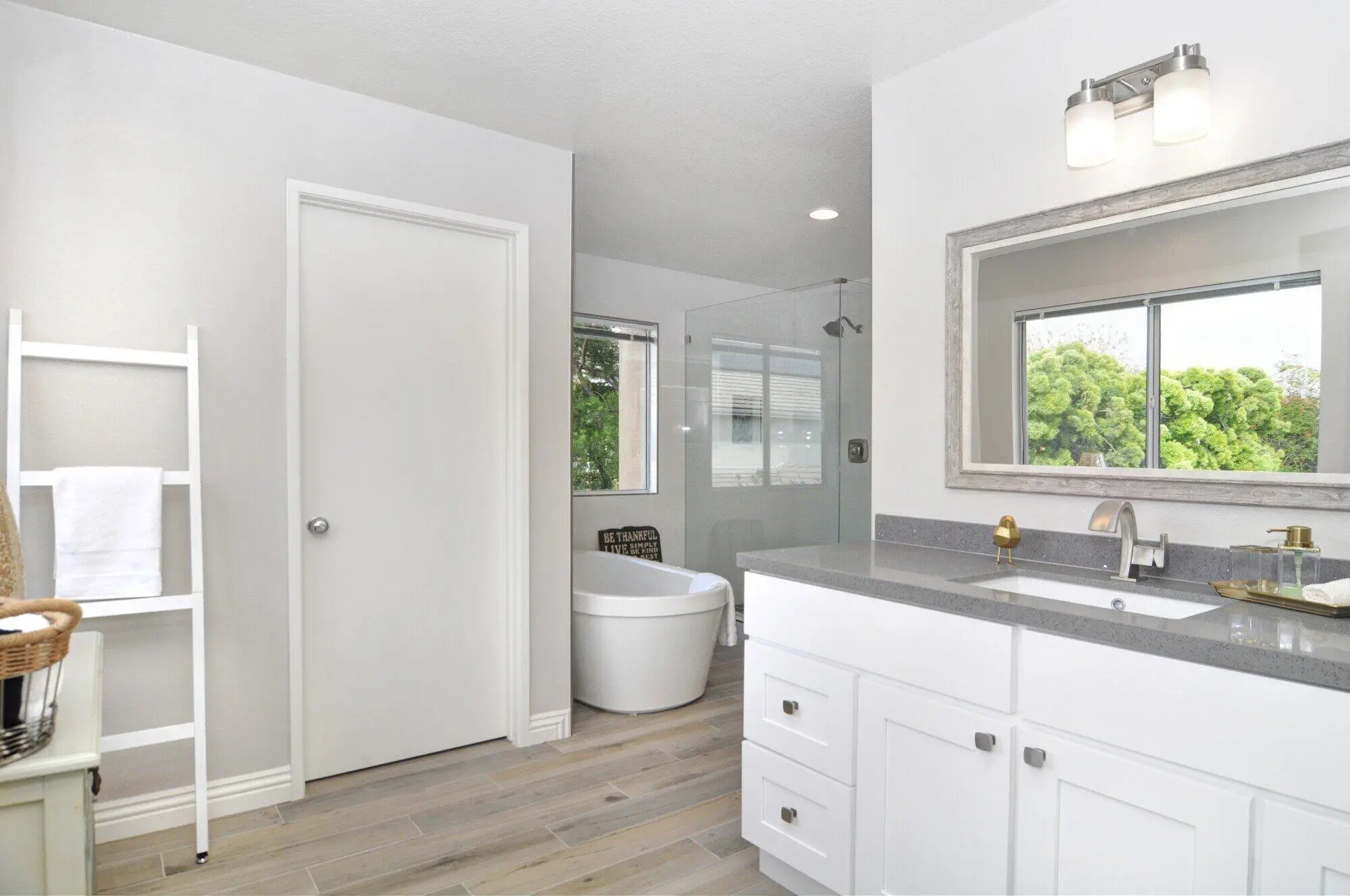
Minimum Size for a Full Bathroom: Clear Space Rules
Fitting a complete bathroom into a small space can be challenging, especially when codes and accessibility regulations come into play.
You might be wondering how much room you really need for a toilet, sink, and shower or tub without breaking compliance.
This blog on the minimum size for a full bathroom clears up the confusion and ties directly into budgeting a $10,000 bathroom remodel.
I’ll walk you through standard measurements, ADA requirements, fixture spacing, and design ideas. By the end, you’ll know exactly what works best and how to plan your bathroom with confidence.
What Counts as a Full Bathroom?
A full bathroom always includes a toilet, a sink, and either a shower or a bathtub. This separates it from a half bath, which only has a toilet and sink, or a three-quarter bath, which has a toilet, sink, and shower but no tub.
Knowing these differences is crucial before examining size rules. When someone says “full bath,” it means you’re planning for all the main fixtures, which naturally requires more space than the smaller options.
Minimum Size Requirements
The size of a full bathroom depends on layout and comfort level, ranging from a bare minimum to more spacious designs.
- A typical full bathroom requires at least 36–40 square feet to accommodate all necessary fixtures.
- Compact layouts like 3×5 ft (15 sq ft) or 6×6 ft (36 sq ft) are possible.
- Bare minimum sizing works, but larger layouts feel far more comfortable and practical for daily use.
| Layout Type | Dimensions | Square Feet | Fixtures Included | Comfort Level | Notes |
|---|---|---|---|---|---|
| Compact Minimum | 3 ft × 5 ft | 15 sq ft | Toilet + Sink (tight fit) | Very Limited | Not a full bath, more like a half bath |
| Small Full Bath | 6 ft × 6 ft | 36 sq ft | Toilet + Sink + Shower/Tub | Bare Minimum | Meets basic full bath requirement |
| Standard Full Bath | 5 ft × 8 ft | 40 sq ft | Toilet + Sink + Shower/Tub | Functional | Common in many homes |
| Comfortable Full | 6 ft × 8 ft | 48 sq ft | Toilet + Sink + Shower/Tub | More Comfortable | Easier movement and spacing |
| Spacious Full Bath | 8 ft × 10 ft | 80 sq ft | Toilet + Double Sink + Shower + Tub | Very Comfortable | Allows luxury features and storage |
ADA Bathroom Requirements
ADA bathroom rules ensure accessibility, comfort, and safety for everyone. These guidelines are legal standards, not optional recommendations.
1. Clear Floor Space

A clear floor space of at least 30″ × 48″ must be provided. A turning radius of 60″ allows wheelchairs to maneuver.
This space ensures users can reach fixtures without obstruction, promoting safe access. Without it, a bathroom cannot be considered ADA-compliant.
2. Toilet Clearance
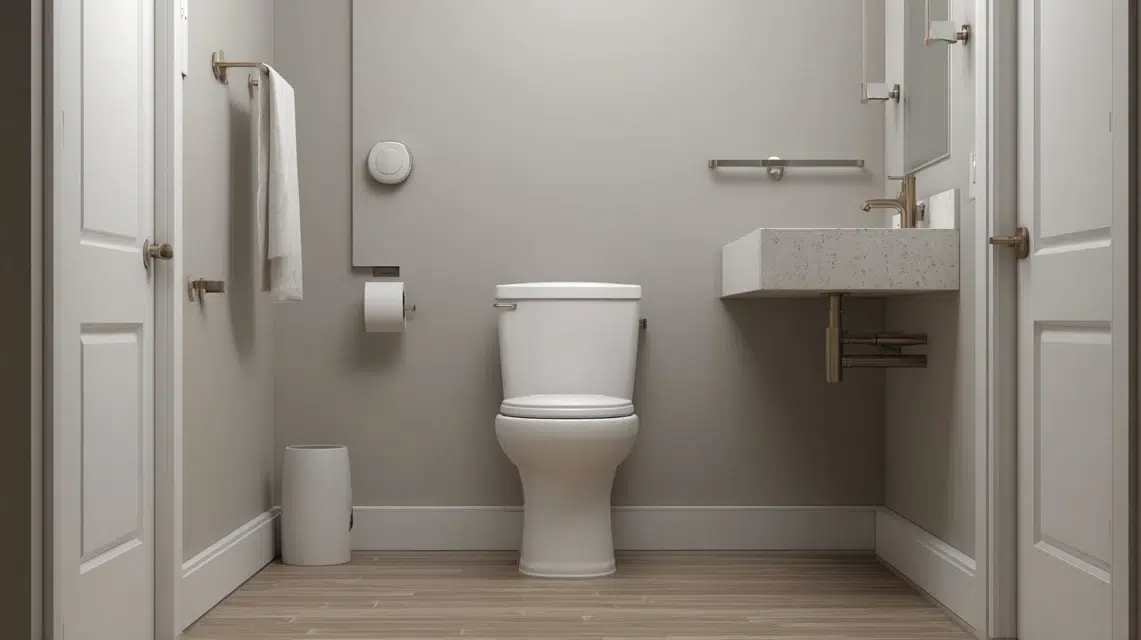
Toilets must have 15″ clearance from the center to side walls and 21″ clear space in front. These distances prevent cramped layouts and allow wheelchair transfer.
Meeting this requirement is essential for both comfort and accessibility. Ignoring it can cause safety hazards and code violations.
3. Sink Clearance
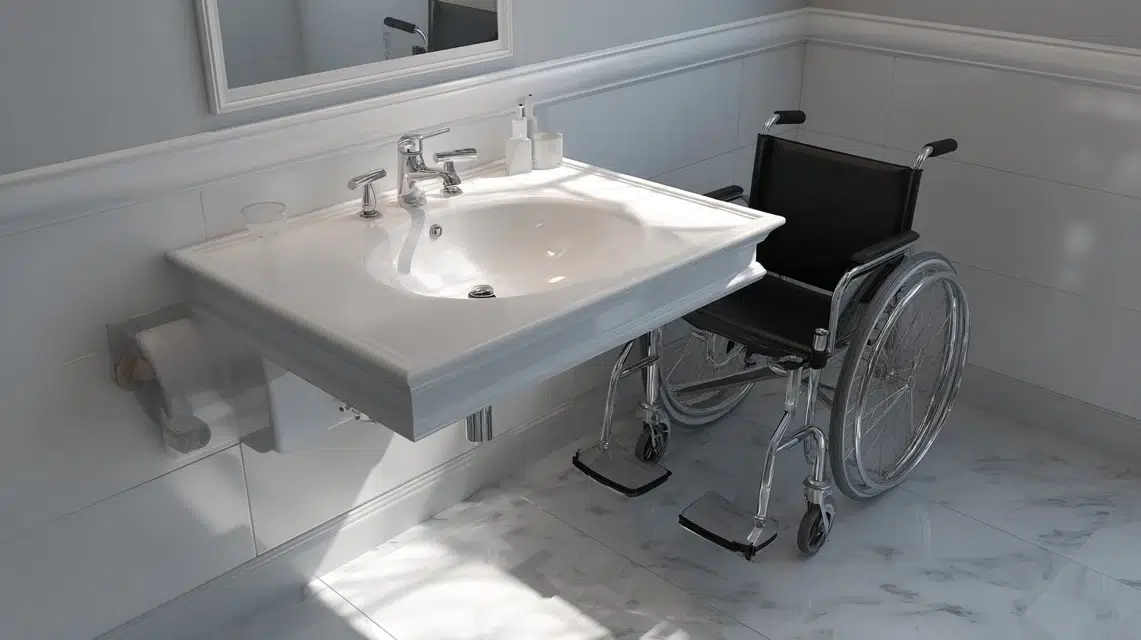
Sinks require 30″ of clear floor space in front for approach and 17″ of knee clearance underneath. These rules let wheelchair users access the sink safely.
Providing both forward and side approaches ensures inclusivity. Skipping these measurements restricts usability and leads to failed accessibility checks.
4. Shower & Tub Clearance
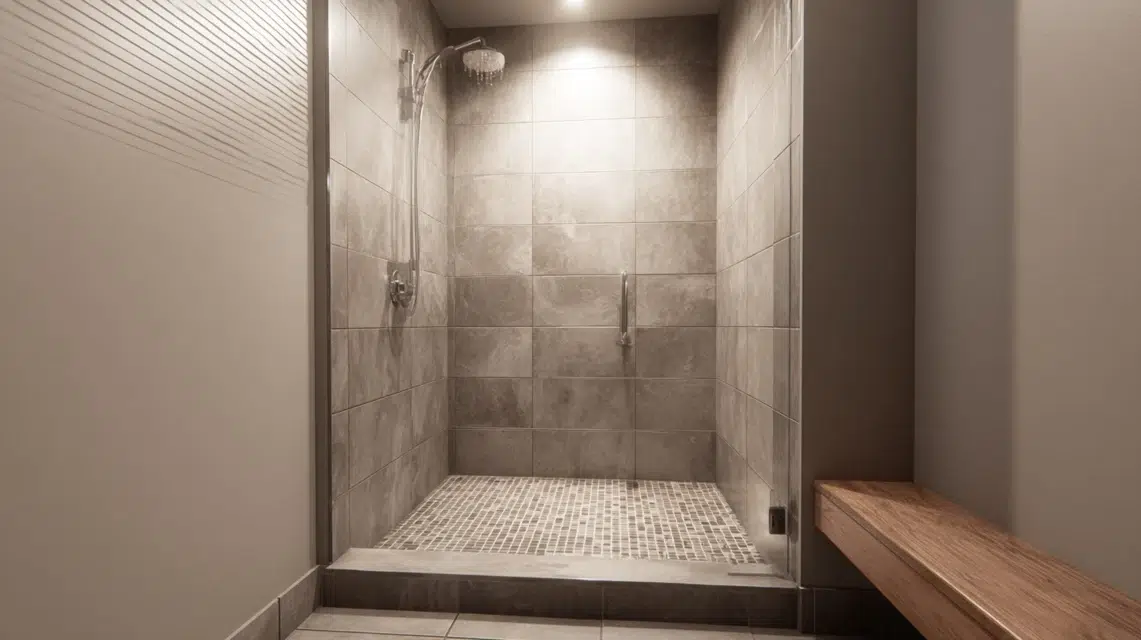
ADA guidelines require a minimum of 24″ clear entry space and 28″ step-in clearance. This ensures safe movement in and out of bathing areas.
Proper spacing reduces fall risks, supports caregivers, and allows for the use of assistive devices. Without compliance, the space becomes unsafe for many users.
5. Door and Maneuverability Rules
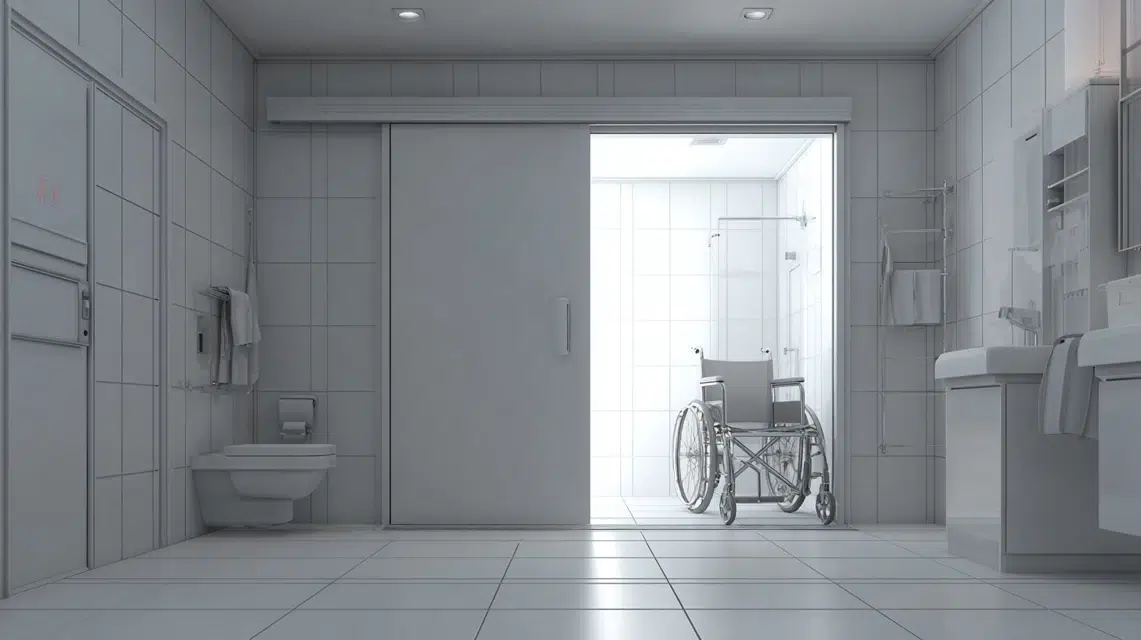
Bathroom doors must not block required clearances and should provide enough width for entry. Maneuvering space must allow wheelchairs to pass through without difficulty. Avoid inward-swinging doors that trap users.
Instead, use pocket or sliding doors where possible. Following these rules ensures legal compliance and safe accessibility.
Fixture Spacing Guidelines
The spacing between bathroom fixtures determines whether the room feels usable or cramped. Toilets, sinks, and tubs all need clearance to work properly.
Toilets require open space both to the side and in front so you can sit and stand safely.
Sinks need clear room in front and a proper distance from walls or other fixtures to remain accessible.
Showers and tubs benefit from extra step-in space that makes entering and exiting safer and more comfortable.
Doors should be placed where they don’t interfere with fixture access, since poor placement can block essential clearance.
Following these spacing guidelines keeps the bathroom compliant with code while also improving day-to-day usability.
Local Code Variations
Bathroom size and clearance rules can differ depending on your location. For example, California ADA regulations often require larger clearances than federal standards.
Other states or municipalities may have their own unique requirements that go beyond national guidelines. Because codes are enforced locally, it’s important to confirm the exact rules where you live before planning a remodel.
Checking with your local building department is the safest way to avoid mistakes. For added assurance, consider hiring a licensed inspector or contractor.
Designing a Small Full Bathroom
Designing a small full bathroom requires smart choices to make the most of limited space. Corner sinks and wall-mounted toilets save valuable square footage, while sliding or pocket doors prevent clearance issues.
Compact fixtures such as narrow vanities or space-efficient tubs can also help. Even small bathrooms can meet ADA requirements if layout and clearances are carefully planned.
For homeowners who feel unsure, remodeling services and fixture suppliers can provide solutions tailored to both space and accessibility needs.
Common Mistakes to Avoid
Many bathroom layouts fail because of small but critical errors that affect comfort, safety, and overall code compliance.
- Not leaving enough clearance between fixtures makes the space cramped and uncomfortable.
- Ignoring door swing issues can block access or reduce required clearances.
- Overlooking ADA requirements creates accessibility problems and legal risks.
- Mistakes like these often lead to failed inspections, wasted money, and expensive remodels that could have been prevented with careful planning.
Conclusion
Now you know the minimum size for a full bathroom and the rules that make layouts safe, comfortable, and legal.
Take a moment to look at your own space and see where these measurements apply.
Planning with the right dimensions helps you avoid costly mistakes and ensures long-term usability.
Keep in mind that local codes can change details, so always double-check before building or remodeling.
If this post gave you clarity, I suggest checking more of my bathroom design blogs for extra ideas.