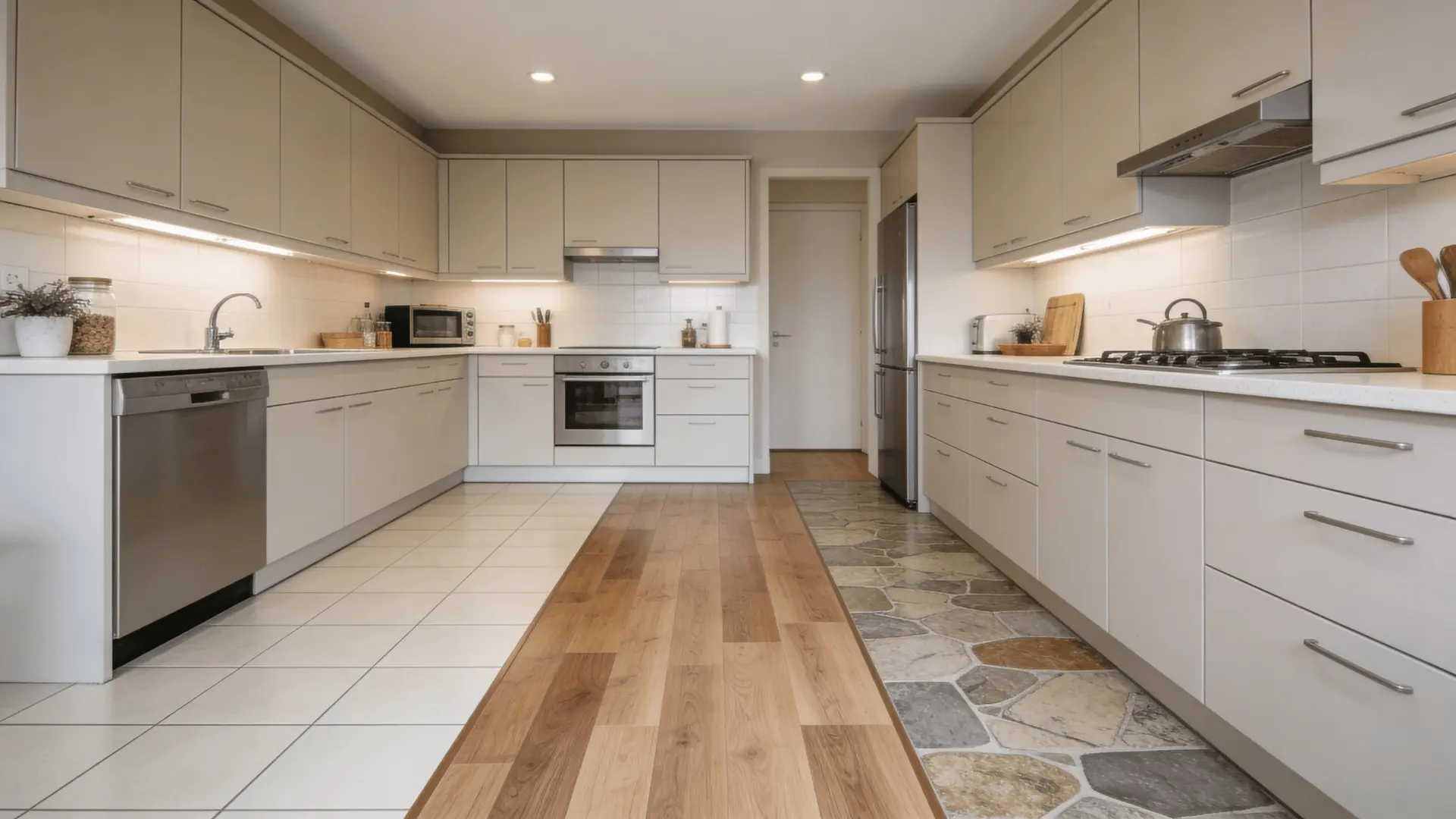
17 Different Countertop Materials: Find Your Best Fit
Choosing the right countertop material for your kitchen or bathroom can be overwhelming, given the numerous options available. You want something that suits your style but also withstands daily use.
It’s essential to consider key factors such as budget, maintenance, design, and durability before making a decision. After all, a countertop should look great and last for years.
In this blog, I’ll help you weigh your options by breaking down the different countertop materials and what you need to know about them. By the end, you’ll have a clear idea of which material works best for your space and lifestyle. Ready to find the perfect fit? Let’s begin!
Factors to Consider Before Choosing Countertop Materials
Choosing the right countertop isn’t just about looks; it also depends on how you use your space. Before you pick a material, keep these points in mind:
Cost: Countertop materials vary significantly in price, ranging from affordable options like laminate to premium materials such as granite or quartzite. While natural stones and engineered stones tend to be more expensive, affordable options like laminate and polyester may be a better fit within budget constraints.
Durability: Certain materials, such as granite and quartz, are more durable and resistant to scratches, stains, and heat. Materials like butcher block and laminate are more prone to damage and require more maintenance.
Maintenance: Consider how much time you’re willing to invest in maintaining the appearance of your countertops. Materials like quartz and solid surface countertops require minimal maintenance, while natural stones, such as marble and granite, require periodic sealing and care.
Design Appeal: Consider the overall design you desire for your kitchen. Natural stones like marble offer luxury, while butcher block brings warmth, and quartz provides a clean, modern look.
Thinking through these will help you choose a countertop that not only looks good but also works well for your daily needs.
Different Types of Countertops
Finding the best countertops for your kitchen means selecting materials that not only look good but also work well and last a long time. Below are some options you can check out to find the one that fits your space and how you cook:
Natural Stones
Natural stone countertops have been a staple in kitchens for centuries due to their beauty and durability.
Natural stones are prized for their unique appearance, as no two slabs are exactly alike. Here’s a look at some popular natural stone options:
1. Granite

Known for its toughness and heat resistance, granite is one of the most durable countertop materials. It is ideal for high-traffic kitchens and can withstand heavy usage.
Granite comes in a variety of colors and patterns, ensuring that every kitchen gets a personalized touch.
2. Marble

Renowned for its luxurious appearance, marble countertops are a popular choice in classy kitchen designs. While beautiful, marble is softer than granite and can stain or scratch more easily.
It requires regular sealing to maintain its shine and longevity.
3. Soapstone

A less common but beautiful natural stone, soapstone boasts a smooth, matte finish and is resistant to heat and stains.
It’s softer than granite, which can make it prone to scratches, but it’s very easy to repair by sanding.
4. Quartzite

This is a harder stone that mimics the look of marble, combining the beauty of natural stone with the durability of granite.
Like marble, quartzite is porous, so it requires sealing; however, it offers impressive heat resistance and scratch durability.
Engineered Stones
Engineered stones are created by combining natural stone particles with resins and other materials.
These countertops offer more durability and are easier to maintain than natural stones. Here are a few popular options:
5. Quartz
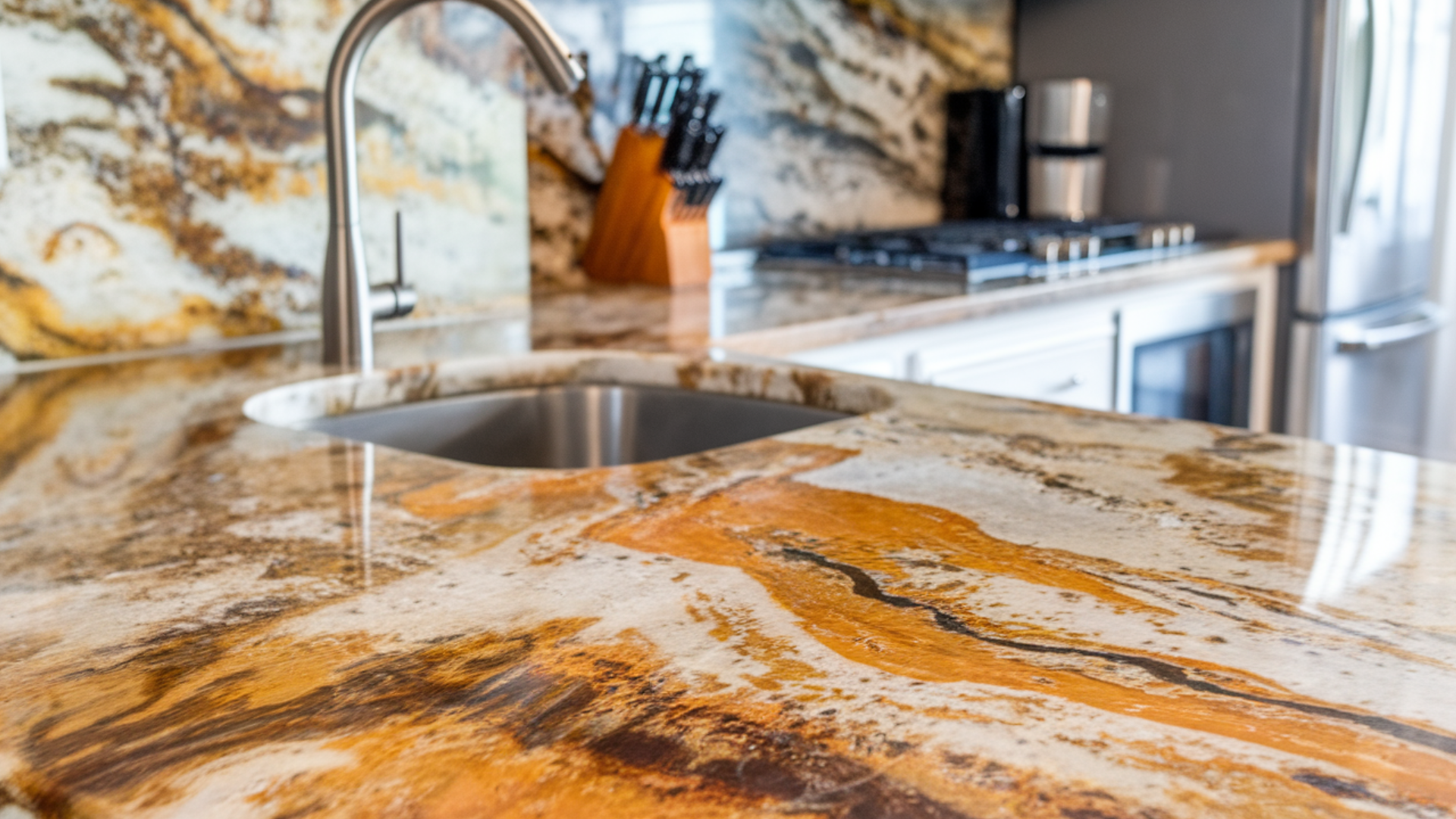
Made from natural quartz crystals, resin, and pigments, quartz countertops are non-porous and don’t require sealing.
They are resistant to scratches and stains, making them an excellent choice for busy kitchens. With a wide range of colors and patterns, quartz fits any visual.
6. Concrete

Concrete countertops are customizable in terms of size, color, and texture. They can be poured to fit any shape or design, making them a unique option.
Even so, concrete requires regular sealing and can be prone to cracking if not properly maintained.
7. Corian

Solid surface countertops are synthetic materials made from acrylic or polyester resins. They are seamless, easy to clean, and come in a variety of styles.
However, solid surfaces are softer than natural stones and can be scratched or scuffed.
Wood and Other Organic Materials
Wooden countertops bring warmth to any kitchen. They are typically used in combination with other materials, such as stone or tile, to add texture and contrast. Here are some wood-based options:
8. Butcher Block

Butcher block countertops are made from wood slats bonded together to form a thick, durable surface.
These counters are popular for their rustic, natural look and are particularly useful in kitchens where food preparation is frequent.
9. Bamboo

Bamboo is a sustainable and eco-friendly option for countertops. It’s harder and more durable than some hardwoods and is naturally resistant to bacteria.
However, bamboo countertops can be prone to scratching, and they aren’t as heat-resistant as stone options.
Metal and Other Specialty Materials
Metal countertops are ideal for a modern, industrial kitchen look. They are durable, easy to clean, and can offer a unique touch to your space.
Here’s a look at popular metal and specialty countertop materials:
10. Stainless Steel

Popular in commercial kitchens, stainless steel is a durable, heat-resistant, and sanitary material. However, it requires professional installation and is expensive compared to other materials.
11. Copper

Copper countertops provide a rustic yet sleek design. Copper is antimicrobial and easy to clean, but it is prone to scratches and the development of patina over time.
12. Zinc

Zinc countertops are known for their antibacterial properties and unique patina that develops over time. While they are durable, they scratch easily and aren’t heat-resistant.
13. River Rock

River rock countertops are made by embedding smooth river stones into a resin or cement surface. These countertops offer a natural, earthy appearance but require regular maintenance to prevent staining.
Alternative Surface Options
If you’re looking for budget-friendly options without compromising style, these materials are a great choice.
While they may not have the same durability as natural stones, they offer a range of design possibilities at a lower price point.
14. Laminate

Laminate countertops are the most affordable option, available in a wide variety of colors and patterns.
While laminate is easy to install and clean, it is prone to scratches and doesn’t offer the same longevity as stone materials.
15. Paper Composite

This is an eco-friendly option made from recycled paper, resin, and natural pigments.
While paper composite countertops are durable and heat-resistant, they are more expensive than laminate and have limited availability.
16. Polyester

Polyester countertops are another affordable option that mimics the look of natural stone.
They are easy to maintain, durable, and available in various finishes; however, they are prone to scratches and less resistant to heat compared to other materials.
17. Poured Epoxy

Poured Epoxy countertops are a DIY-friendly option that allows for a completely customizable look. This material is poured directly onto the surface, creating a clean and glossy finish that can mimic the appearance of natural stone.
Pros and Cons of Different Countertop Materials at a Glance
Before you decide on a countertop, it helps to see how each material stacks up. Here’s a quick look at the pros and cons of the most common options:
| Material | Pros | Cons |
|---|---|---|
| Natural Stone | Durable, heat-resistant, timeless appeal | Requires sealing (except soapstone), can stain or scratch |
| Engineered Stones | Low-maintenance, customizable, and a wide variety of designs | Concrete needs sealing, can crack, and is not heat-resistant |
| Wood and Organic Materials | Eco-friendly, warm, natural look | Requires sealing, vulnerable to scratches and stains |
| Non-Stone Options | Budget-friendly, wide range of designs | Less durable, prone to scratches, and heat-sensitive |
| Metal and Specialty Materials | Durable, easy to clean, unique aesthetic | Expensive, requires professional installation, and can scratch |
With this table, you can easily compare your countertop options. The right material for you will depend on your preferences for cost, maintenance, and design.
Sustainability and Environmental Impact
Sustainability is becoming an increasingly important consideration for homeowners when selecting materials, with many opting for eco-friendly alternatives.
- Natural stones, such as granite and marble, are durable, but their extraction can have a significant environmental impact. However, manufacturers are adopting more sustainable mining practices to reduce their footprint.
- Engineered stones, such as quartz and solid surface countertops, combine natural stone and resins, with some brands incorporating recycled materials; however, their synthetic components still contribute to their environmental impact.
- Wood options, such as bamboo and reclaimed wood, are highly sustainable. Bamboo is a renewable and fast-growing resource, while reclaimed timber helps reduce waste by repurposing existing materials.
- Affordable options, such as laminate, are often made from composite wood, which may come from sustainable sources; however, some brands use resins and chemicals that can harm the environment.
Installation Tips and Costs
Installation costs vary depending on the material you choose. Here are some general tips and things to keep in mind:
For Stone Surfaces (Natural and Engineered Stones)
Materials such as granite, marble, quartz, and quartzite typically require professional installation due to their weight and the precision required for cutting and fitting. Installation can range from $30 to $100 per square foot, depending on the material and the complexity of the job.
For Wood and Organic Materials
Butcher block and bamboo countertops are easier to install and, in many cases, homeowners can install them themselves, especially with pre-fabricated options. Professional installation for these materials generally costs between $10 and $30 per square foot.
Bamboo, being a sustainable material, may also come with installation costs that vary depending on its specific requirements.
For Non-Stone Options
Materials like laminate and paper composite are the most affordable options for installation. Laminate, in particular, is a DIY-friendly material, and many homeowners opt to install it themselves.
If professional installation is required, costs typically range from $10 to $30 per square foot.
For Metal and Specialty Materials
Stainless steel, copper, and other specialty materials are generally more expensive and require professional installation. The installation cost for these materials can range from $70 to $200 per square foot, depending on the project’s complexity and the type of material chosen.
Conclusion
When choosing between different countertop materials, consider your budget, the level of maintenance you’re willing to do, the design you want, and the durability required for the material.
To narrow down your choices, start by setting a budget, then consider the style you want and the level of upkeep you’re willing to accept. Don’t forget to factor in long-term needs, such as resale value and how well the material holds up over time.
This will help ensure you make a decision that suits both your present needs and plans. If you’re still unsure, check out other blogs for more tips on home improvements to help guide you further.