

Sherwin Williams Extra White (SW 7006): Paint Review
Choosing the perfect white paint can be a challenge, but Extra White Sherwin-Williams (SW 7006) might just be what you’re looking for.
With its clean, crisp finish, this shade offers a bright, modern look that fits a variety of spaces, from trim and ceilings to full walls.
I know it can be tough to decide between so many white options, but Extra White stands out for its versatility and fresh vibe.
In this guide, I’ll give you a look at the key characteristics of Extra White, how it behaves in different rooms, and how it stacks up against other popular whites.
If you’re updating a single room or an entire home, you might find that Extra White is exactly what you need.
Getting to Know Extra White by Sherwin-Williams

Extra White (SW 7006) by Sherwin-Williams is a bright, crisp white paint color often described as clean and fresh. It’s a popular choice for both interiors and exteriors, offering a modern, polished look.
Basic Color Profile
- HEX code: #EEEFEA
- LRV (Light Reflectance Value): 86
- Color family: Stark white with subtle blue-gray undertones
This color belongs to Sherwin-Williams’ Whites and Pastels collection, and it’s known for its high light reflectivity, making it perfect for brightening rooms and enhancing other colors.
Extra White sits in the cooler white spectrum, giving your space a clean, crisp feel without being too harsh. It works particularly well in modern settings or areas where you need extra light.
Undertones Explained
Extra White has blue-gray undertones that are subtle but noticeable depending on the light in your room. These undertones give the color depth, preventing it from looking too sterile or flat.
- In daylight, especially in rooms with plenty of natural light, you’ll notice the blue undertones.
- Under warm artificial light, the gray undertones may become more apparent, offering a soft, refined look.
This shifting undertone effect is what makes Extra White such a versatile color. However, it’s essential to test the color in your space to see how it interacts with different lighting before committing to a full coat.
SW Extra White in Real Spaces
Extra White looks different depending on the room and lighting. Here’s how it typically behaves, so you can decide if it’s the right fit for your home.
How It Looks in Different Rooms
Kitchens

Extra White provides a bright, crisp base in kitchens. It pairs beautifully with white cabinets, stainless steel, and natural wood accents.
The cool undertones balance out warmer lighting from pendant or overhead fixtures, creating a clean and fresh feel.
Bathrooms

In bathrooms, Extra White gives a clean, airy vibe. It works well with white or marble tile, keeping the space feeling open and fresh.
In smaller bathrooms with limited natural light, the blue undertones may be more noticeable, but it still remains bright and inviting.
Living Rooms

This color adds a relaxed and airy feel to living rooms. Extra White complements both modern and traditional styles, giving a neutral backdrop that doesn’t overpower other colors. It’s perfect for creating a light and open atmosphere.
Bedrooms

Extra White can make a bedroom feel peaceful and light. It pairs well with soft bedding and wooden or metal furniture.
Be mindful of the direction your windows face, as this will affect how the undertones appear throughout the day.
Overall, Extra White works best in spaces where you want a light, fresh backdrop without stark white walls.
How Lighting Affects It
Lighting plays a huge role in how Extra White looks. The same color can shift tones depending on the direction of light and the time of day.
- North-facing rooms: These rooms receive cooler light, making Extra White appear more blue-gray.
- South-facing rooms: These rooms are brighter and warmer, softening Extra White and giving it a more neutral appearance.
- East-facing rooms: Morning light brings out Extra White’s crispness, making it feel cooler and cleaner in the early hours.
- West-facing rooms: In the evening, warm sunlight can highlight the subtle gray undertones of Extra White, giving it a softer look.
Light changes throughout the day, so always test a sample on multiple walls and check it during different times: morning, noon, and night. This will help you understand exactly how Extra White behaves in various lighting conditions.
Choosing the Right Finish for Extra White
The finish you choose for Extra White can significantly impact the appearance and feel of your space. Here’s a breakdown of each finish and how it works best with Extra White:
- Semi-Gloss: Best for trim, doors, and moldings. It’s durable, reflects light well, and brightens spaces, making Extra White appear even brighter in areas with natural light.
- Satin: Ideal for walls and ceilings. Satin provides a soft sheen with light reflectivity, giving Extra White a smooth, clean finish without being too glossy, making it perfect for living rooms, bathrooms, and kitchens.
- High-Gloss: Great for accent walls or furniture. This finish creates a shiny look, making Extra White stand out. It reflects light strongly, but it’s best used sparingly in large areas to avoid overwhelming the space.
- Flat/Matte: This finish has no shine, offering a soft, subtle look. It’s great for hiding imperfections and providing a more relaxed, understated finish. Perfect for ceilings and areas where a non-reflective, smooth surface is preferred.
- Eggshell: Eggshell has a slight sheen that offers durability while maintaining a soft appearance. This finish works well on walls, providing a balance between smoothness and reflectivity, making it ideal for living rooms and bedrooms.
Each finish has its strengths, depending on the area and lighting in your home. Consider your needs and the desired look before making a decision.
Extra White vs. Other Sherwin-Williams Whites
Sherwin-Williams offers a variety of white paint colors, and it can be tough to decide which one works best. Here’s how Extra White (SW 7006) compares to some of the most popular whites from the brand.
Extra White vs. High Reflective White

High Reflective White (SW 7757, #F7F7F1) is the brightest white with minimal undertones.
- High Reflective White looks pure and crisp, reflecting the most light (LRV 93).
- Extra White stays cool with subtle blue-gray undertones.
If you need maximum brightness, High Reflective White is the way to go. For a cooler, more defined white, choose Extra White.
Extra White vs. Pure White
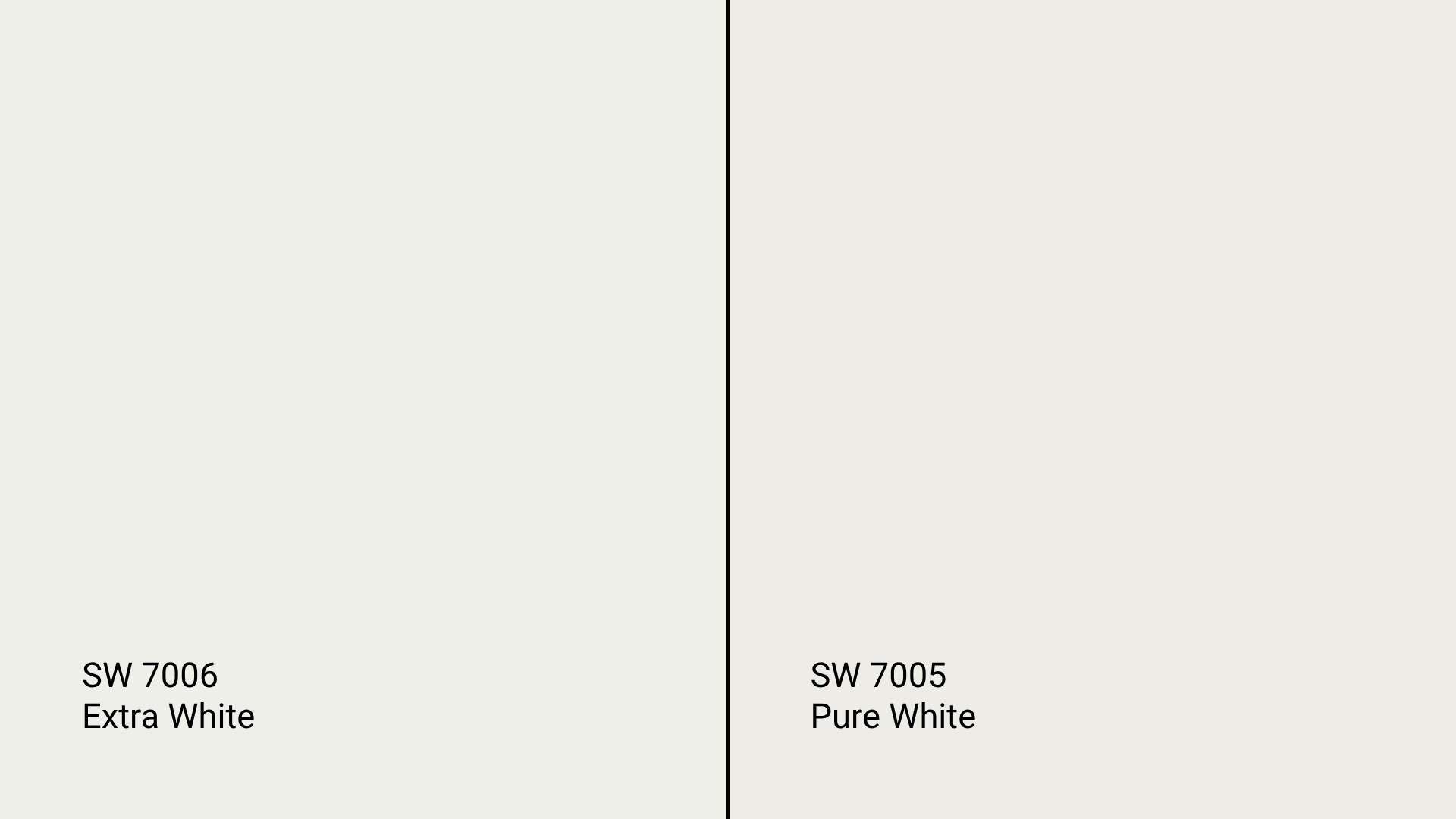
Pure White (SW 7005, #EDECE6) is a soft, neutral white with subtle gray undertones.
- Pure White is warmer with a slightly gray undertone (LRV 84).
- Extra White has cooler, clearer tones with a brighter, sharper look.
If you want a soft, inviting feel, Pure White is your choice. For a crisper, more modern appearance, Extra White works best.
Extra White vs. White Sand
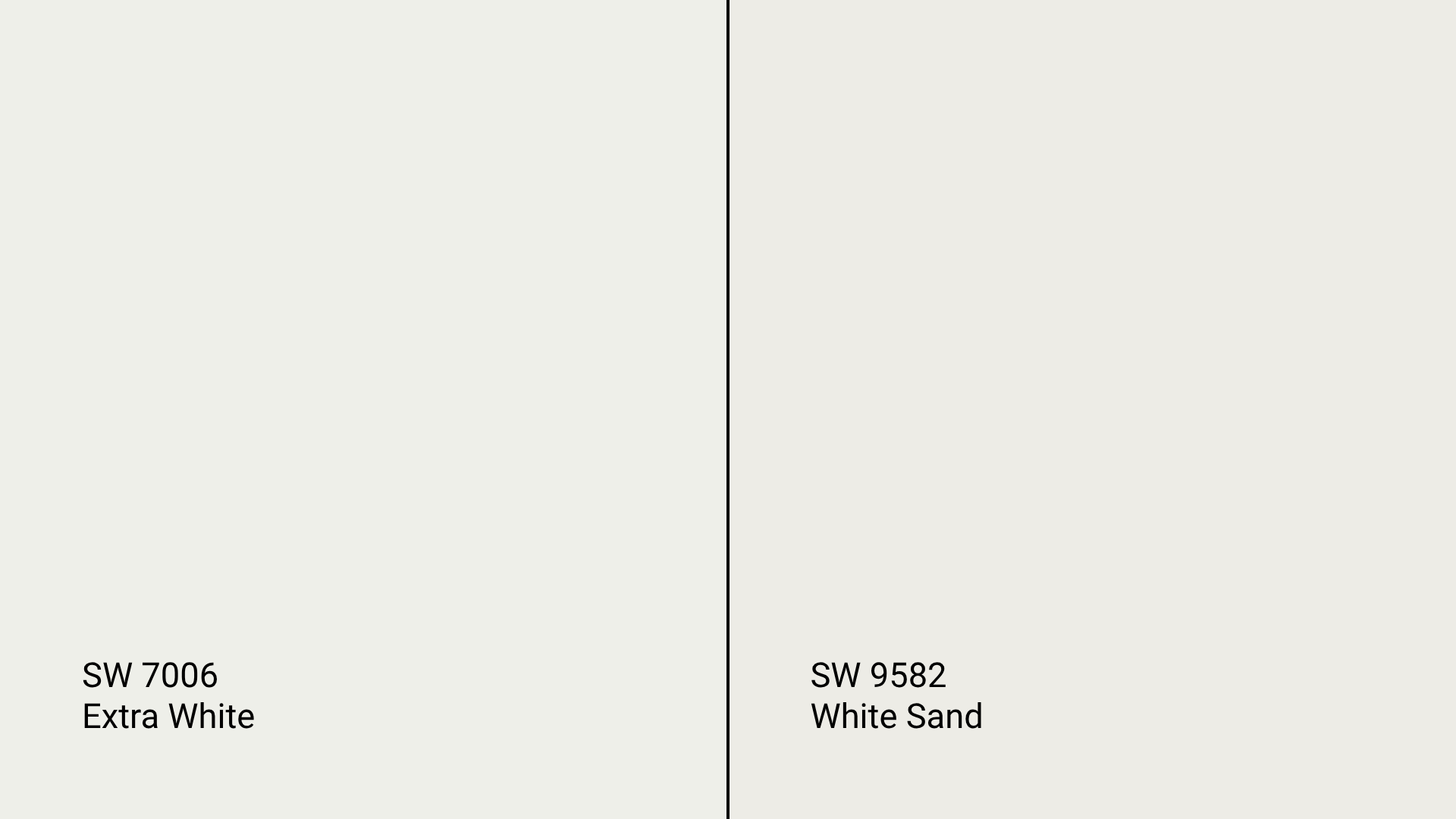
White Sand (SW 9582, #EDECE7) is a soft off-white with a hint of beige.
- White Sand has a warmer feel with light beige undertones (LRV 84).
- Extra White remains cooler with subtle blue-gray hints.
If your space needs warmth and a cozy atmosphere, White Sand is a great option. For a modern, crisp look, Extra White is better.
Extra White vs. White Sail
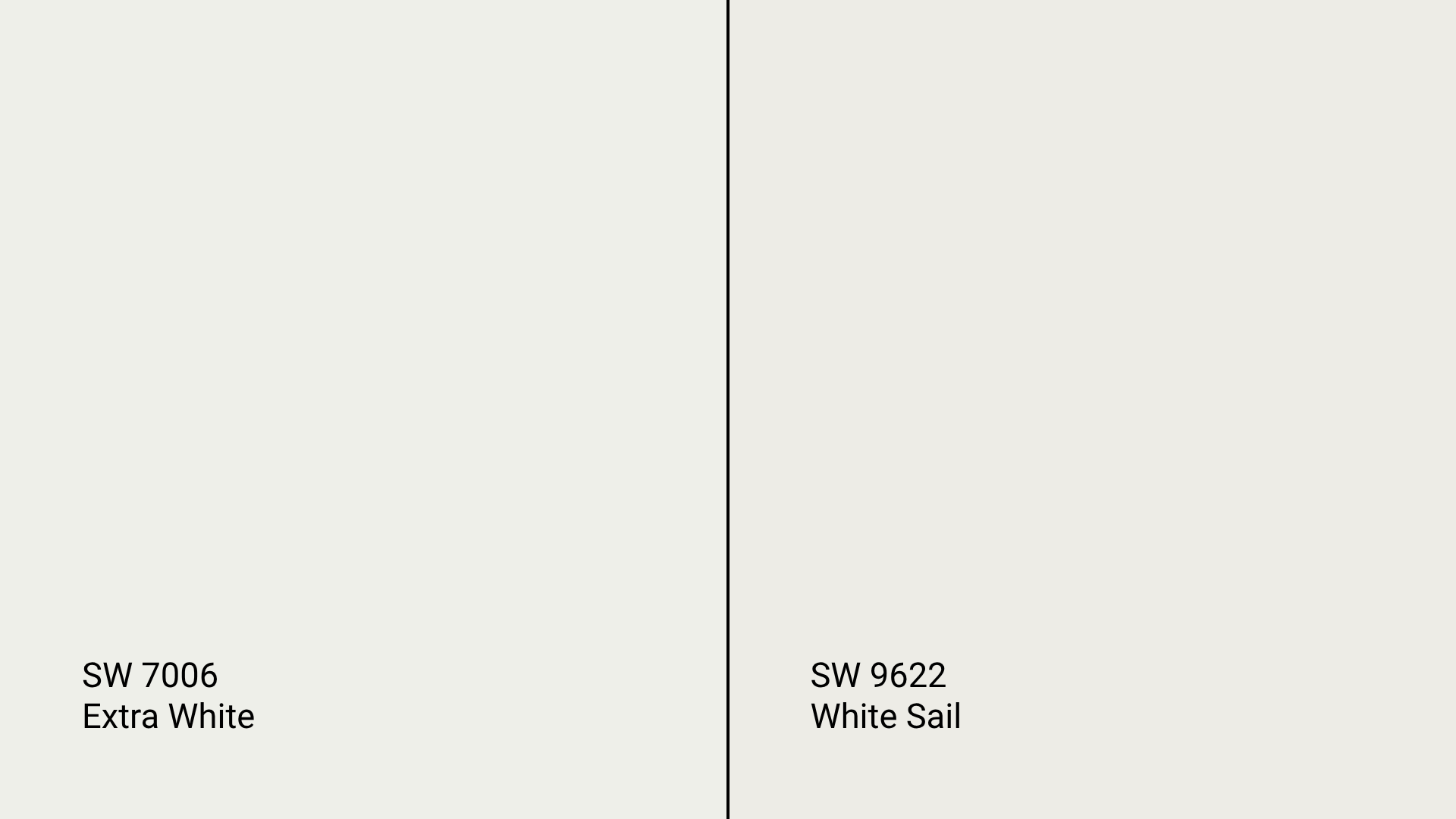
White Sail (SW 9622, #EBEBE7) is a very light gray with a touch of warmth.
- White Sail has soft gray and beige undertones (LRV 85), giving it a warm, subtle feel.
- Extra White stays cooler and more vibrant with blue-gray undertones.
For a warm, soft look, White Sail is ideal. Choose Extra White for a fresh, modern touch with cooler tones.
Extra White vs. Ceiling Bright White
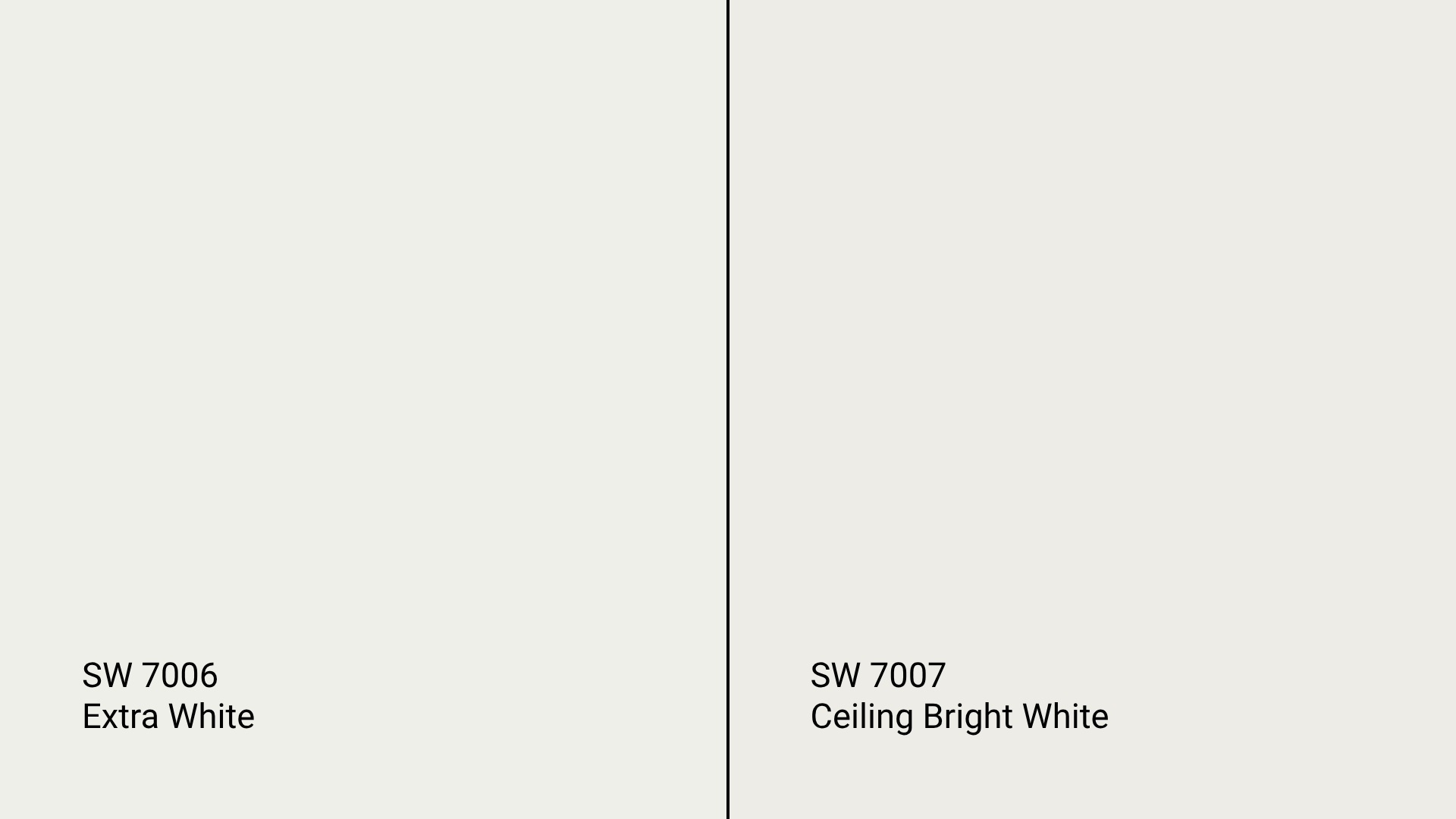
Ceiling Bright White (SW 7007, #E9EBE7) is a soft, cloud-like white with a slight warmth.
- Ceiling Bright White is warmer with an LRV of 83, giving it a softer appearance.
- Extra White offers a cleaner, cooler finish that’s perfect for trim and walls.
If you want a subtle, softer white for ceilings, Ceiling Bright White is perfect. For a fresher, sharper look, Extra White works best.
Undertone and LRV Comparison Table
| Paint Color | Undertones | LRV | Warm or Cool |
|---|---|---|---|
| Extra White | Blue-gray | 86 | Cool |
| High Reflective White | Minimal undertones | 93 | Cool |
| Pure White (SW 7005) | Subtle gray | 84 | Warm |
| White Sand (SW 9582) | Beige | 84 | Warm |
| White Sail (SW 9622) | Light gray, slight warmth | 85 | Warm |
| Ceiling Bright White (SW 7007) | Soft cloud-like | 83 | Warm |
These whites are all great options, but they behave differently depending on the lighting and room characteristics. Test them in your space to find the perfect match for your needs.
Cost and Where to Buy Extra White SW 7006
Here’s a look at the price range for purchasing Extra White across different retailers:
Sherwin-Williams: A gallon of Extra White paint typically costs around $45-$60, depending on the finish (e.g., flat, satin, or semi-gloss). Sherwin-Williams often offers promotions and discounts, so it’s worth checking for sales or coupons.
Other Sellers: Online sellers like Amazon and eBay offer Extra White for prices ranging from $38-$55 per gallon. However, shipping costs may vary, so it’s important to check total prices, especially for larger orders.
Where to Get Peel-and-Stick Samples
Both Sherwin-Williams and Samplize offer peel-and-stick samples for Extra White. Here’s a quick look at both:
| Retailer | Sample Size | Price (USD) | Notes |
|---|---|---|---|
| Sherwin-Williams | 8″ x 8″ | $3.95 ($3.50/4+) | Lower price for 4+ samples |
| Samplize | 9″ x 14.75″ | $5.95 | Largest size, real paint sample |
Bulk discounts are available from Sherwin-Williams for four or more samples. Both options let you test the true paint color at home before committing to a full gallon.
Extra White Equivalents in Other Brands
If you don’t have access to Sherwin-Williams or are considering another brand, here are a few close alternatives to Extra White (SW 7006). Remember that each brand has its own formula, so undertones and finishes might vary slightly.
Behr
- Bakery Box (BL-W09): Direct color comparison, visually very similar to Extra White.
- Ultra Pure White (PP100 / 1850): Commonly cited as Behr’s brightest white; however, it may be even cooler and cleaner than SW Extra White.
Benjamin Moore
- Super White (OC-152): Extremely close in tone and brightness, with a nearly identical LRV to Extra White.
- Decorator’s White (CC-20): Slightly darker and warmer, but still close to Extra White.
These alternatives are great options, but it’s always best to sample them side by side to see how they appear in your space. Small differences in undertones or finish can affect how the color looks on your walls.
Conclusion
Now, I’ve covered everything you need to know about Extra White Sherwin-Williams (SW 7006), from its key features to the best ways to use it in your home.
If you’re looking for a bright, crisp finish or a cool, modern vibe, Extra White is a versatile choice that works well in both interiors and exteriors.
Before making your final decision, I recommend testing the color in your space using peel-and-stick samples. This will help you see how it looks in your lighting and with your décor.
Want more paint inspiration? You can check out other paint color reviews on the website to find the perfect shade for your next project.


